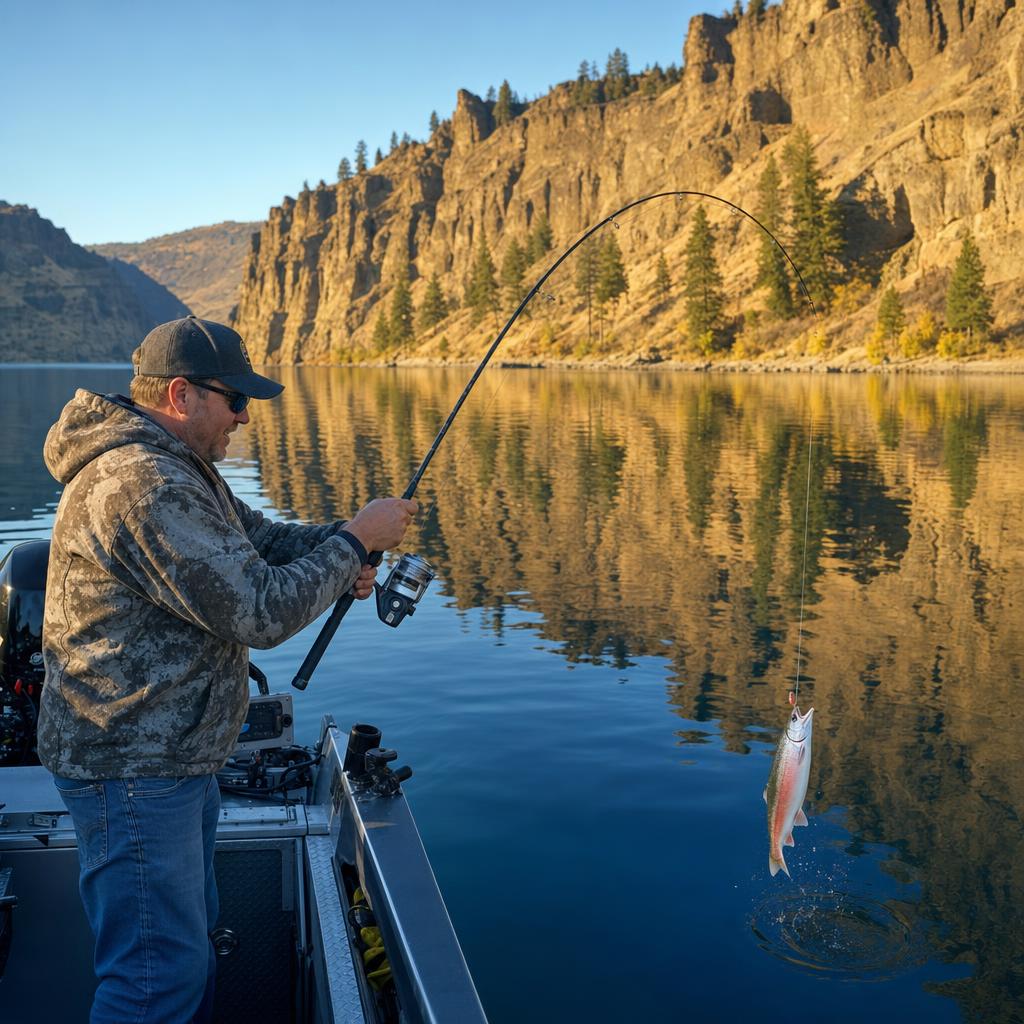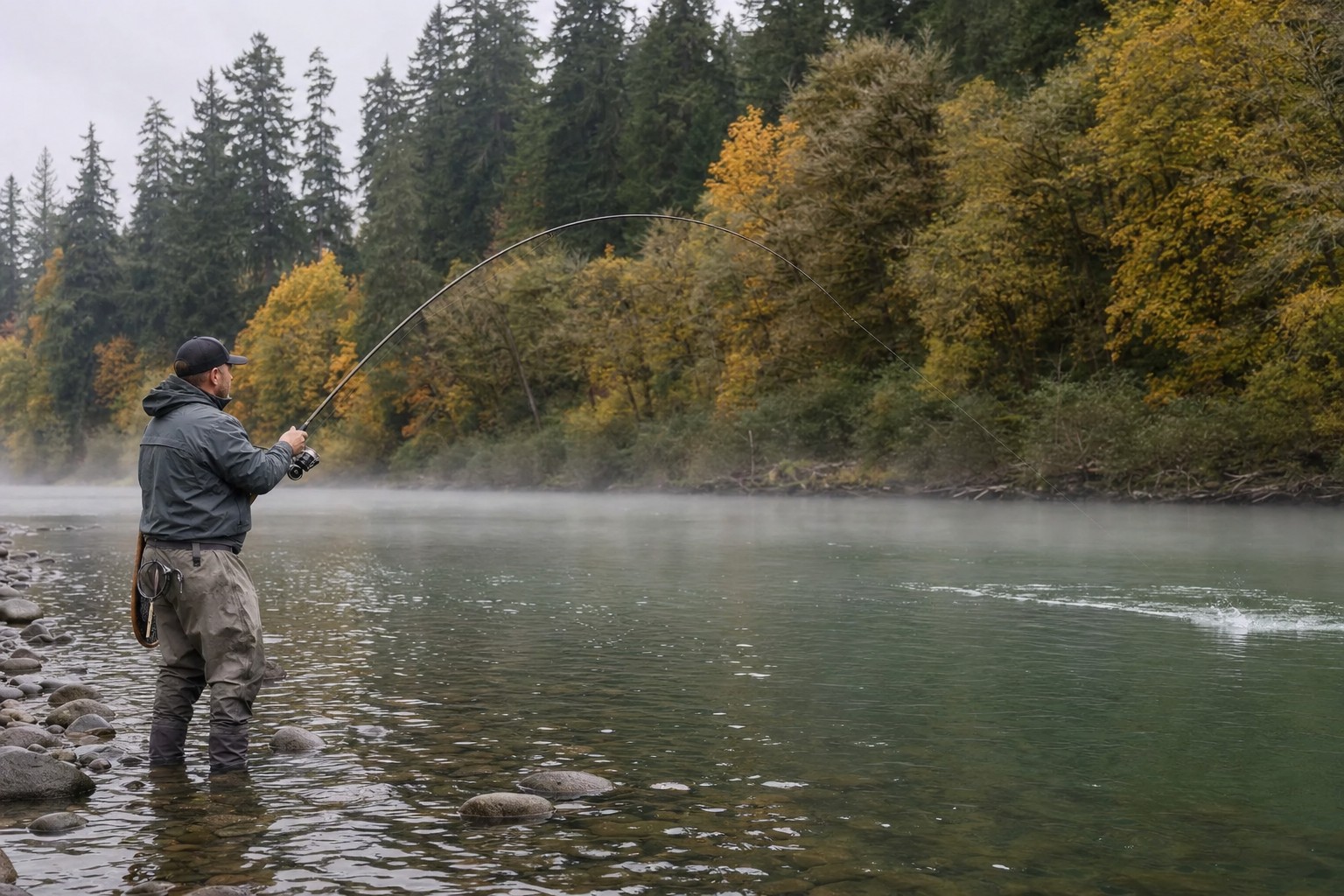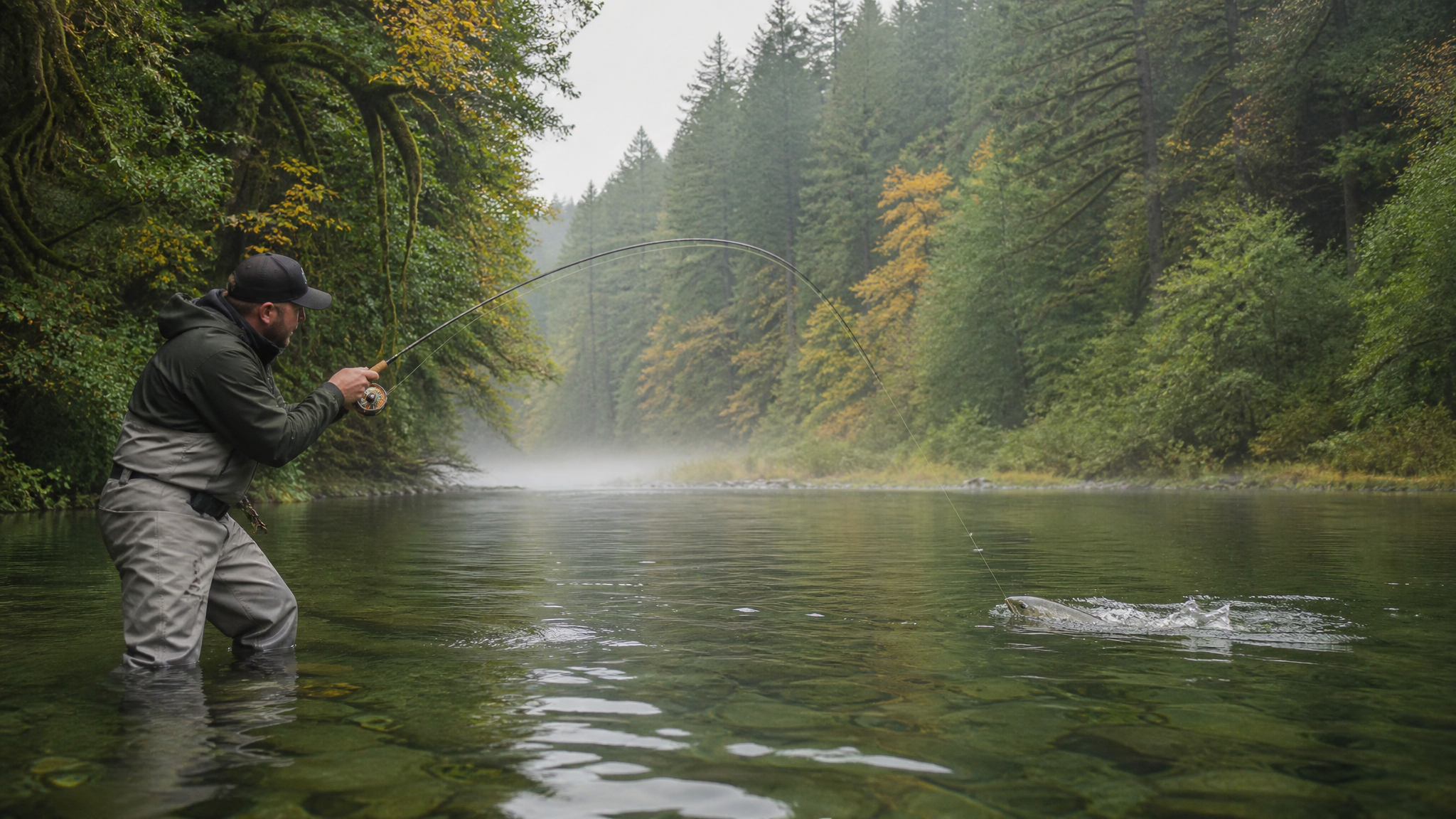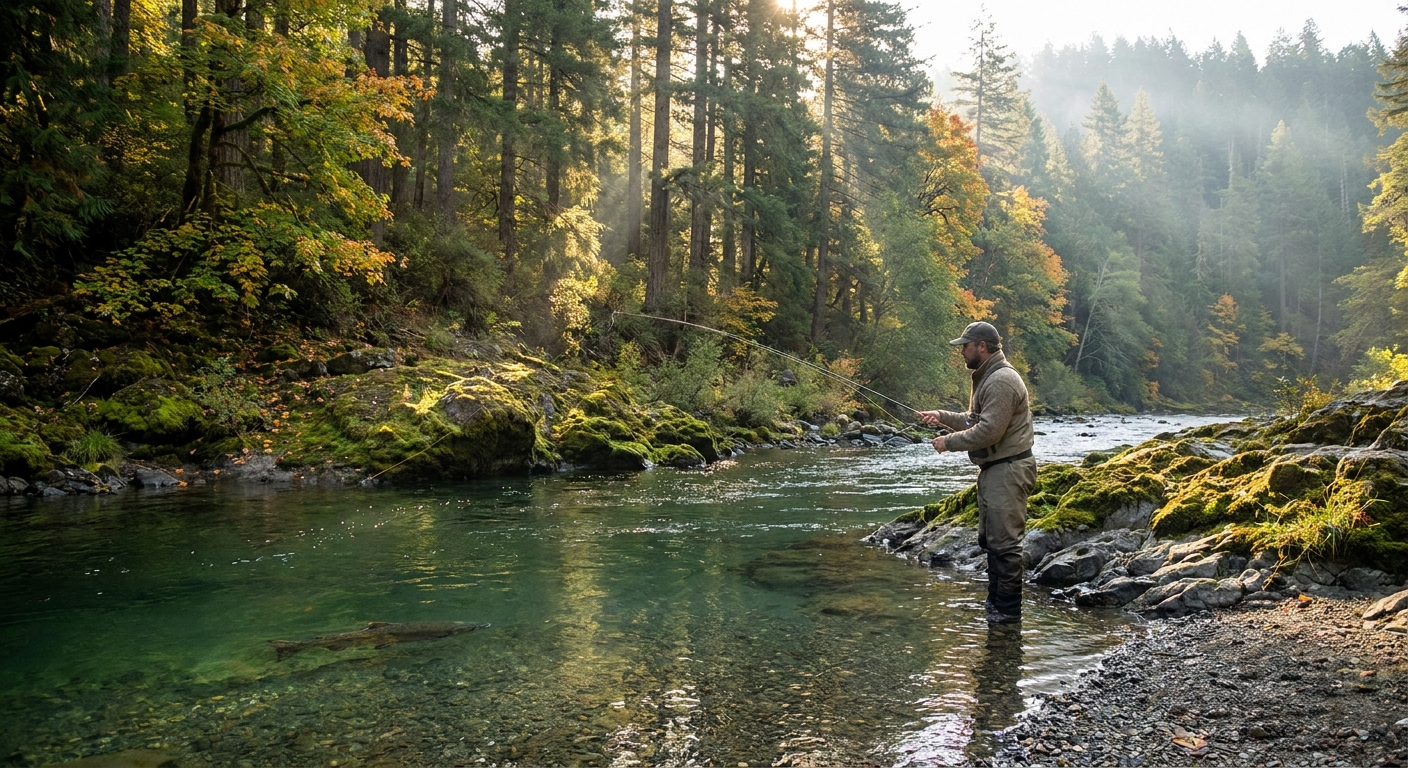
When Oregon salmon anglers talk fall Chinook, the conversation usually jumps straight to the Rogue, the Alsea, or the Columbia. The South Umpqua gets mentioned as an afterthought — if at all. That’s a mistake. This river runs clean, carries fish from late September through November, and offers some of the most productive bank access of any south coast drainage in the state. If you’re willing to do a little homework, you can find yourself on a pool full of fresh chrome while the crowds are stacked three deep on the lower Rogue.
River Basics and Run Timing
The South Umpqua drains the western slope of the Cascades and the eastern foothills of the Klamath Mountains before merging with the North Umpqua at Roseburg. The main stem Umpqua then flows west to Winchester Bay at Reedsport. Fall Chinook begin staging at the bay in late August, and the first strong push of fish typically moves into the South Fork in late September, peaking through October and tapering into November.
Water temperature is your best indicator. Once the main stem drops below 60°F consistently, fish start moving aggressively. After the first significant fall rain event — typically a half-inch or more over two to three days — expect a fresh surge of fish within 48 to 72 hours. Keep an eye on the USGS stream gauge at Brockway (Station 14308000). When flow rises from summer low and begins holding in the 1,500 to 3,000 cfs range, conditions are usually ideal.
Access Points That Actually Produce
The South Umpqua has more bank access than most anglers realize. Here are the spots worth your time:
- Days Creek to Canyonville stretch — County road pullouts and BLM parcels give you access to several productive runs upstream of the Canyonville area. Less pressure here than anywhere downstream, and fish push through fast once the water drops post-rain.
- Milo area (above Days Creek) — Small community with a few public access points. The water is tighter here, but fish hold longer at this elevation because of cooler temperatures. Worth the drive if you want solitude.
- South Umpqua Falls — The falls create a natural holding area below the fish ladder. In low water, Chinook stack below the ladder waiting for flow to increase. Access is via Forest Road 28 from Tiller, and the hatchery downstream at the falls gets supplemented returns each year.
- Canyonville to Roseburg corridor (Highway 99) — Multiple county parks and boat ramps along this stretch offer day-use bank access. Susan Creek Recreation Area (BLM, fee area) has a good gravel bar with access to a long, deep run.
Gear and Rigs for Bank Anglers
South Umpqua Chinook respond well to the same presentations that work throughout the Oregon coastal system. For bank fishing, these three setups cover 90 percent of situations:
Plunking Rig
This is the go-to for slower, deeper pools. Use a 4- to 8-ounce pyramid sinker on a three-way swivel with an 18- to 24-inch leader of 30- to 40-pound monofilament to a 4/0 to 6/0 hook. Bait with a sand shrimp and prawn cocktail or a chunk of cured salmon eggs wrapped in spawn sac material. Cast upstream and across, let the sinker anchor, and wait. Plunking at dawn and dusk is most productive — fish move during low light even in clear water.
Drift Fishing
In shallower tailouts and riffles, drift a tuna-colored Spin-N-Glo or Corkie ahead of a bait cluster downstream through the run. Use enough weight to tick bottom without stopping — a 3/4- to 1-ounce pencil lead on a dropper. This covers water efficiently and gets in front of moving fish.
Plugs from Bank
In medium-depth runs with moderate current, you can fish a Hot Shot or Kwikfish from the bank by casting upstream and mending to achieve a tight back-trolling wobble. Wrap the plug with cured anchovies for added scent. This is especially effective when fish are actively moving but not stacked in pools.
Regulations to Know
South Umpqua Chinook regulations have changed in recent years and vary by section. As of the 2026 season, check the Oregon Department of Fish and Wildlife regulation booklet carefully for open dates, retention rules, and gear restrictions. Wild Chinook retention is often prohibited or limited, and barbless hook requirements may apply in certain sections. Hatchery fish are identified by a clipped adipose fin. Targeting the stretch below the South Umpqua Falls hatchery typically means better odds of hooking a legal, adipose-clipped fish during peak run timing.
What the Locals Know
Roseburg-area anglers treat the South Umpqua like a closely held secret. A few things worth knowing that don’t make it into guidebooks:
- The run often peaks a week or two after the North Umpqua’s most heavily fished period. If you’ve struck out north of town, work your way south.
- Morning fog can linger in the canyon until 10 AM, keeping water temps cooler and fish active longer into the morning than you might expect.
- On weekdays after the season opener rush, many bank spots see zero other anglers. Come Tuesday through Thursday and you’ll likely have a run to yourself.
- The ODFW’s Canyonville hatchery supplementation program adds returning adults annually — verify current escapement reports on the ODFW website before your trip.
Final Thoughts
The South Umpqua won’t make magazine covers or show up on most Oregon salmon fishing highlight reels. That’s exactly why it’s worth your attention. A river with good bank access, a legitimate fall Chinook run, and a fraction of the fishing pressure of its more famous neighbors is a rare find in 2026. Get there in October with a plunking rig and a bag of cured prawns, and you just might wonder why you ever fought the crowds somewhere else.