Tucked inside the Oregon Dunes National Recreation Area between Florence and Reedsport, Tahkenitch Lake and Eel Lake are two of the most underrated warm-water fisheries on the Oregon coast. While most anglers chase the Deschutes or the Rogue, these coastal dune lakes quietly produce largemouth bass, yellow perch, brown bullhead catfish, and sea-run cutthroat trout throughout the summer — and the access is free.
Tahkenitch Lake: Oregon's Coastal Bass Factory
Tahkenitch Lake covers roughly 1,670 acres and sits just west of Highway 101, about 7 miles south of Florence. It's connected to the ocean via a tidal channel that runs through the dune field, giving it a unique mix of freshwater and brackish influence near the outlet. That connectivity brings sea-run cutthroat in from late summer through fall, but the bass and perch fishing peaks right now — from July through early September.
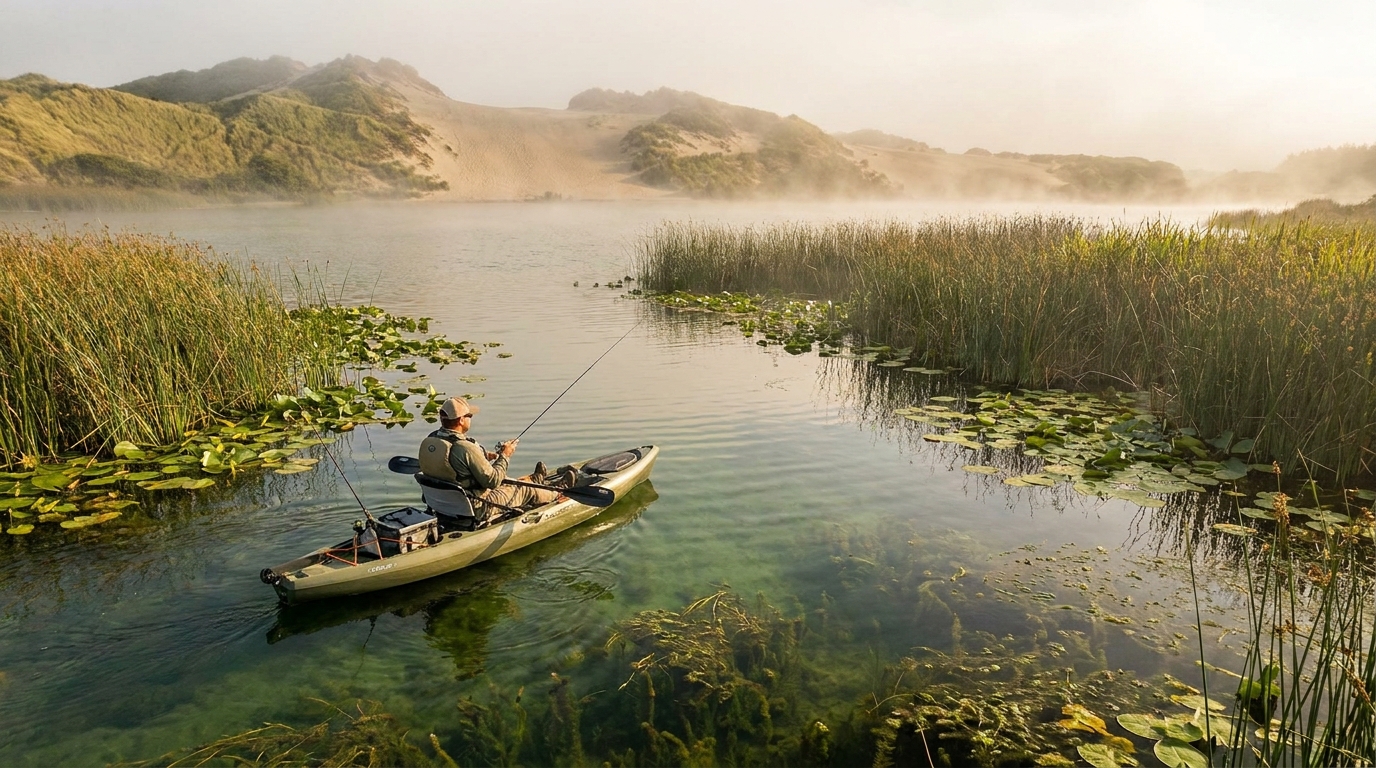
Largemouth bass in Tahkenitch run 1 to 3 pounds on average, with the occasional 4-pound fish turning up near the dense tule beds along the lake's eastern and southern shores. The bass stack up in the emergent vegetation right now, staging in 4 to 8 feet of water where lily pads and reeds meet open water. A Texas-rigged 4-inch Senko in green pumpkin or watermelon seed, worked slowly through the edge of the cover, is the most consistent producer. In the early morning, hollow-body frogs over the lily mats draw violent surface blowups — there's no better way to start a summer day on the Oregon coast.
Yellow perch are everywhere in Tahkenitch. They're aggressive, easy to catch, and excellent eating. A small jig — a 1/16-oz. to 1/8-oz. hair jig or Ned-style soft plastic in chartreuse or white — worked along the weed edges produces limits in a hurry. Perch from 8 to 11 inches are common; anything over 12 inches is a legitimate trophy for the species.
Access and Launch Points
The Tahkenitch Campground boat launch off Highway 101 provides paved access and is managed by the Oregon Dunes NRA (no fee for day-use launch). The campground itself is a good base if you're spending multiple days. The upper arms of the lake are best explored by kayak or canoe — a 12-foot aluminum with a small electric motor is ideal. Gas motors are allowed but the lake's fingers and backwaters reward slower travel.
Eel Lake: The Quieter Option with Big Perch
About 14 miles south of Tahkenitch, Eel Lake at William M. Tugman State Park is smaller (about 350 acres) and gets far less pressure. It doesn't have the bass population that Tahkenitch does, but the yellow perch fishing is arguably better — fish in the 10 to 13-inch range are common, and the lake sees very little competition from weekend anglers.
Eel Lake also holds brown bullhead catfish in good numbers. Night-fishing from the state park's bank with nightcrawlers or chicken liver on the bottom produces consistent action from July through August. Bring a headlamp, a cooler, and patience — the catfishing here is relaxed and rewarding.
Sea-run cutthroat start showing up in Eel Lake's inlet and outlet areas in late August, signaling the early edge of the fall season. A small #8 Clouser Minnow stripped through the current seams near the outlet, or a bubble-and-fly rig with a size 10 elk hair caddis, will produce these fish as the summer winds down.
What You'll Need
- Bass: Medium-action spinning rod, 10-lb fluorocarbon, Texas-rigged plastics, frogs, and spinnerbaits
- Perch: Light spinning gear, 4–6 lb line, small jigs or live bait (worms)
- Catfish: Medium-heavy rod, 15–20 lb mono, heavy sinker, stink bait or nightcrawlers
- Cutthroat: 4–5 wt fly rod or spinning rod with bubble-and-fly rig, small streamers and wet flies
Regulations to Know
Both Tahkenitch and Eel Lake fall under Oregon's general coastal regulations. A valid Oregon fishing license is required. For bass, there is no size limit or bag limit on largemouth in these lakes under general coastal rules — but check the current ODFW regulations booklet since rules can change year to year. Cutthroat trout in coastal systems are catch-and-release for wild fish; retain only hatchery fish with a clipped adipose fin.
Timing the Summer Season
August is prime time for bass and perch at Tahkenitch. Water temperatures climb into the low-to-mid 70s by mid-summer, which brings the bass up shallow and makes the perch aggressive throughout the day. Early morning fog is common on the Oregon coast even in August — launch at first light, fish the bass shallow until 9 or 10 a.m., then switch to perch as the sun drives fish deeper.
The campground at Tahkenitch books up on summer weekends, so reserve ahead on Recreation.gov or plan a weekday trip. Midweek, you'll often have the upper arms of the lake entirely to yourself — a rare thing for any productive Oregon fishery this close to Highway 101.
The Bottom Line
If you're looking for consistent summer action without fighting the crowds on the Deschutes or dealing with the complexity of tidal salmon timing, Tahkenitch and Eel Lake deliver. Pack light, bring a float tube or kayak, and plan to spend a slow August morning working the tule edges. The coast has a lot more to offer than steelhead, and these dune lakes are proof.