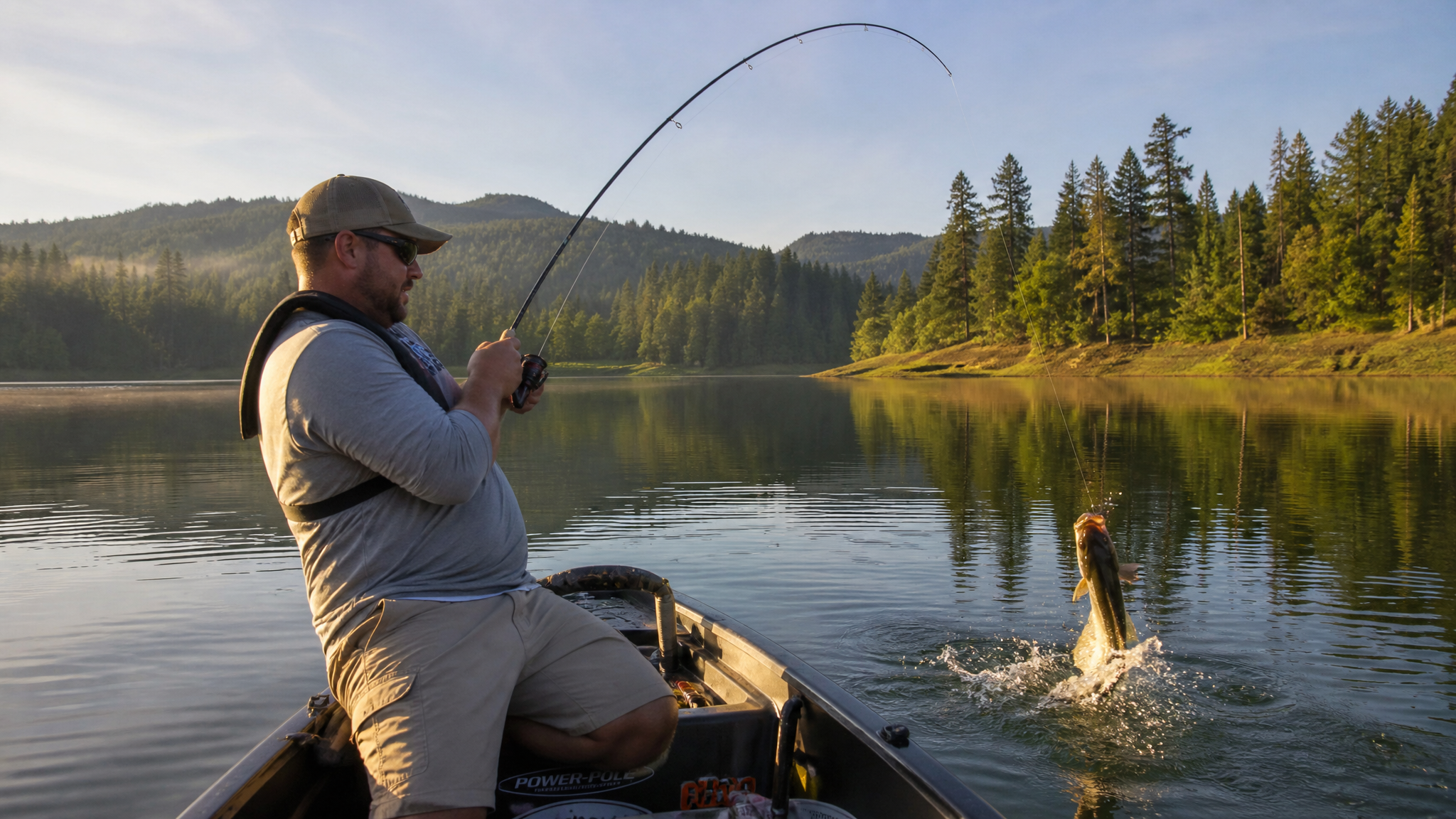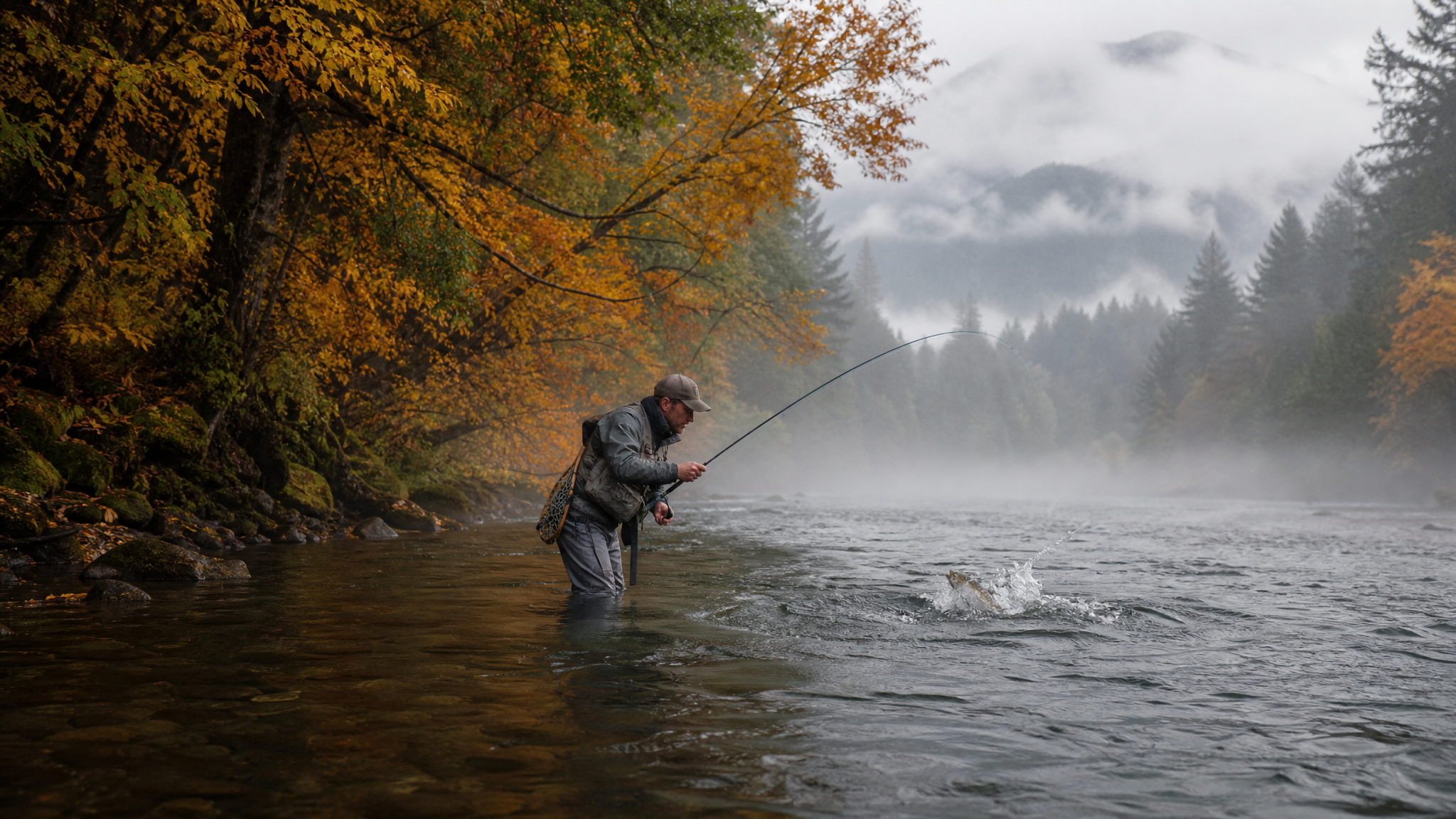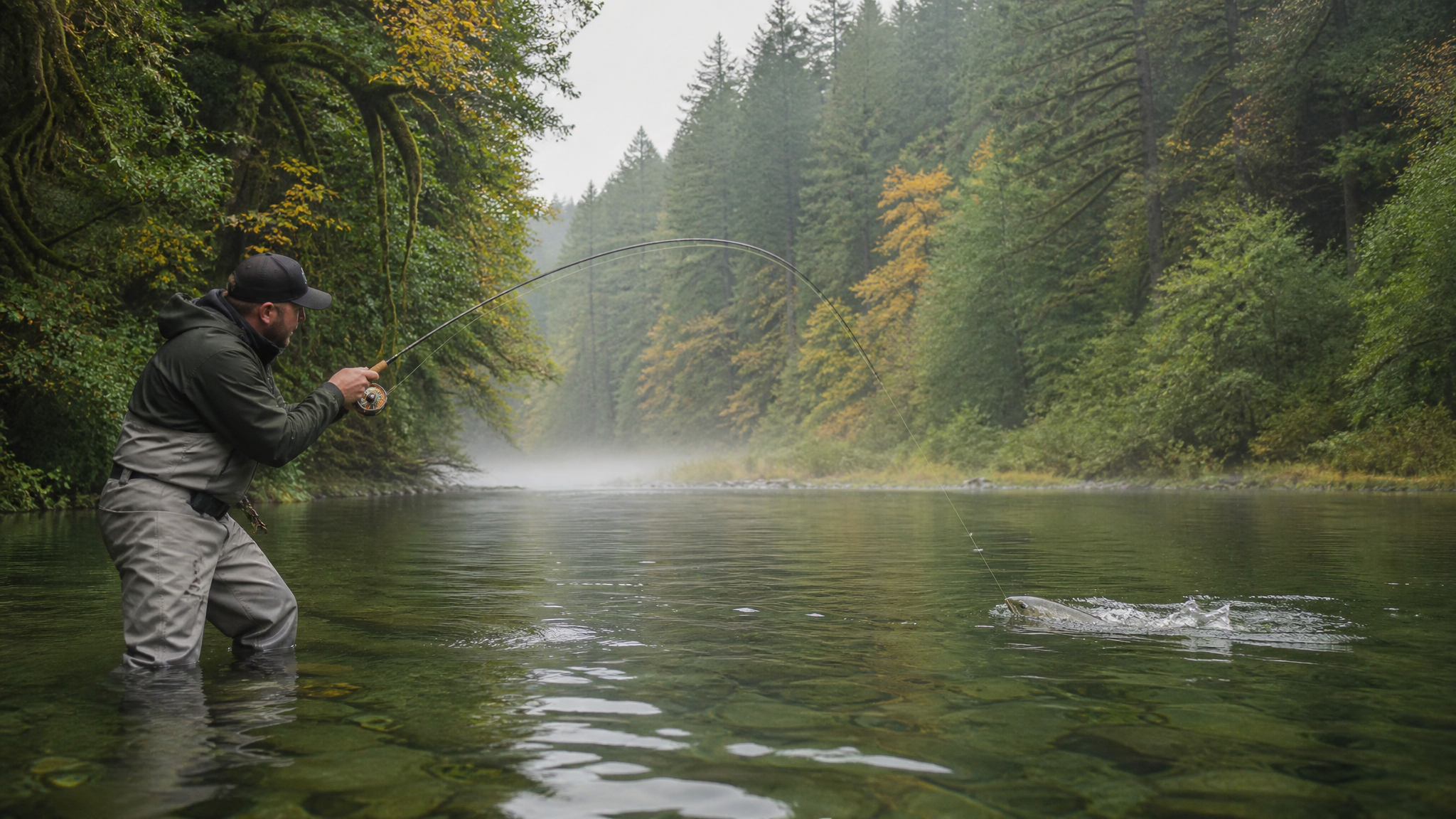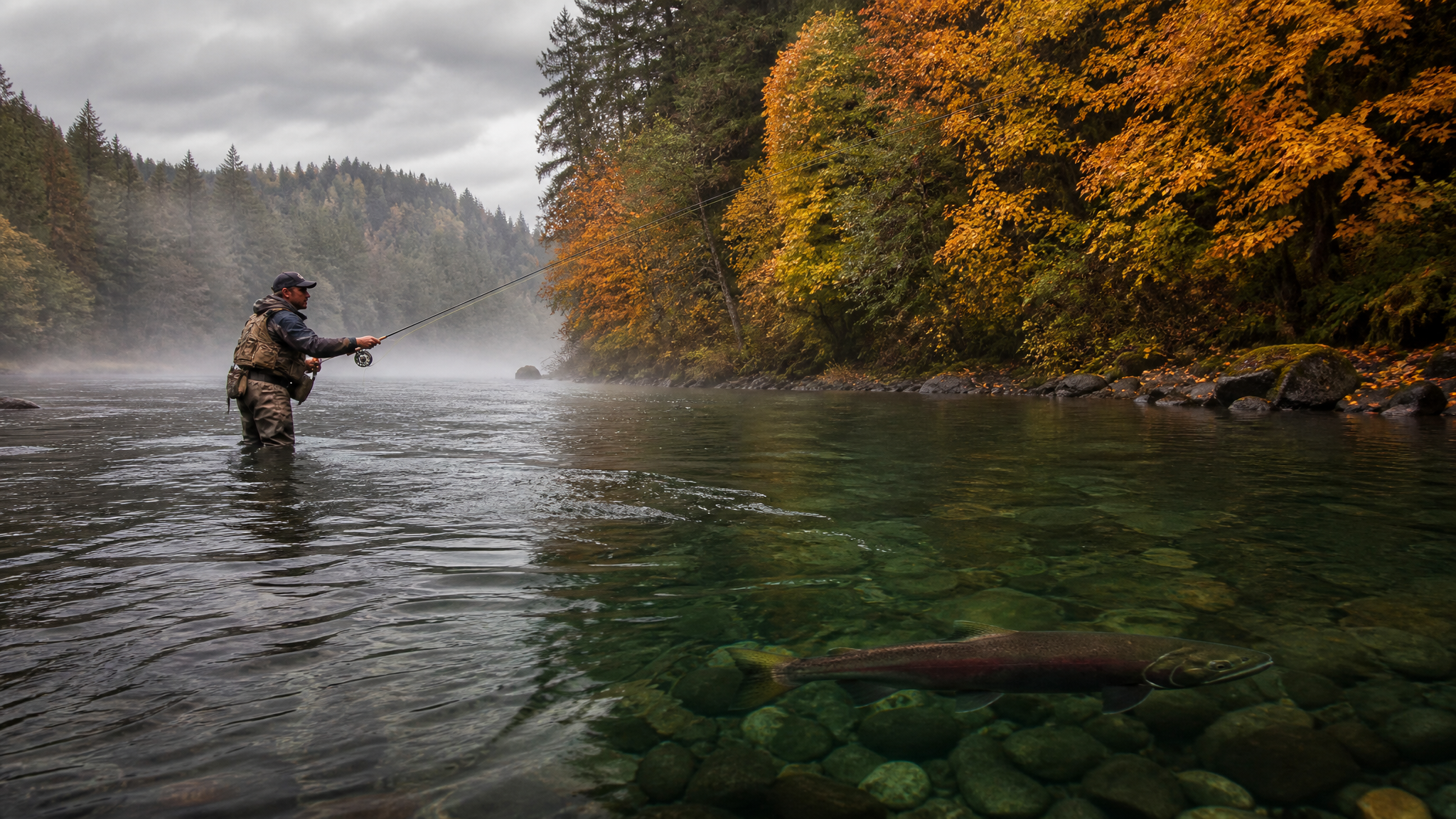
The Trask River doesn't get the press of the Wilson or the Nestucca, but ask any serious Tillamook County angler about the fall Chinook run and you'll get a knowing nod. The Trask is a legitimate trophy fishery — a short, powerful coastal river that dumps out of the Coast Range and into Tillamook Bay with enough gradient to keep it fishable even when the bigger rivers are blown out. If you time it right, you can be elbow-deep in some of the biggest kings on the Oregon coast.
Timing the Run
The Trask fall Chinook run typically begins showing up in the lower river in mid-September, with numbers peaking through late September into mid-October. Unlike spring Chinook, which stage offshore and trickle in slowly, fall fish move fast once rain hits. The first significant rainfall of the season — even just an inch overnight — can turn a marginal bite into a red-letter day almost immediately. Watch the gauge at Tillamook closely. You want flows between 400 and 800 cfs for ideal bank fishing conditions. Below 400, the fish get lockjaw in clear water. Above 1,500, you're fighting a brown muddy river that'll test your patience.
Early September fish are often the biggest — hatchery kings pushing 30 to 40 pounds that have been holding offshore and come in bright and aggressive. By late October, you'll see more jacks and the run quality drops, so concentrate your effort in that sweet September-October window.
Best Bank Access Spots
The Trask is a surprisingly accessible river for bank anglers, with several pullouts along the Trask River Road that provide legal, fishable water.
- Loren's Drift: One of the most popular bank holes on the lower Trask. Deep tailout holds fish in lower flows. Good for bobber-and-bead early in the season.
- Sollie Smith Park: Excellent family-friendly access with a deep hole on the far bank. Drift eggs or toss spinners to fish stacking in the seam.
- Lower Trask Road pullouts (Miles 2-5): Multiple informal pullouts with bankable water. Scout from the road during low water to identify holding lies before the fish arrive.
- Above the hatchery rack: Once fish are stacking below the Tillamook County hatchery, the water above the rack can be phenomenal. Check ODFW regulations — sections above the rack may have gear restrictions.
Gear and Rigs
Fall Chinook on the Trask respond to several presentations depending on water clarity and flow conditions.
Bobber and Bead
The go-to setup for bank anglers when flows are moderate and water has some clarity. Run a 10-12mm peach or apricot bead pegged 2 inches above a size 2 or 4 Gamakatsu octopus hook. Use 20-25 lb fluorocarbon leader. Set your bobber depth so the bead ticks bottom through the slot. Pink and peach are classic on the Trask; chartreuse beads can trigger aggressive fish when the water is off-color.
Egg Clusters
When the river comes up with the first rains and the water gets color, fresh cured eggs are hard to beat. A golf ball-sized cluster of bright orange or flame eggs cured with Pro-Cure Egg Cure wrapped in pink mesh netting is the classic Tillamook County rig. Run it on a 3-way swivel with a pencil lead dropper, size up the lead as flows increase. Scent is everything — fresh eggs beat cured every time if you can get them.
Spinners and Spoons
Do not overlook hardware for fresh-run fish. A #5 Blue Fox Vibrax in silver/chartreuse or a 1-oz Little Cleo in nickel-blue can absolutely hammer fresh kings resting in a holding pool. Work spinners across and downstream, slow enough to feel the blade thumping. This is especially effective on early-run fish that have not been pressured yet.
Reading Trask Water
Chinook on the Trask behave predictably once you understand the river's personality. This is not a long, lazy lowland river — it's a coastal system with distinct runs, riffles, and deep slots carved by winter flows. Fish rest in the deeper buckets at the bottom of runs, facing upstream with their noses into the current. The inside seam where fast water meets slow is always worth a few casts. During high water, Chinook push to the edges and rest in the slower water behind boulders and along cut banks.
The most important thing on the Trask is to show up at the right time. If you pull up to a hole and there are no fish rolling, there probably are not fish there. Chinook roll regularly when resting — keep your eyes on the water and cover water until you find where they are sitting.
Regulations to Know
Always check the current ODFW Sport Fishing Synopsis before your trip. The Trask has hatchery Chinook retention with wild fish release mandatory most seasons, though regulations can change. The Tillamook Bay terminal fishery in the tidewater section may have different retention rules than upper sections. The hatchery rack at the Tillamook County facility usually closes that section to angling — respect the closure signs. Two-rod fishing is typically allowed with a license endorsement.
What to Bring
- Heavy spinning or baitcasting outfit: 10-12 ft rod, 40-65 lb braid mainline
- Chest waders — even bank fishing benefits from being able to step in to land fish
- Net with at least a 24-inch hoop for big kings
- Cooler with ice — fall Chinook are premium table fish, take care of your meat
- Rain gear — this is Tillamook County, and the best fishing often happens in the rain
The Trask does not have the name recognition of Oregon's bigger Chinook systems, and that's part of what makes it special. A clear September morning, a big tide pushing in, and fresh Chinook stacked in the lower holes — it's some of the best bank fishing on the Oregon coast, and most days you will have a hole to yourself. That's worth knowing.