Three decades ago, the Umatilla River ran nearly dry through the summer months, its water diverted for irrigation long before salmon could spawn. Today, the fall Chinook return to the Umatilla is one of the most remarkable fishery restorations in the Pacific Northwest — and it remains one of the most underrated bank fisheries in Oregon's Columbia basin.
The Umatilla Basin Water Quality Project returned flows to the river, and the Confederated Tribes of the Umatilla Indian Reservation (CTUIR) led hatchery restoration efforts through facilities like the Minthorn Springs Hatchery near Pendleton. The results have been dramatic. Fall Chinook returns now regularly exceed 20,000 fish annually, and ODFW opens the lower river for multiple angling windows each fall — yet you'll rarely see more than a handful of rigs at the best bank access points.
The Run: Timing and Entry Points
Umatilla fall Chinook begin staging at the Columbia River confluence in late August, with the first fish entering the river proper by early September. Peak bank angling opportunity in the lower Umatilla — from the mouth upstream to the town of Umatilla — typically falls between September 10th and October 10th. Check ODFW regulations carefully each year; the lower river often has hatchery-only retention rules and broodstock collection closures that vary by reach and in-season run conditions.
Fish continue pushing upstream through October, reaching the Pendleton area and beyond by mid-month. Cold autumn rains that freshen river flows will move fish quickly. Watch the USGS gauge at Pendleton — a jump from base flow to 500–700 CFS after a rainfall event almost always signals a push of fresh Chinook through the system.
Best Bank Access Spots
Lower River: Mouth to McNary Pool
The Columbia River backwater area near the Umatilla mouth offers early staging access. Look for fish stacked in the slack water where currents mix. The Oregon side of McNary Pool also produces fish waiting for the first rise in Umatilla River flows. This stretch is often your best bet in the first two weeks of September before upriver fish have moved far from the Columbia.
Irrigon to Hermiston Reach
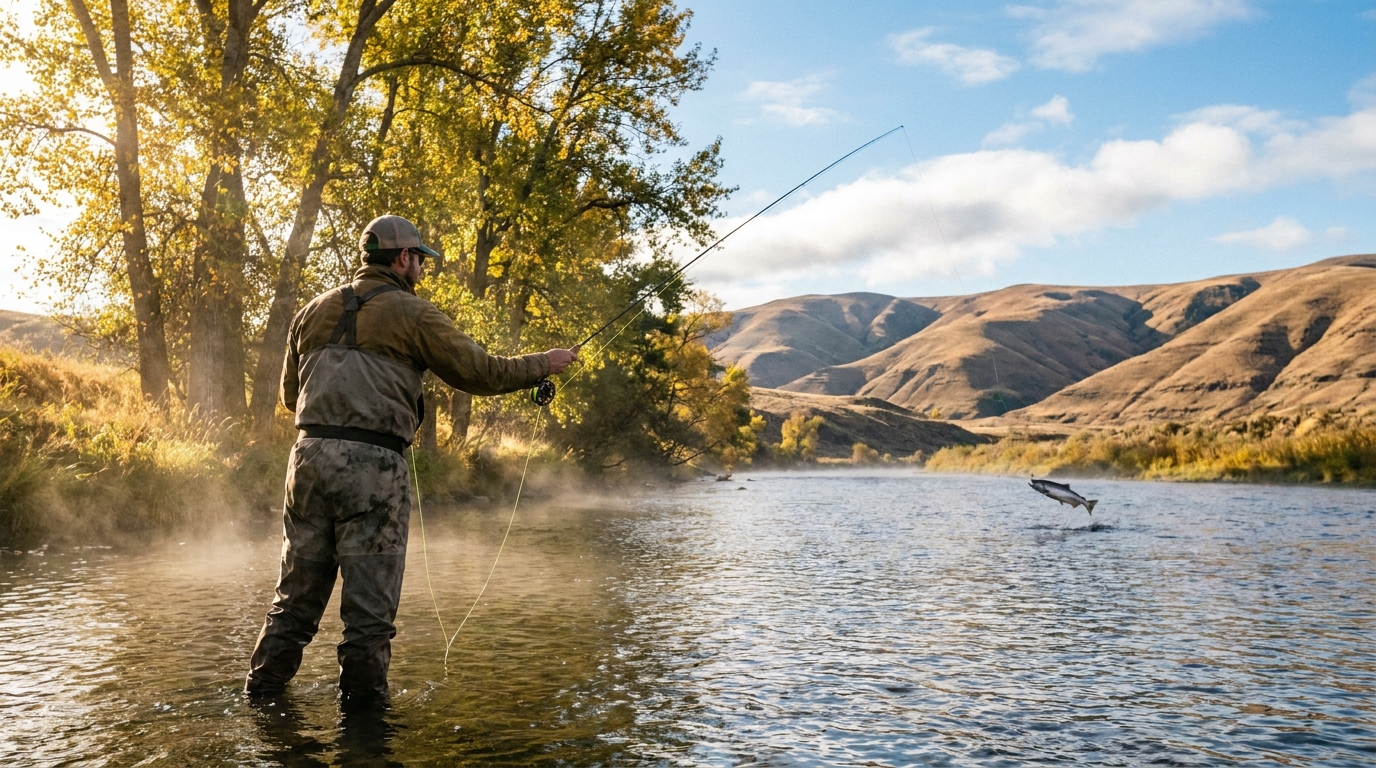
This stretch offers the most consistent public bank access on the lower Umatilla. Hwy 730 runs parallel to much of the river, and ODFW's Threemile Canyon access area, plus BLM river corridor parcels, provide legal pullouts without trespassing concerns. Riffle tails, deep outside bends, and pools below irrigation diversion structures hold fish best. Walk away from the parking areas — the 200-yard rule separates the fish from the crowd.
Echo to Pendleton
Above Echo, the river character changes: riffles tighten, pools deepen, and the canyon begins to pinch. Access becomes more challenging, but crowds thin dramatically. The rodeo grounds area near Pendleton and the bridge pools at Echo are traditional bank spots that local anglers have been fishing for generations.
Gear and Tactics
The Umatilla is a compact river — flows during the fall Chinook run typically range from 400 to 1,200 CFS in good water years. A 9-foot medium-heavy spinning or casting rod rated for 15–20 lb mainline handles the river perfectly.
Pulling Plugs from Shore
A Kwikfish K14 or K15 wrapped with sardine wrap is the go-to presentation for experienced Umatilla anglers. Anchor your cast across the current and let the river work the lure back slowly. Chartreuse, orange, and natural sardine-wrap patterns all produce fish. Replace sardine wrap every 30–45 minutes to maintain fresh scent in the water column.
Back-Bouncing Eggs
On the deeper pools from Echo upstream, back-bouncing cured salmon eggs or sand shrimp under 2–4 oz of pencil lead is the most effective bank method when fish are stacked. Use a 3-way swivel rig, 18–20 lb fluorocarbon leader, and a size 2/0 to 4/0 octopus hook in red or orange.
Corkies and Sand Shrimp
Corky-and-yarn combinations with sand shrimp under a bobber or drift-fished free-line are deadly when fish are moving through shallower riffles. Keep your presentation in the 1–3 foot depth zone when targeting actively running fish. Pink, orange, and cerise are the consistent Umatilla colors.
Regulations and Tribal Respect
The Umatilla River runs through the Umatilla Indian Reservation above river mile 32. The CTUIR hold treaty rights to the fishery and co-manage the run with ODFW. Non-tribal anglers must stay below the reservation boundary and respect all posted closures. Check ODFW's in-season regulation updates every trip — this river can close to non-tribal harvest on short notice when broodstock collection takes priority. Always carry your Oregon fishing license and Combined Angling Tag.
A fishery that returned from near extinction deserves careful stewardship. The CTUIR and ODFW have built something extraordinary on the Umatilla — it's worth protecting.
Local Intel
Tackle shops along Hwy 730 near Hermiston know the current run status better than any website. When Chinook are stacking below the railroad bridge on the lower river, word travels fast in the communities along the Columbia. The locals here are proud of what the Umatilla River has become — ask with respect and they'll point you in the right direction.