When Oregon elk hunters hear "Mount Hood," most think ski resorts and weekenders — not archery bulls. That assumption works in your favor. The White River Unit, sprawling across the eastern flanks of the Hood River drainage and the Barlow Pass country south toward Warm Springs, holds a legitimate Roosevelt-Rocky Mountain hybrid elk population that sees a fraction of the pressure of better-known units to the east. If you're willing to climb, you'll find elk.
Understanding the Unit
The White River Unit covers the eastern slope of Mount Hood and the upper White River drainage, bounded roughly by Highway 35 to the west and the Warm Springs Reservation boundary to the south. The bulk of huntable public land sits within Mount Hood National Forest and scattered BLM parcels along the lower canyon breaks. Elevations range from around 2,000 feet in the canyon bottoms to alpine meadows above 5,500 feet near the timberline.
The elk population here blends the genetics and habits of both Roosevelt and Rocky Mountain elk — bigger-bodied than pure Rocky Mountain bulls but more timber-oriented than classic Blue Mountain herds. Expect legal bulls in the 250–320 inch range on average, with occasional 330+ animals showing up on cameras during velvet season.
Pre-Season Scouting Strategy
The most productive scouting happens in July, when bulls are still in bachelor groups and using high-elevation parks and meadows to feed and escape insects. Drive the forest roads above 4,500 feet in the evenings with a good spotting scope and glass the clear-cuts and meadow edges. The old clear-cuts along Forest Roads 48 and 3530 hold feed and have historically been reliable glassing points.
Digital Scouting
- Use OnX Hunt to identify private land inholdings — there are several in the unit, and knowing their boundaries saves embarrassment.
- Look for saddles and benches between 3,500 and 5,000 feet — elk move through these predictably during the archery season.
- The upper White River canyon has limited access by road; study the topography to plan foot routes before season opens.
Trail Cameras
Set cameras on wallows in late June and July. Elk wallows in the White River Unit tend to concentrate in drainages between 3,800 and 4,800 feet. A cell camera on a productive wallow will give you a bull inventory and activity timing before you ever pull on your pack.
Early Season Tactics: Pre-Rut and Opening Week
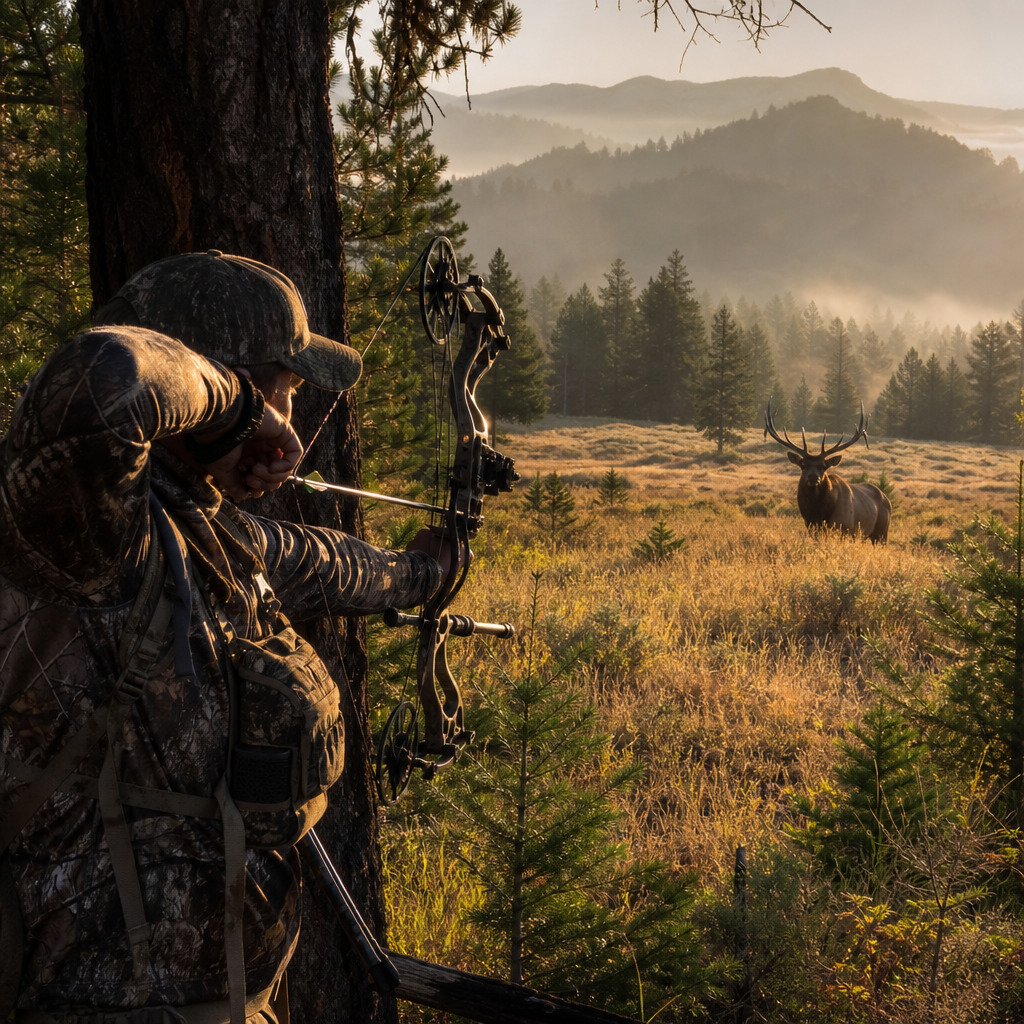
Oregon's general archery elk season opens in late August. In the White River Unit, early-season bulls are still in summer patterns — feeding heavily, watering predictably, and responding poorly to calling. This is a spot-and-stalk or ambush game.
Water Holes and Wallows
August heat pushes bulls to water in the afternoon and early evening. A properly placed ground blind or saddle tree 20–30 yards downwind from a confirmed wallow is as close to a sure thing as archery elk hunting offers. Set up the week before season, let the site rest, and be in position before first light.
Thermals and Wind
The White River drainage creates reliable thermal patterns. Winds blow uphill through the canyon during warming morning hours and reverse downslope in the evening. Plan your approaches against these thermals — elk noses are your primary obstacle in this heavy-timber country.
Rut Tactics: September Calling
By the second week of September, bulls in the White River Unit are typically vocal and responsive. The timber country here makes elk calling particularly effective — sound carries well through the firs, and bulls are inclined to come to the call rather than hang up in open terrain.
- Bugles: Start with location bugles at first light from ridgelines and saddles. The unit's bulls are vocal — if they're nearby, you'll know within minutes.
- Cow calling: Mew and estrus whines do the heavy lifting once you've established contact. Cow calls work all day, not just at dawn.
- Raking: Thrashing a branch on saplings while cow calling has closed the final 50 yards on more than one White River bull. It communicates dominance and urgency simultaneously.
Access and Camp Logistics
The most overlooked access into quality country is the Barlow Road corridor south of Highway 26, where several forest roads lead into the upper White River drainage with minimal traffic. Dispersed camping is allowed throughout the National Forest, and setting a base camp at elevation saves hours of hiking in the dark each morning.
Be aware that the Warm Springs Reservation boundary runs along the southern edge of the unit — know where it is and stay north of it. ODFW’s unit boundary maps are downloadable through the MyODFW portal; print one and carry it.
What to Pack for a 4-Day Self-Guided Hunt
- Compound bow setup tuned to broadheads at season distances (30, 40, 50 yards minimum)
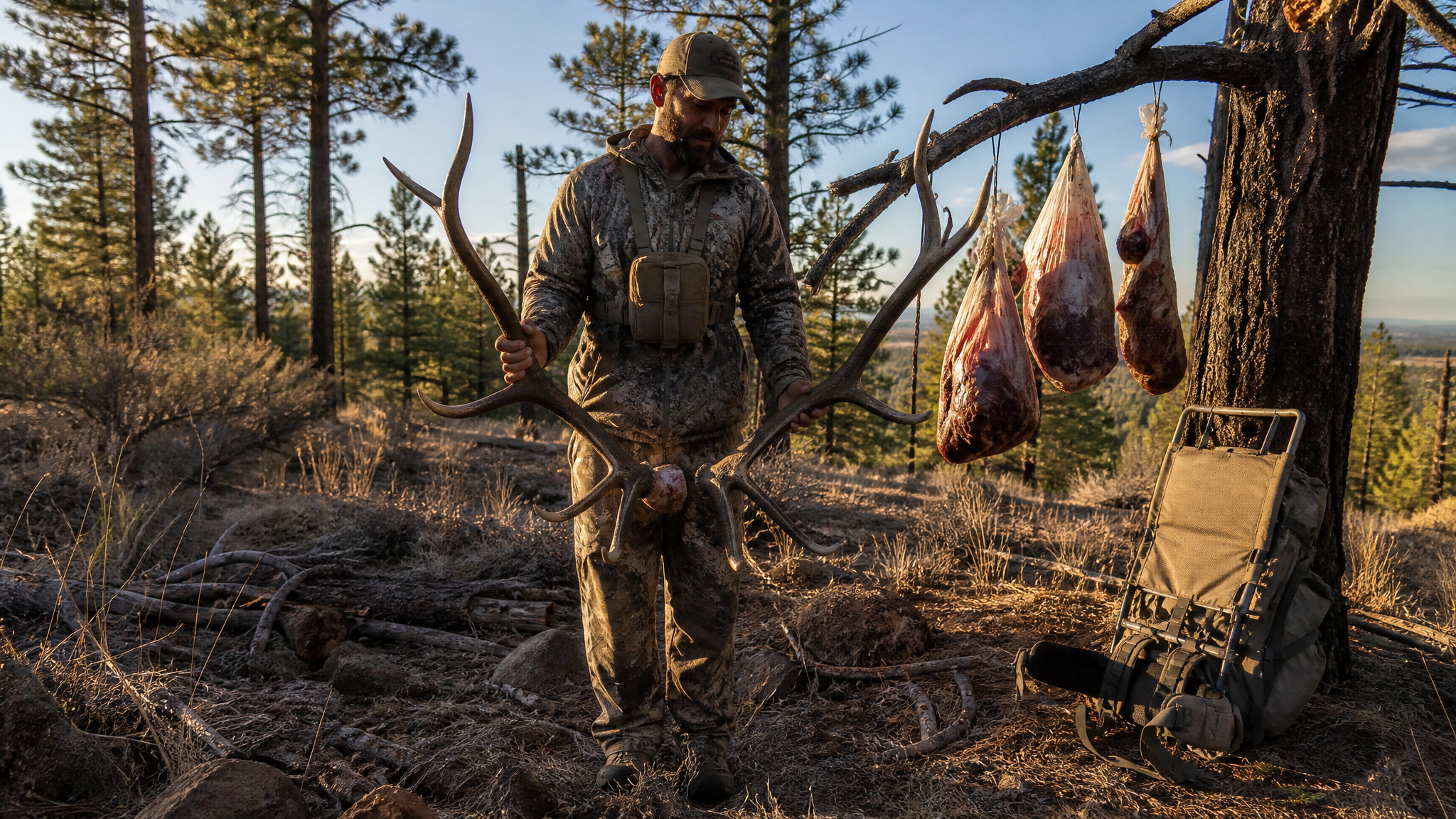
- Elk pack capable of 120+ lb loads for packing meat
- Sharp skinning and boning knives, meat bags, and a hoist rope
- Lightweight base camp setup — the weather can shift fast at elevation in September
- Two-way communication — cell coverage is limited in the canyon drainages
Final Thoughts
The White River Unit doesn't have the legendary reputation of the Silvies or the Chesnimnus, but that's exactly the point. Elk numbers are healthy, pressure is light by Oregon standards, and the mix of timber, canyon breaks, and high meadows makes for classic Pacific Northwest archery hunting. Put in the scouting, climb above the road hunters, and this unit will give you a legitimate shot at a bull every season you draw a tag.