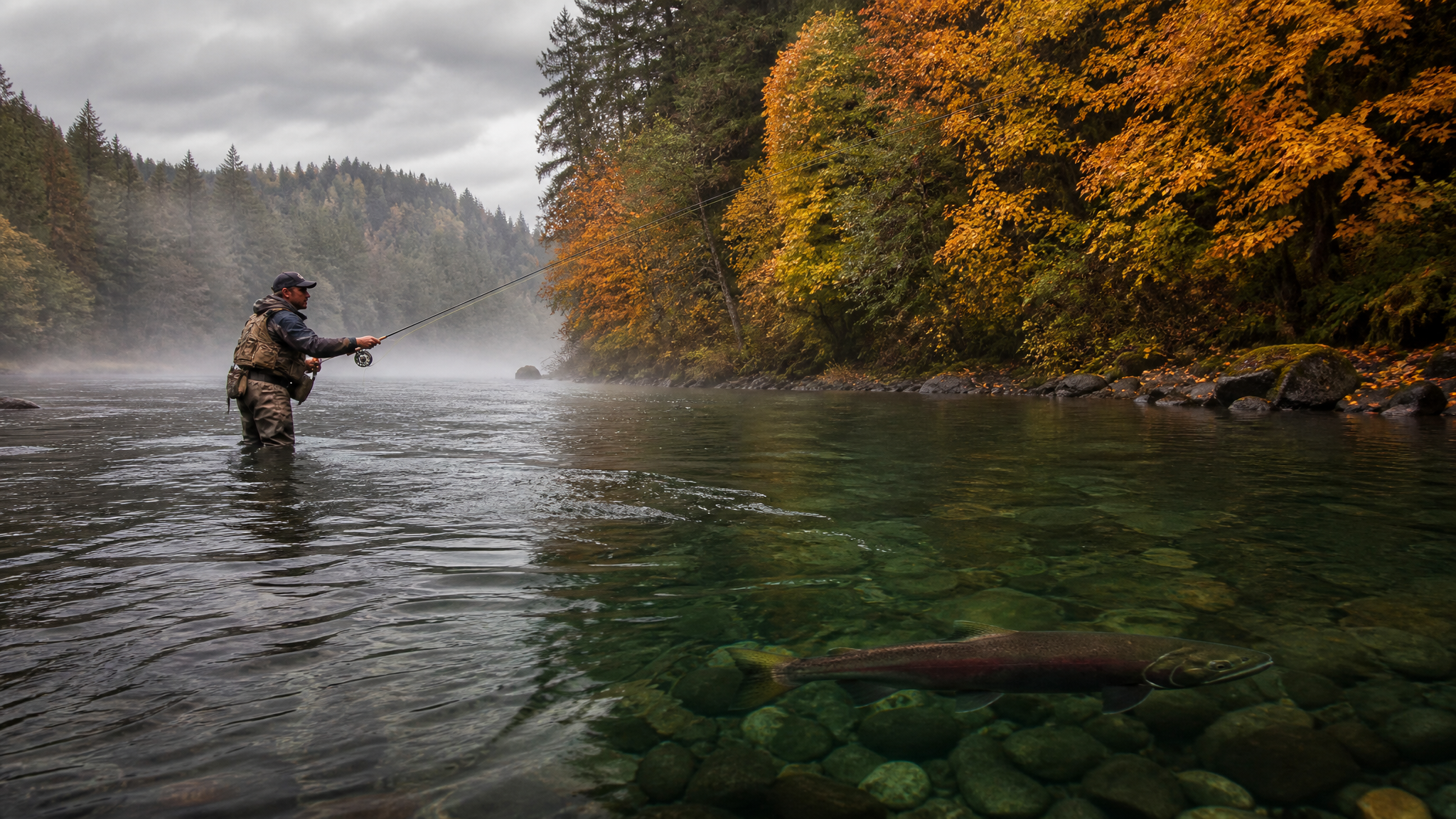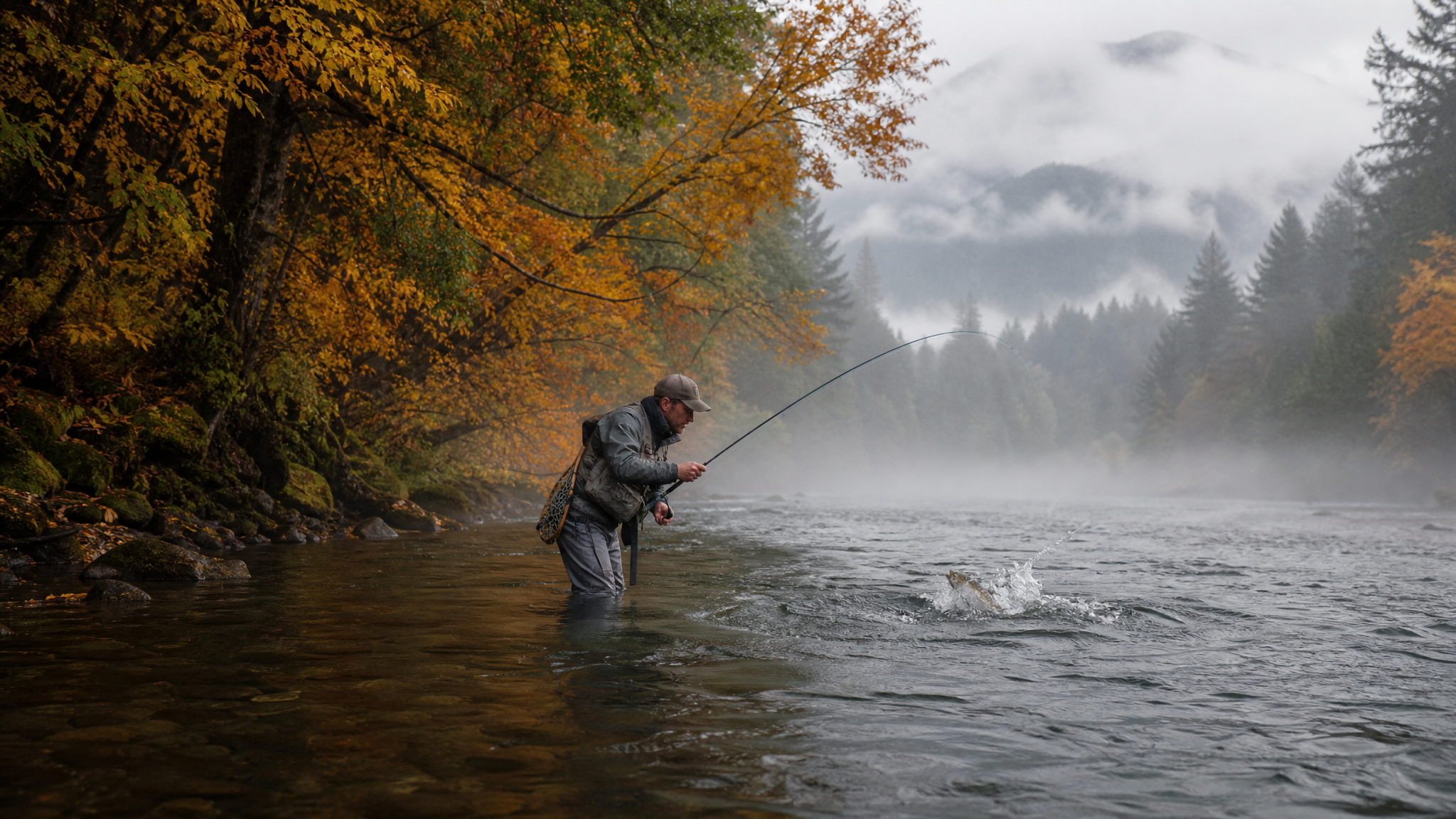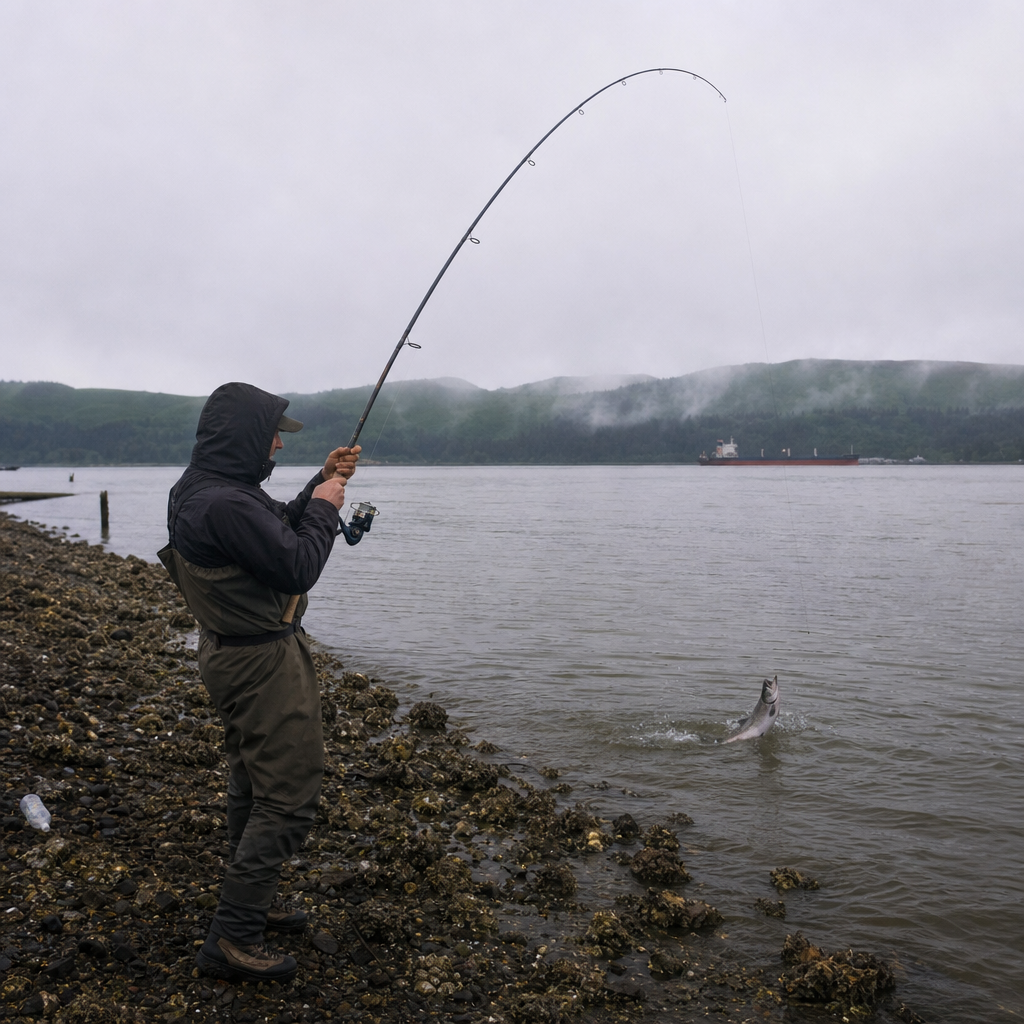
Most Oregon anglers chasing fall Chinook are stacked elbow-to-elbow on the Willamette, the Rogue, or the lower Columbia. Meanwhile, a quiet group of locals is pounding fish in Youngs Bay — a shallow, tidally influenced estuary just south of Astoria where the Youngs, Lewis and Clark, and Klaskanine Rivers drain into the Columbia.
If you've driven through Astoria and never wet a line here, you've been leaving fish on the table.
The Fishery: What You're Targeting
Youngs Bay receives a mixed run of fall Chinook — a combination of Columbia River hatchery fish returning to the Lewis and Clark River Hatchery and wild fish using the bay as a staging area before pushing upriver. The run typically peaks from late August through mid-October, with September being the prime window. Fish in the 15–30 pound range are common; the occasional 40-pounder shows up to remind you why you got into salmon fishing.
The bay is shallow — most of it runs 6–12 feet at high tide — which means fish concentrate along deeper channels, bridge pilings, and current seams. This is excellent news for bank anglers, because those same features are accessible on foot.
Best Access Points
Youngs Bay Bridge (Highway 101)
The most productive public bank access in the system. Fish both the north and south sides of the bridge, targeting the pilings and the current seam on an incoming tide. Arrive early — this spot is popular with locals who know the drill. A drift with cured roe or a plug pulled tight to the pilings at first light can produce multiple fish before most people finish their coffee.
Lewis and Clark River Lower Reach
The lower mile of the Lewis and Clark River, below the hatchery, sees fish stacking in September waiting for water levels to pull them upstream. Bank access is good from the county road. Drift cured eggs through the deeper holes and along any timber structure. Watch tide charts — the lower river fishes best on a flooding tide that backs up current and holds fish in predictable positions.
Klaskanine River Mouth
Less pressure, more exploration required. The Klaskanine dumps into the eastern arm of the bay and sees a modest wild fish run. Regulations here differ — check ODFW's current rules carefully, as this may be wild fish release water during parts of the season.
Tactics That Work
Anchored Roe
The go-to for most Youngs Bay bank anglers. Rig a sliding sinker above a swivel, 18–24 inches of 15–20 lb fluorocarbon leader, and a 1/0 to 3/0 Gamakatsu octopus hook. Cure your own chinook or coho roe in a borax/sugar mix, tie it into a mesh bag, and cast to the bottom of the channel. Let it sit on an incoming tide. This is not a finesse game — the smell is everything.
Spinners and Spoons
Effective when fish are actively moving on a push of tide. A No. 5 Blue Fox Vibrax in chartreuse or orange, or a 3/4 oz Little Cleo in nickel/blue, worked slowly through the current seam will draw strikes from aggressive fish. Fan-cast from the bank and vary retrieve speed until you find what they want that day.
Back-Bouncing
If you're fishing from the bridge or a dock, back-bouncing roe or sand shrimp through the current below works well. Use enough weight to stay near bottom — a pencil lead on a dropper loop works well in the 4–6 oz range depending on current speed. Let the current walk it downstream in short hops.
Tackle and Gear
- Rod: 9–10.5 ft medium-heavy salmon/steelhead spinning or casting rod
- Reel: Size 4000–6000 spinning reel with solid drag, or a low-profile baitcaster
- Main line: 30 lb braid (PowerPro or Sufix 832)
- Leader: 15–20 lb Seaguar fluorocarbon
- Terminal: 2–6 oz sliding sinker, quality swivel, 1/0–3/0 octopus hooks
- Bait: Cured chinook or coho roe; sand shrimp (fresh or salted)
Tides and Timing
Youngs Bay is tidal. The incoming tide is almost always the most productive window — fish move with the push of water. Fish the last two hours of an incoming tide through the first hour of the outgoing. Slack high tide can be slow. Check tide tables for Astoria (which is the reference station for the area) and plan your arrival accordingly.
Early morning and late afternoon light are best, particularly in September when fish are abundant but selective. Overcast days with stable barometric pressure consistently outperform bluebird afternoons.
Regulations
Always verify current ODFW regulations before fishing. Youngs Bay and its tributaries may have different rules for wild vs. hatchery retention, and tributary-specific closures apply at various times. The Lewis and Clark River typically has a late-season closure to protect spawning fish. Mark your fish immediately upon retention and carry your license and harvest card.
The Bottom Line
Youngs Bay doesn't make the lists of Oregon's most famous salmon fisheries, and that's exactly the point. The fish are there, the access is free, and the crowd is a fraction of what you'll find downstream at Buoy 10. Pack your roe, watch the tides, and be on the bank at first light. September salmon fishing doesn't get more accessible than this.