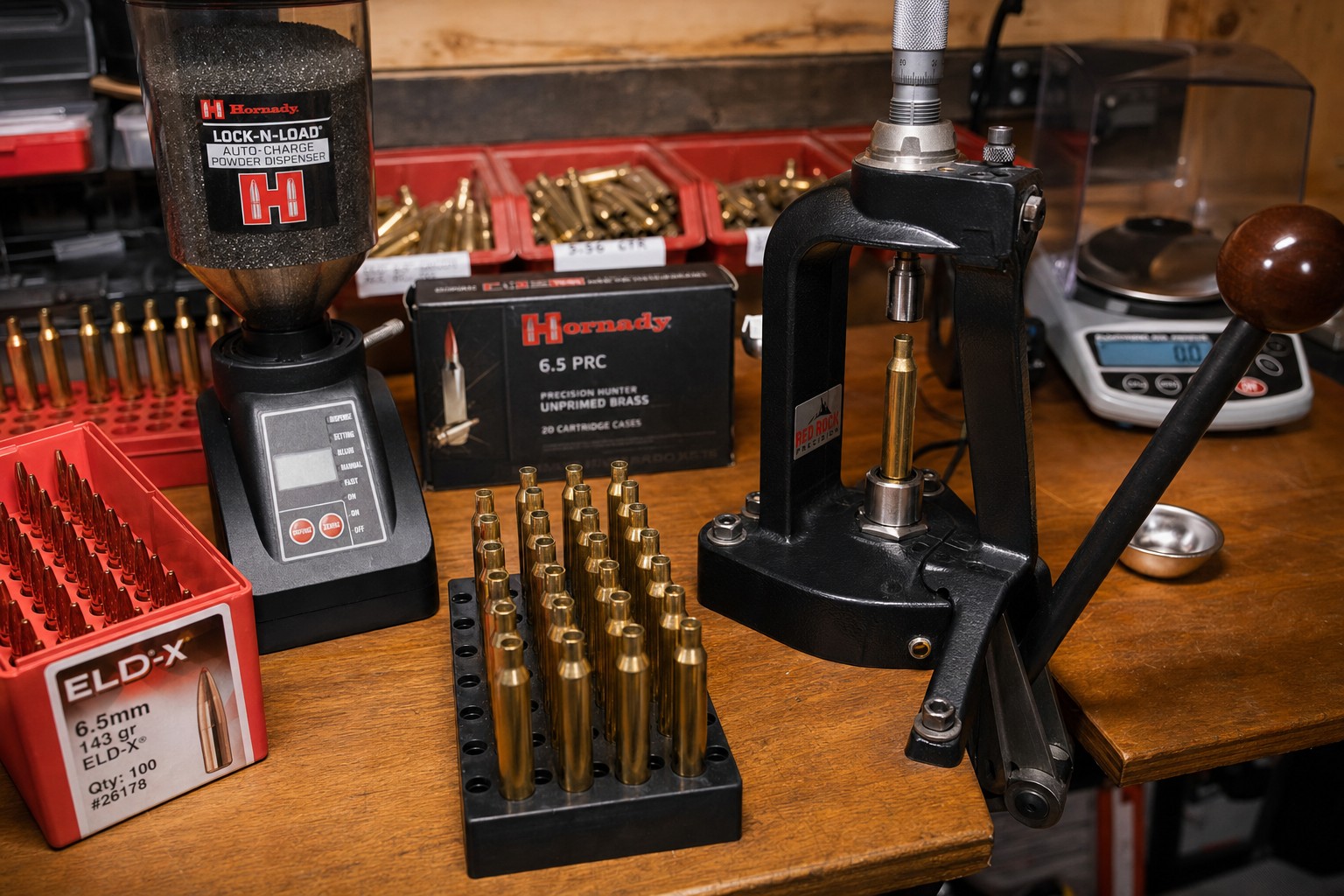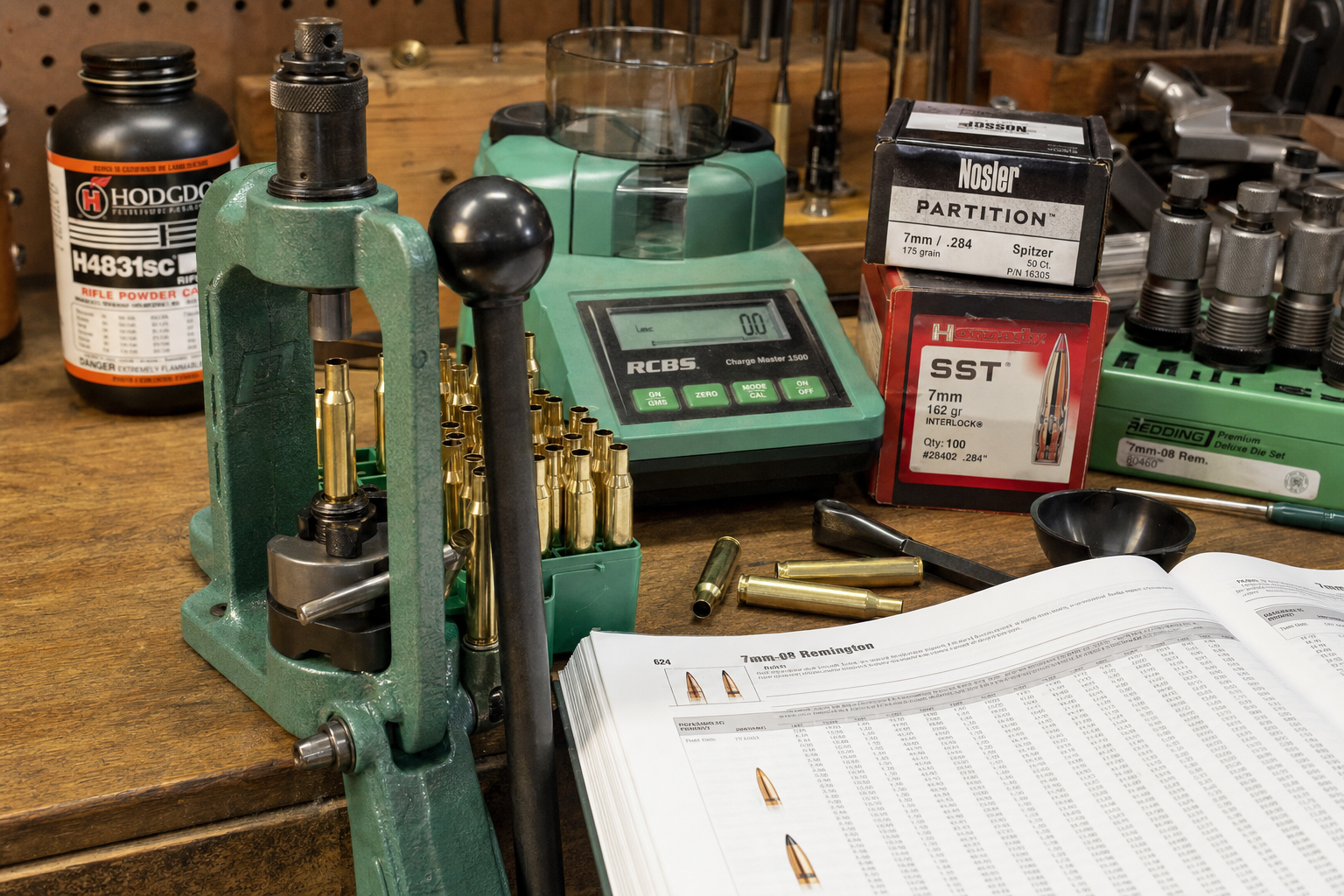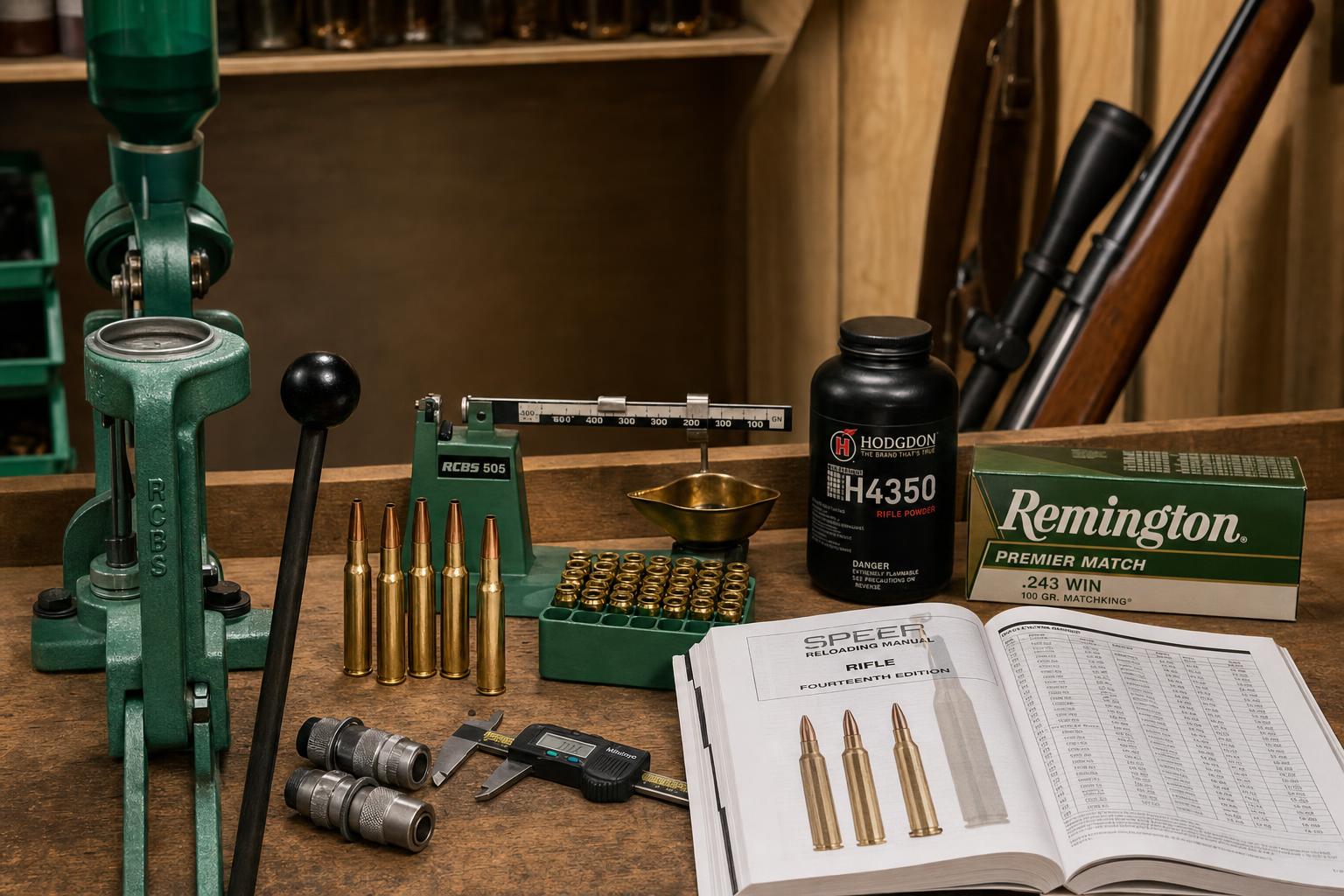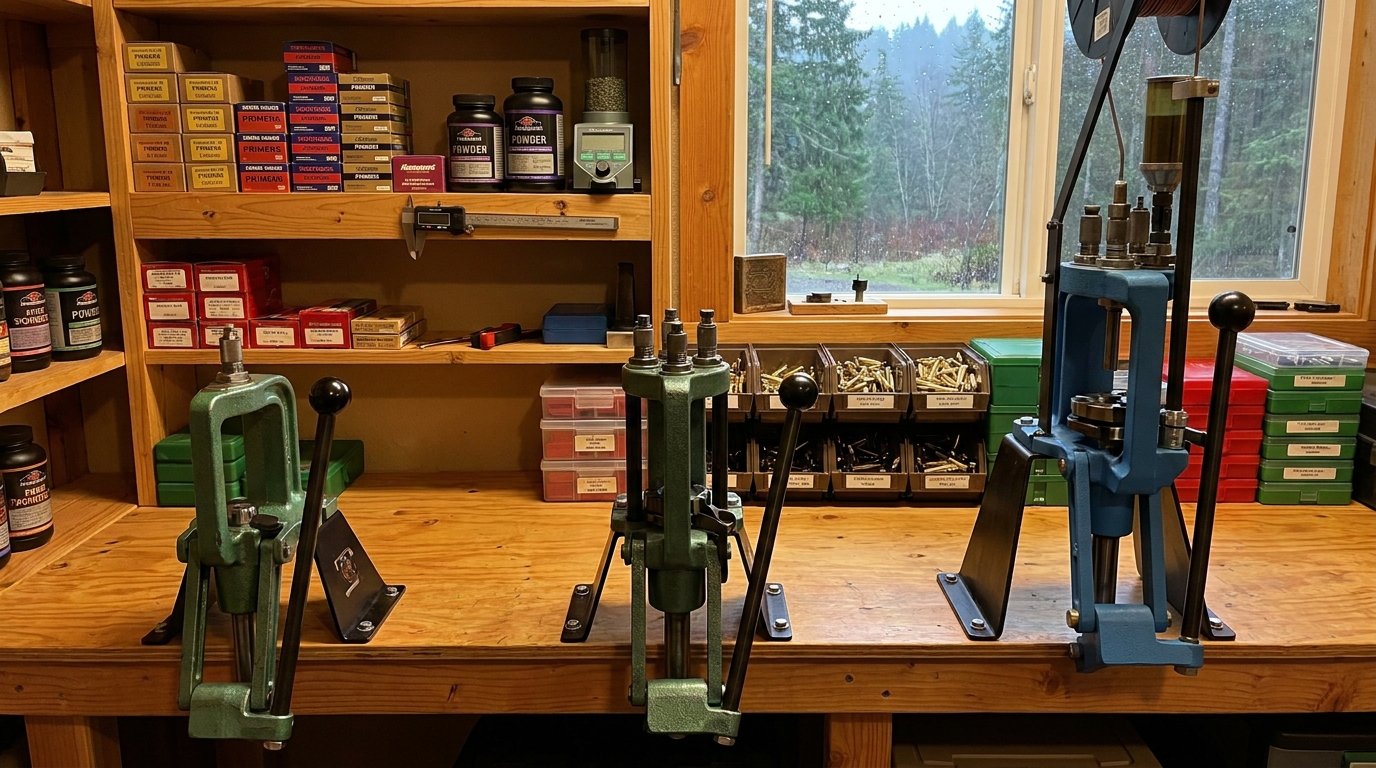
The reloading press is the heart of your handloading bench. Get the right one and you'll be loading quality ammo efficiently for decades. Get the wrong one and you'll either be bored to death cranking out rounds one at a time, or overwhelmed trying to manage a complex progressive when you're still learning the fundamentals. This breakdown cuts through the marketing noise and helps you pick the press that matches how you actually shoot.
The Three Types: A Quick Overview
All reloading presses share the same basic mechanical principle — a ram driven by a lever arm passes brass through a die mounted in the press head. What differs is how many dies can be mounted simultaneously and how much operator involvement each case requires between operations.
- Single-stage press: One die at a time. You run all your brass through one operation, then swap the die and repeat. Slow, simple, precise.
- Turret press: Multiple dies mounted in a rotating turret head. You can advance through all your reloading steps on a single case without swapping dies, or lock the turret and batch like a single-stage.
- Progressive press: Multiple stations, multiple cases advancing simultaneously. One pull of the handle completes a round. Designed for volume production.
Single-Stage Presses: The Right Start for Most People
If you're new to reloading, a single-stage press is almost always the right first choice — regardless of how many rounds you plan to eventually produce. The reason is simple: reloading has a learning curve, and that learning curve is best navigated slowly. A single-stage press forces you to touch every case, every step, every time. You'll notice the case that didn't resize properly. You'll catch the primer that seated crooked. You'll feel when something is wrong before it becomes a dangerous mistake.
Best for:
- Precision rifle cartridges (6.5 Creedmoor, .308 Win, .300 Win Mag, etc.)
- Beginners learning safe reloading practices
- Low-volume loading (50–200 rounds per session)
- Wildcat cartridges or custom neck-turned brass requiring extra attention
Top single-stage options:
- RCBS Rock Chucker Supreme — The industry standard. Heavy, smooth, built for life. Around $200 new.
- Redding Big Boss II — Excellent ergonomics and leverage. Preferred by many benchrest shooters.
- Forster Co-Ax — Unique parallel guide system produces exceptional concentricity. Pricier but worth it for precision work.
- Lee Breech Lock Challenger — Budget-friendly at around $80, good for someone who wants to try reloading before committing to a bigger investment.
Typical output on a single-stage: 50–100 rounds per hour if you're in a groove. That's fine for rifle reloading, where you're usually loading 50–200 rounds at a time.
Turret Presses: The Middle Ground That Often Gets Overlooked
Turret presses don't get nearly the attention they deserve. They give you die-swap convenience — load all your dies for a given cartridge in the turret, then rotate through them without pulling each one out — while still letting you work at a deliberate, controlled pace. For hunters who reload two or three different rifle cartridges and maybe a pistol caliber, a turret press with one turret head per caliber is an extremely efficient system.
The Redding T-7 and Lyman Crusher II are classic turret presses with 7-station heads. The RCBS Turret Press is another solid option. Lee makes turret presses in the $120–$150 range that work well for moderate volume. On a turret, a practiced loader can produce 150–250 rounds per hour on pistol cartridges and 80–120 on rifle.
Best for:
- Hunters reloading 2–4 different calibers
- Medium-volume pistol loading (100–300 rounds per session)
- People who want more efficiency than a single-stage without the complexity of a progressive
Progressive Presses: Speed at the Cost of Simplicity
A progressive press produces a loaded round on every stroke of the handle once it's primed and running. The Dillon 550C, 650C, and XL 750; the Hornady Lock-N-Load AP; and the RCBS Pro Chucker all operate on this principle. They're designed for high-volume pistol loading — competitive shooters loading 1,000+ rounds per week — and for shotshell reloading where volume is everything.
For hunters, a progressive is often overkill unless you're also a competitive shooter burning through 500+ pistol rounds at a practice session. They require more setup time, more regular adjustment, and more operator attention to avoid mistakes that propagate across multiple cases simultaneously. A double-charged case on a progressive can happen before you notice it; on a single-stage, it's a serious risk you can catch immediately.
That said: if you shoot USPSA, IDPA, 3-Gun, or Steel Challenge and you're loading 9mm, .45 ACP, or .40 S&W in quantity, a progressive press pays for itself quickly in time savings.
Things to know before buying a progressive:
- Budget for the full system — casefeeder, bullet feeder, extra toolheads, strong-mount, and powder check die add $200–$500 to the base price.
- Setup and caliber changes take 30–60 minutes vs. 5 minutes on a single-stage.
- Learn to reload on a single-stage first. Experienced single-stage loaders transition to progressives much more successfully than complete beginners.
What the Pacific Northwest Hunter Actually Needs
If you're a typical Oregon or Washington hunter — one or two elk/deer rifle cartridges plus maybe a pistol — here's the honest recommendation: start with a quality single-stage press. Spend your first season loading rifle ammo carefully and correctly. If you find yourself wanting to load pistol ammo and your volume is climbing, add a turret or entry-level progressive later. Your first press doesn't have to be your only press forever.
The single-stage presses from RCBS, Redding, and Forster will outlast you. Buy quality once, buy dies for your calibers, and take your time learning the process. The ammo you load will be better than anything you can buy off the shelf, and the process of understanding how your cartridges work will make you a better shooter and hunter.
A Note on Dies
Whatever press you buy, invest in quality dies. Redding, Forster, and RCBS make excellent dies for most cartridges. For precision rifle work, Redding Competition seating dies and neck-sizing dies produce measurably better results than budget alternatives. For pistol and general rifle, standard two-die (rifle) or three-die (pistol) sets from any of the major brands work well.
Start simple, start safe, and build your system as your experience grows. The best reloading press is the one you actually understand and use consistently.