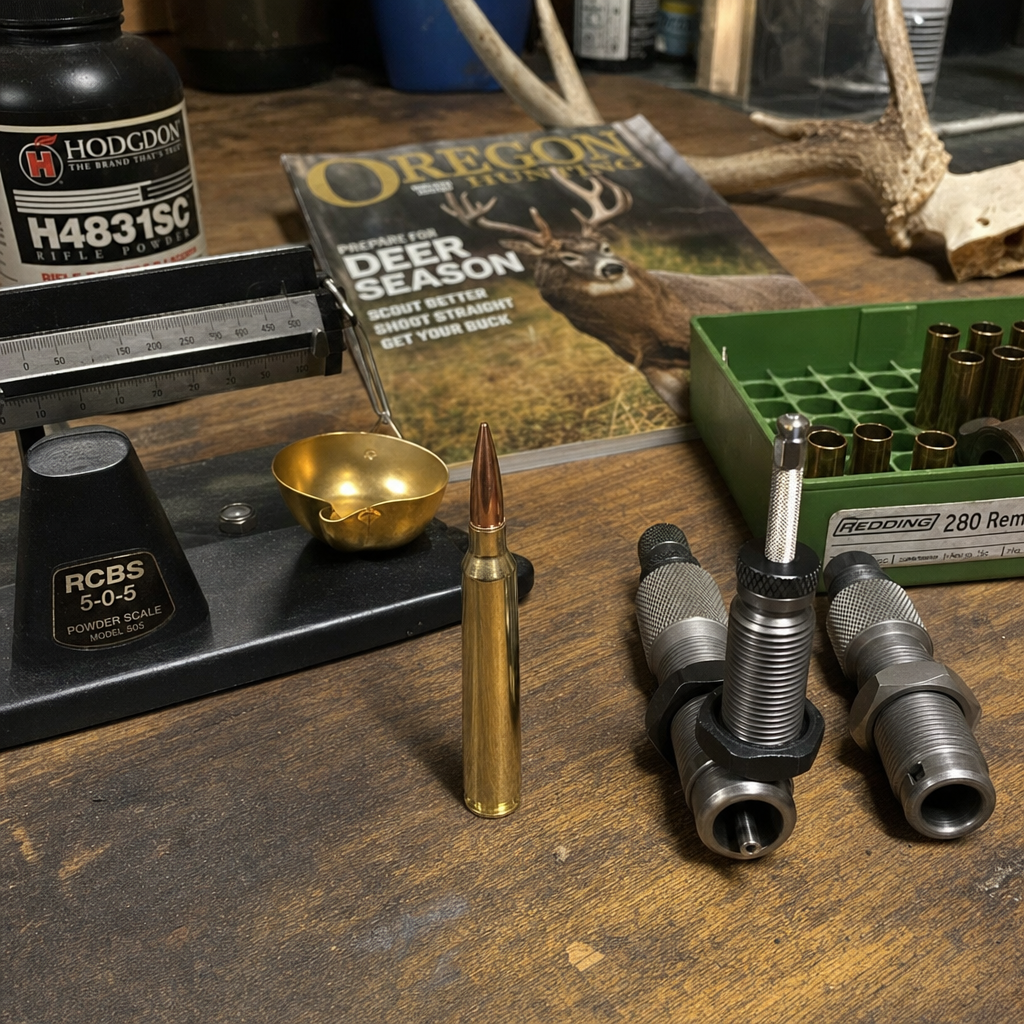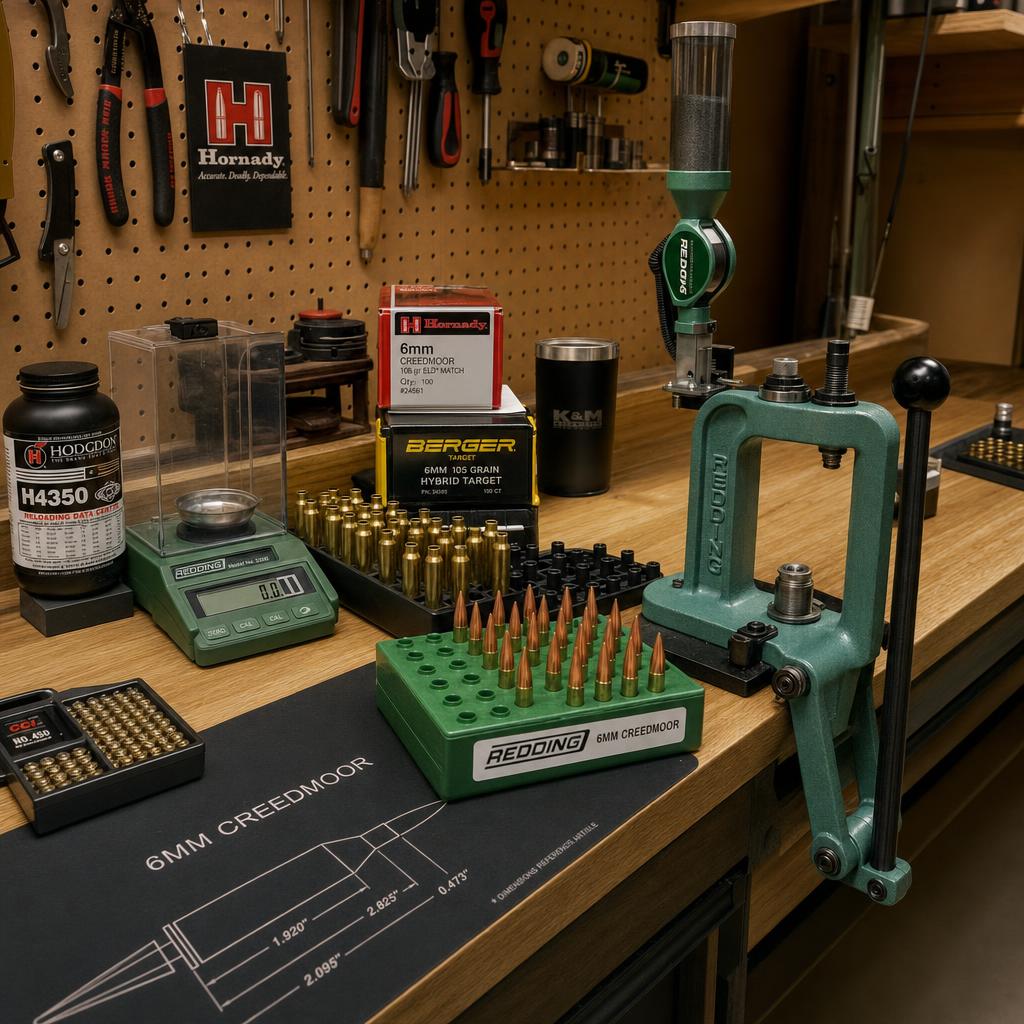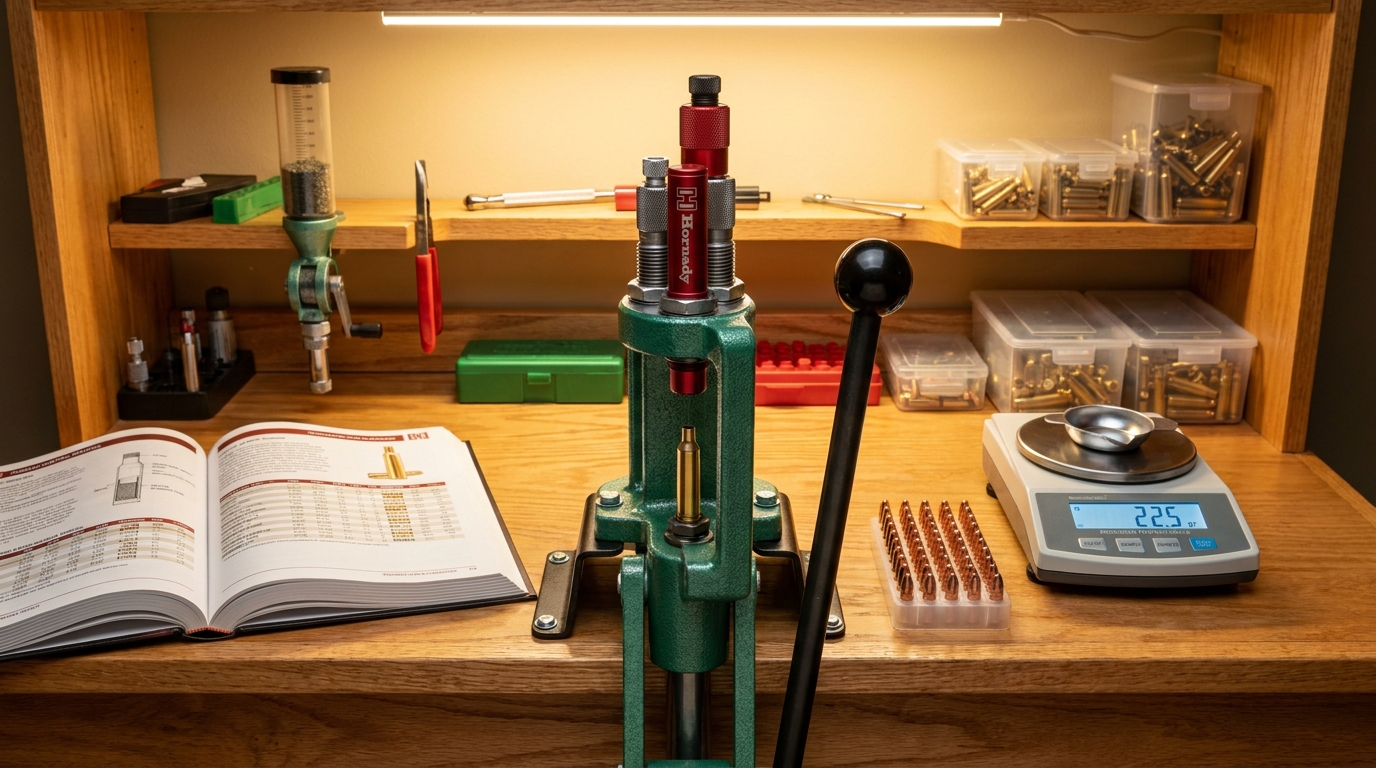
The .22-250 Remington is one of the most versatile varmint cartridges ever standardized, and for Oregon shooters it occupies a sweet spot that few rounds can match. It's fast enough to anchor ground squirrels at 400 yards in the high desert, flat enough to reach coyotes across open sage country, and accurate enough to shoot half-MOA groups from a good rifle. When you reload it yourself, the economics get compelling: once your brass is established, you can produce excellent varmint loads for under 25 cents a round.
The .22-250: What You're Working With
The .22-250 Remington pushes a .224-caliber bullet — typically 40 to 60 grains — at velocities ranging from 3,600 to nearly 4,100 fps depending on bullet weight and powder charge. Factory ammunition is good but expensive, and it doesn't let you tune bullet selection to your specific rifle's throat geometry and twist rate. Most production .22-250 barrels have a 1:12 or 1:14 twist, which stabilizes bullets in the 40–55 grain range ideally. If you've got a newer rifle with a 1:8 or 1:9 twist, you can run heavier 60–75 grain projectiles for longer-range work.
Brass life is excellent. Quality .22-250 cases from Lapua, Nosler, or Remington will last 5–8 loadings with proper case care. The large rifle primer pocket and moderate taper make the .22-250 forgiving and easy to work with at the bench.
Brass Prep
New cases from any major manufacturer can go straight into production after a deburr and primer pocket clean. Once fired, run your brass through a full-length sizing die (RCBS, Redding, or Forster all make excellent dies for the .22-250), trim to 1.904" (max spec is 1.912"), and deburr the case mouth. A consistent crimp-free roll on the case mouth keeps seating force predictable.
If you're shooting a bolt gun and loading for that rifle only, neck sizing only after the first firing extends case life significantly and often improves accuracy by keeping brass fitted to your chamber. Use a quality neck die like the Redding Type-S with the bushing sized to give 0.001"–0.002" of neck tension on your specific bullets.
Powder Selection
The .22-250 thrives with medium-burn-rate powders in the Varget/H4895 neighborhood. These are also the most temperature-stable options — important when you're shooting in July heat on the Harney County ground squirrel flats or in cool October mornings calling coyotes in the Coast Range.
Top Powder Choices
- Varget (Hodgdon): The go-to for most .22-250 handloaders. Meters well, temperature insensitive (Extreme series), and produces excellent accuracy with 52–55 grain bullets. Start at 35.0 gr, max around 38.0 gr with 52–55 gr bullets (always verify with your manual).
- H4895 (Hodgdon): Slightly faster burn rate than Varget, excellent with 40–50 grain bullets for maximum velocity. Great for ground squirrel work where wind drift on lighter bullets is acceptable.
- IMR 4064: A classic choice that performs similarly to Varget. Available at most Oregon reloading retailers and consistently accurate.
- Benchmark (Hodgdon): Excellent for lighter bullets in the 40–45 grain range. Very high velocity potential and fine metering.
- Reloader 15 (Alliant): Works well across the full bullet weight range. Good temperature stability for summer varmint hunting.
Bullet Selection for Oregon Varmint Work
Ground Squirrels and Prairie Dogs (Short to Medium Range)
For the high desert Belding's ground squirrel shoots around Brothers, Hampton, and the Alkali Flat areas of eastern Oregon, you want a thin-jacketed, explosive bullet that doesn't ricochet. The Hornady 40 gr V-MAX is the benchmark here — devastating at any velocity, and at .22-250 speeds it simply disintegrates on contact. The Sierra 45 gr Hornet is another option for the fastest possible loads. Expect 500+ round sessions; buy bullets in 500-count boxes and load in batches.
Coyotes (Medium to Long Range)
Coyote work requires a heavier, more explosive bullet that retains energy to 400+ yards without over-penetrating and damaging the pelt if you're running hides. The Hornady 52 gr HP Match and the Nosler 55 gr Ballistic Tip are both proven. The Sierra 55 gr BlitzKing is a favorite among Oregon coyote callers for its combination of flat trajectory, excellent BC, and reliable explosive expansion.
Target/Benchrest
If you're shooting the .22-250 at paper — club matches, long-range varmint benchrest — the Sierra 52 gr MatchKing or Berger 52 gr FB Target are the standard. These are not hunting bullets; they won't expand reliably. But their consistency lot to lot is exceptional and they'll shoot into a quarter-inch at 100 yards in a good barrel.
A Starting Load to Work From
The following is a safe starting point for a standard 1:12 twist .22-250 barrel. Always begin at the listed start load and work up in 0.5 gr increments, watching for pressure signs (flattened primers, sticky extraction, case head expansion). Never exceed published maximums. Consult the current Hodgdon, Sierra, or Hornady reloading manual for data applicable to your specific components.
- Bullet: Hornady 55 gr V-MAX
- Powder: Varget
- Start load: 35.5 gr (~3,650 fps)
- Max load: 37.5 gr (~3,850 fps) — approach carefully
- Primer: CCI BR-2 or Federal 210M
- COL: 2.350" (adjust 0.020" off the lands for your rifle)
- Case: Remington or Lapua, full-length sized, trimmed to 1.904"
Seating Depth: The Detail That Separates Good Loads from Great Ones
The .22-250 is surprisingly sensitive to seating depth, particularly with match and varmint bullets that have long secant ogives. The standard approach is to measure your rifle's chamber throat with a Hornady OAL gauge and a modified case, then seat the chosen bullet 0.020"–0.040" off the rifling lands. Many .22-250 barrels, especially Savage and Ruger production guns, have throats that allow 2.340"–2.360" COL with 55 grain bullets — still within the magazine length constraint of 2.390" for most actions.
Take the time to find your rifle's preferred seating depth. It's often the difference between a 3/4 MOA load and a 1/4 MOA load with the same powder charge.
Oregon Applications: Where This Cartridge Earns Its Keep
The .22-250 is legal in Oregon for coyote, ground squirrel, and other non-game varmints statewide. It's a popular choice at the eastern Oregon varmint shoots held annually in Crook, Harney, and Lake Counties. For home defense or deer, Oregon law requires a centerfire cartridge of .243 caliber or larger — the .22-250 doesn't qualify for big game. But for everything in the varmint world, it's hard to beat. Load it carefully, find your rifle's sweet spot, and it'll stay in your safe for decades.