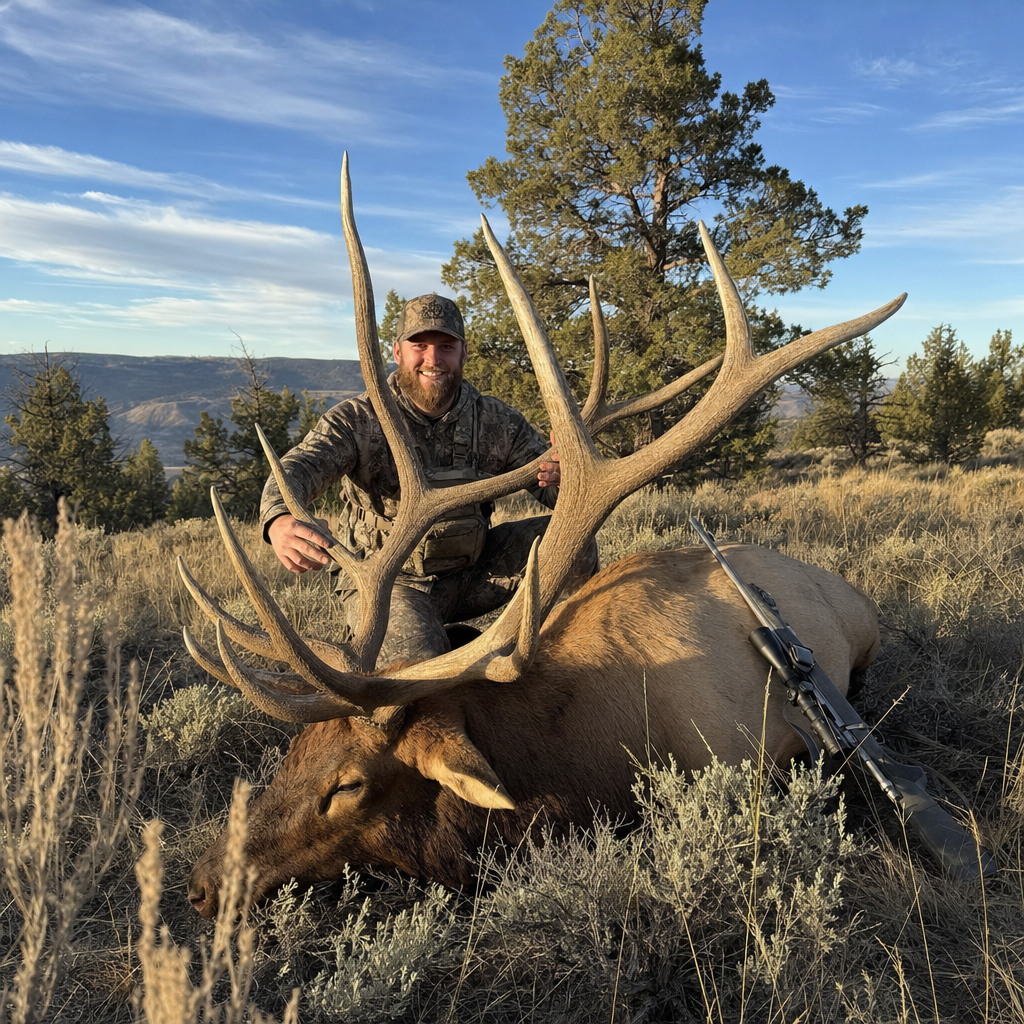
The general Oregon elk rifle season is open, and for hunters drawn to the Ochoco Mountains of Crook and Wheeler counties, mid-October means crisp mornings, bugling bulls that have settled into post-rut feeding patterns, and some of the most accessible public-land elk hunting in the state. The Ochoco Unit covers roughly 1.2 million acres of mixed ponderosa pine, Western juniper, and sagebrush steppe — a landscape that produces consistent harvests for hunters willing to put in the miles.
Understanding the Ochoco Unit
The Ochoco Unit sits east of Prineville and is bordered by the Maury Mountains to the south and the North Fork John Day drainage to the north. Ochoco National Forest makes up the backbone of the unit, but Bureau of Land Management ground fills in the lower elevation draws and canyon bottoms. The unit holds a mix of Rocky Mountain elk with a resident population that doesn't migrate far — many bulls winter on BLM ground below 4,500 feet and summer in the higher timber of the national forest.
During the general rifle season, elk shift from the open parks and ridgetops they used during the rut into the dense ponderosa corridors and creek bottoms where food and cover overlap. Pisgah Ridge, the Lookout Mountain area, and the drainages off Big Summit Prairie are consistent producers. If you're hunting public land without a tag to a specific unit, the Ochoco is one of the few Oregon units where showing up with an over-the-counter general tag still gives you a realistic shot at a bull.
Reading October Elk Sign
By mid-October, the rut is winding down. Bulls are tired, covered in rut-worn bodies, and focused on calorie recovery. Look for fresh feeding sign rather than rut sign — torn-up wallows are old news by now. Focus on:
- Meadow edges at first and last light: Big Summit Prairie and Antelope Flat draw elk at dawn and dusk. Glass the timber edges from 400–600 yards away before moving in.
- South-facing slopes with bunchgrass: These warm up early in October and attract elk during the cold mornings. The transition between ponderosa timber and open grass is your money zone.
- Water sources: Springs and small creeks on BLM ground below the national forest boundary still draw elk daily. Scout with onX Maps to find water in areas that receive less pressure.
- Fresh tracks and beds in pine duff: Look for oval depressions in dry needle litter under old-growth ponderosa. A fresh bed with warmth and hair means elk are close.
Glassing Strategy for High Desert Elk
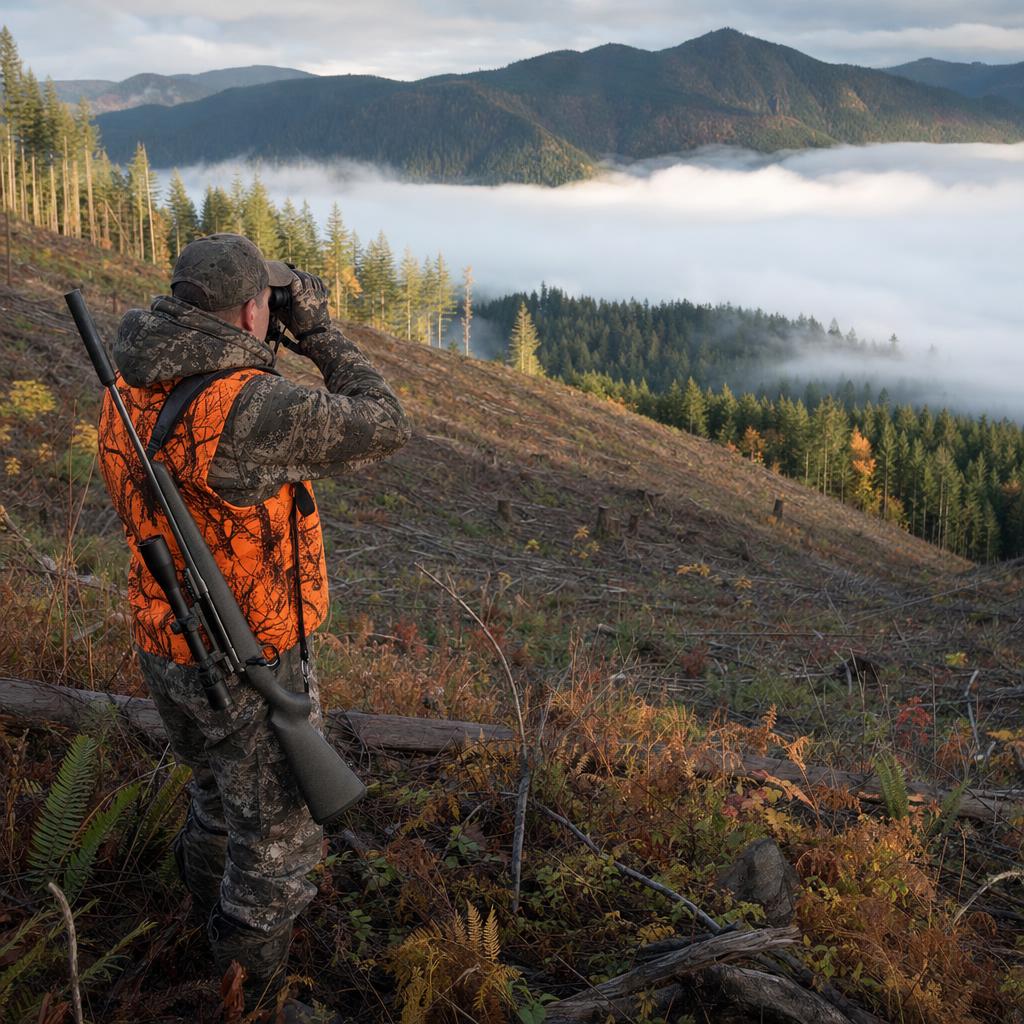
The Ochoco terrain rewards glassers. Unlike the thick Coast Range or deep Cascades where shots come at 50–100 yards, the open timber and rimrock country here regularly offers ethical shots at 200–400 yards. Set up on high points with a clear sightline into creek drainages by 5:30 AM. Bring quality optics — a 10x42 binocular and a 20–60x spotting scope are the standard kit. The Ochoco's December-like October light is soft and long, which helps pick out elk moving through open timber.
Don't overlook the canyon rims above Ochoco Creek and Beaver Creek. Elk frequently feed on the flat benches below these rims at first light, then drift back into the timber by 8 AM. Position yourself above them before sunrise and glass downward rather than across — you'll see their backs before they see you.
Access and Roads
The main access corridor is US-26 east of Prineville, with Forest Road 22 (Ochoco Creek Road) taking you into the heart of the national forest. The Big Summit Prairie area is reached via Forest Road 42 and Forest Road 3010. Most roads in the unit are passable with a 2WD truck in dry conditions, but October snow is common above 5,000 feet — a set of chains or a 4WD rig is good insurance. The Ochoco Ranger District (541-416-6500) can give you current road conditions and a motor vehicle use map before your trip.
Key Access Points
- Ochoco Lake area: Easy public access, good for early season scouting before the main push
- Pisgah Ridge (FR 22 corridor): Heavy timber, consistent elk sign, moderate road network
- Big Summit Prairie: Classic meadow-edge hunting, can be crowded on opening weekends — push back into the timber adjacent to the prairie for less pressure
- Maury Mountains BLM ground: Often overlooked, holds elk that drop off the forest edge; requires more hiking but less competition
Shot Selection and Cartridge Notes
With shots out to 400 yards a real possibility, cartridge selection matters. The .300 Winchester Magnum is the most common rifle you'll see in the Ochoco, followed by the 7mm Remington Magnum and the 6.5 Creedmoor. Whatever you carry, know your maximum point-blank range and practice field positions — kneeling, sitting, and using shooting sticks — before the season. Elk are tough animals and deserve clean kills. A well-placed 180-grain .300 Win Mag bullet through the shoulder at 350 yards will anchor a bull far more reliably than a rushed shot from an unfamiliar rest.
Pack a quality rangefinder. Distances in open ponderosa timber are notoriously deceptive — what looks like 200 yards is often 300. A Leupold RX-2800 or Vortex Ranger 1800 will earn its weight on the first morning.
Camp Setup and Logistics
Dispersed camping is allowed throughout Ochoco National Forest outside of designated campgrounds. Ochoco Lake Campground (near Prineville) and Big Summit Horse Camp (on Big Summit Prairie) offer developed sites if you prefer hookups and water. Most elk hunters run a spike camp off a forest road, which allows an early start without a long drive. Bring enough water — springs can be unreliable this late in the season. Temperatures in October range from 20°F overnight to 55°F during the day, so plan your layering system accordingly.
The Ochoco Unit won't make the cover of a hunting magazine for its trophy quality, but it's one of Oregon's most reliable producers of a freezer full of quality elk meat. Arrive early, glass hard, and be willing to cover ground when the pressure pushes elk deeper. That's the formula that fills tags in the Ochocos every October.