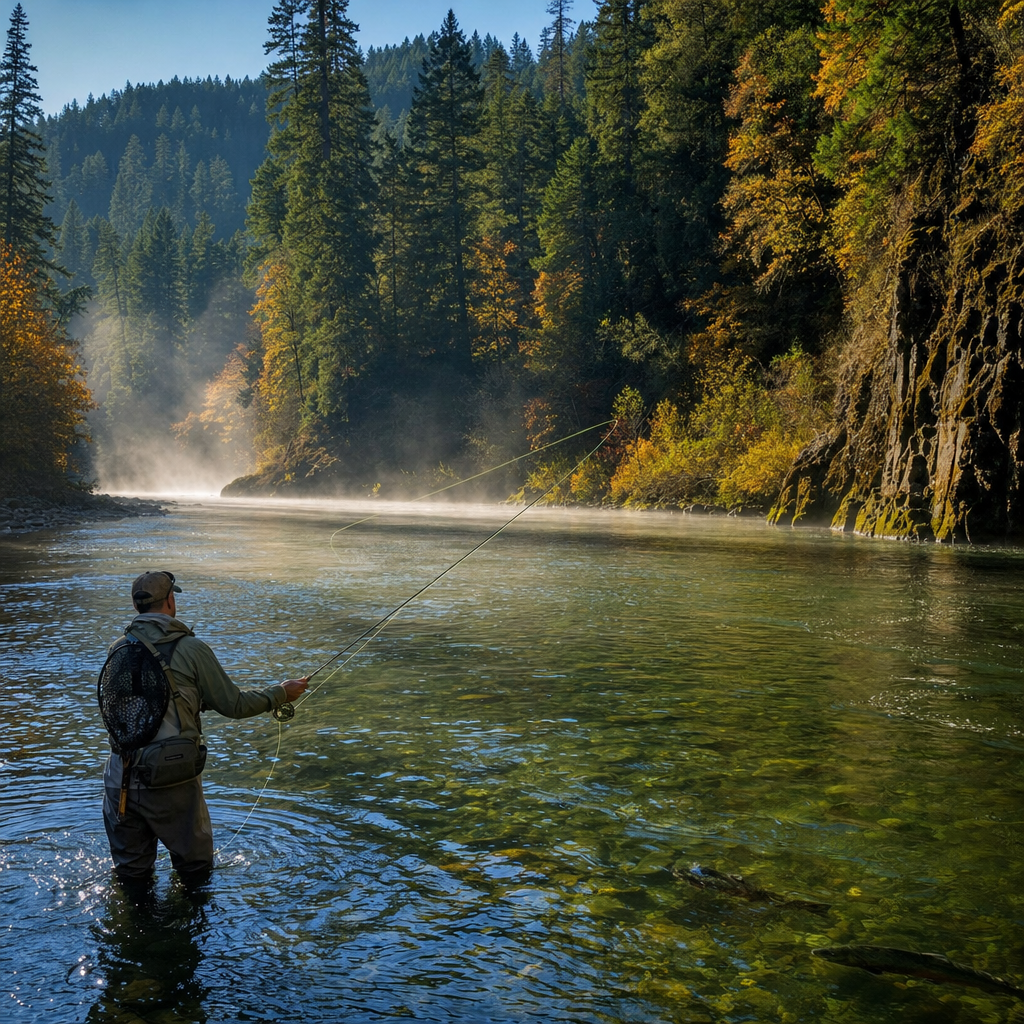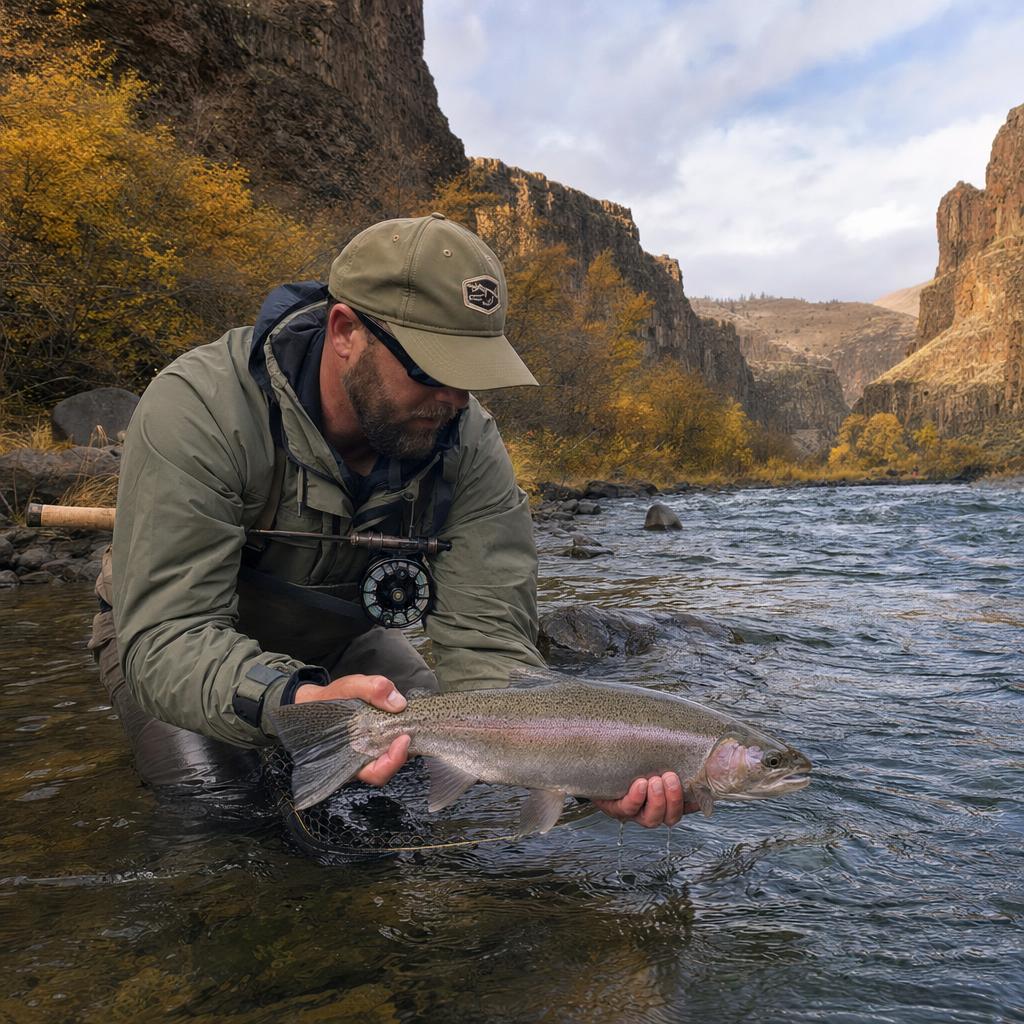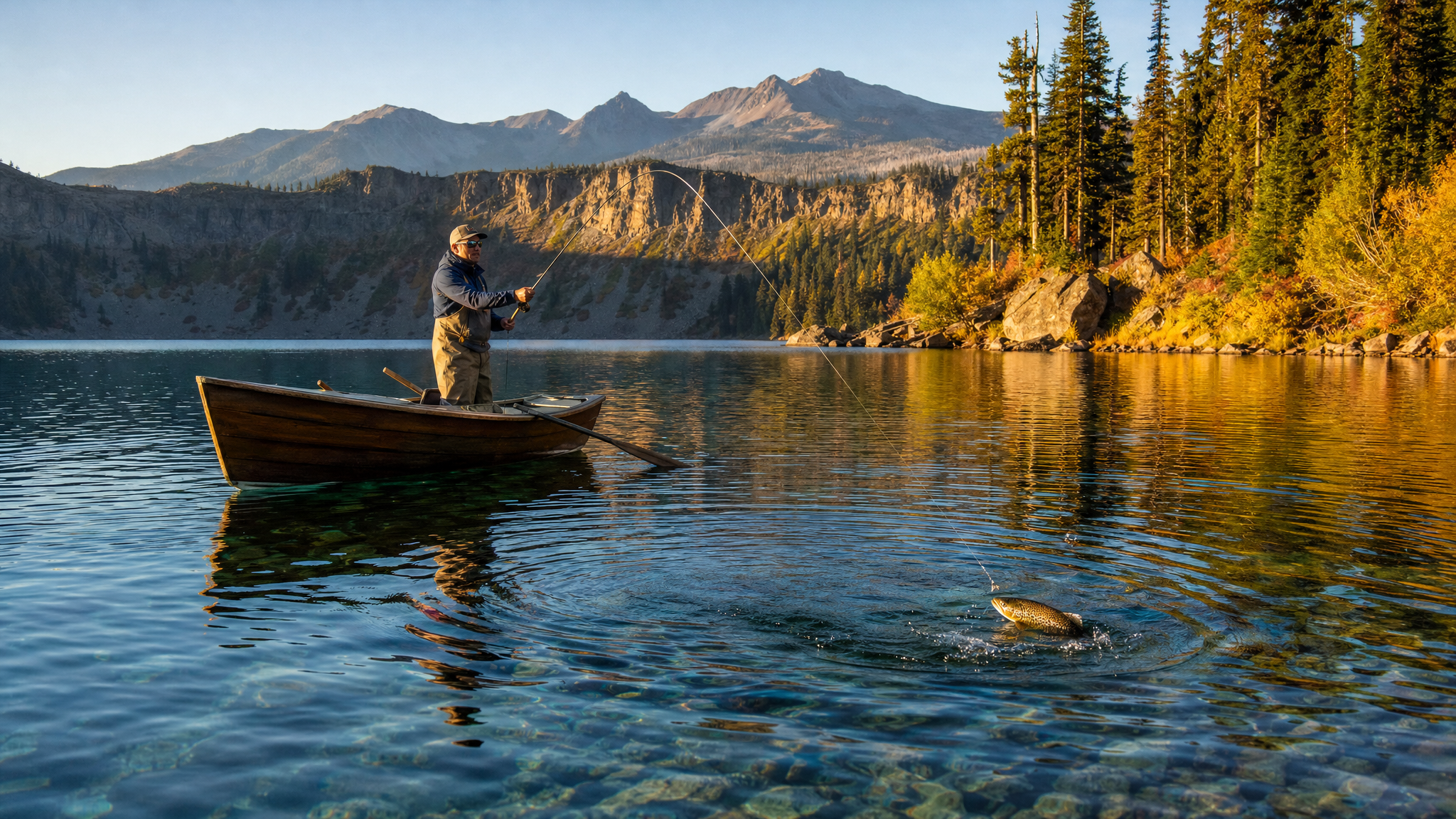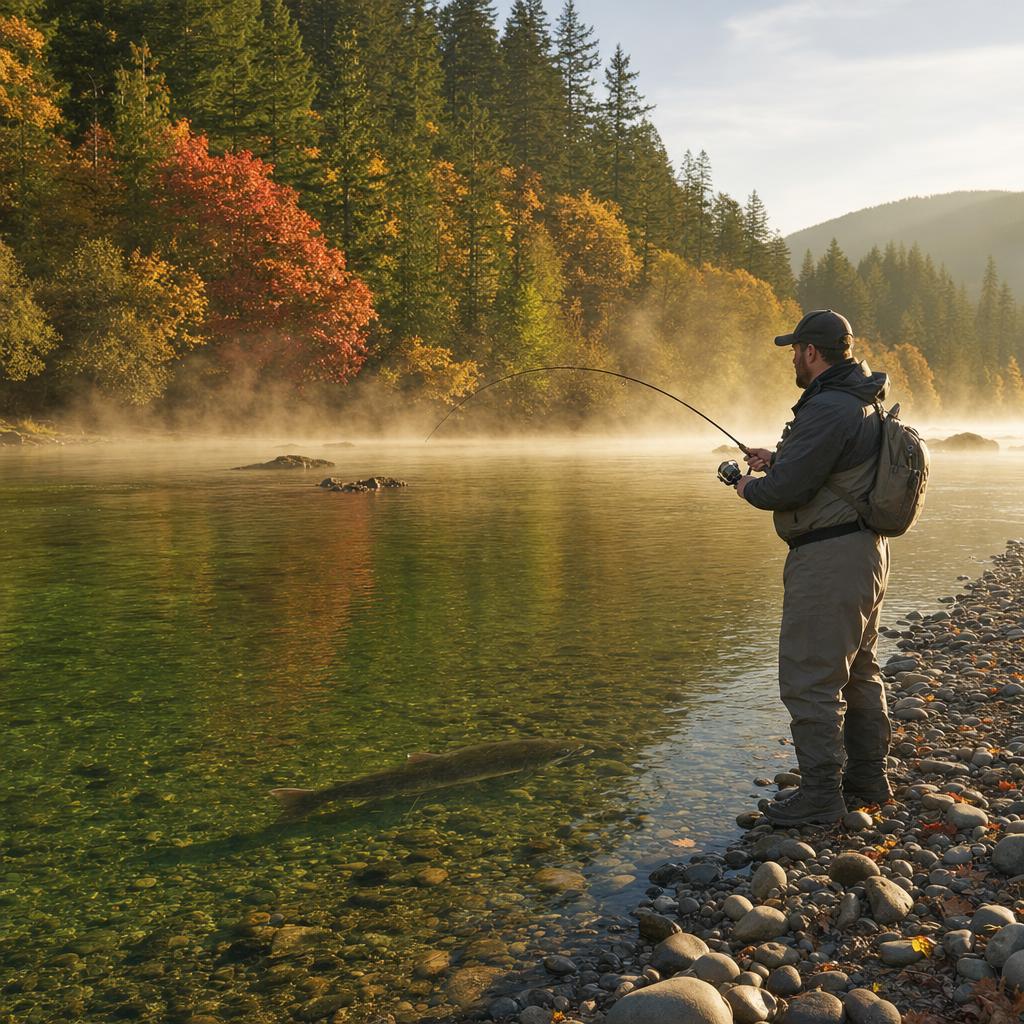
The Santiam River system — split into the North Fork and South Fork above their confluence near Jefferson — is one of the Willamette Valley's most productive and underappreciated fall Chinook runs. While the Wilson, Nestucca, and Rogue grab most of the headlines, savvy bank anglers who know the Santiam's gravel bars and holding pools can intercept bright, chrome-fresh kings through October and into early November. Here's what you need to know to put fish on the bank this season.
Understanding the Run
Santiam fall Chinook typically begin pushing into the system in earnest by late September, with peak numbers reaching prime bank-fishing water between mid-October and early November. Fish staging in the lower Santiam near its confluence with the Willamette can be targeted as early as the first week of October, but the bulk of legal-retention fish — those that have moved upriver and haven't begun full spawning coloration — are usually found between Mehama and Lyons on the North Fork, and between the Foster Dam tailrace and Sweet Home on the South Fork.
The North Fork Santiam below Big Cliff Dam near Mehama receives a hatchery supplement from the Marion Forks Hatchery, which means a solid percentage of the fish returning are adipose-clipped and legally retainable under current ODFW regulations. Always check current-season rules on the ODFW website before you go — regulations can change mid-season based on run forecasts.
Best Bank Access Spots — North Fork Santiam
Mehama / Lyons Area (Miles 25–35)
The stretch between the towns of Mehama and Lyons offers the best combination of public access and fishable water on the North Fork. Several ODFW-managed access points and county road pull-offs give bank anglers room to spread out. Fish tend to stack in the deeper runs below riffles and in outside bends where the current slows. The Mehama Bridge pool is a local favorite — arrive early on weekends, as it fills up fast.
Below Big Cliff Dam (Miles 35–38)
Water releases from Big Cliff Dam can trigger fish movement, and the tailrace below the dam produces action when flows are steady. Check current release schedules through the Army Corps of Engineers' water management portal — sudden flow increases can push fish out of their holding lies temporarily.
Best Bank Access Spots — South Fork Santiam
Foster Dam Tailrace and Foster Reservoir
The South Fork offers a different fishing experience. The tailrace below Foster Dam in Sweet Home is perhaps the most productive single bank-fishing location on the entire Santiam system. Fish pool up below the dam, unable to pass, and bank anglers working the gravel bars on the north side of the river can have exceptional days on hatchery Chinook. Parking is available at the BLM-managed area; get there by 6 AM on Saturdays to secure a spot.
Sweet Home to Lebanon (Miles 15–25)
The lower South Fork between Sweet Home and Lebanon has several public access points worth exploring. Fish move through this section quickly, so covering water is key — don't spend more than 30–45 minutes on any one spot unless you're seeing active fish.
Tackle and Techniques
Drift Fishing with Bait
The standard Santiam setup is a sliding sinker rig with 6–10 inches of 25–30 lb fluorocarbon leader, a size 4/0 to 5/0 Gamakatsu Octopus hook, and fresh roe tied in mesh netting. Fish the rig in the seam where fast water meets slow, letting it tumble naturally along the bottom. Scent is critical — Pro-Cure salmon and herring gel adds extra attraction in the Santiam's sometimes off-color fall flows.
Spinners and Spoons
When fish are aggressive, spinners produce fast. A #5 or #6 Blue Fox Vibrax or Mepps in silver/blue or chartreuse/silver is the Santiam standard. Cast quartering upstream, let the blade engage, and retrieve at just fast enough a pace to keep it turning. Work the inside seams and the slow current just off the main channel. A ¾ oz Kastmaster in silver or chrome is also deadly when fish are stacked in deeper pools.
Plug Fishing from the Bank
While plugs are typically a boat angler's game, bank anglers on the Santiam can effectively work Hot Shots and Kwikfish in the #M2 and #K14 sizes in slow inside bends. Wrap a sardine fillet on the belly of the plug with elastic thread for added scent dispersion. Let the plug work in the current directly below your position, twitching the rod tip occasionally.
Timing Your Trip
- Best days: 2–4 days after significant rainfall triggers a fresh pulse of fish upstream
- Best tides: Incoming tides on the Willamette push fish upriver earlier in the day — fish tend to reach Santiam confluence water by late morning after an early incoming
- Best hours: First two hours of daylight are peak, with a secondary bite window from 4–6 PM
- Flow range: Fish the North Fork between 800–2,500 CFS at the Mehama gauge for ideal clarity and fishability (USGS gauge #14183000)
Regulations Snapshot (Always Verify with ODFW)
- Daily bag limit: 2 adult Chinook (typically, with adipose clip required for retention)
- Most productive retention water opens in late September and runs through November
- Some sections above Foster Dam may have closures to protect wild fish — check the 2026–2027 ODFW Sport Fishing Regulations Synopsis
- License + Combined Angling Tag required; Hatchery Harvest Card may be required for some species
Final Notes
The Santiam doesn't get the Instagram attention of the Rogue or the Tillamook rivers, and that's exactly why it's worth fishing. The crowds are thinner, the access is good, and on a crisp October morning with the maples burning red-gold above a green gravel run, a big fall Chinook on light gear is one of the finest experiences an Oregon angler can have. Do your homework on flows and regulations, get there early, and work the water methodically. The fish are there.