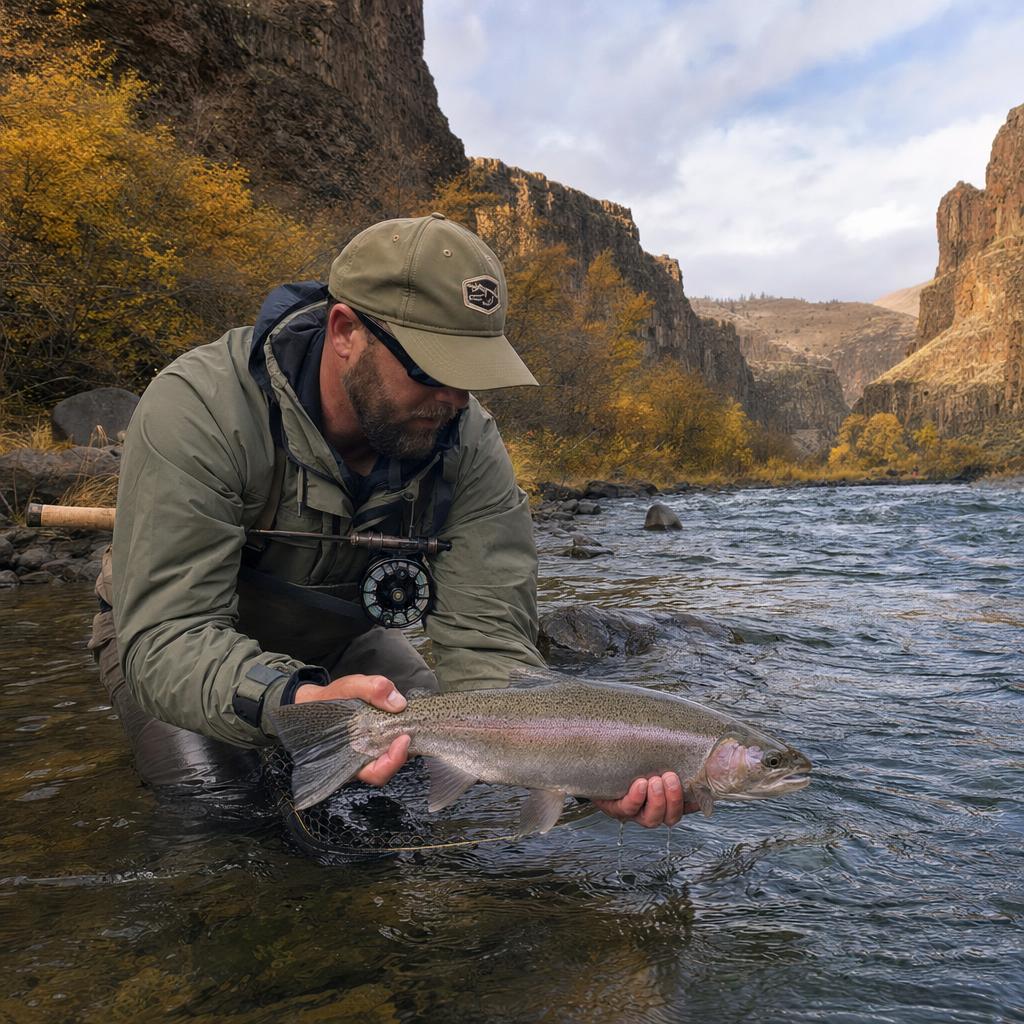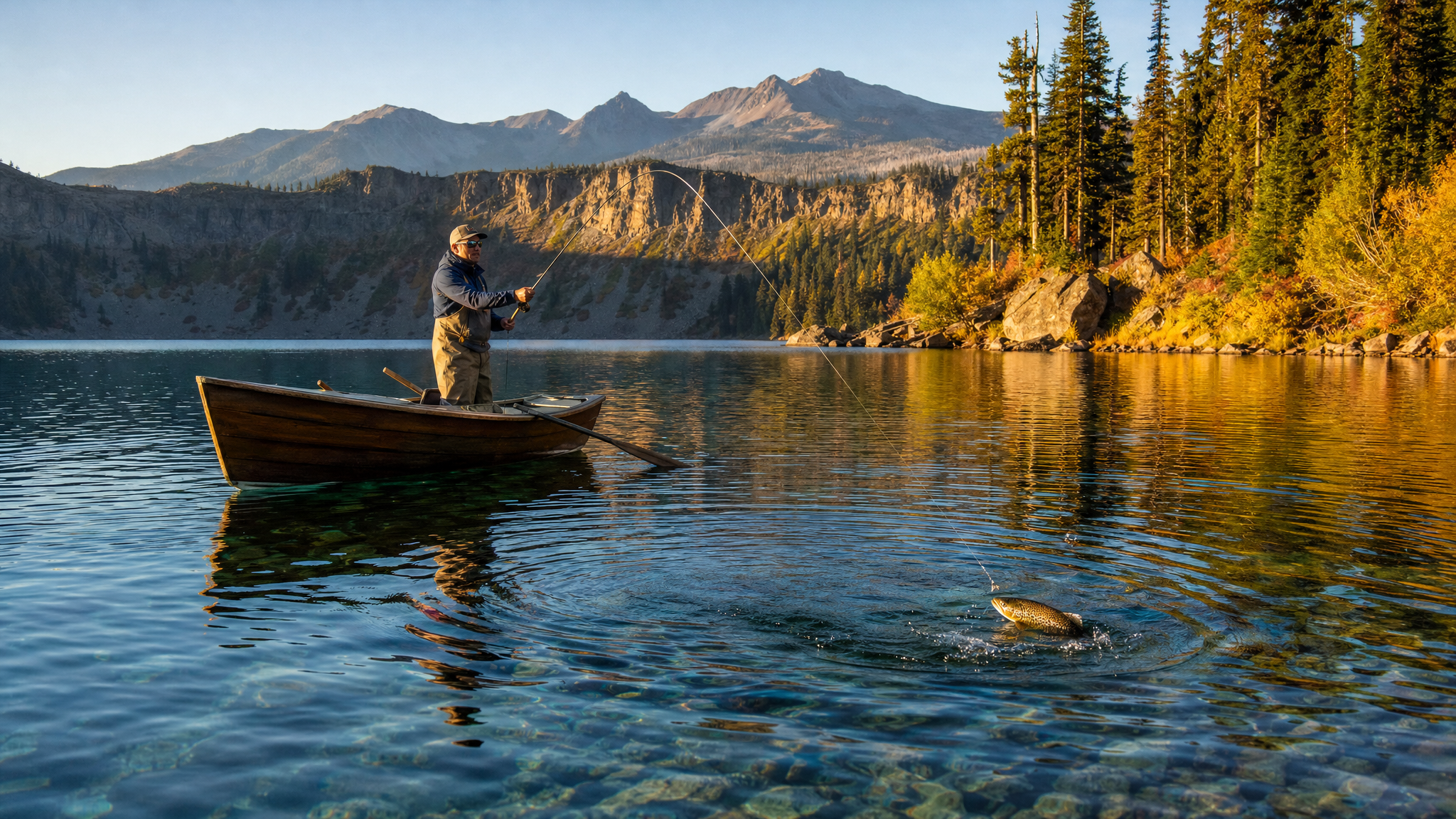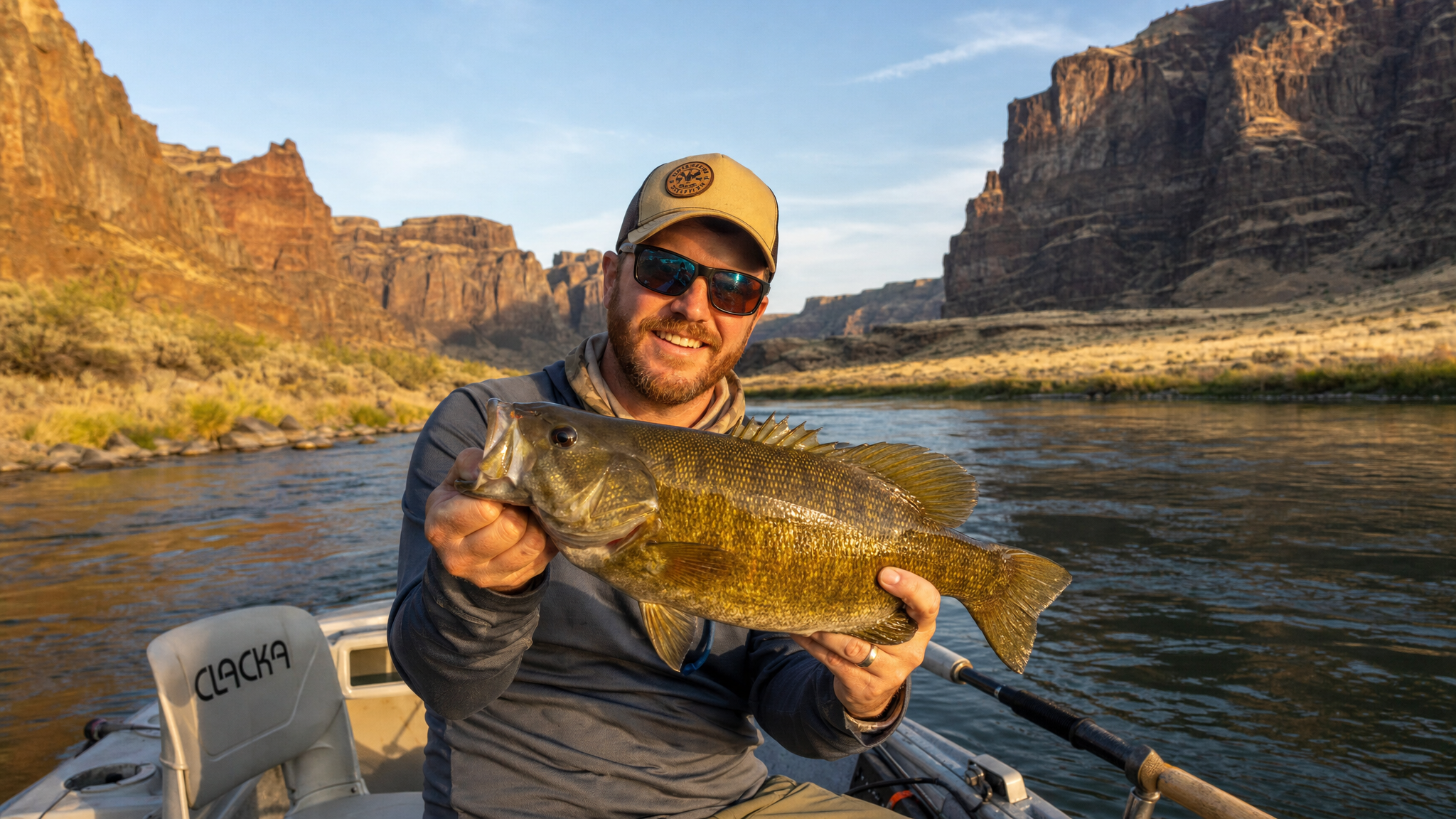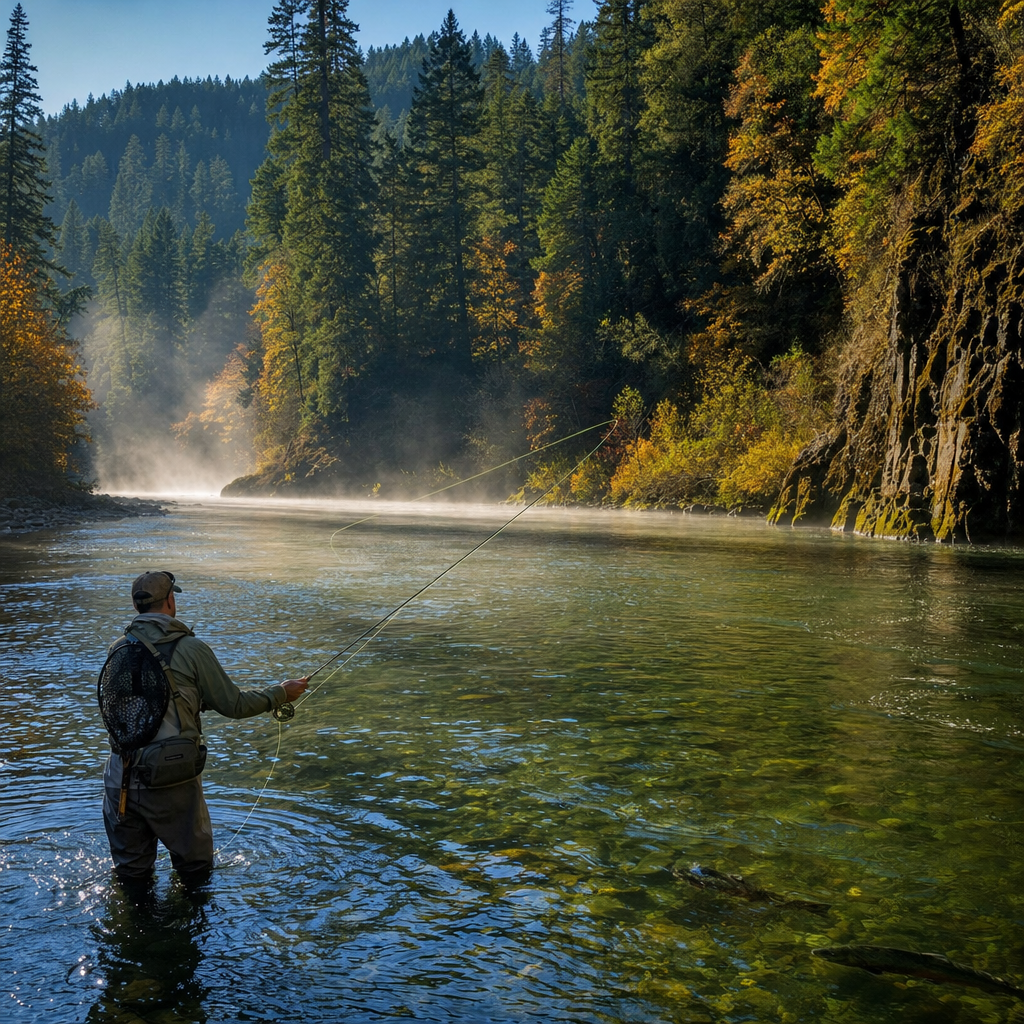
The upper Rogue River above Shady Cove is a different world from the crowded lower river fisheries. By mid-October, the first strong pulse of native winter steelhead has pushed up past Gold Hill and into the canyon stretches between Shady Cove and McLeod, giving drift boat and wading anglers alike a shot at chrome fish in tight, technical water. If you're willing to hike, scout, and fish hard, the upper Rogue offers some of the most rewarding steelhead water in southern Oregon.
Understanding the Upper Rogue Steelhead Run
The Rogue River's winter steelhead run is one of Oregon's most storied, drawing fish from mid-October through March. The upper river — commonly defined as the stretch from Shady Cove upstream to Prospect and the USFS boundary — receives fish that have traveled more than 100 miles from the Pacific. These are strong, wild native steelhead, typically ranging from 6 to 12 pounds with occasional 15-plus-pound fish showing up in peak years.
By October, water temperatures are dropping into the ideal steelhead range of 45–55°F, and fish that have been holding in the lower canyon begin pushing upriver with purpose. The October-November window before Thanksgiving is considered prime time on this stretch — fish are fresh, aggressive, and not yet pressured by the heavier winter crowds that arrive in December and January.
Access Points: Shady Cove to McLeod
The upper Rogue has excellent public access throughout this stretch. Key launch and wading points include:
- Shady Cove Boat Ramp (RM 92) — The standard upper river launch for drift boats. Well-maintained ODFW facility, good parking, and easy access to the first canyon sections downstream.
- Casey State Recreation Site (RM 86) — Day-use park with a short trail down to productive riffle water. Walk-in bank access to some excellent slots that see less pressure than road-side water.
- McLeod Bridge (RM 83) — A popular wade-fishing access point with a paved pullout. The run below the bridge holds steelhead well into November in normal water years.
- Dodge Bridge (RM 96) — Downstream from Shady Cove, this is a popular bank fishing and wade-fishing access point and a good takeout for shorter floats.
- BLM River Access Trails — Several unmarked trails off Rogue River Drive provide walk-in access to canyon water that sees very light pressure. Worth exploring with a topo map.
Tackle for Upper Rogue Steelhead
The upper Rogue is clear, technical water. Fish can be spooky, especially in low conditions. Gear selection matters more here than on some of the bigger, murkier coast rivers.
Hardware Fishing
For spin anglers, the upper Rogue rewards finesse over power. Go lighter than you think you need to. Key hardware setups:
- Rod: 9 to 10-foot medium-light to medium spinning rod rated for 8–15 lb line. The longer rod helps with mending and line control in the current.
- Line: 10-pound monofilament or 20-pound braid with a 10–12 pound fluorocarbon leader. Fluoro's low visibility is worth the extra cost on this clear river.
- Lures: 1/4 oz or 3/8 oz Spin-N-Glos in chartreuse, orange, and red. Blue Fox spinners in #3–#5. Vibrax spinners in gold or silver. In clear water, natural and subdued colors (pink, peach, clear sparkle) often outperform gaudy chartreuse.
- Roe: Cured salmon roe drifted under a float is deadly on this river in October. Fish it on a size 2 or 4 Gamakatsu octopus hook with 8-pound fluorocarbon. Use a light cure — Borx O' Fire pink or Atlas Mike's — that keeps the eggs semi-fresh and soft rather than fully hardened.
Fly Fishing
The upper Rogue is a world-class fly fishing steelhead river, particularly for anglers willing to swing flies through the canyon runs. The river's pools and tail-outs are made for the swinging game.
- Rod: 7-weight single-hand rod or 12–13 foot switch rod for the best of both worlds. Many guides here prefer a 13-foot 7-weight switch for covering water efficiently.
- Line: Skagit or Scandinavian head with appropriate sink tips for the water level. In low clear October conditions, lighter T-8 tips and intermediate heads often work better than heavy T-14.
- Flies: October swinging patterns for upper Rogue fish: Skunk (a PNW classic), Green Butt Skunk, Purple Peril, October Caddis patterns (the actual October caddis hatch can bring fish to the surface), Intruder-style patterns in black/purple for overcast days, and classic Muddler Minnow variations stripped across current.
- Nymphing: When fish aren't responding to swung flies, a double nymph rig under an indicator with a stonefly imitation or Hare's Ear will produce. The upper Rogue has excellent bug life, and fish feed actively on nymphs in the canyon pools.
Reading Upper Rogue Water
Steelhead in the upper Rogue stack in predictable places. Learn to read these features and you'll find fish consistently:
- Seam water behind mid-channel boulders: Steelhead rest out of the main current but stay adjacent to it. The seam on the downstream side of large boulders is prime real estate.
- Tail-outs of pools: As pools shallow and narrow into the next run, steelhead stack in the glassy tail-out water just before the riffle. In low water, fish these areas at dawn before light hits the surface.
- Pocket water in canyon sections: The canyon water between Shady Cove and Casey State Park features complex pocket water where steelhead wedge into small depressions and pockets behind structure. Wade carefully — the rocks are slippery and the drop can be sudden.
- Transition zones: Where riffle water transitions to deeper pool water is consistently productive. Steelhead moving upriver pause in these zones to rest.
October Water Conditions and Timing
The Rogue at Shady Cove runs between 600 and 1,200 cfs in most normal October years — ideal steelhead conditions. Check the USGS gauge at Dodge (site 14335300) before heading out. Below 500 cfs the fish get wary and tough to approach. Above 1,500 cfs the river colors up and hardware fishing becomes more productive than fly fishing. The ODFW Rogue River fish counts at Gold Ray are also available online and give a real-time picture of how many fish are in the system.
Fish are most active in low light: the first 90 minutes after sunrise and the last 90 minutes before sunset. On overcast October days the bite can last most of the morning. Bright bluebird days push fish deep and make afternoon fishing slow.
Regulations and Hatchery vs. Wild Fish
Before fishing the upper Rogue, review current ODFW regulations carefully. Wild steelhead retention rules change by section and by year. In most recent seasons, wild steelhead must be released above Grave Creek, and the upper river stretches near Shady Cove and McLeod often have selective gear rules in effect during certain periods. Adipose fin clips identify hatchery fish, which may be retained within the daily bag limit. The distinction matters — study the current year's regulations before your trip and carry them with you on the water.
Final Tips for the Upper Rogue
Stealth matters enormously on this river. Wear drab colors, avoid wading directly into a run before fishing its near-bank water, and approach pools from downstream. The upper Rogue's clear water means fish can see you before you see them. Fish that have been spooked by a careless approach will not bite. Take your time, observe the water, and make your first cast count.
October steelheading on the upper Rogue is a genuine privilege. These fish have survived the Pacific, the lower river gauntlet, and a hundred miles of migration. Handle them carefully, minimize fight time, and use a quality rubber net to protect their slime coat. The wild steelhead runs that make this river great depend on anglers who care.