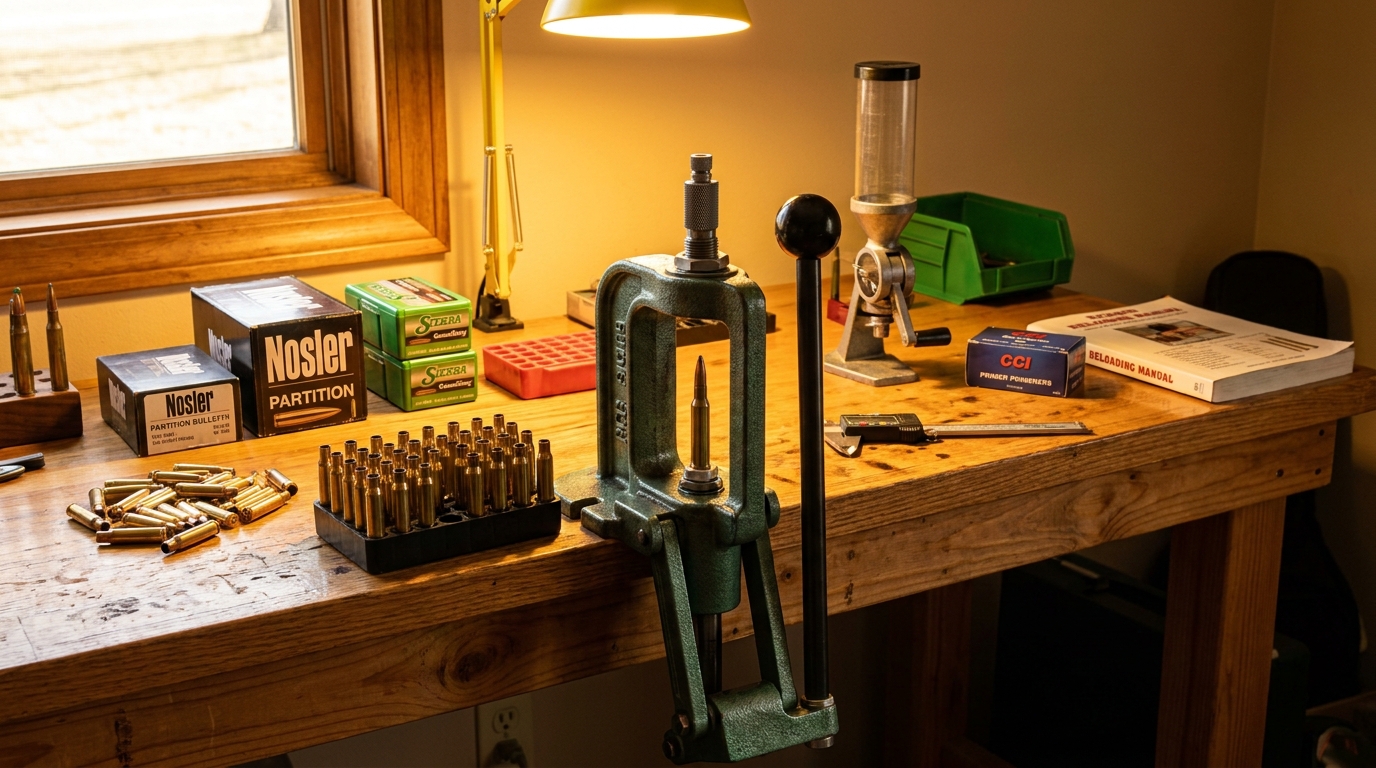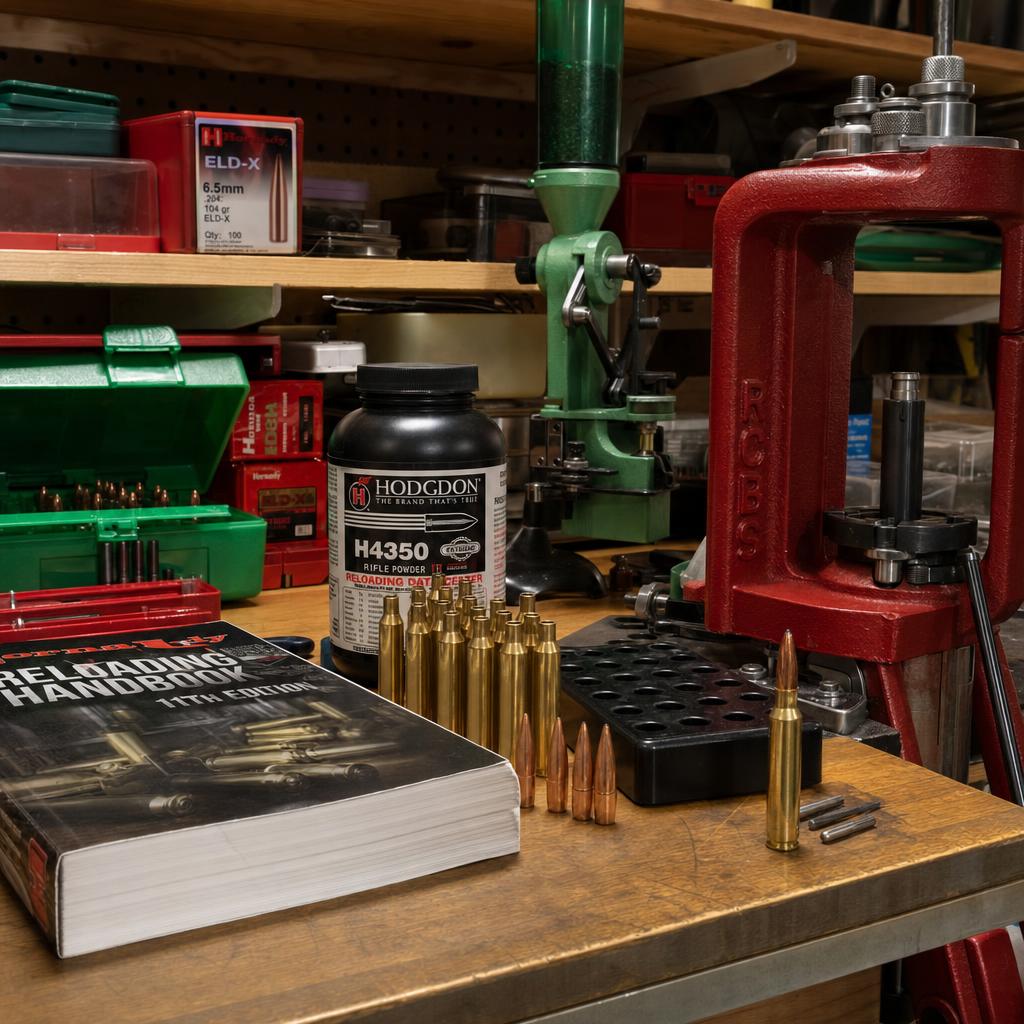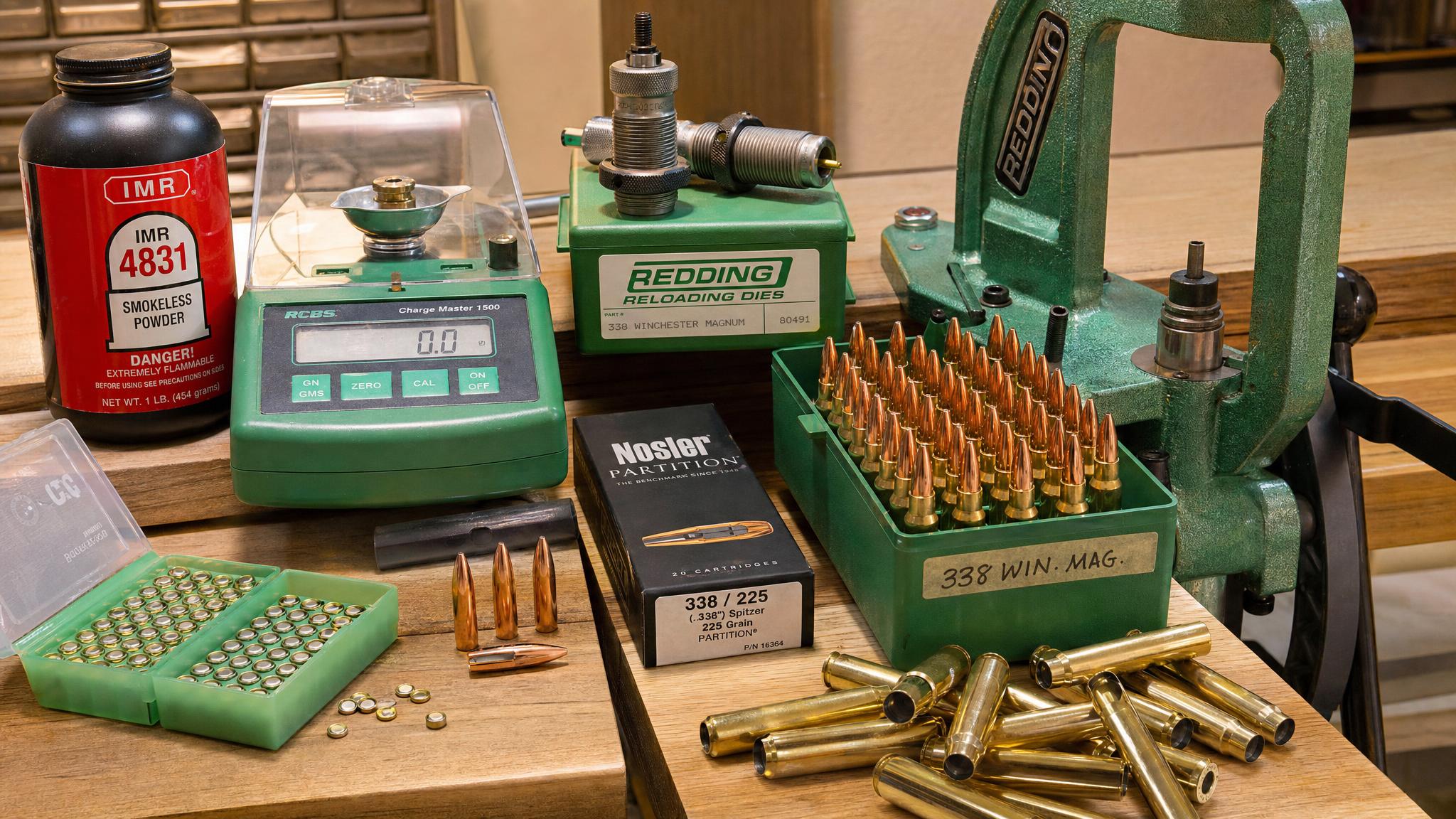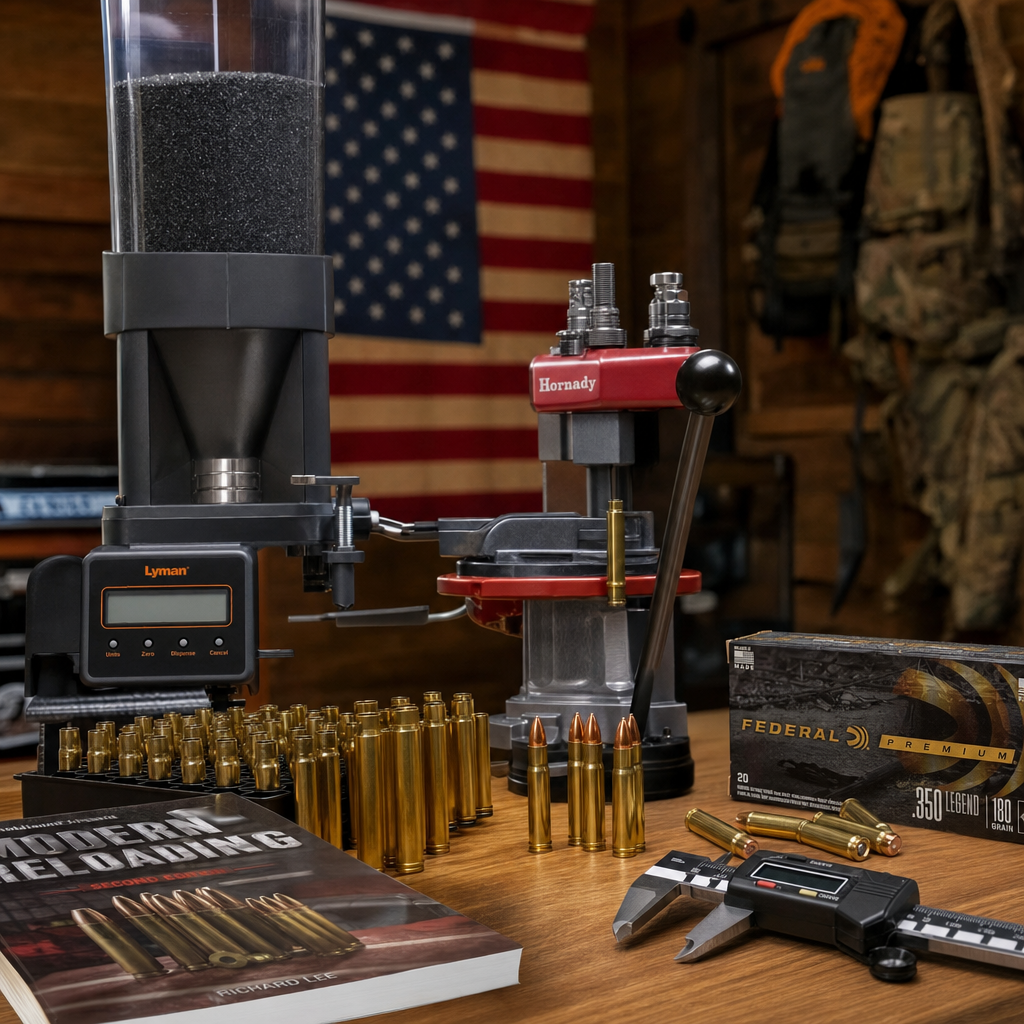
Winchester's .350 Legend arrived in 2019 and quietly became one of the most useful deer cartridges available for hunters working in close-cover timber country. For Oregon blacktail hunters in the thick Douglas fir drainages of the Coast Range and western Cascades, it checks almost every box: modest recoil, straight-walled case simplicity, and enough punch to put a deer or black bear down inside 200 yards. If you're handloading for this cartridge, you're also working with one of the most straightforward cases in the reloading room.
Why the .350 Legend Works in Oregon Timber Country
Oregon's blacktail habitat rarely asks for long shots. In the logging units of the Tillamook State Forest, the dense fir stands of the Siuslaw National Forest, or the brushy clear-cuts above the Rogue River drainage, 50 to 125 yards is a realistic average shot distance. The .350 Legend launches a .357-inch diameter bullet — the same bore as .357 Magnum revolvers — at velocities between 2,100 and 2,400 fps depending on bullet weight and barrel length. That's enough retained energy at typical Oregon timber distances to put deer down cleanly and quickly.
The straight-walled case is also a plus in wet Coast Range conditions. It headspaces off the case mouth like pistol brass, feeds smoothly, and extracts reliably even in muddy, wet conditions that sometimes cause problems with rimless bottlenecked cases in bolt actions.
Brass, Dies, and the Basics
Winchester is the primary source of .350 Legend brass and it's widely available. Hornady also produces legend brass. Quality control on both is good. The case is relatively short — 1.710 inches — and the large primer pocket takes standard large pistol or large rifle primers depending on the load. Most reloaders stick with large rifle primers for hunting loads, which provide more consistent ignition with slower rifle powders.
For dies, Lee, RCBS, Hornady, and Redding all make quality sets. A standard three-die set (sizing, expanding/charging, seating) is all you need. Because the case is straight-walled, full-length sizing is the norm even for bolt-action rifles. Neck-only sizing is not practical with straight-walled cases.
Powder Selection
The .350 Legend is a modest-capacity case. You're not trying to fill a magnum case here — you're working with roughly 30–33 grains of water capacity, and fast to medium-speed powders work best. The following powders are proven performers:
- Hodgdon CFE BLK — This powder was designed for the .300 Blackout and short pistol-caliber cases, and it meters beautifully in the .350 Legend. Yields excellent velocity and clean burn with 180-grain bullets.
- IMR 4227 — A classic pistol-case powder that works well with heavier 200-grain cast or jacketed bullets. Good temperature stability for cold Oregon mornings.
- Accurate 1680 — Another excellent choice for heavier bullets in this case, producing clean, consistent results with 200-grain loads.
- Hodgdon H110 / Winchester 296 — Recommended for 150 and 160-grain bullets. High velocity, consistent ignition. Requires a compressed load in some configurations — don't reduce these charges more than 3% without re-checking pressure signs.
- Alliant Lil'Gun — Versatile across bullet weights, meters consistently, and gives excellent ignition in cold temperatures.
Bullet Selection for Oregon Deer and Bear
The .350 Legend can push bullets ranging from 125 grains up to 220+ grains for cast lead applications. For Oregon blacktail deer, a 150 to 180-grain expanding bullet is the sweet spot. Here's what works:
- Hornady 150-grain SST or FTX — The SST at high velocity (2,350–2,400 fps from a 16-inch barrel) is a flat-shooting, hard-hitting deer bullet that expands reliably at .350 Legend velocities. The FTX is the preferred choice for tubular lever-action magazines.
- Winchester 145-grain FMJ — Not for hunting, but an inexpensive practice and plinking bullet that lets you train on the same platform without burning premium projectiles.
- Speer 180-grain Gold Dot — A bonded pistol bullet that performs well at .350 Legend velocities, ideal for heavier deer and black bear. Excellent weight retention and controlled expansion.
- Barnes 170-grain TSX — For hunters who want a lead-free option or need deeper penetration for black bear, the all-copper TSX at 170 grains is a serious performer.
Tested Starting Loads (Always Consult a Current Manual)
These are general starting-point references for experienced reloaders. Always begin at or below published starting charges and work up carefully, watching for pressure signs:
- 150-grain SST / CFE BLK: Start ~22.0 gr, max around 25.5 gr — expect 2,250–2,380 fps from a 16-inch barrel
- 180-grain Speer Gold Dot / Accurate 1680: Start ~17.5 gr, max around 19.5 gr — expect 2,050–2,150 fps
- 170-grain Barnes TSX / H110: Start ~22.0 gr, max around 24.5 gr — expect 2,150–2,250 fps
Pressure Signs to Watch
The .350 Legend operates at a maximum average pressure of 55,000 psi. Common pressure indicators include flattened or cratered primers, stiff bolt lift, and case head expansion beyond the base. Because this is a straight-walled pistol-diameter case, it's somewhat more forgiving than small bottlenecked rifle cases — but that doesn't mean you should push it. Work up slowly, especially when switching powder lots or bullet brands.
Practical Accuracy Expectations
A well-assembled .350 Legend handload in a quality bolt-action — the Ruger American, Mossberg Patriot Predator, and Winchester XPR are popular choices — will typically shoot 1 to 1.5 MOA with a load it likes. At 100 yards, that's a 1- to 1.5-inch group, which is more than adequate for any shot a blacktail hunter in Oregon timber country is likely to take. Don't chase sub-MOA performance at the expense of reliable terminal performance — pick the load that shoots consistently and hits hard.
Zeroing for Oregon Timber Hunting
A 100-yard zero works well for the .350 Legend in timber hunting conditions. With a 150-grain load at 2,350 fps, the bullet drops roughly 4.5 inches at 150 yards and around 13 inches at 200 yards. For hunters who rarely take shots beyond 150 yards — which describes most blacktail country — a 100-yard zero keeps things simple. If you're hunting open units like parts of the Rogue River drainage where 150-yard shots are possible, consider a 125-yard zero to flatten the trajectory slightly.
Final Thoughts
The .350 Legend is a purpose-built close-cover hunting cartridge and it rewards handloaders who treat it as such. Pick a quality 150 to 180-grain hunting bullet, find a powder that meters consistently in the small case, work up a load that shoots sub-1.5 MOA, and you'll have a deer rifle that's a genuine pleasure to carry through wet October brush. For Oregon's Coast Range and western Cascade blacktail units, this cartridge hits hard where it counts, at the distances you'll actually be shooting.