An hour southeast of Portland, tucked into a corner of Mount Hood National Forest that most hikers drive right past on their way to Timothy Lake or the Ramona Falls trailhead, the Clackamas Wilderness quietly holds some of the finest old-growth Douglas fir forest in the Oregon Cascades. It's not dramatic in the way that the Three Sisters or Eagle Cap are dramatic. There are no glaciers, no volcanic cones on the horizon, and no Instagram-famous viewpoints. What there is, is forest — genuine ancient forest — and the kind of solitude that's become increasingly rare within a tank of gas of a major city.
If you haven't heard of the Clackamas Wilderness, you're not alone. The 9,400-acre unit rarely appears in guidebooks, and the trailheads don't draw the crowds that the more scenic wilderness areas do. That's both a feature and a bug: expect limited signage, unmaintained trails in sections, and self-reliance in navigation. Bring paper maps as backup and expect to work for it. The reward is proportional.
Getting There
The most practical trailhead for a weekend loop is the Shellrock Lake Trailhead, reached via Forest Road 57 (also called the Skyline Road) east of Estacada. From Portland, take Highway 224 south through Estacada, then follow FR 57 east. The road is paved to a point and then transitions to gravel — passable in a standard vehicle in dry summer conditions, but check road status with the Clackamas River Ranger District before heading out in spring or after heavy rain.
The drive from Portland is approximately 55–60 miles, taking around 75–90 minutes depending on traffic through Estacada. No Northwest Forest Pass is currently required at the Shellrock trailhead, but confirm this before your trip as permit requirements change.
The Weekend Loop: Shellrock to Serene Lake and Back
The most satisfying weekend route in the Clackamas Wilderness links Shellrock Lake with the Serene Lake area and returns via ridge trail, covering approximately 12–15 miles round trip with 1,800–2,200 feet of cumulative elevation gain — reasonable for fit hikers and very manageable as a two-day trip.
Day 1: Trailhead to Serene Lake (~6 miles)
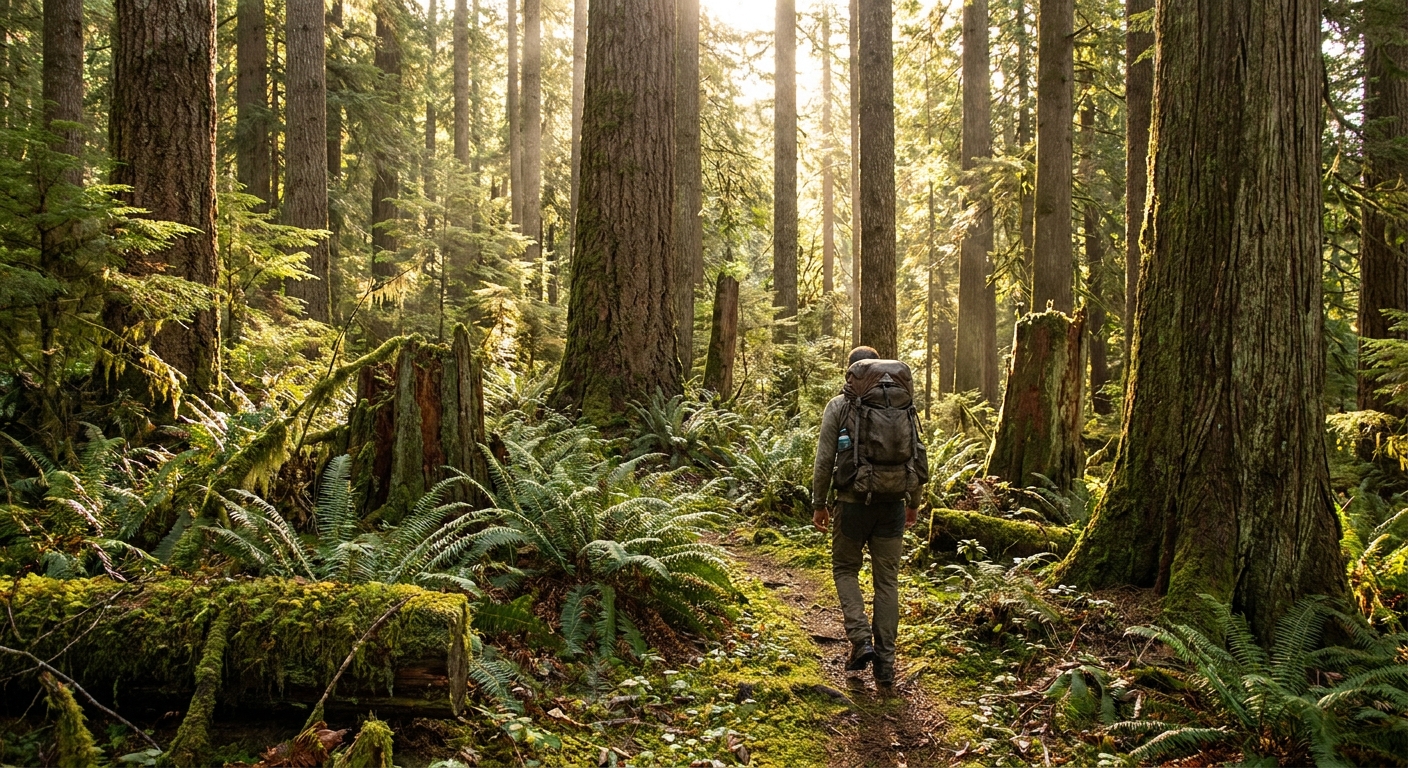
From Shellrock, the trail climbs gently through second-growth forest before entering the wilderness boundary and transitioning into the old-growth zones that make this area worth the trip. The trees here are remarkable — Douglas fir in the 5–7 foot diameter range, some specimens exceeding 400 years of age, with a multi-layered understory of western red cedar, big-leaf maple, and sword fern that creates a cathedral quality to the light. You'll want to slow down here, even if your legs say otherwise.
Shellrock Lake itself is a pleasant stop with good views and a few exposed campsites, but push on to Serene Lake for the better camping and more protected sites. Serene Lake sits in a natural basin surrounded by old growth, and on a clear July evening the reflection of the surrounding timber on still water is worth the miles alone.
Camp at Serene Lake: Multiple sites scattered around the lake perimeter. Choose sites at least 200 feet from the waterline per Leave No Trace standards. Water is plentiful — filter before drinking. Bear canisters are recommended in this drainage; hang food at minimum.
Day 2: Serene Lake to Trailhead via Ridge (~7 miles)
The return route follows a ridge trail with intermittent views to the north and west — on a clear day you can identify Mount Hood and the Bull Run watershed to the north. The ridge trail passes through a mosaic of old growth and open rocky sections before descending back toward the Shellrock trailhead. Navigation is the crux of this section — the trail is faint in places and junctions are not always well-marked. Keep a GPS track loaded or follow a topo carefully.
July Conditions
July is the sweet spot for Clackamas Wilderness travel. Snow is typically gone from even the highest elevations by late June, the old-growth forest is cool enough to hike comfortably even on warm days, and mosquito pressure (high in June near the lakes) has begun to subside. Afternoons can bring thunderstorms — build in flexibility and watch the western sky after noon. Lightning is rare but not unheard of on the exposed ridge sections.
Water is abundant in July from multiple sources on both days of the loop. The lakes and small streams flowing from the old-growth drainages are crystal clear, though always filter or treat.
Wildlife
The old-growth zones of the Clackamas Wilderness support a healthy wildlife community that more open terrain can't match. Expect to see:
- Black-tailed Deer: Common throughout the drainage, especially at dawn and dusk near the lake margins
- Roosevelt Elk: Present in the wilderness; most common in the lower drainages in summer
- Black Bear: Active in berry patches and near the lakes in July — make noise, hang food properly, and appreciate the encounter if it comes
- Northern Spotted Owl: The old-growth structure here is prime habitat; listen for their four-note call in the evening hours
- Pacific Giant Salamander: Look under logs and stream-edge rocks in the drainage bottoms
Gear Notes for Pacific Northwest Summer
Even in July, night temps near the lakes can drop to 40°F. Bring a sleeping bag rated to at least 35°F and a shelter with good condensation management — old-growth forests are humid environments and everything will be damp by morning. A good rain layer is non-negotiable; the weather here can change fast. Trekking poles are worth their weight for the return ridge descent, particularly if the trail is wet.
Why It Deserves More Attention
The Clackamas Wilderness protects a piece of Oregon's natural heritage that's increasingly rare — genuine old-growth forest within reach of the state's largest population center. It won't give you the big views of the alpine zones, but it offers something different and equally valuable: the quiet of a forest that's been growing longer than the United States has existed. If you're looking for a place to take a first-time backpacker who needs to understand why wilderness protection matters, bring them here. The trees will do the rest of the talking.