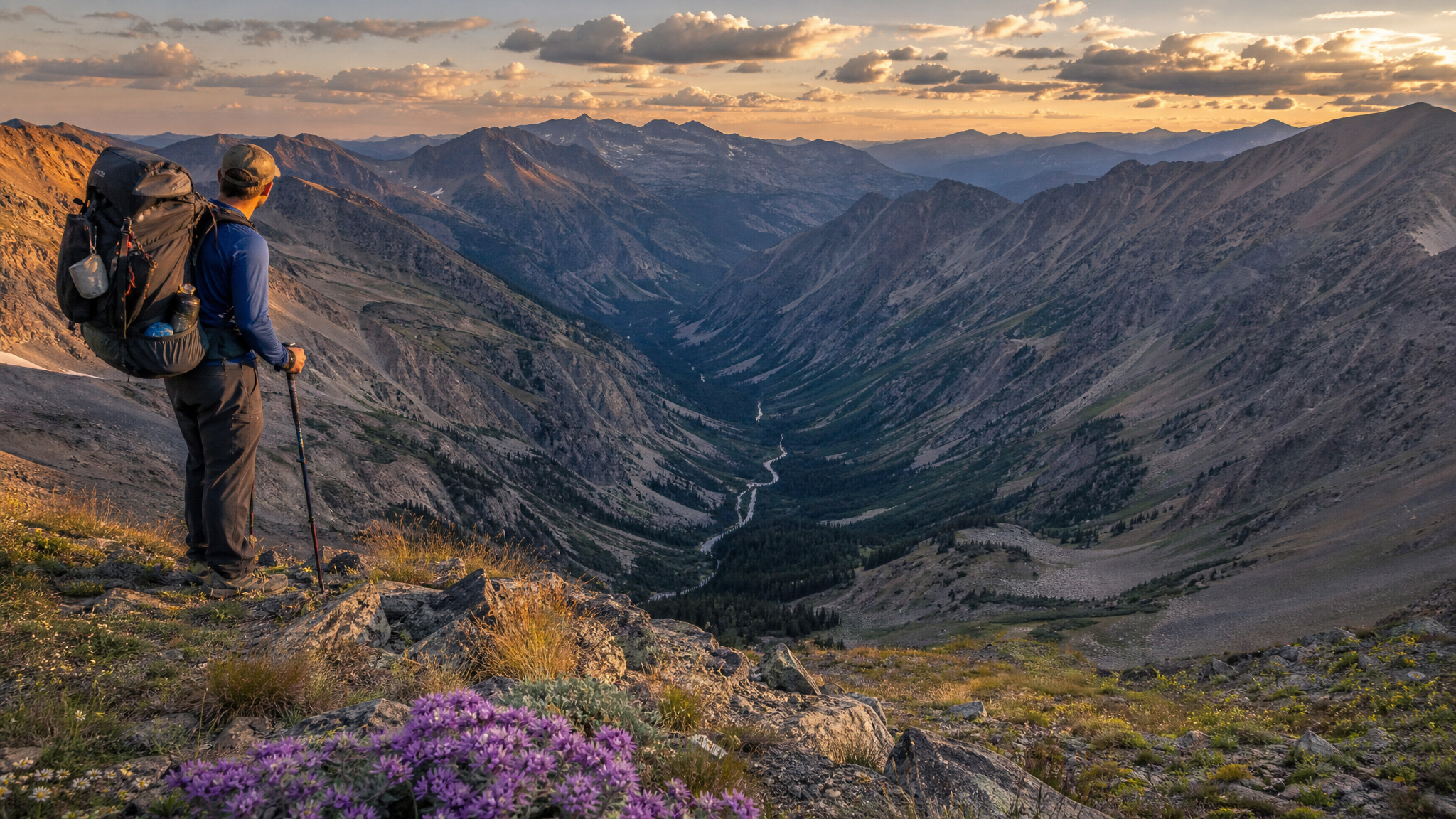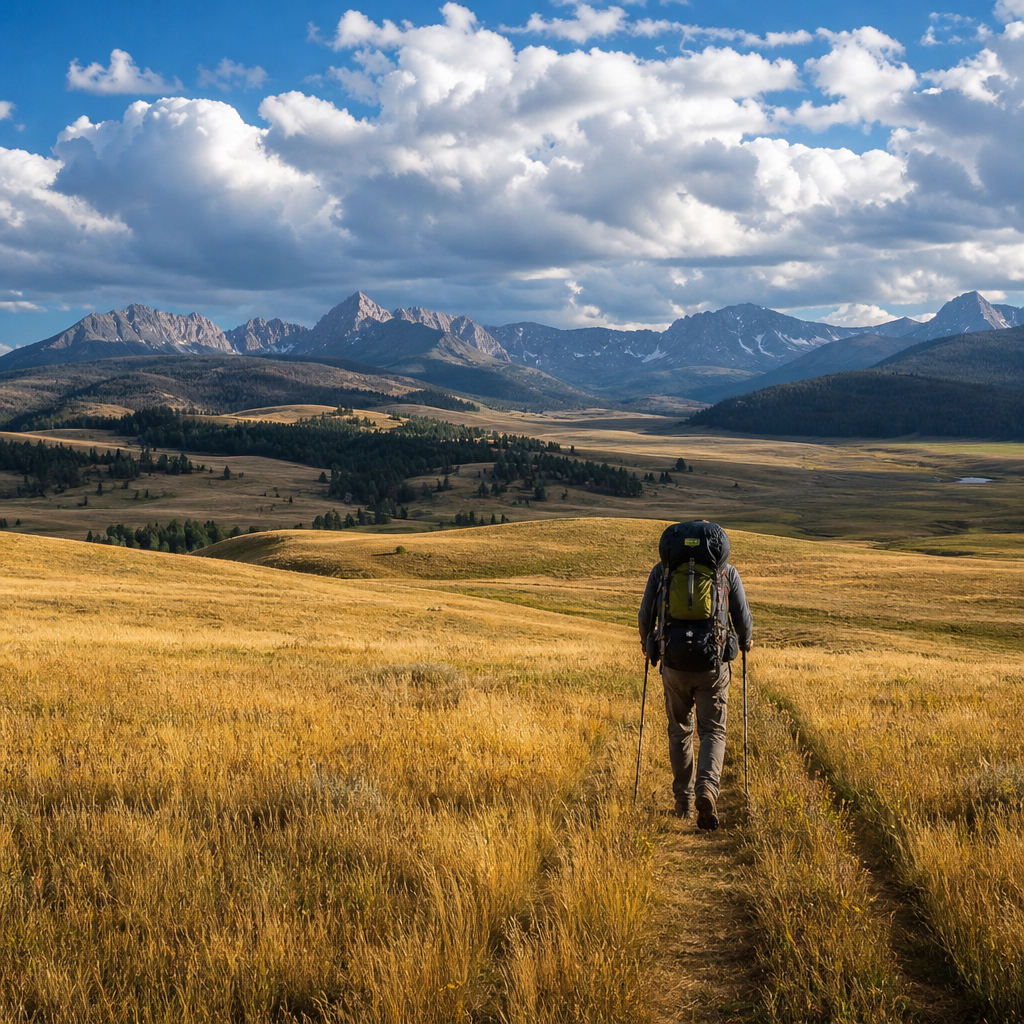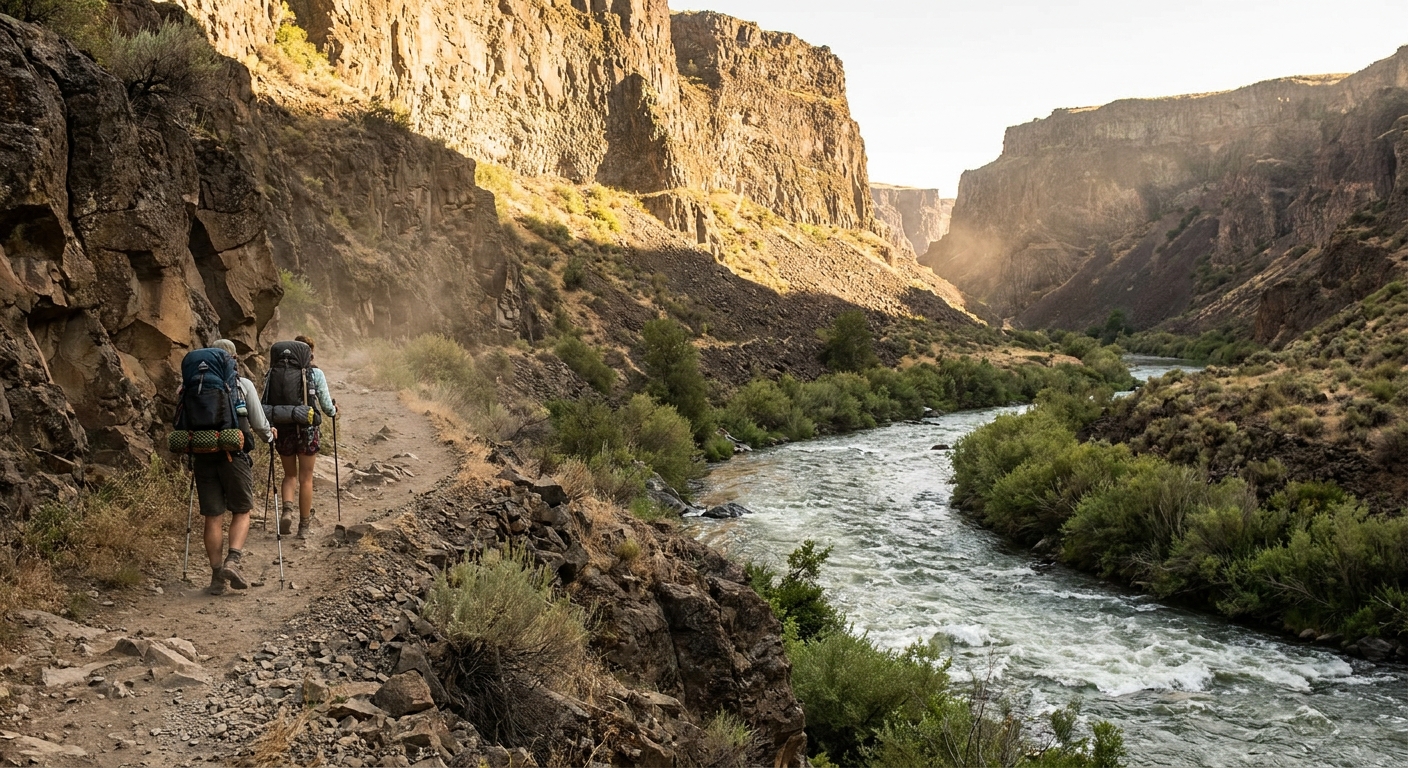
If the Eagle Cap Wilderness gets the glamour and the Hells Canyon rim-to-river route gets the headlines, the lower Imnaha River canyon exists in a category of its own: genuinely remote, brutally hot in summer, and utterly spectacular in a way that no amount of photographs fully captures. The 3-day route from Dug Bar down to Eureka Bar on the Snake River is among the most demanding and rewarding backpacking experiences in the Pacific Northwest.
The Route at a Glance
The core route drops from Dug Bar — the end of a long, rough road off Imnaha — and follows the Snake River Trail south along the Oregon side of the canyon to Eureka Bar. Total one-way distance is approximately 24 miles, with most parties choosing to camp at Corral Creek (mile 9) and Kirkwood Ranch (mile 18) before finishing at Eureka Bar on day three. The route can be hiked north-to-south (Dug Bar to Eureka Bar) as a shuttle, or out-and-back from either end.
Getting There
The Dug Bar trailhead sits at the end of Forest Road 4260, accessed from the town of Imnaha in Wallowa County. The last 24 miles from Imnaha to Dug Bar on a narrow, one-lane dirt road take 90 minutes minimum in dry conditions — longer after rain, when sections become impassable. High-clearance is recommended; 4WD is better. Do not attempt this road in wet weather.
Dug Bar itself is a primitive launch area used by jet boat operators and floaters. There is no developed trailhead infrastructure. Park well off the launch area, sign the trail register, and start early — you want to be moving by 6 a.m. in July.
Day 1: Dug Bar to Corral Creek (9 miles)
The trail from Dug Bar heads south immediately into canyon terrain: steep talus slopes above the river, narrow game-trail-width tread, and the constant sound of the Snake churning below. The first three miles are the most technically demanding of the route, with several exposed traverses above the river.
Temperatures in the lower canyon reach 100–110°F by July and August. Start before sunrise, move fast through the early hours, and plan to be at Corral Creek — where a reliable stream provides water — before noon. The flat near the creek offers good camping and shade. Afternoon in camp, afternoon in the shade. This is not negotiable.
Key water sources on Day 1: Dug Bar itself (Snake River — filter required), and Corral Creek at mile 9. Carry at least 4 liters from Dug Bar.
Day 2: Corral Creek to Kirkwood Ranch (9 miles)
Day 2 follows the Snake River south through increasingly open terrain. The canyon walls are dramatic — 7,900 feet above on the Idaho side, 6,000-plus on the Oregon rim. The trail undulates along the river bench, occasionally dropping to gravel bars and river level before climbing back onto rocky terraces.
Kirkwood Ranch is a historic homestead administered by the Forest Service. The old ranch house and outbuildings are preserved and open to visitors. A reliable spring near the ranch provides water, and the flat ground near the cottonwoods is the best camping on the route. Jet boats occasionally stop at Kirkwood — the presence of other humans can feel surreal out here.
Wildlife on the Middle Stretch
- Rattlesnakes: Common throughout the canyon, especially on warm rock in the morning. Watch where you step and where you put your hands.
- Rocky Mountain bighorn sheep: Hells Canyon has a robust bighorn population. Look for them on steep rocky slopes in the morning and evening.
- Black bears: Present but typically shy. Store food properly — a bear canister is strongly recommended.
- Mule deer: Abundant in the canyon bottom, especially near water.
Day 3: Kirkwood Ranch to Eureka Bar (6 miles)
The final day is the shortest and arguably the most beautiful. The trail follows the Snake closely through several dramatic bends before arriving at Eureka Bar — a wide gravel flat with a primitive boat launch where shuttle drivers can meet you.
Eureka Bar is accessible by jet boat from Hells Canyon Dam, and arrangements for jet boat shuttle out (rather than a vehicle shuttle) are possible through outfitters in Lewiston, Idaho. This simplifies the logistics considerably if you can arrange it in advance.
Permits and Regulations
The lower Imnaha and Snake River Trail fall within the Hells Canyon National Recreation Area, managed by the Wallowa-Whitman National Forest. Overnight camping requires a Hells Canyon NRA wilderness permit, obtainable at the Dug Bar trailhead self-registration station. No advance permit reservation is currently required for this section, but confirm with the Wallowa-Whitman National Forest (Enterprise Ranger District, 541-426-5546) before your trip.
Campfires are prohibited below 6,000 feet elevation during summer (typically June 1 through October 31). Carry a stove. This is grizzly country — wait, no, it's not. But it is rattlesnake and scorpion country. Check your boots every morning.
What to Bring
- Water filtration: A quality filter or purification tablets for Snake River water. Carry 4+ liters capacity.
- Sun protection: Sun umbrella, SPF 50+ sunscreen, lightweight long sleeves, wide-brim hat. The canyon offers almost no shade on the trail.
- Electrolytes: Sweat loss is extreme at canyon temperatures. Nuun tablets, Liquid IV, or similar are essential.
- Satellite communicator: Cell service is zero for the entire route. A Garmin inReach or SPOT is not optional in terrain this remote.
- Snake bite protocol: Carry a SAM splint, know the protocol (immobilize, evacuate, no tourniquet), and have your emergency contact briefed on the route.
The Right Season
Summer (July–August) is brutal but manageable with an early start and heat discipline. Spring (April–June) is the preferred season for most experienced canyon hikers — temperatures are moderate, wildflowers are spectacular, and the bighorn sheep are lambing. Fall (September–October) is excellent. Winter is survivable but cold and logistically challenging with the road conditions to Dug Bar.
If you do go in summer, leave the trailhead no later than 6 a.m., be camped and stationary by noon, and accept that you are not covering miles between 10 a.m. and 4 p.m. This is the non-negotiable reality of the lower Hells Canyon in July. Work with it, and you'll have the most memorable backpacking trip of your life.