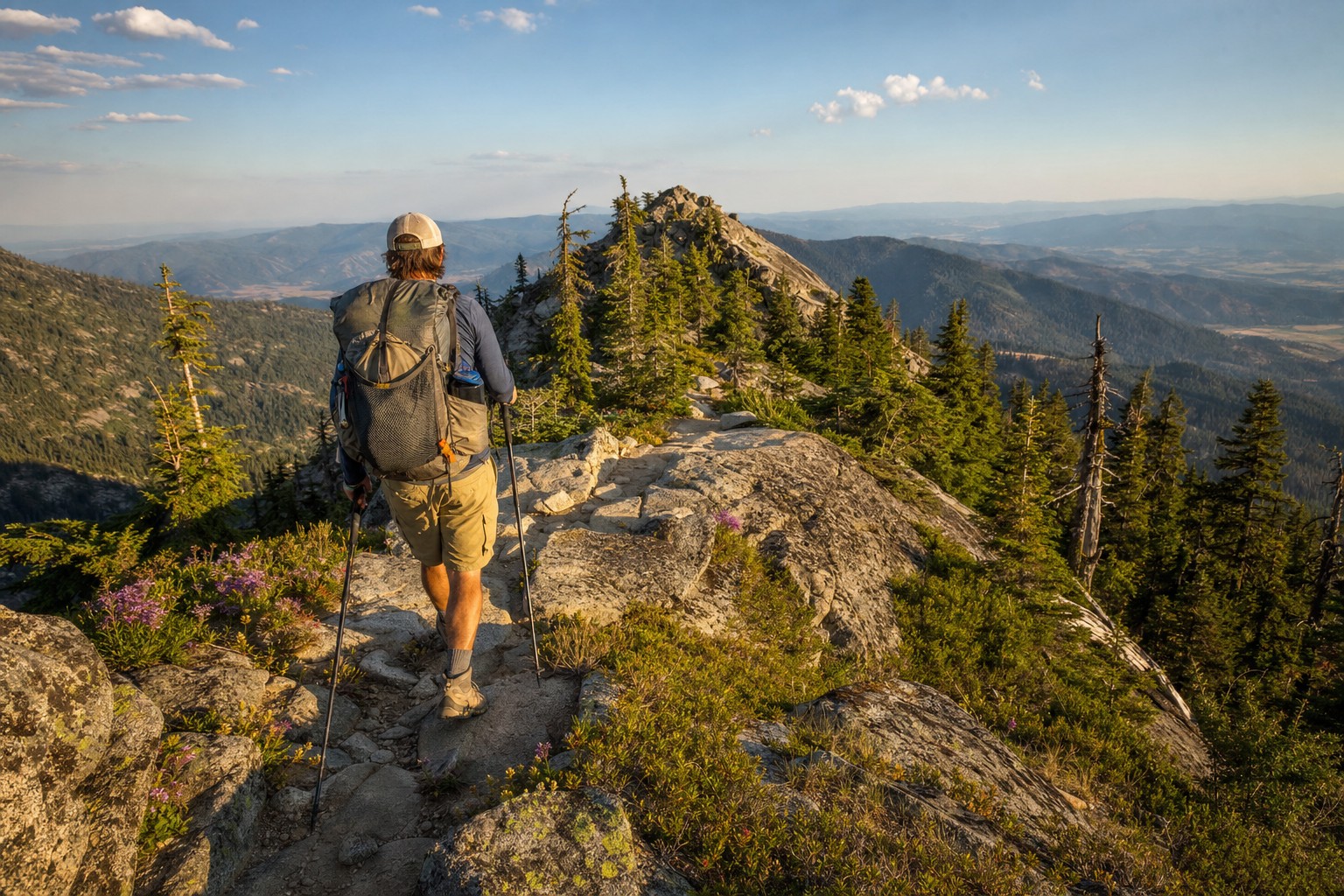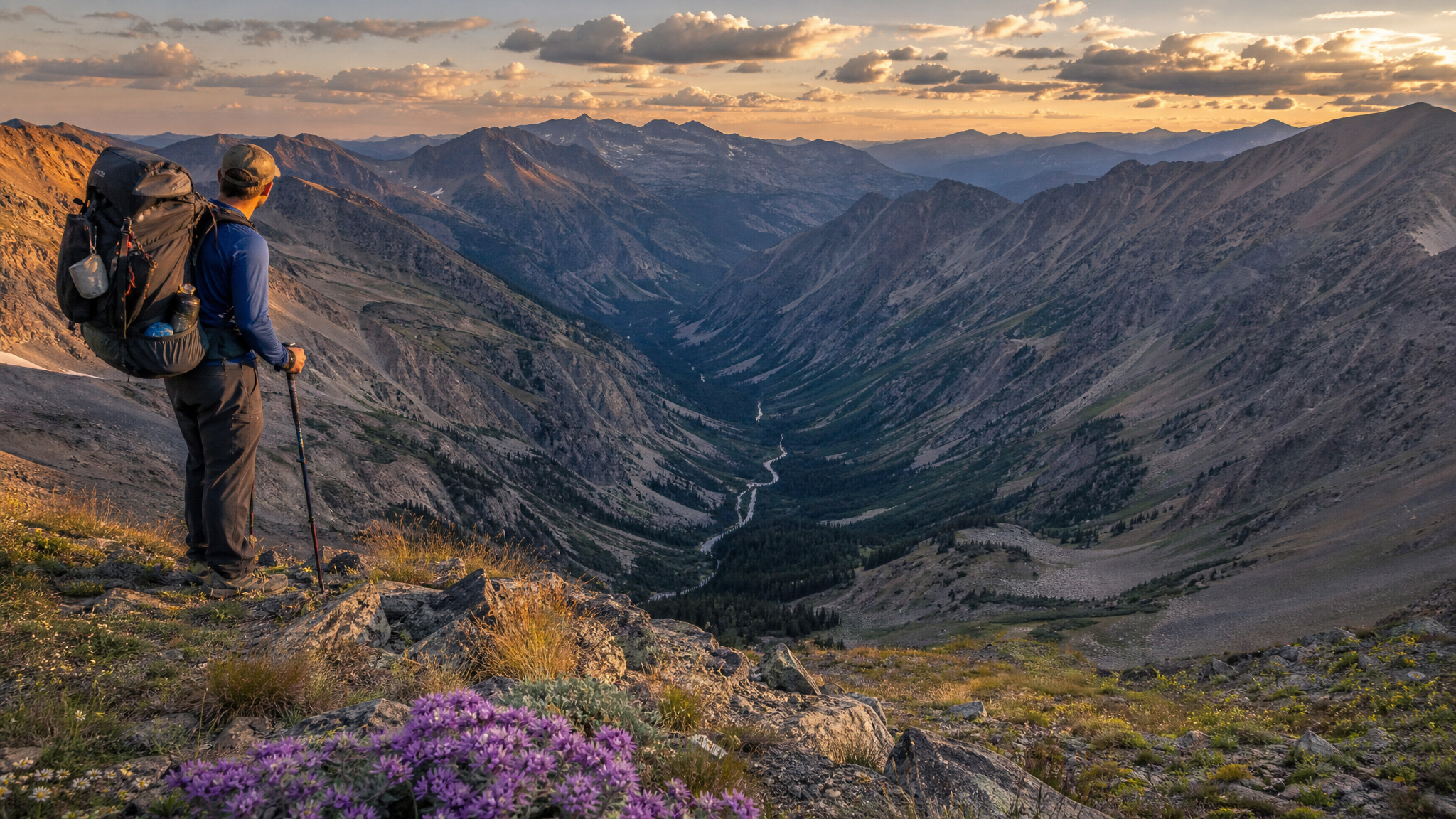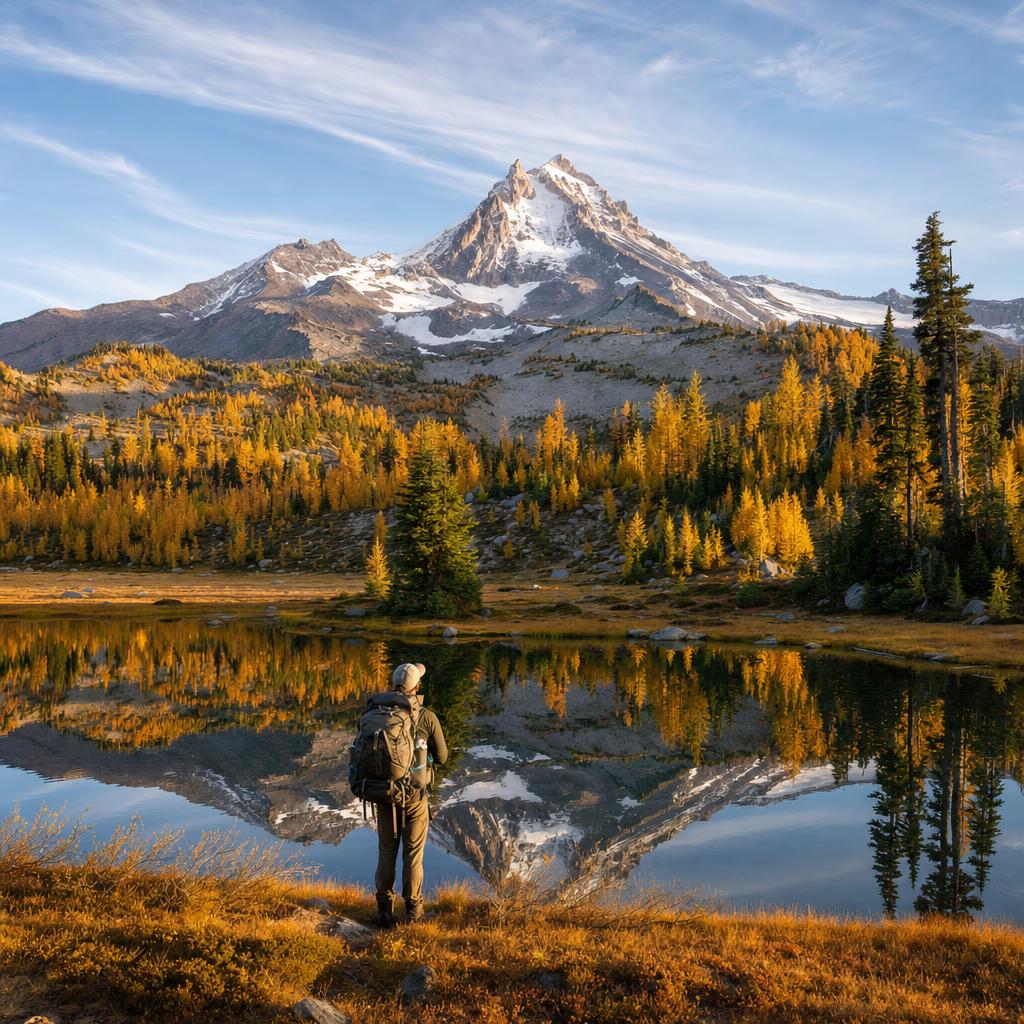
Jefferson Park sits high on the north shoulder of Mount Jefferson, tucked into a glacially carved bowl at 5,900 feet. It's one of the most spectacular destinations in Oregon's Mount Jefferson Wilderness — and one of the most crowded in summer. Come back in early October, though, and you'll find the meadows blazing with fall color, the bugs completely gone, and the parking lot half empty. Three days is exactly enough time to make the loop, explore the park's multiple lake basins, and catch the larch needles turning gold before the first serious winter storm rolls in.
Trailhead Access and Permits
The most popular access point is the South Breitenbush Trailhead, reached via Forest Road 4685 off Hwy 46 (Detroit Lake Road). The trailhead sits at about 3,600 feet elevation — expect the road to be rough gravel the last few miles. A Northwest Forest Pass is required for parking. No overnight permits are required in the Jefferson Wilderness currently, but self-registration at the trailhead is expected. Cell service disappears well before you reach the trailhead — download your maps ahead of time with Gaia GPS or CalTopo and print a backup.
The classic loop runs roughly 22 miles, gaining about 3,500 feet over three days. It's not technical terrain, but the elevation and the weight on your back will keep honest company. Mid-October can bring snow — stay aware of the forecast and build in a bail-out day if the weather turns.
Day 1: South Breitenbush to Jefferson Park (9 miles, ~2,600 ft gain)
The South Breitenbush Trail (#3375) climbs steadily through old-growth Douglas fir and mountain hemlock before breaking into the open and delivering you into Jefferson Park after roughly 4.5 miles of grunt. Take your time — the views open up fast once you clear timberline, and Mount Jefferson's 10,495-foot summit dominates the sky to the south. The final push into the Park crosses open pumice flats and can feel exposed in wind.
Camp regulations in Jefferson Park are strict: no camping within 200 feet of any lake, and fires are prohibited. Dispersed sites in the trees on the park's margins hold up to the rules and give you better wind protection than the open meadow. Scout your site early — the best spots near Scout Lake and Russell Lake fill fast even in fall. Filter all water; Jefferson Park sees high overnight use year-round and the lakes are no place to cut corners on treatment.
Day 2: Jefferson Park Loop and Park Exploration (4–6 miles, minimal gain)
Make Day 2 a rest-and-explore day inside the park. The PCT runs through Jefferson Park, and you can walk a figure-eight connecting Scout Lake, Russell Lake, and the upper basin lakes to the north. In early October, the huckleberry fields go deep crimson and the reflection of the mountain in Russell Lake — when the wind dies — is the kind of view that ruins normal hiking for a few months afterward.
If you want a legitimate objective, boot-pack the talus on Jefferson's lower north flanks for wider views of the Three Sisters to the south and Mount Hood to the north. No technical gear needed for the lower slopes, but this isn't a maintained route — pick your way carefully on loose volcanic rock.
Wildlife to Watch
- Black bear — Jefferson Park sees heavy fall bear activity as animals feed on huckleberries before denning. Hang food or use a canister; don't leave packs unattended.
- Clark's nutcrackers — Loud, chaotic, and everywhere. Watch them cache whitebark pine seeds in the pumice flats.
- Mule deer — Bucks in velvet through early October, sometimes visible in the park meadows at dusk.
- Pika — Listen for their sharp alarm calls from the boulder fields on Jefferson's flanks.
Day 3: Out via Whitewater Trail or Breitenbush (7–9 miles)
The return loop descends via the Whitewater Trail (#3429) on Jefferson's west side, dropping through old-growth and crossing Whitewater Creek before reaching the Whitewater Trailhead on Forest Road 2243. This requires a two-car shuttle — leave a vehicle at Whitewater ahead of time, or add a 5-mile forest road walk between trailheads. Alternatively, retrace your steps down the South Breitenbush Trail. The descent in either direction is gentler on the knees than the ascent felt coming up.
If you left a car at Whitewater, you'll reach it by noon on Day 3, which leaves you time to stop at the Blue Heron French Cheese Company near Tillamook on the way home — or, more practically, to grab a hot meal in Detroit before the long drive back to the valley.
Gear Notes for October Conditions
- Shelter: Four-season tent or bomber three-season with a good rainfly. October storms can bring 40 mph gusts on the exposed pumice flats.
- Layers: Down jacket, hardshell, and waterproof pants. Temperatures drop into the 20s overnight at elevation in early October.
- Trekking poles: The talus and pumice are loose enough that poles pay dividends both up and down.
- Microspikes: Not required for early October in most years, but pack them if recent snowfall has been reported on the summit.
- Water filter: Sawyer Squeeze or BeFree — high flow rate matters when you're filtering from alpine lakes in the cold.
Leave No Trace and Regulations
Jefferson Park has been loved hard over the years. The Willamette National Forest has pushed dispersed camping zones away from lakeshore to help meadows recover. Stick to established sites in the trees, carry a WAG bag for human waste (cat holes in the pumice don't work — there's not enough soil biology to process waste properly), and pack out everything you pack in. The park is worth protecting. Future-you will want to come back.
The Jefferson Park Loop is the kind of trip that reminds you why Oregon's wilderness is worth the fight to keep it wild. Three days in early October, the bugs gone and the crowds thinned, the mountain right there — it's as good as it gets in the Pacific Northwest.