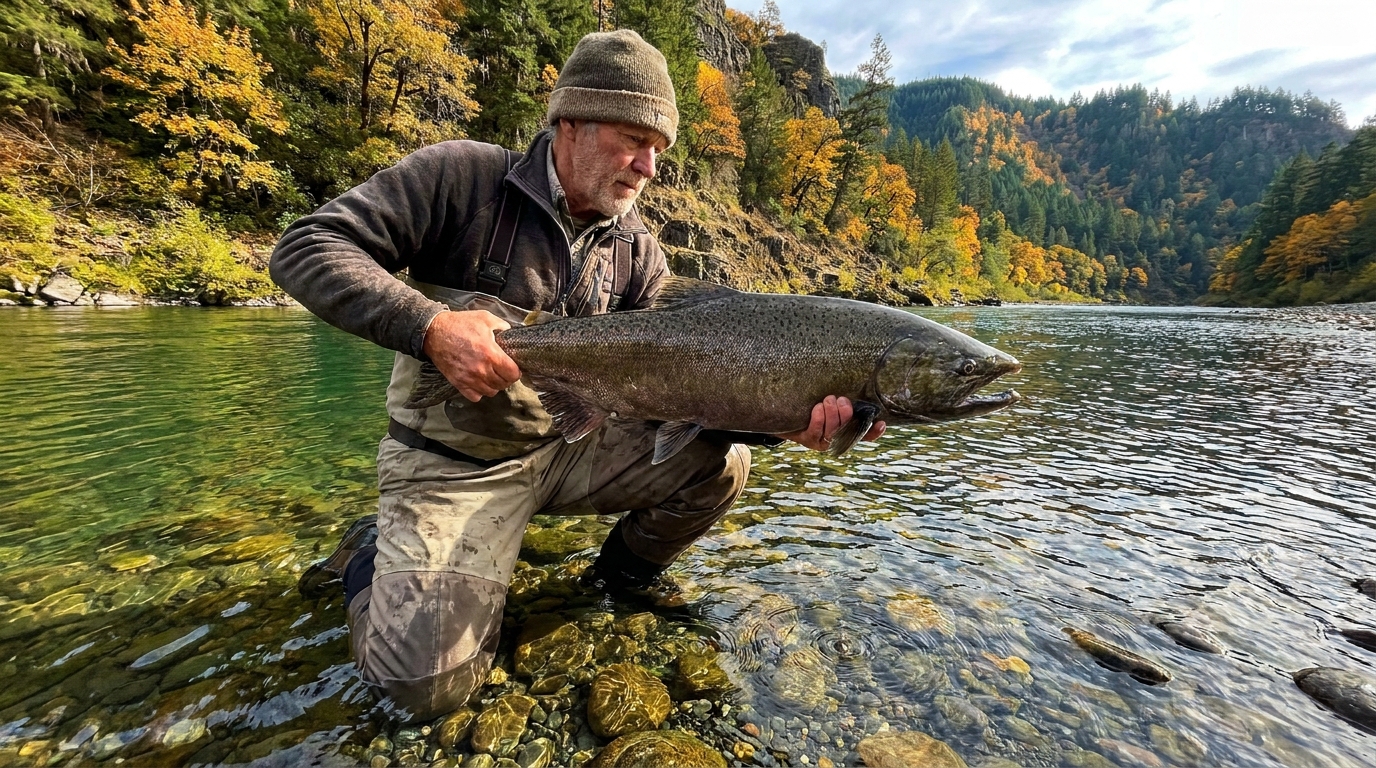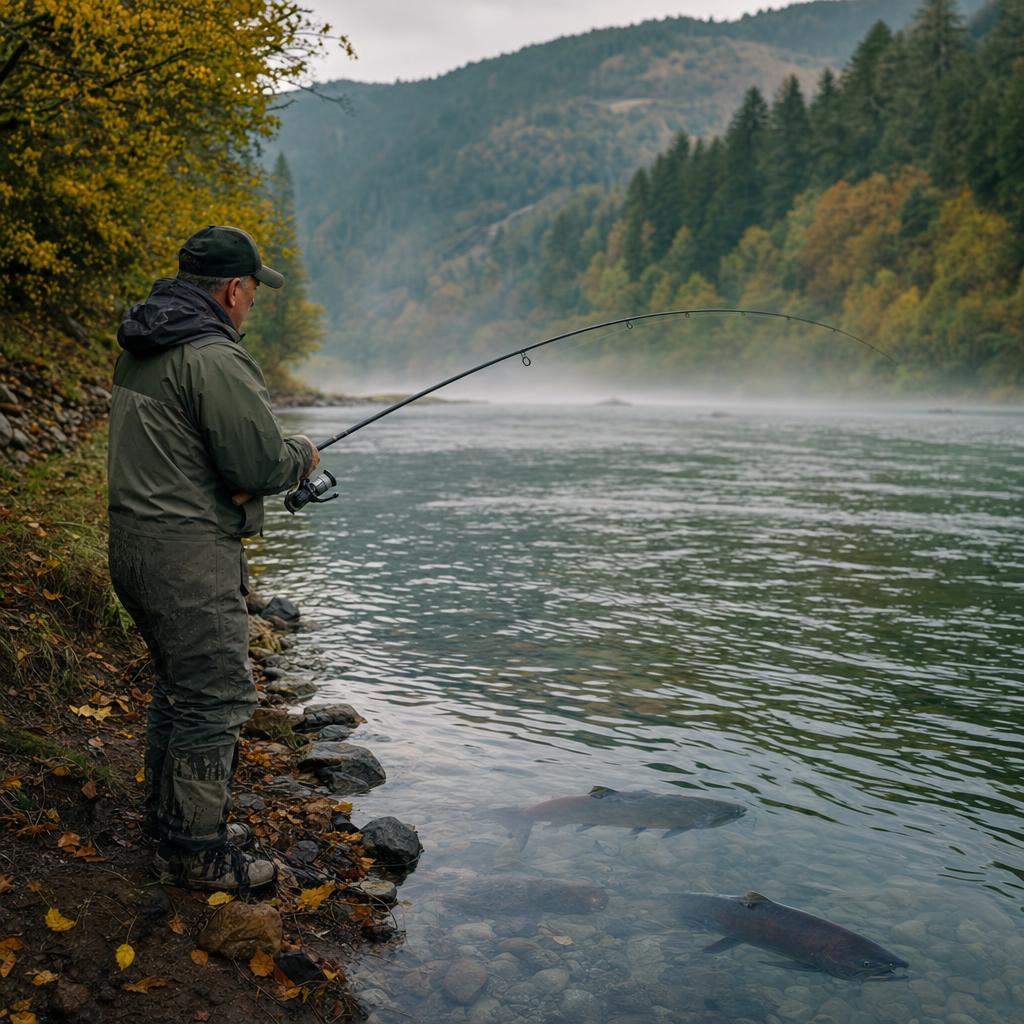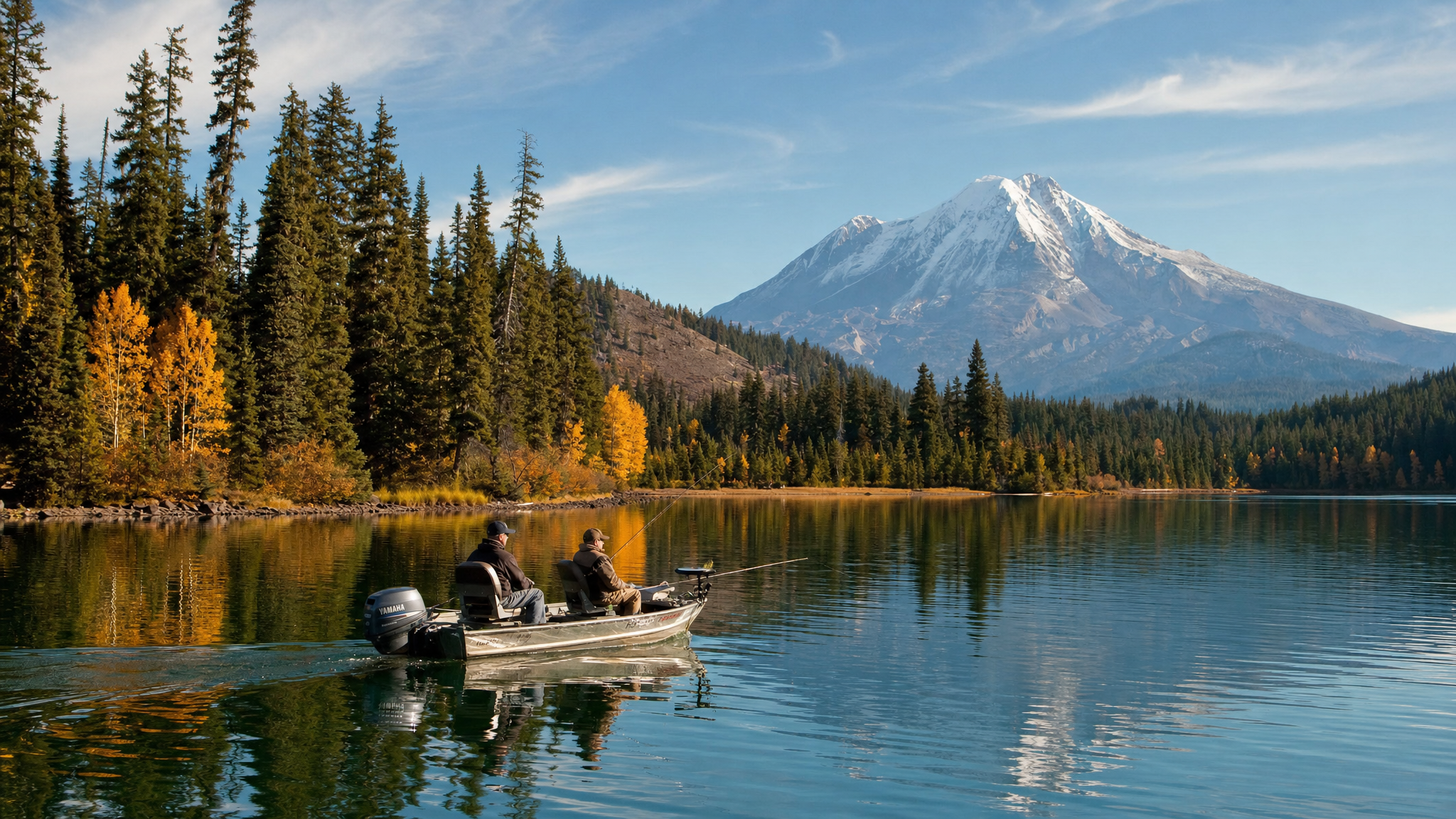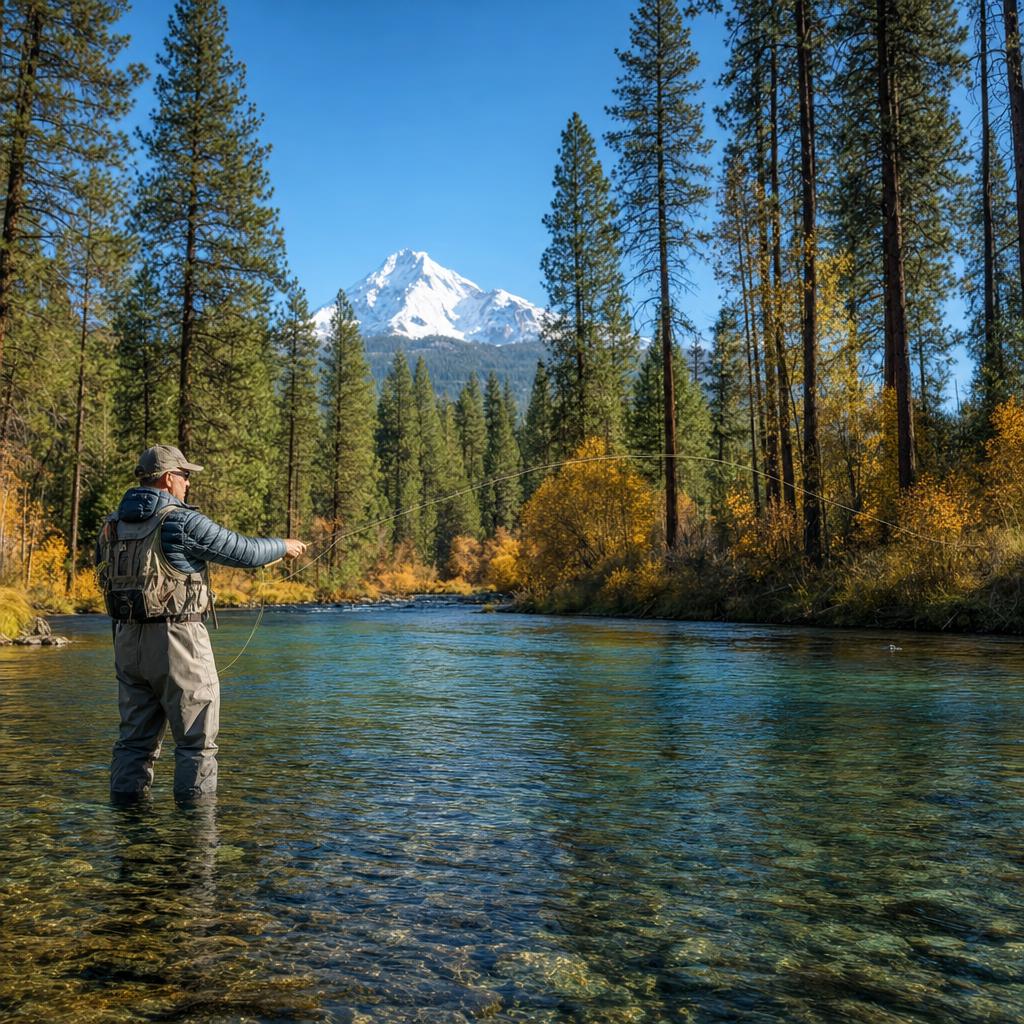
When the crowds thin out and the summer heat breaks, the Metolius River transforms into something almost magical. Oregon's most unique trout fishery — a spring-fed river that emerges full-sized from the base of Black Butte in the eastern Cascades — reaches its most productive period from late September through November. The target: wild redband rainbow trout that grow fat on a steady diet of aquatic insects and scuds in some of the clearest water in the Pacific Northwest.
Why October Is Prime Time on the Metolius
The Metolius runs cold and constant year-round, hovering between 46 and 54 degrees Fahrenheit regardless of season. That consistency is what makes fall so productive. As surrounding lakes and streams cool down, anglers abandon them for warmer pursuits, leaving the Metolius comparatively uncrowded. Meanwhile, the redbands are feeding aggressively, putting on weight ahead of winter.
Blue-winged olive mayflies (Baetis) hatch in earnest from mid-September through November, often peaking on overcast afternoons between 11 a.m. and 2 p.m. These size 18–20 hatches can trigger explosive surface feeding, with double-digit numbers of fish rising simultaneously in the long, flat glides above Camp Sherman. If you time your visit to catch a cloudy, slightly breezy October afternoon, you may witness one of the best dry-fly shows in Oregon.
Regulations You Must Know
Before you rig up, get the current Oregon Department of Fish and Wildlife (ODFW) regulations for the Metolius. The river has unique rules that change by section:
- Fly angling only for most of the mainstem — artificial flies with barbless hooks are required.
- Catch-and-release only for all trout in the majority of the river corridor. Check ODFW Zone 10 regulations for the exact boundary markers.
- A valid Oregon fishing license with Combined Angling tag is required.
- The river flows through Deschutes National Forest land — most access points are day-use only, with some designated campgrounds allowing overnight stays.
The Metolius is a trophy fishery managed specifically to protect wild redband genetics. Respect the rules — every fish you release is another trophy for the next angler.
Where to Fish: Best Access Points
The river runs roughly 28 miles from its headspring near the town of Camp Sherman to Lake Billy Chinook. Not all sections are created equal.
Camp Sherman Area (Miles 0–4)
This is the most heavily fished stretch and for good reason. The spring itself produces a remarkable volume of water that immediately forms deep pools and clear runs. The Camp Sherman Store area and the Forest Service bridge offer easy access. Fish early on weekdays to avoid weekend pressure. Redband trout here average 12–16 inches, with occasional fish pushing 20 inches.
Lower Canyon Sections (Miles 10–22)
Accessible via Lower Bridge Road and several Forest Service spur roads, these stretches require more effort but reward with solitude and bigger fish. The trail system along the lower canyon covers several miles of prime water with deep holding pools where large redbands spend their days. A 6-weight rod is useful here if you're throwing streamers into the heavy water below Pioneer Ford.
The "Braids" Near Canyon Creek Campground
Where the river splits around gravel bars and islands, you'll find excellent side-channel fishing. These areas warm slightly in afternoon sun and concentrate fish during blue-winged olive hatches. Smaller sizes and lighter tippets shine here.
Tackle and Fly Selection
The Metolius demands technical fishing. The water is gin-clear, the fish are educated, and drag-free drifts are non-negotiable. Here's what works:
- Rod: 9-foot, 4-weight is the standard. A 5-weight handles the lower canyon streamer work.
- Leader: 12–14 feet tapered to 6X for dry flies; 5X for nymphs and scuds.
- Dry flies: BWO Parachute (size 18–20), Sparkle Dun, Comparadun, and CDC Biot Emergers in olive and gray.
- Nymphs: Pheasant Tail (18–20), Copper John, and Zebra Midge in red or black (size 20–22). Fish these in tandem under a small indicator or as a Euro-nymphing rig with a sighter.
- Scud patterns: Olive and orange scuds in size 14–16 are year-round producers. The Metolius is full of freshwater shrimp and the fish know it.
- Streamers: Black Woolly Bugger and Midnight Cowboy in size 6–8 for lower canyon work, especially early morning or during low-light conditions.
Approach and Presentation Tips
Metolius redbands see plenty of flies. Approach every run from downstream, moving slowly and staying low. The glassy flats above Camp Sherman require casts of 40–50 feet with perfect drifts — if there's even a hint of drag, the fish will ignore your fly or spook entirely.
During BWO hatches, look for consistent rises along foam lines and current seams. Match the hatch size precisely; going one size too large is often the difference between refusals and hookups. Many experienced anglers on the Metolius fish without a strike indicator, relying on subtle leader movement to detect takes on nymphs.
Getting There
From Bend, take US-20 West toward Sisters, then turn north on Camp Sherman Road (Forest Road 14). The 40-mile drive takes about an hour. Camp Sherman itself has limited services — a small general store and a few Forest Service campgrounds. Sisters is the closest town with full services, gas, and lodging. The Deschutes National Forest's Sisters Ranger District (541-549-7700) can answer questions about current road conditions and campground availability.
Final Notes
The Metolius is one of those places that earns a permanent spot on your annual fishing calendar. Fall brings cooler air, golden ponderosas, hatching mayflies, and aggressive redband trout in some of the most beautiful water in Oregon. Go on a Tuesday, bring 6X tippet, and prepare to be humbled — and occasionally rewarded — by one of the state's most demanding and spectacular fisheries.