When most Oregon salmon anglers think fall Chinook, their minds jump to coastal rivers — the Tillamook, the Rogue, the Elk. But the Willamette River, running straight through the heart of the state's most populated valley, hosts one of the most accessible and productive fall Chinook runs in the Pacific Northwest. From its confluence with the Columbia at Portland south to Corvallis and beyond, the Willamette's fall king salmon fishery deserves far more attention than it typically gets.
The Fall Chinook Run: Timing and Origins
Willamette fall Chinook are a distinct, hatchery-supported run produced primarily at Willamette Falls Hatchery near Oregon City and Marion Forks Hatchery on the North Santiam. These fish enter the Columbia from the Pacific in late summer, stage briefly in the lower Columbia, then push into the Willamette beginning in late September. Peak bank fishing typically runs from mid-October through early November, though fish are present in good numbers from the first week of October.
Most Willamette fall Chinook are hatchery fish — adipose fin-clipped and fully harvestable. A smaller component of unclipped wild fish are present and must be released. Check the current ODFW regulations for harvest rules, which can change mid-season based on run returns.
Key Stretches and Access Points
The Willamette offers a remarkable number of public bank and boat access points through the valley. Here are the stretches that consistently produce for bank anglers:
- Willamette Falls (Oregon City): The historic falls create a natural holding zone that concentrates fish waiting to move upstream. The bank below the falls on both sides — particularly the Clackamette Park and West Linn Tualatin River confluence areas — produces kings consistently through October. This is arguably the most productive single location on the mainstem Willamette.
- Newberg Pool (Willamette River Miles 45–60): The broad, slow reach between Newberg and Wilsonville is a major salmon staging area. Bank access at Champoeg State Heritage Area and Molalla River State Park provides productive anchor points. Boat anglers work this reach extensively with back-trolling plugs.
- Willamette Mission State Park (north of Salem): Bank access along the river bend here allows anglers to reach a productive inside curve where fish hold and stage. The slower current makes for productive bobber-and-bait presentations.
- Independence Riverview Park: One of mid-valley's most underrated bank spots, the gravel bars and current seams near Independence see solid fish numbers by late October as fish push toward Marion Forks.
- Albany and Corvallis area: The lower Calapooia and Marys River confluences are late-season magnets. Fish that have passed through the lower and mid valley arrive here in November, and the stretches near Bowman Park in Corvallis are accessible and productive.
Bank Fishing Tactics
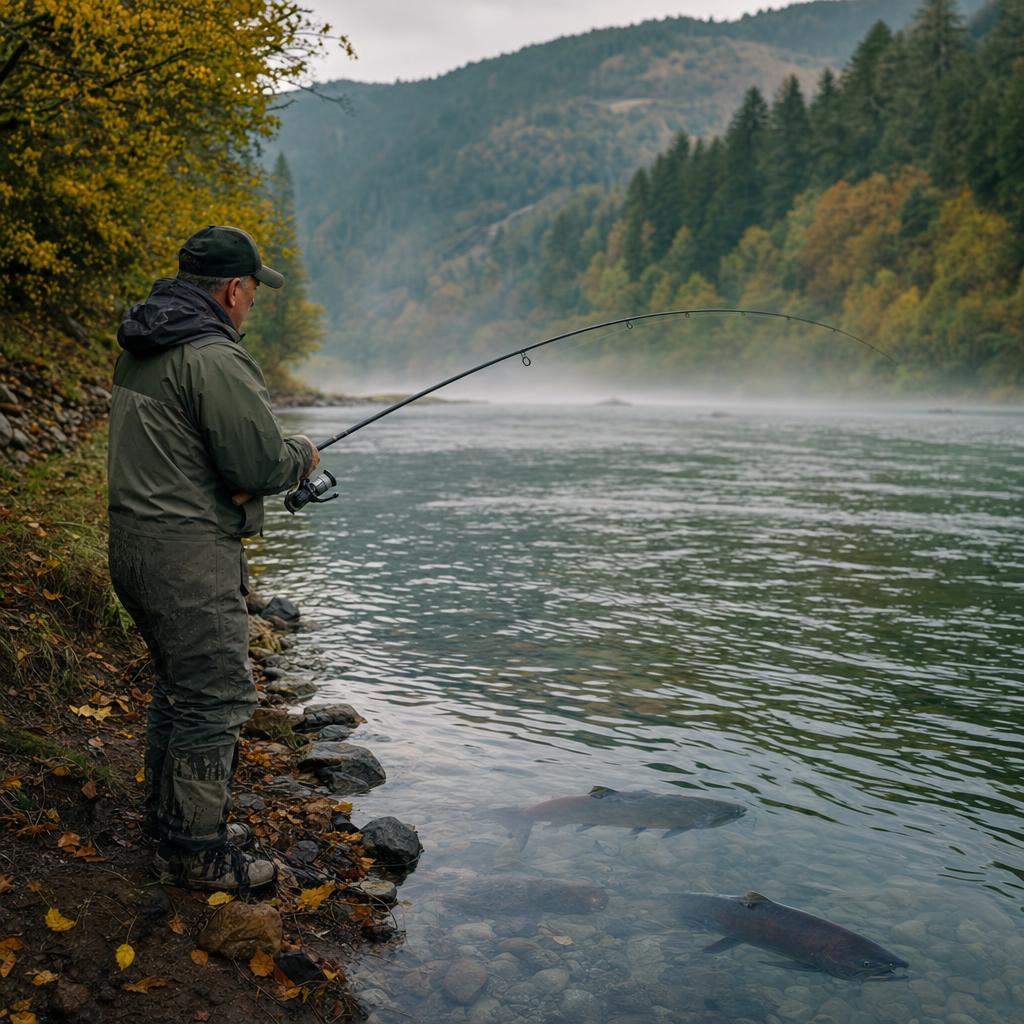
Willamette bank fishing for fall Chinook is primarily a cured-egg-and-lead game with some spin-and-glo and spinner opportunities thrown in.
Anchored Bait Presentation
The most reliable bank method is casting a two-hook bait leader rig with cured salmon eggs or sand shrimp to the edge of the main current seam and allowing it to sit. Use a sliding sinker rig (typically 2–4 oz of pencil lead or slinky) above a swivel, then a 24–36 inch leader of 20–25 lb monofilament to a pair of size 2 or 4 Octopus hooks.
- Egg cure: Pautzke's Fire Cure in red or orange is the local standard. Borax-cured roe also produces consistently on the Willamette.
- Sand shrimp: Thread two medium shrimp on the hooks, facing opposite directions, for maximum scent dispersal. Change baits every 20–30 minutes in warm water.
- Color: Pink and orange yarn on the hook adds visual appeal and holds scent. A small cheater of red or orange yarn above the hook is a classic Willamette Valley add-on.
Spinner and Spoon Fishing
Casting spinners — Blue Fox Vibrax in sizes 4–5, or Worden's Original Rooster Tail in chartreuse or orange — works well from gravel bars in faster current. Fish the inside edge of seams and slower water adjacent to holding lies. Early morning and evening are prime, as Willamette kings are notoriously light-shy in clear water conditions.
Boat Fishing the Willamette
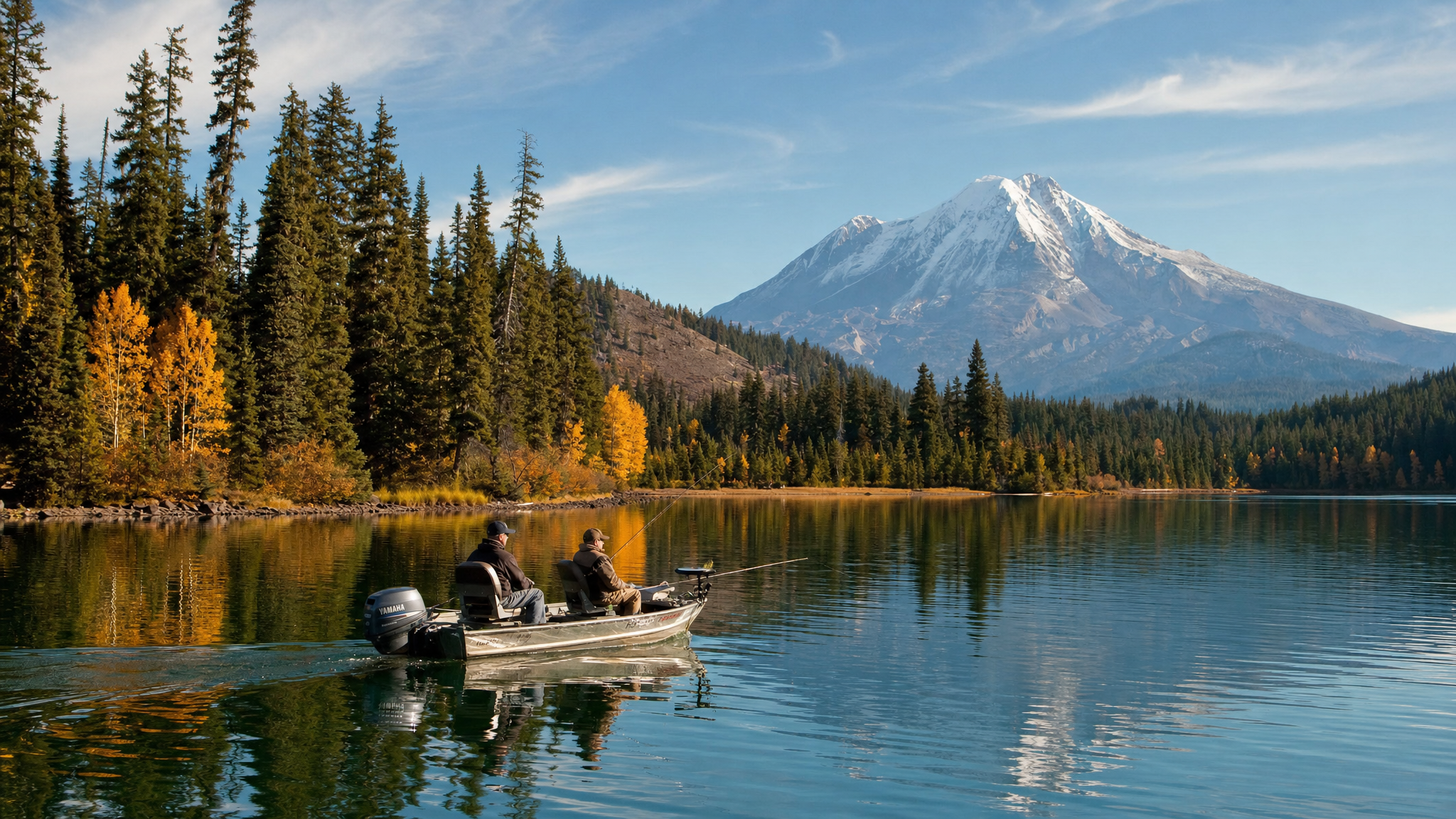
Drift boats and jet sleds both work effectively on the Willamette, particularly in the Newberg Pool and below Willamette Falls. The primary boat tactics are:
- Back-trolling plugs: Kwikfish K15–K16 or Flatfish X5 wrapped with a sardine fillet back-trolled at current speed through known holding lies. Work slower, methodically — Willamette kings want the bait in front of them for several seconds.
- Anchored bait plunking: Same presentation as bank fishing, executed from a boat anchored in productive current seams. This allows you to precisely position bait in spots that bank anglers can't reach.
- Side-drifting: Running bait presentations down current on a side-drift setup is effective from Newberg Pool south. Use longer leaders (4–6 feet) and lighter lead in the slower water.
Gear and Tackle Summary
- Rod: 9–10.5 ft medium-heavy salmon rod rated for 1/4–4 oz
- Reel: Level-wind baitcaster or spinning reel with 20 lb main line
- Leader: 20–25 lb Maxima Ultragreen or Seaguar fluorocarbon
- Terminal: 2/0 to 4/0 Owner SSW or Gamakatsu Octopus hooks
- Weight: 2–4 oz slinky or pencil lead, matched to current speed
- Bait: Cured roe, sand shrimp, or combination of both
Regulations and Hatchery vs. Wild
The Willamette's fall Chinook fishery is closely managed by ODFW. Critical rule: retain only adipose-clipped (hatchery) fish. Wild unclipped Chinook must be released immediately. In-season regulation changes can and do happen — consult myodfw.com or the ODFW hotline before each trip.
The 2026 season is open for Chinook retention in most Willamette reaches through November. Daily bag limit is typically two adult Chinook, hatchery only. A valid Oregon angling license and Combined Angling Tag are required.
Local Knowledge and Etiquette
The Willamette bank fishery draws significant crowds at productive spots, especially on weekends near Oregon City and in the Newberg Pool. Show up early — prime spots fill fast on Saturday and Sunday mornings. Give others room, keep your lines out of neighboring anglers' water, and be prepared to rotate if a fish comes off or the bite slows.
The Willamette is a working river with boat traffic — barge traffic, jet boats, and recreational watercraft all share the water. Bank anglers should be aware of their surroundings, particularly below Willamette Falls where current can be deceptive near the falls structure.
Final Thoughts
The Willamette's fall Chinook fishery is a genuine sleeper — close to Portland, Salem, and Eugene, accessible to bank anglers without a boat, and stuffed with hatchery fish that are fully harvestable. It doesn't get the press of the coastal runs or the mystique of the upper Rogue, but for pure numbers of fish available to a broad audience of Oregon anglers, the Willamette mainstem in October and November is tough to beat. If you haven't tried it, this is the year.