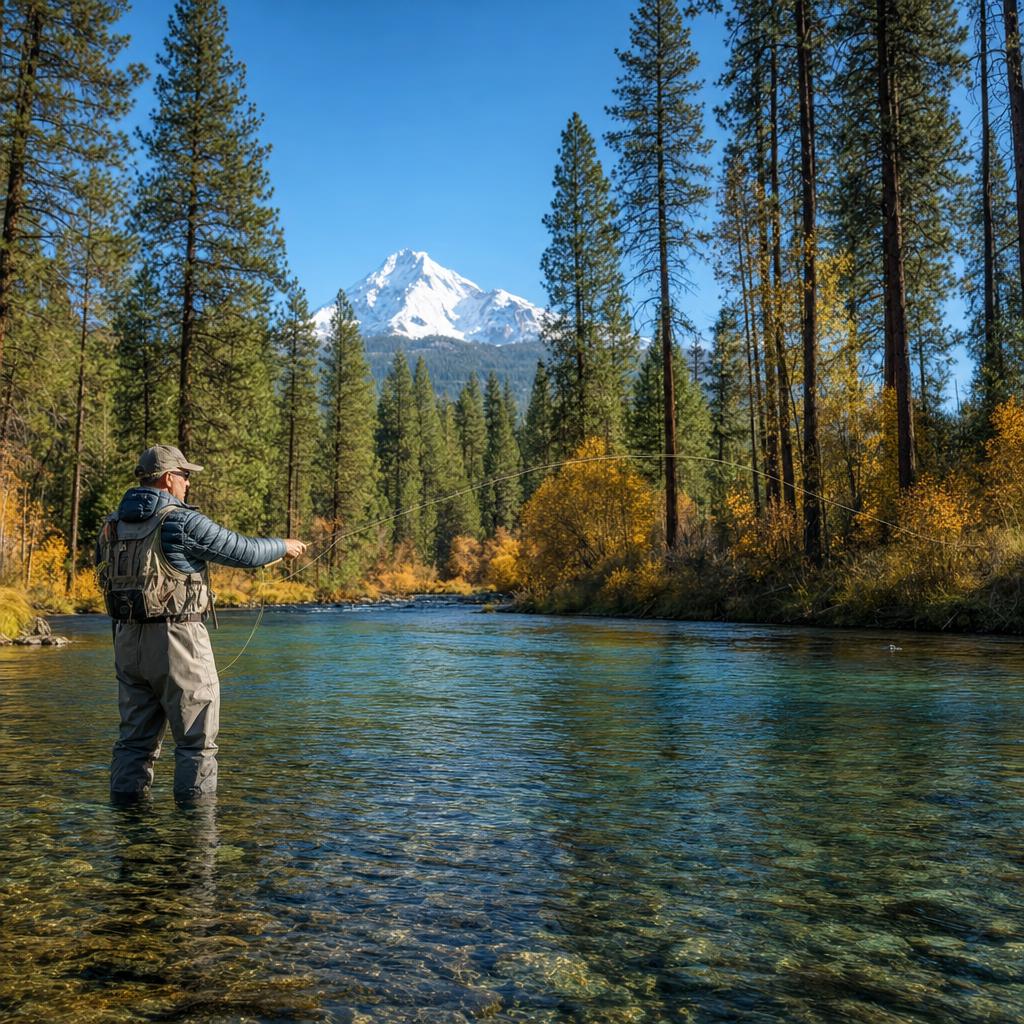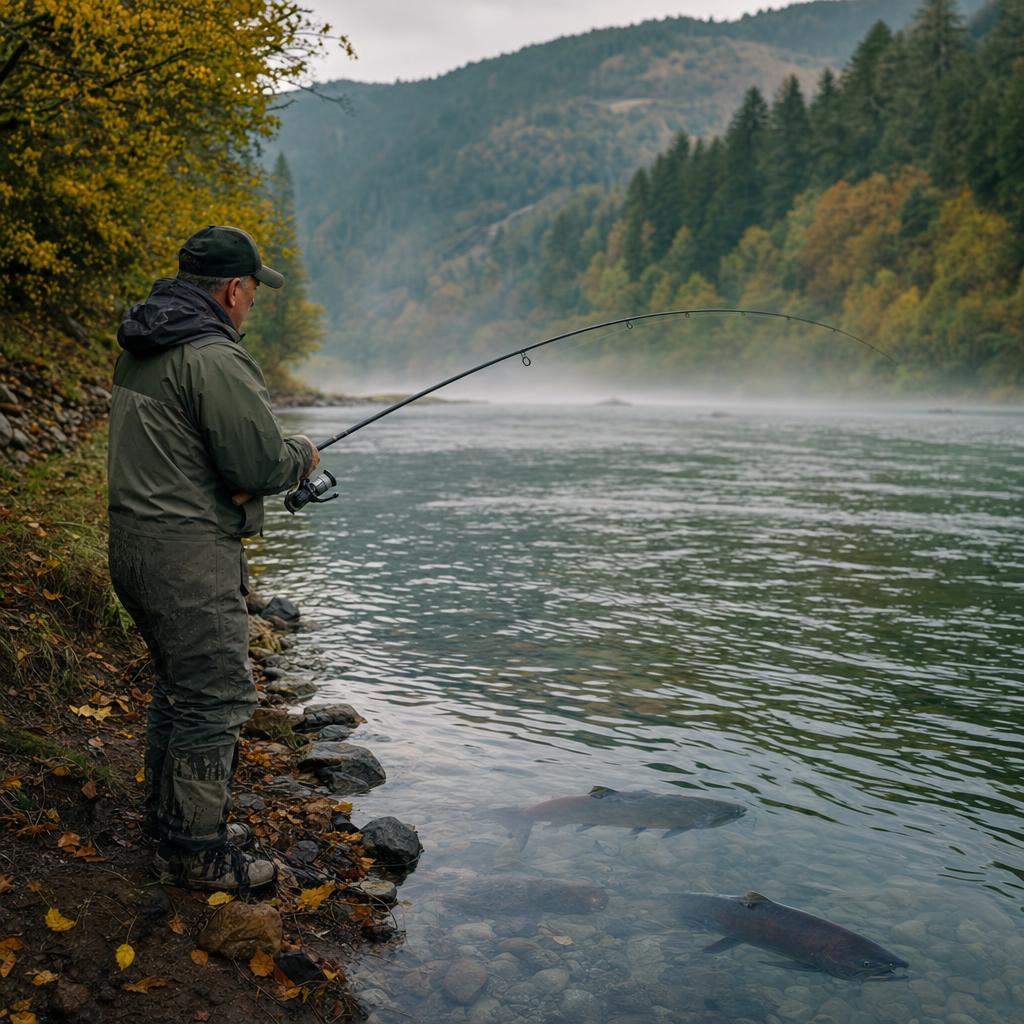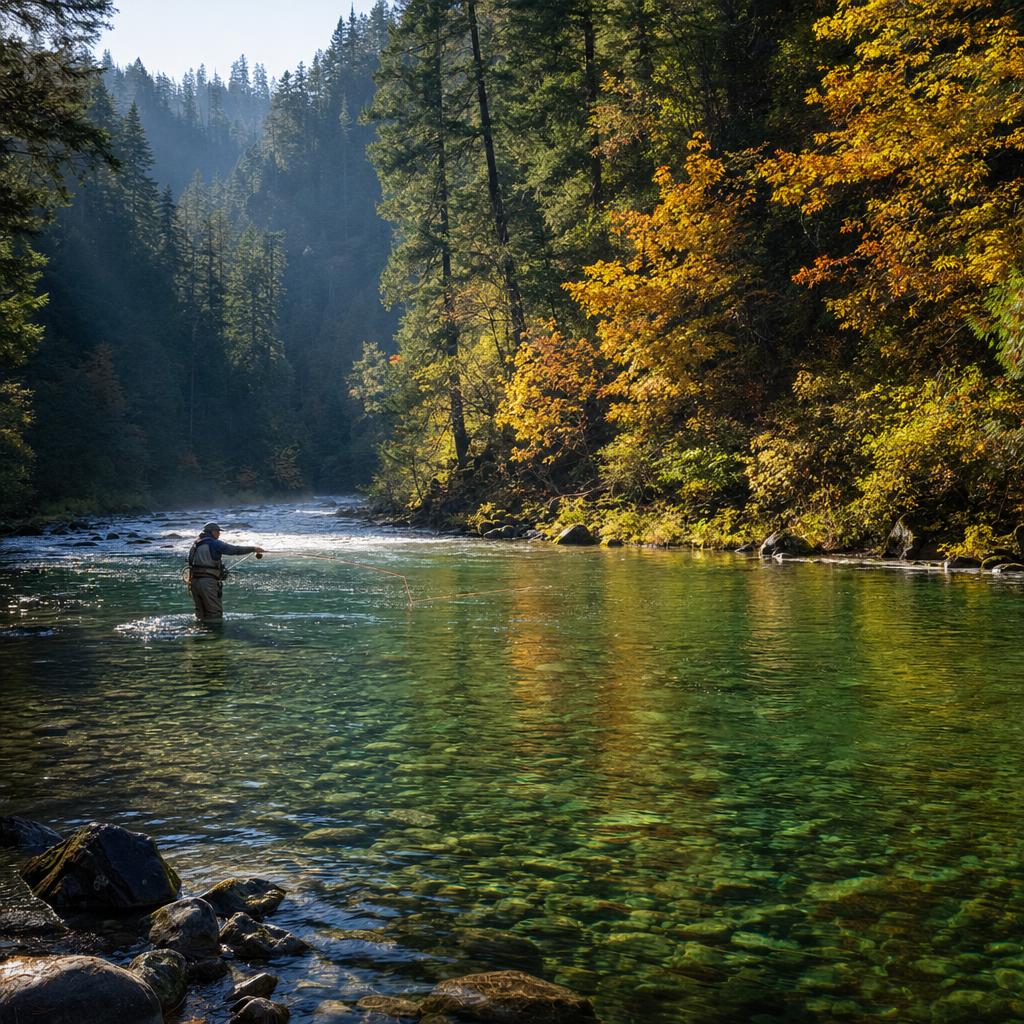
If there is one river in Oregon that has earned the right to be called sacred, it is the North Umpqua. From Soda Springs Dam down through the famed Deadline Falls stretch to Susan Creek, this river holds wild summer steelhead well into October — chrome-bright fish that have traveled hundreds of miles from the Pacific. For fly anglers willing to wade wet and work hard, there may be no better October destination in the Pacific Northwest.
The Fly-Only Section: Understanding the Rules and the Water
The North Umpqua's most celebrated stretch runs approximately 33 miles from the confluence with the Little River upstream to Soda Springs Dam. This fly-only, catch-and-release section for wild steelhead is one of the oldest designated fly fisheries in the American West, established in 1950. Before you step in the water, know the rules: artificial flies only, no weight, no floats, and all wild steelhead must be released unharmed. Check ODFW regulations each season, as retention rules for hatchery fish (marked with a clipped adipose fin) can change.
The best public access points include Susan Creek Day Use Area, Bogus Creek, Horseshoe Bend, and Wright Creek. Each stretch has distinct character — some wide and tailout-rich, others tight canyon runs that require precise wading and reach casting.
October Timing: What the Fish Are Doing
North Umpqua summer steelhead enter the river from June through September, but October fishing can be exceptional. Fish that entered during late summer have been holding in cooler, deeper pools, often stacked in good numbers by the time fall air temperatures drop and river clarity peaks. By mid-October, flows typically begin to rise with early fall rains, which can trigger fresh movement from the lower river and refresh holding water throughout the fly section.
Water temperatures in the low-to-mid 50s (°F) are ideal. When temps drop below 50°F, fish become sluggish and harder to move on the swing. Check the USGS gauge at Winchester (station 14317000) before every trip — flows between 400 and 900 cfs are generally fishable; higher is tough wading, lower means spooky fish in skinny water.
Reading the North Umpqua: Where Steelhead Hold in Fall
North Umpqua steelhead are classic holding fish. They are not moving constantly — they are resting in specific lies, and your job is to cover those lies efficiently. In October, focus on:
- Tail-outs: The calmer water at the bottom of a pool, where current slows before a drop. Fish stack here and are most likely to swing a fly.
- Seam lines: The soft water behind boulders or the edge between fast current and the slower softer water — prime steelhead ambush lanes.
- Mid-depth runs: Three to six feet of water over a gravel or rock bottom, moving at a walking pace. Classic swinging water. These are your bread-and-butter lies on the North Umpqua in fall.
- Shaded banks: Fish avoid bright midday sun. In October, the canyon walls create afternoon shade on the north bank — wade to the sunny side and fish toward the shade.
Flies and Presentation: The Swing Is Everything
The North Umpqua is a traditional swinging river, and most experienced anglers fish it with a two-handed Spey rod or a single-hand rod with a sink-tip line. Rods in the 12–14 foot range for 7- or 8-weight lines let you cover water efficiently and manage long swings across wide runs.
In October, when water begins to color up after the first rains, don't be afraid to fish larger, darker patterns. Some proven North Umpqua fall flies include:
- October Caddis Soft Hackle: A perfect match for the massive October caddis hatch that blankets the river in fall. Size 6–8, burnt orange body.
- Purple Peril: An old-school classic that North Umpqua fish cannot resist in off-color water.
- Intruder-style patterns: When flows push above 700 cfs, a 3–4 inch articulated pattern gets down and pushes water fish can sense.
- Green-Butt Skunk: The legendary North Umpqua fly. Carry a dozen. Fish it in clear low water on size 4–6 irons.
Present the fly quartering downstream, mend to control the swing speed, and let the fly hang below you for a full three-count before stepping and recasting. This methodical coverage of the run is the essence of steelhead fishing on the North Umpqua.
Logistics: Getting There and Planning Your Trip
The North Umpqua flows along Highway 138 east of Roseburg, making access straightforward. Most fly-section access points have small day-use parking areas. Horseshoe Bend Campground is a popular base camp with established sites near excellent water. Steamboat Inn, a legendary fly fishing lodge perched above the river near Steamboat Creek, offers world-class lodging and guiding for those who want a full-service experience.
A ODFW Oregon fishing license with combined angling tag is required. Oregon resident licenses run approximately $44 annually; non-resident licenses are $90. Tags for steelhead are included in the combined angling tag.
Conservation: Why Wild Steelhead Matter Here
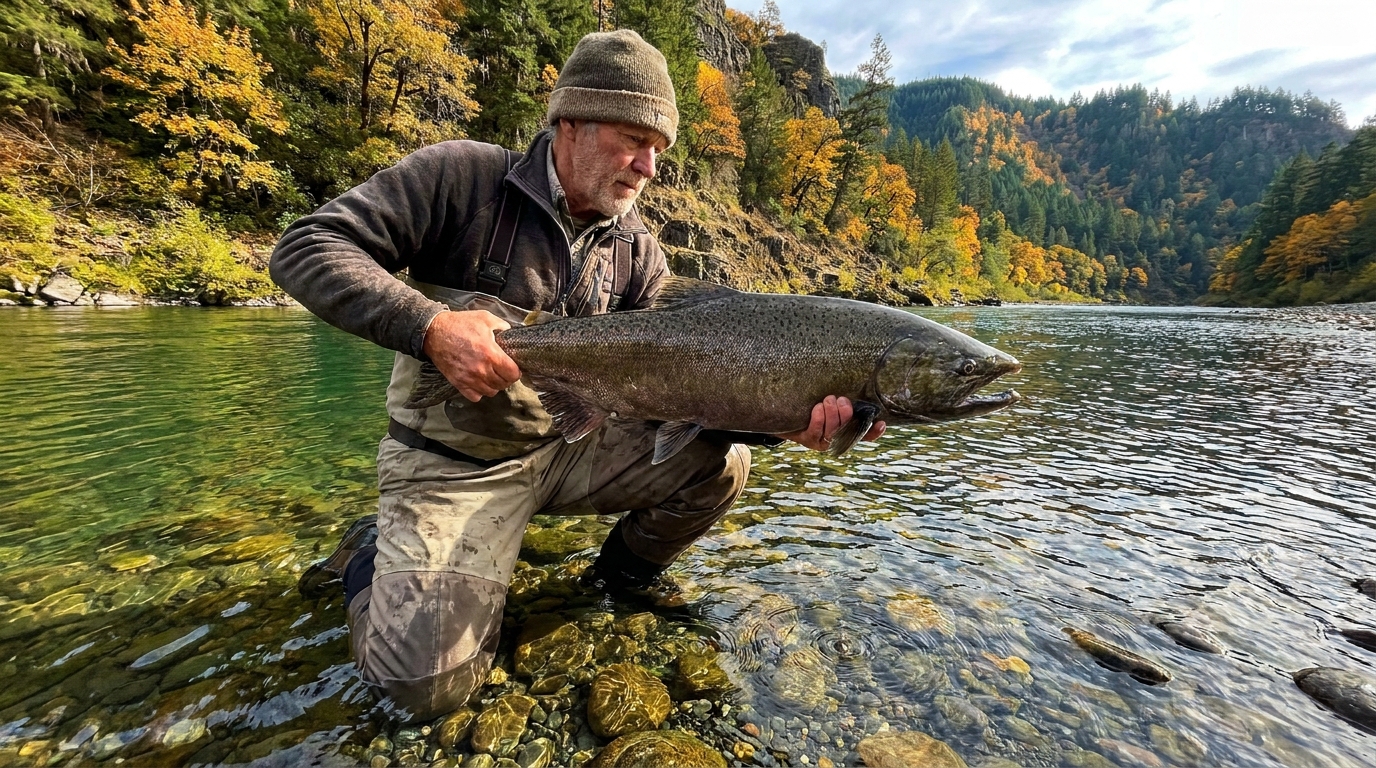
The North Umpqua's wild steelhead population is a treasure. These fish are native, self-sustaining, and genetically distinct from hatchery runs. Handle them with care — wet your hands before touching a fish, keep it in the water for photos, and support it gently until it swims away strong. The fly-only, catch-and-release rules on this section exist because the community fought for them. Honor that legacy every time you fish.
October on the North Umpqua means canyon walls in fire-orange and rust-red, cold mornings, the scent of Douglas fir, and the heart-stopping pull of a wild fish on a swung fly. It does not get more Oregon than this.