When December rains settle into the Oregon Coast Range and Cascade foothills, most upland bird hunters have already hung up their vests for the season. That's exactly why the dedicated few who pursue ruffed grouse in December have some of the best hunting of the year — quiet woods, flushed-out cover, and birds that have largely been left alone since October.
Oregon's Ruffed Grouse: An Overlooked Treasure
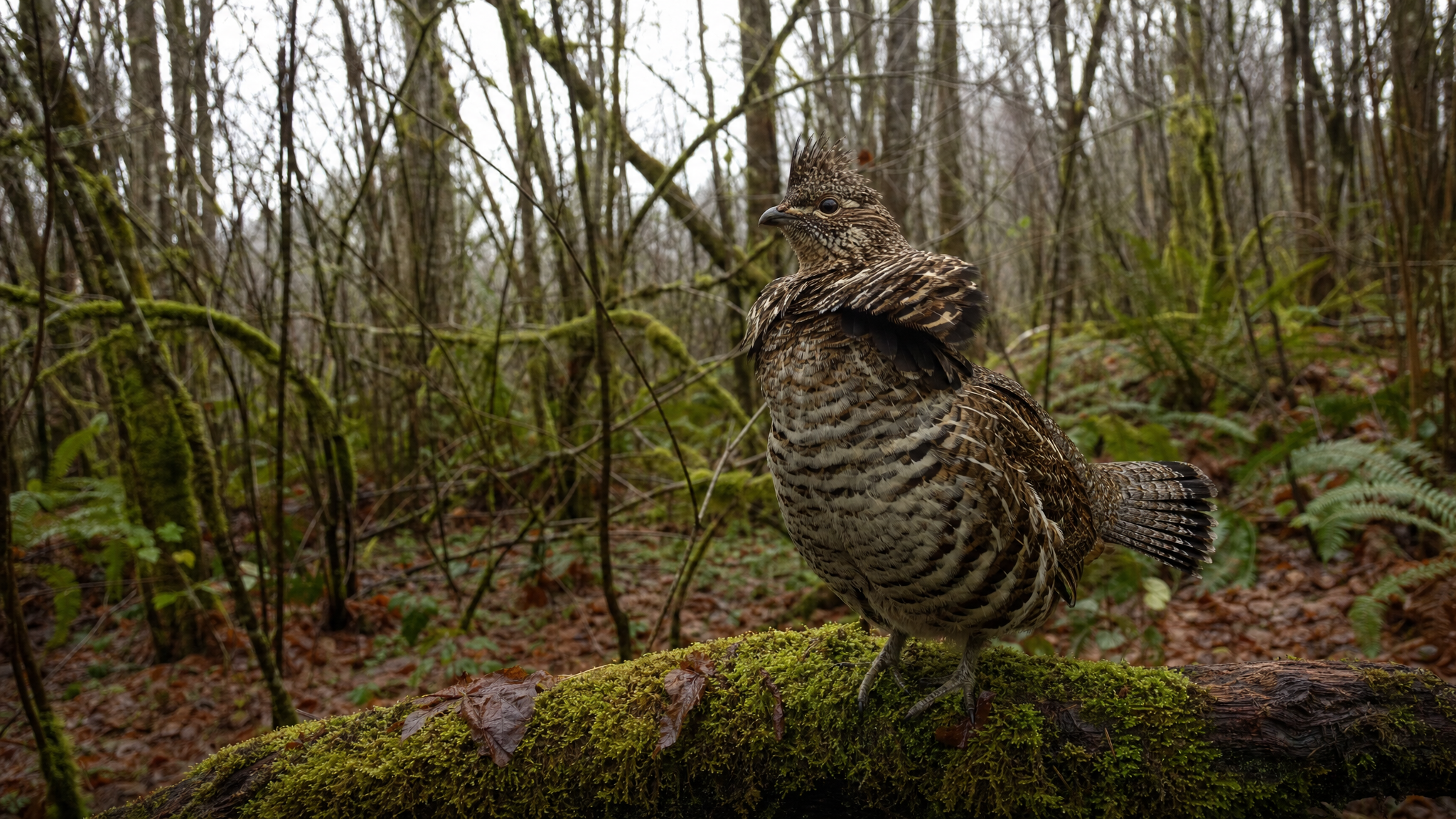
The ruffed grouse (Bonasa umbellus) is Oregon's most widespread native grouse, occupying a broad swath of the state from the dense alder bottoms of Tillamook County to the mixed conifer drainages of the Umpqua and Rogue headwaters. Unlike pheasants, which require open agricultural edges, or blue grouse, which push into high-elevation timber, ruffed grouse thrive in exactly the kind of brushy, low-elevation second-growth habitat that defines Oregon's wet western forests.
Oregon's ruffed grouse season typically runs through December 31, giving hunters a solid late-season window that most people ignore. With bag limits of three birds per day and 10 in possession, there's real opportunity here for hunters willing to put boots in the mud.
Prime December Habitat: Where to Look
Ruffed grouse are birds of edge and transition — the thicker and messier, the better. In December, concentrate your scouting on:
- Alder creek bottoms: The drainages feeding the Trask, Wilson, and Nestucca rivers in Tillamook County hold consistent populations. Young alder stands with dense understory are textbook ruffed grouse cover.
- Clear-cut edges at 5–15 years old: The Tillamook State Forest and Siuslaw National Forest are patchworked with cuts in various stages of regeneration. Cuts in the 5–15 year range that back up to mature timber are prime spots.
- Hazel thickets: Oregon hazel is a key winter food source. Wherever you find dense hazel stands mixed with vine maple and alder, expect grouse.
- Cascade Foothills drainages: The upper Molalla, North Santiam tributaries, and drainages off the Clackamas River watershed in Clackamas and Marion counties offer solid public land access in classic ruffed grouse habitat.
- BLM Salem and Eugene Districts: Much of the BLM land on Oregon's west side is open to upland bird hunting. Download the district maps and focus on creek drainages in logged-over second growth.
December Tactics: Slow Down and Listen
Ruffed grouse hunting in December differs meaningfully from early-season hunting. The birds are warier, the cover is thinner with leaves down, and cold temperatures make them more likely to hold tight to thermal cover on ridge edges and south-facing slopes during morning and evening hours.
Go Slow, Cover Less Ground
The classic ruffed grouse hunting mistake is covering too much ground too fast. Slow your pace to nearly a shuffle. Take three steps, pause, scan, repeat. The stop-and-go cadence mimics an approaching predator and often triggers nervous birds to flush rather than run. December birds that might have run in October are more likely to hold as temperatures drop.
Work the Creek Drainages
Rather than hunting ridges, focus on the creek bottoms and the lower third of hillsides above drainages. Ruffed grouse use these corridors daily, moving between roost sites in conifers and feeding areas in alder and hazel. Walk the edges where mature timber meets brushy understory — you'll find more birds in that transition zone than in pure brush or pure timber.
Dogs Make a Big Difference
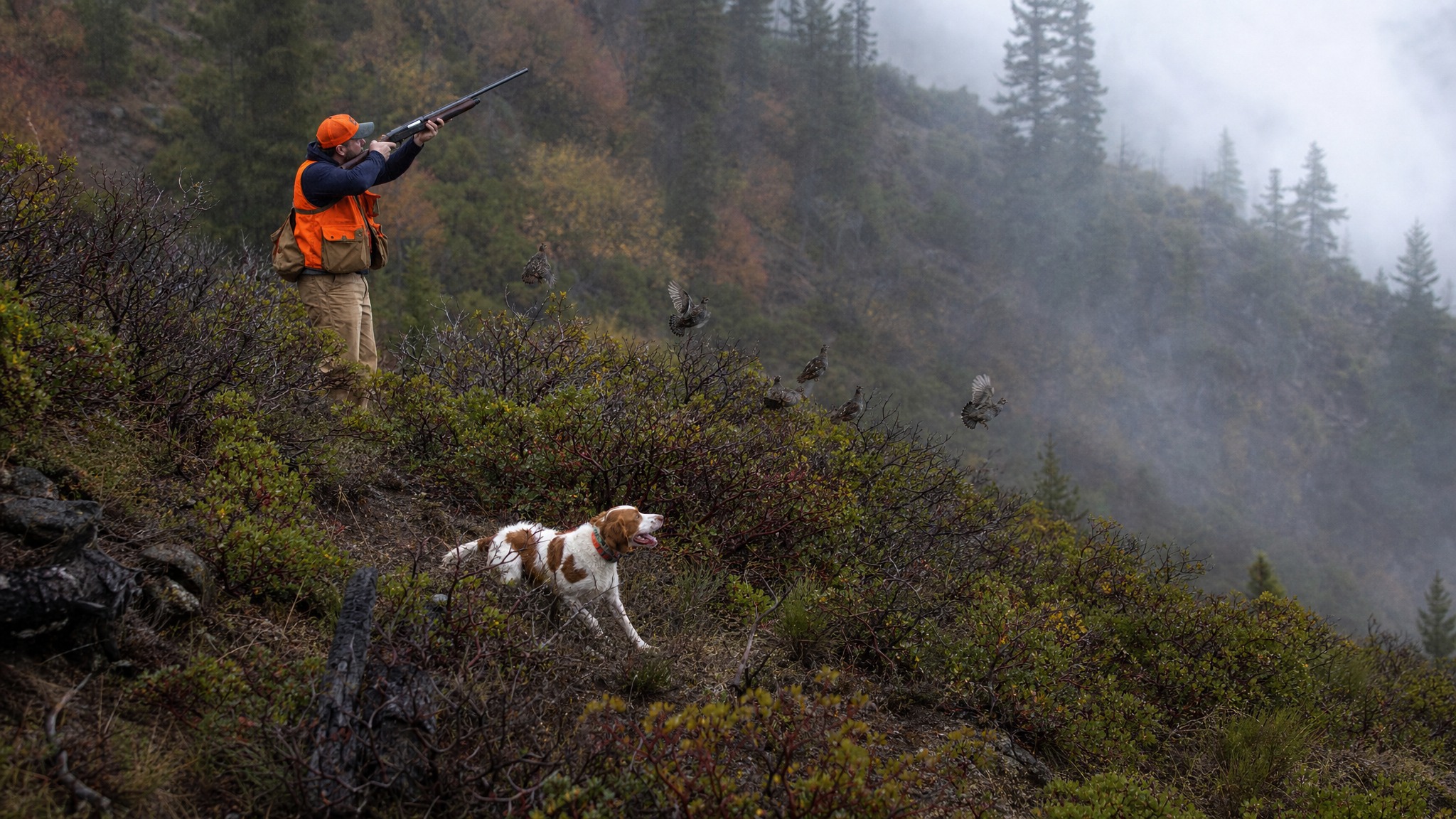
Any flushing or pointing breed is effective for ruffed grouse, but versatile breeds like German Shorthairs, Wirehairs, and Brittanys particularly excel in the Pacific Northwest's wet second growth. Flushing dogs work well in heavy cover where pointing breeds struggle to hold point. The key is a dog that works close — 20 yards or less — in this thick timber. A dog that ranges wide will push birds out of range before you can get a shot.
Shooting Through Timber
Ruffed grouse don't flush into open sky — they explode through branches, alder stems, and vine maple at close range. This is snap-shooting at its purest. A 20-gauge or 12-gauge loaded with #7½ or #8 shot in an improved cylinder or skeet choke gives you the widest pattern for threading shots through December timber. Longer shots are rare; most opportunities come inside 25 yards. Keep your head down, pick a hole in the cover, and swing through.
Gear for December Conditions
Oregon's December forests are wet. Seriously wet. Plan accordingly:
- Waterproof upland boots: Rubber-soled leather or synthetic boots with Gore-Tex or similar membranes are essential. Count on wet brush and standing water in the creek bottoms.
- Briar pants or chaps: Thorns, blackberries, and salal will tear up unprotected legs. Upland-specific briar pants or snake chaps protect against both thorns and the inevitable crouching under alder tangles.
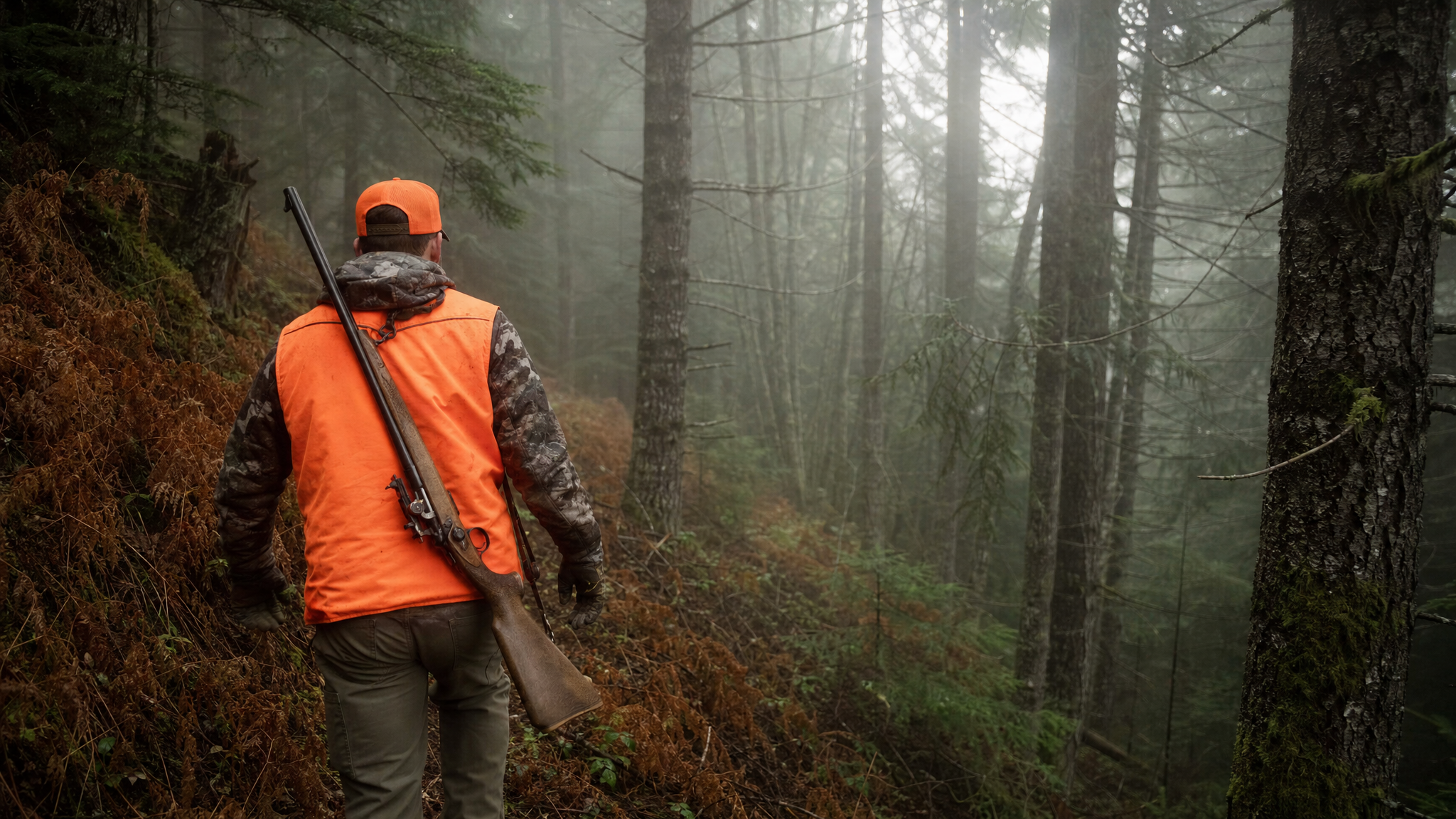
- Blaze orange: Required in Oregon for upland bird hunting. At least 400 square inches visible from all sides, or a hat — read the current regs.
- Light pack with snacks and emergency gear: You can easily get turned around in Coast Range timber. Carry a compass, emergency space blanket, and enough water and food for the day.
Regulations and Licensing
Oregon ruffed grouse regulations are managed by ODFW under the upland game bird umbrella. A current Oregon hunting license is required, along with an upland bird validation if applicable — check the current year's regulations synopsis at myodfw.com for exact requirements. Season dates and bag limits can be verified in the ODFW upland game bird regulations booklet. Most Coast Range and Cascade foothills public land is open to ruffed grouse hunting, but always confirm access before you go — some timber company lands require a free recreation permit.
Cleaning and Table Fare
Ruffed grouse are exceptional table fare — arguably the best-eating upland bird in the Pacific Northwest. The breast meat is mild and white, similar to pheasant but with a slightly richer, more complex flavor from a varied wild diet of berries, buds, and insects. Field dress birds promptly in cool weather and get them refrigerated within a few hours. Breast them out for a quick pan sear, or cook them whole for a more traditional roast. A simple preparation with butter, garlic, and fresh herbs is all these birds need.
December ruffed grouse hunting in Oregon is a sleeper. While most hunters have shifted to waterfowl or are dreaming about next elk season, the Coast Range and Cascade foothills are quietly holding some of the best grouse cover in the Pacific Northwest — and almost nobody's out there. That's the whole point.