The .22 Creedmoor is a wildcat cartridge that’s rapidly shedding its wildcat reputation. Formed by necking down the 6.5 Creedmoor case to .224 caliber, it produces muzzle velocities in the 3,800 to 4,000 fps range with 77- to 90-grain bullets while maintaining a case that feeds from standard short-action magazines and headspaces on a common bolt face. Factory ammo has started appearing from several manufacturers, and most reloaders who already load the parent case find the transition easy. For Oregon shooters who chase ground squirrels in May, coyotes year-round, and deer in the mountains, the .22 Creedmoor covers more ground in one rifle than almost anything else on the market.
Why the .22 Creedmoor Over Other .22 Centerfires?
The .220 Swift and .22-250 have been the velocity kings of the .224 world for decades. The .22 Creedmoor doesn’t beat them outright on raw speed, but it beats them in ways that matter more to serious reloaders:
- Case efficiency — The Creedmoor case has a more efficient powder column geometry than the Swift or .22-250, meaning you get competitive velocities with slightly less powder and less heat per round.
- Barrel life — The Swift is notoriously hard on throats. The .22 Creedmoor runs cooler and delivers measurably longer barrel life, often 20 to 30 percent more rounds before accuracy degrades.
- Bullet selection — The longer case allows seating long, high-BC .224 bullets like the Berger 90-grain VLD, Hornady 88-grain ELD-M, and Sierra 90-grain MatchKing at correct depth without intruding on powder capacity. These bullets are simply too long to feed or work well in .22-250 or Swift-based actions.
- Brass availability — 6.5 Creedmoor brass is among the most available and best quality on the market. Necking it down is a one-step operation with a full-length sizing die.
Brass Preparation
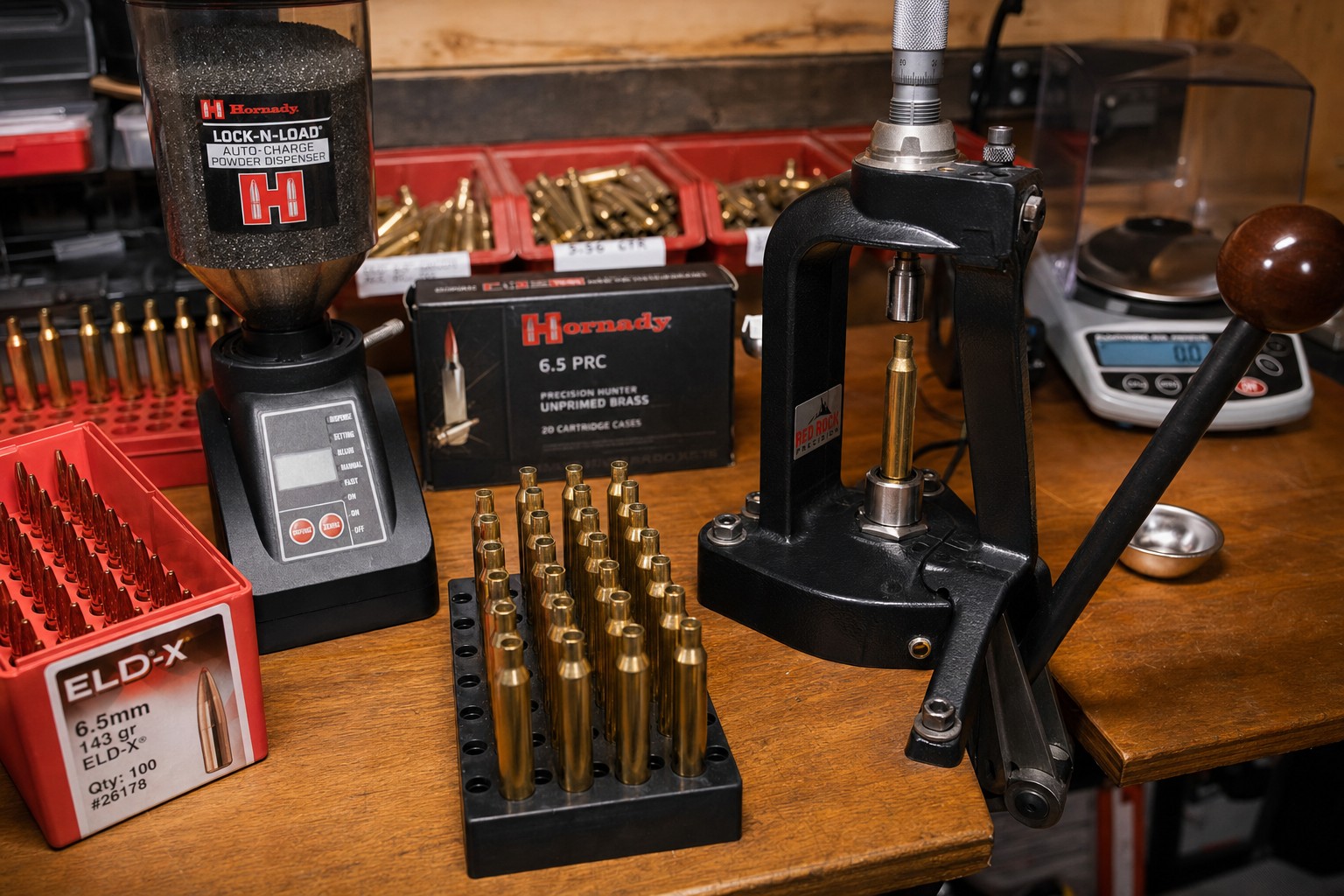
Starting with quality Hornady, Lapua, or Peterson 6.5 Creedmoor brass is the right move. The forming process is straightforward:
- Run virgin or once-fired 6.5 CM brass through a .22 Creedmoor full-length sizing die. Most brass will form in one pass with adequate lubrication (Redding Imperial Sizing Die Wax recommended).
- Trim to 1.910 inches. Fresh-formed brass often runs a bit short, but verify and trim to spec before loading.
- Uniform primer pockets, deburr flash holes, and anneal the case neck after forming. The necking-down process work-hardens the brass, and annealing restores the neck tension uniformity that drives consistent velocity spreads.
- Full-length size and neck-turn if building for a tight-neck custom chamber. For most factory-spec chambers, FL sizing is sufficient.
Powder Selection
The .22 Creedmoor’s larger case volume compared to the .22-250 means slower powders work best. The following have shown excellent results in barrels from 24 to 26 inches:
Top Powder Choices
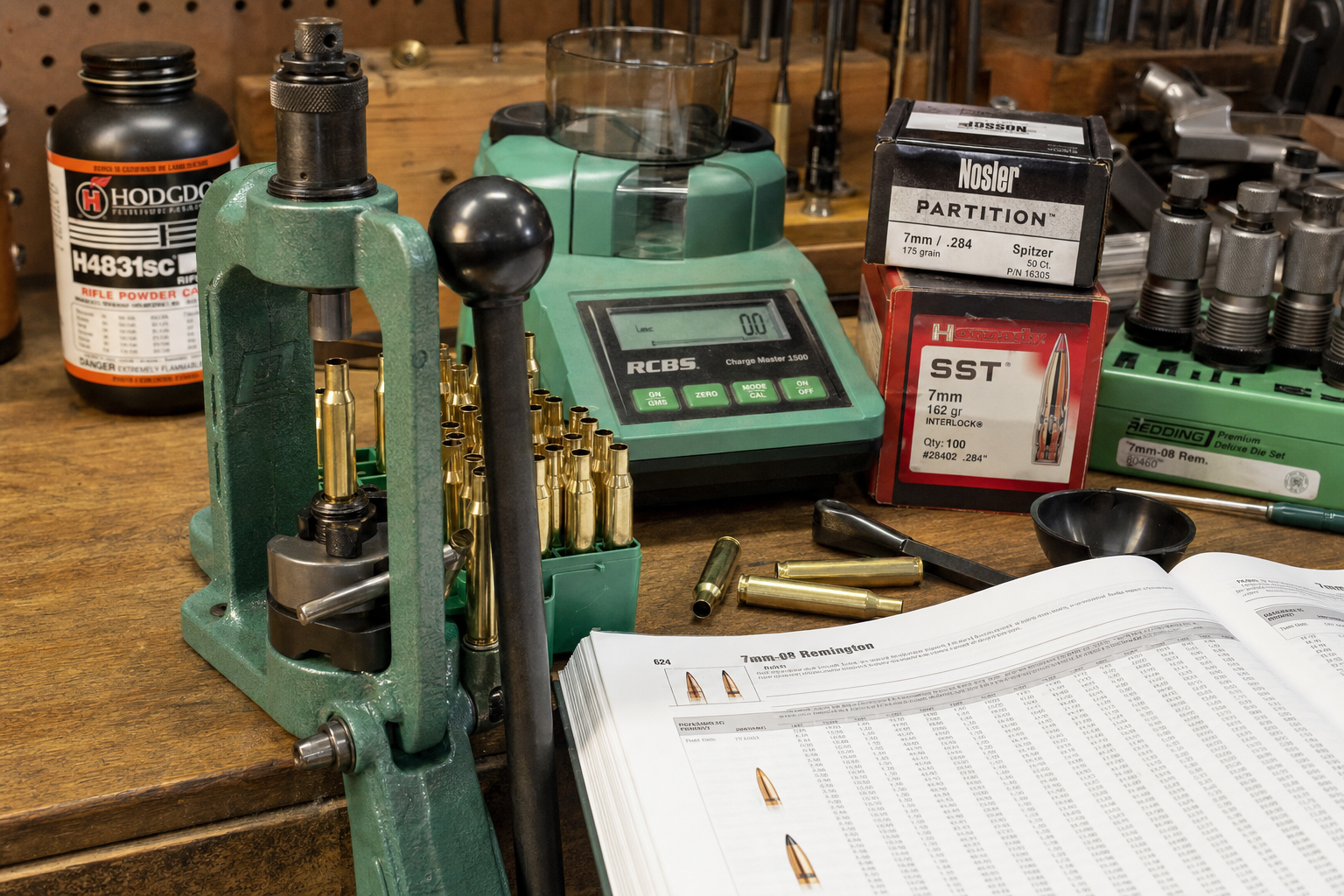
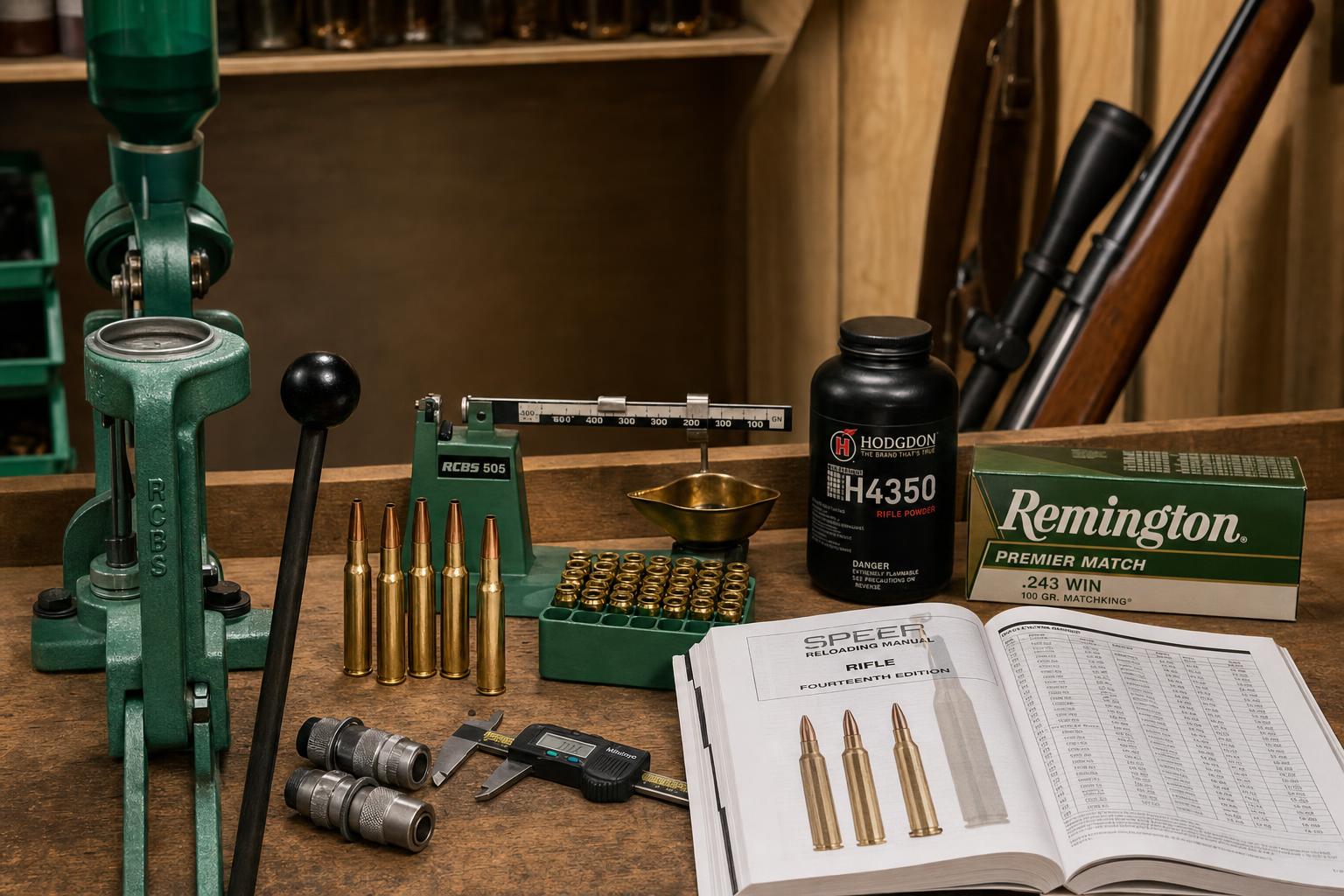
- Hodgdon H4350 — The most popular choice and the benchmark powder for this cartridge. Offers excellent velocity consistency, temperature stability (important for Oregon’s hot August varmint days), and meters cleanly. Start loads around 36 grains with 77-grain bullets and work up carefully.
- Hodgdon Varget — Works better with lighter 52- to 62-grain bullets when you want screaming ground squirrel velocity. Less ideal for the heavier, high-BC hunting bullets.
- IMR 4451 — Excellent with 75- to 90-grain bullets. Temperature insensitive and fills the case nicely for consistent ignition and velocity.
- Alliant RL-16 — Slightly faster burn than H4350, works well with 75- to 80-grain bullets. Can be compressed slightly without pressure issues in 26-inch barrels.
- Hodgdon CFE 223 — Good choice for lighter bullets and high-volume varmint shooting. Copper Fouling Eraser additive extends strings between cleaning sessions.
Bullet Selection for Oregon Applications
Varmints (Ground Squirrels, Prairie Dogs)
- Hornady 52-grain V-MAX: Screams past 4,100 fps in a 26-inch barrel, devastating on small varmints to 500 yards
- Berger 55-grain Varmint: Excellent accuracy, flat arc, affordable enough for high-volume shooting
Predators (Coyotes)
- Hornady 75-grain ELD-M: Excellent BC for wind bucking, expands reliably at extended ranges
- Sierra 77-grain MatchKing: Proven accuracy and terminal performance to 600+ yards
Deer (Inside 400 yards)
- Berger 90-grain VLD Hunting: The premier long-range deer bullet in .224. At .22 Creedmoor velocities, it initiates rapid expansion and delivers deep, controlled penetration. Oregon requires adequate terminal performance on deer, and this bullet delivers it decisively inside 400 yards.
- Hornady 88-grain ELD-M: Excellent BC, consistent performance, and more widely available than the Berger
Sample Load Data (26-inch barrel, Lapua brass, CCI BR-4 primers)
Always start 10 percent below maximum and work up in 0.5-grain increments, watching for pressure signs. This data is for reference only and is not a substitute for current published load data from powder manufacturers.
- Hornady 75-grain ELD-M, H4350: Start 37.0 gr / Max 39.5 gr — Velocity range 3,650–3,900 fps
- Berger 90-grain VLD, H4350: Start 35.0 gr / Max 37.5 gr — Velocity range 3,500–3,750 fps
- Hornady 52-grain V-MAX, Varget: Start 37.0 gr / Max 40.0 gr — Velocity range 3,950–4,150 fps
Realistic Expectations in the Field
A .22 Creedmoor load built around the 90-grain Berger and H4350 in a quality 26-inch heavy-contour barrel will deliver sub-half-MOA groups from the bench with worked-up handloads, retain supersonic velocity beyond 1,000 yards in calm conditions, and generate less recoil than any 6mm or 6.5mm cartridge at those ranges. For Oregon deer hunters who want one rifle for both summer varmint season and fall deer, the .22 Creedmoor loaded with 90-grain hunting bullets is a genuine option — though shot placement discipline matters more with .22-caliber deer bullets than it does with a heavier caliber. Keep shots inside 350 yards on deer, pick the vitals carefully, and this cartridge performs.
Getting Started
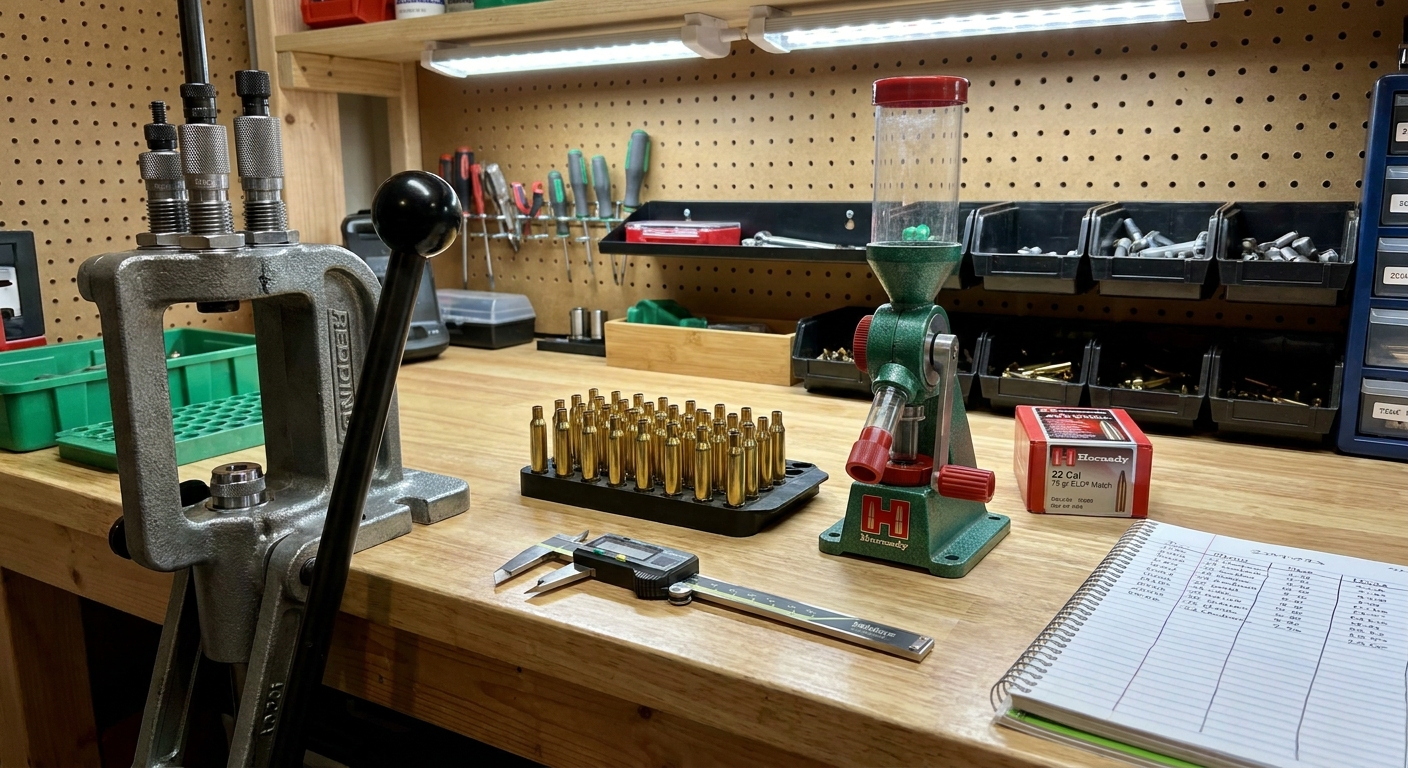
If you’re already reloading 6.5 Creedmoor, the barrier to entry for the .22 Creedmoor is a single sizing die and a box of .224 bullets. Redding, Hornady, and RCBS all offer dies. Brass forming is simple. The cartridge rewards careful handloading with the kind of downrange precision that factory ammo in standard varmint cartridges rarely achieves. For Pacific Northwest shooters who value accuracy, versatility, and the ability to tailor loads to specific applications, the .22 Creedmoor is worth the investment.