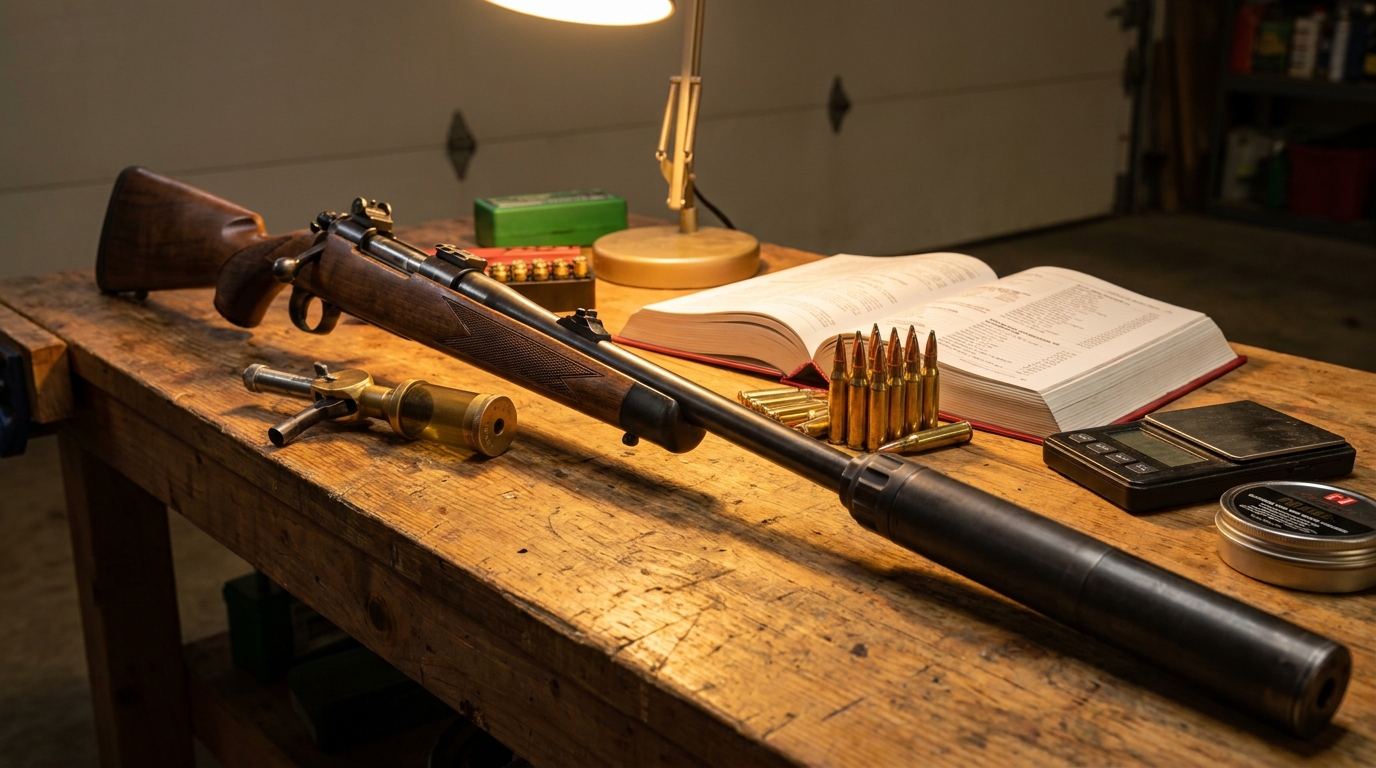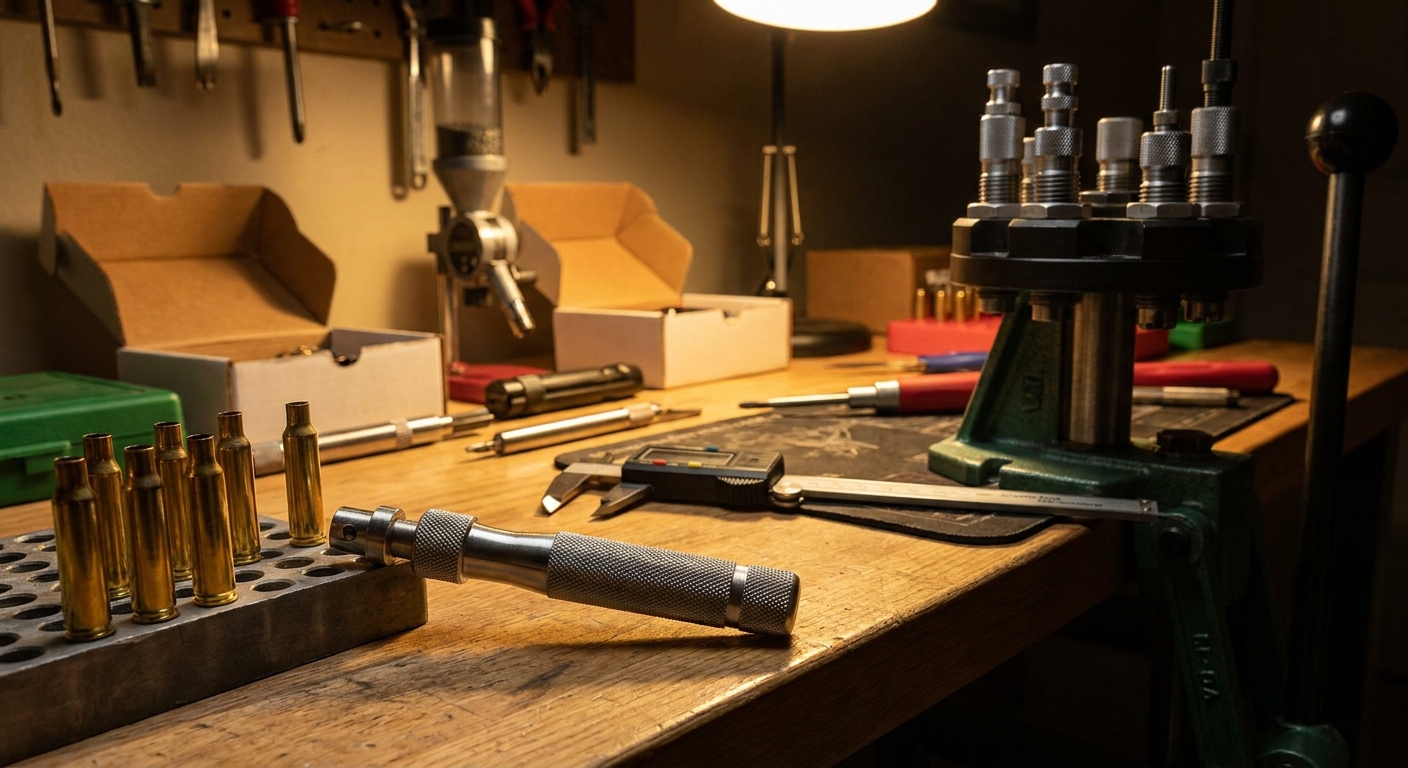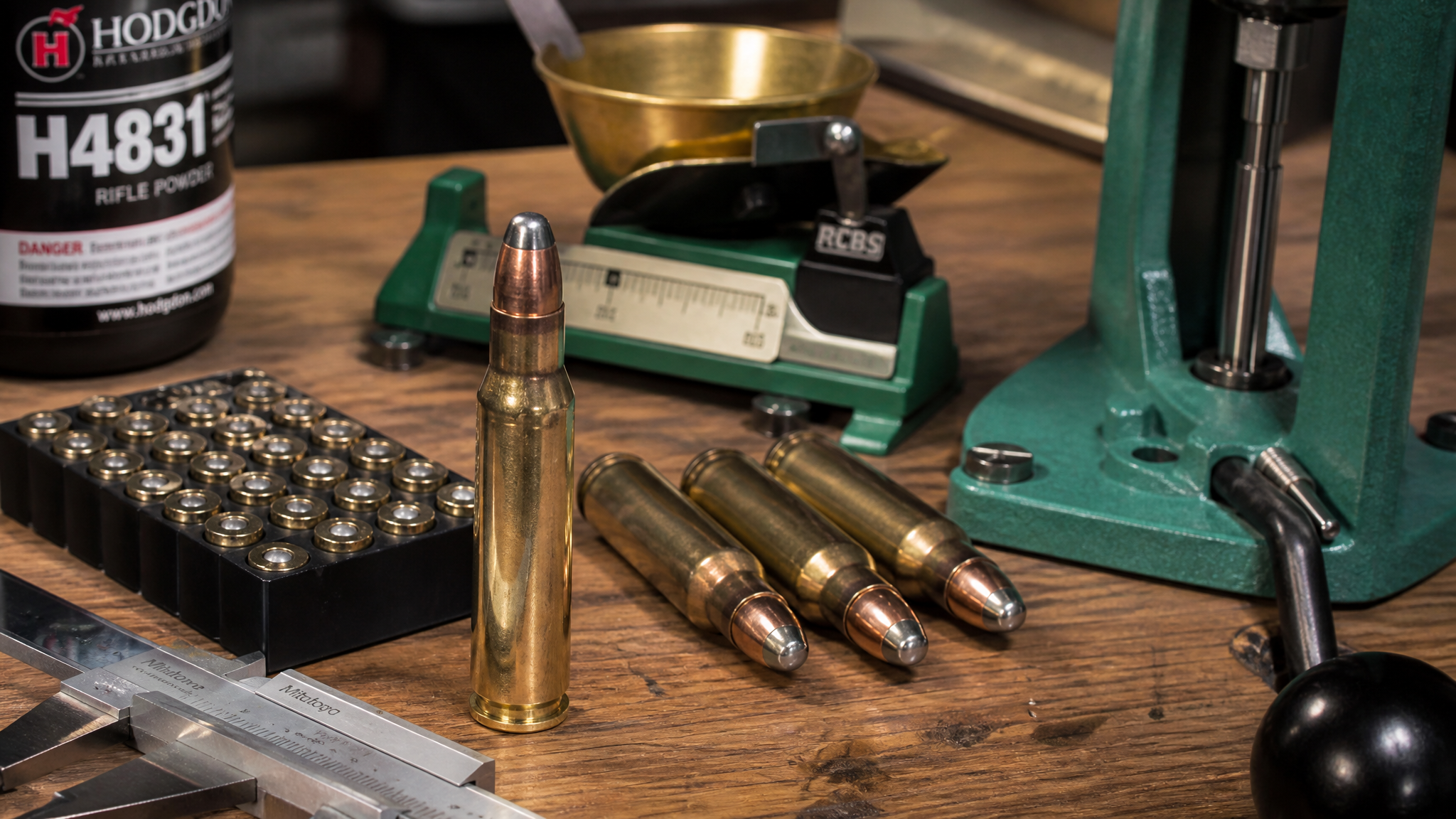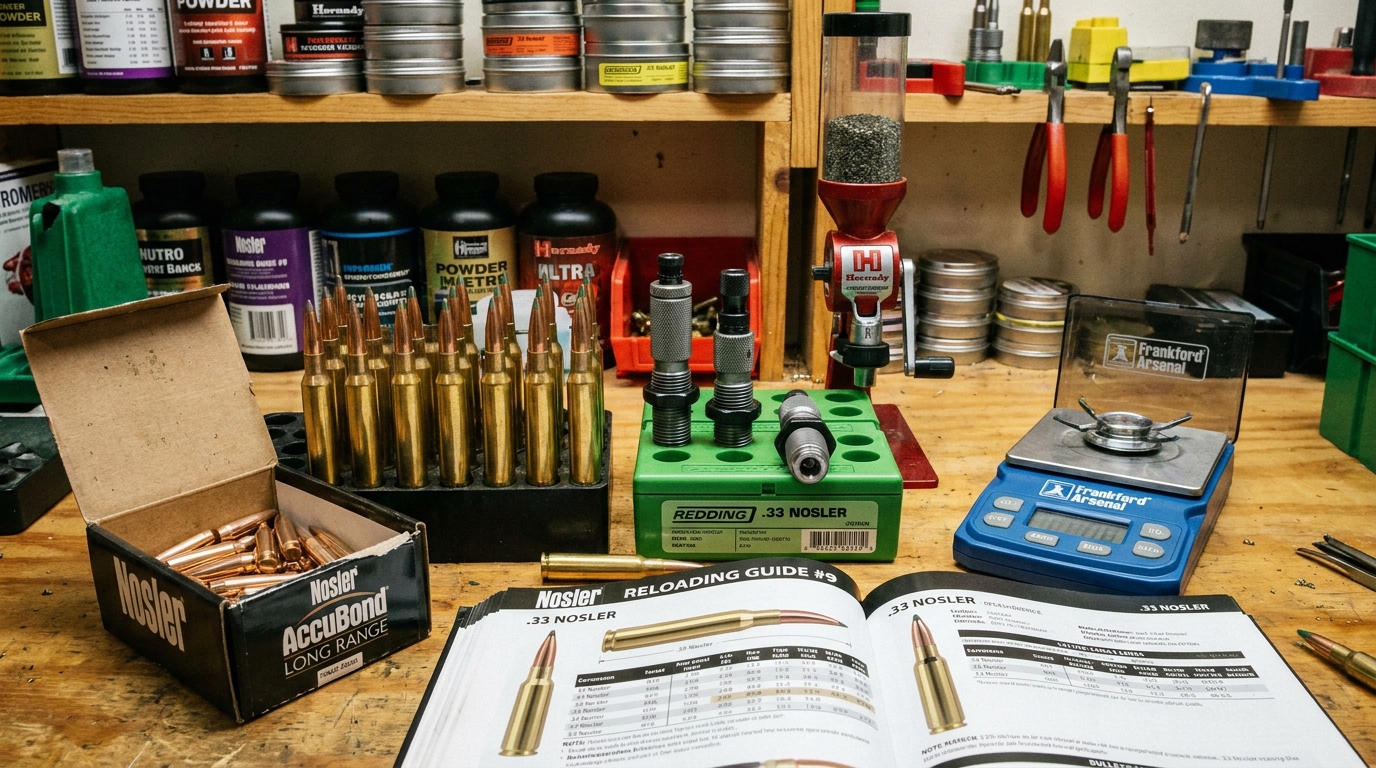
The .33 Nosler arrived in 2016 as Nosler's answer to a long-standing question: how do you get .338 Lapua Magnum ballistics into a standard-length rifle action without the cartridge length, the massive bolt face, or the heavy, expensive rifles that the Lapua demands? The answer was elegant — rebate the rim, shorten the case slightly, and load it to higher pressure in a 3.34-inch overall length that fits a standard long-action magazine.
For Oregon hunters who glass big country in the Wallowas, the Steens, or the Cascades and occasionally need to reach across a canyon, the .33 Nosler is worth serious consideration. It launches 225–265 grain .338-caliber projectiles at velocities and energies that rival the big Lapua — in a rifle that weighs two pounds less and costs half as much.
The .33 Nosler by the Numbers
The .33 Nosler operates at a SAAMI maximum average pressure of 65,000 PSI — higher than most standard belted magnums, which is why it achieves Lapua-adjacent performance. Factory specifications from Nosler place a 225-grain AccuBond Long Range at 2,975 fps at the muzzle, generating 4,426 ft-lbs of energy. A 265-grain partition pushes 2,775 fps with 4,528 ft-lbs.
At 500 yards, a 225-grain ABLR at 2,975 fps retains roughly 1,800 ft-lbs — well above any reasonable threshold for elk-sized game. Wind drift at 500 yards in a 10 mph full-value crosswind runs about 12 inches, which is manageable for a disciplined shooter with confirmed drop data.
Cases and Brass Prep
Nosler manufactures the only commercial .33 Nosler brass — there is no other source, and the cartridge cannot be formed from other brass in any practical way. Nosler's cases are premium quality, and most handloaders report excellent case life when loads are kept at or below maximum pressure. Buy a minimum of 100 cases to start; 200 is better if you plan to shoot seriously.
Standard case prep applies: trim to 2.540 inches (SAAMI spec length is 2.550 maximum), debur and chamfer the case mouth, uniform the primer pocket, and flash hole deburr on first use. The .33 Nosler uses a standard large rifle magnum primer pocket.
Primers
High-pressure, magnum-charge cartridges like the .33 Nosler demand large rifle magnum primers. Federal 215M (Gold Medal Match) and CCI 250 are the standard choices. The Federal 215M is slightly hotter and tends to produce more consistent ignition with slower magnum powders like H1000, Retumbo, and IMR 7977. Stick with magnum primers across all your .33 Nosler loads — standard large rifle primers are not appropriate for this cartridge's charge weights.
Powders and Load Data
The .33 Nosler's large case and high-pressure design favors slow, dense powders in the 4350–7000 burn rate range. The following data is compiled from Nosler's published data — always start 10% below maximum and work up carefully, watching for pressure signs:
- H1000: The most commonly used powder for heavy .33 Nosler loads. With a 250-grain AccuBond, expect a start charge near 83.0 grains (2,720 fps) working toward a max around 88.0 grains (2,875 fps). Dense metering and temperature stability make H1000 a top choice for Oregon's variable conditions.
- Retumbo: Excellent with 265-grain bullets where case capacity is pushed. Slightly higher velocity potential than H1000 in some rifles. Start at 84.0 grains and work toward 89.0 grains with 265-grain projectiles.
- IMR 7977: A newer entry that meters cleanly and shows excellent performance with 225–250 grain bullets. Good choice for hunters who want consistent metered charges without a bushing measure.
- Hodgdon US869: Excellent case fill and velocity potential with 265–300 grain bullets. Less commonly seen but delivers competitive numbers for the heaviest projectiles.
Note: All loads must be developed from current published data. The figures above are reference points only — every rifle, lot of brass, and altitude will produce different results. Pressure test methodically.
Bullets for Elk Hunting
The .33 Nosler's .338-caliber bore is served by an extensive selection of premium hunting projectiles. For Oregon elk at realistic hunting distances (inside 400 yards for most hunters), bonded and partition designs dominate:
- Nosler 250-grain AccuBond: The natural choice for a Nosler cartridge. High BC (.467 G1), excellent terminal performance across the velocity range the .33 Nosler generates. Works for shots from 50 to 500 yards.
- Nosler 225-grain AccuBond Long Range: G1 BC of .550. Best for open-country shots beyond 300 yards where the higher velocity matters and expanded diameter on a fast-moving bullet is acceptable.
- Federal 250-grain Trophy Bonded Bear Claw: For close-range timber elk where bone penetration and structural integrity are the priority. Deep-penetrating design handles shoulder shots cleanly.
- Berger 250-grain Hybrid Hunter: Match-grade accuracy with reliable terminal performance for hunters who practice at distance and want the smallest groups possible.
Seating Depth and Accuracy
Start seating bullets 0.020 inches off the lands and experiment in 0.010-inch increments. The .33 Nosler's freebore is generous and some rifles respond to bullets seated closer to the lands, while others prefer a longer jump. Group testing at 100 and 200 yards will tell you what your chamber prefers. Aim for 0.5 MOA at 100 yards before committing to a hunting load.
Practical Field Notes for Oregon Elk Hunters
The .33 Nosler generates significant recoil — plan for a quality recoil pad and, ideally, a muzzle brake or moderator if you're shooting prone off a bipod at distance. Muzzle blast with a brake in a hunting situation is substantial; always wear ear protection at the range. In the field, the noise from one shot on a cold bore is manageable.
The cartridge is well-suited to Oregon's longer shots on mule deer and elk in the Ochoco, Steens, and Wallowa country where 300–500 yard shots are more common than in the timber of the Coast Range or western Cascades. For Roosevelt elk in the brush under 200 yards, the .33 Nosler is overkill — though it certainly works.
The Bottom Line
The .33 Nosler fills a legitimate gap between the .338 Win Mag and the .338 Lapua — offering nearly the big Lapua's terminal performance in a lighter, shorter, more ergonomic rifle. For the Oregon hunter who shoots a lot, handloads carefully, and wants the best possible odds on a long-range elk shot, it's a serious option that rewards the effort of developing a quality load.