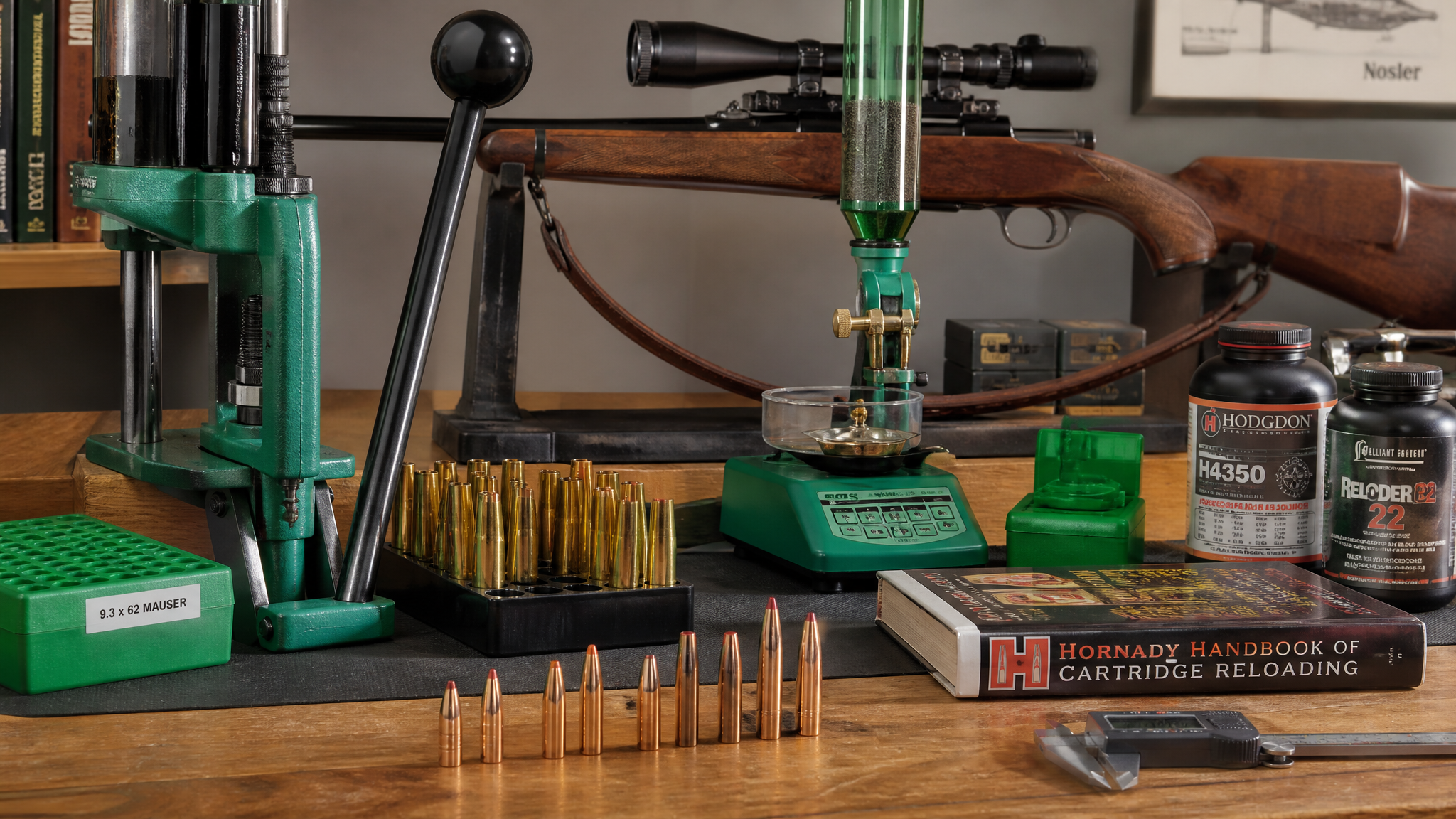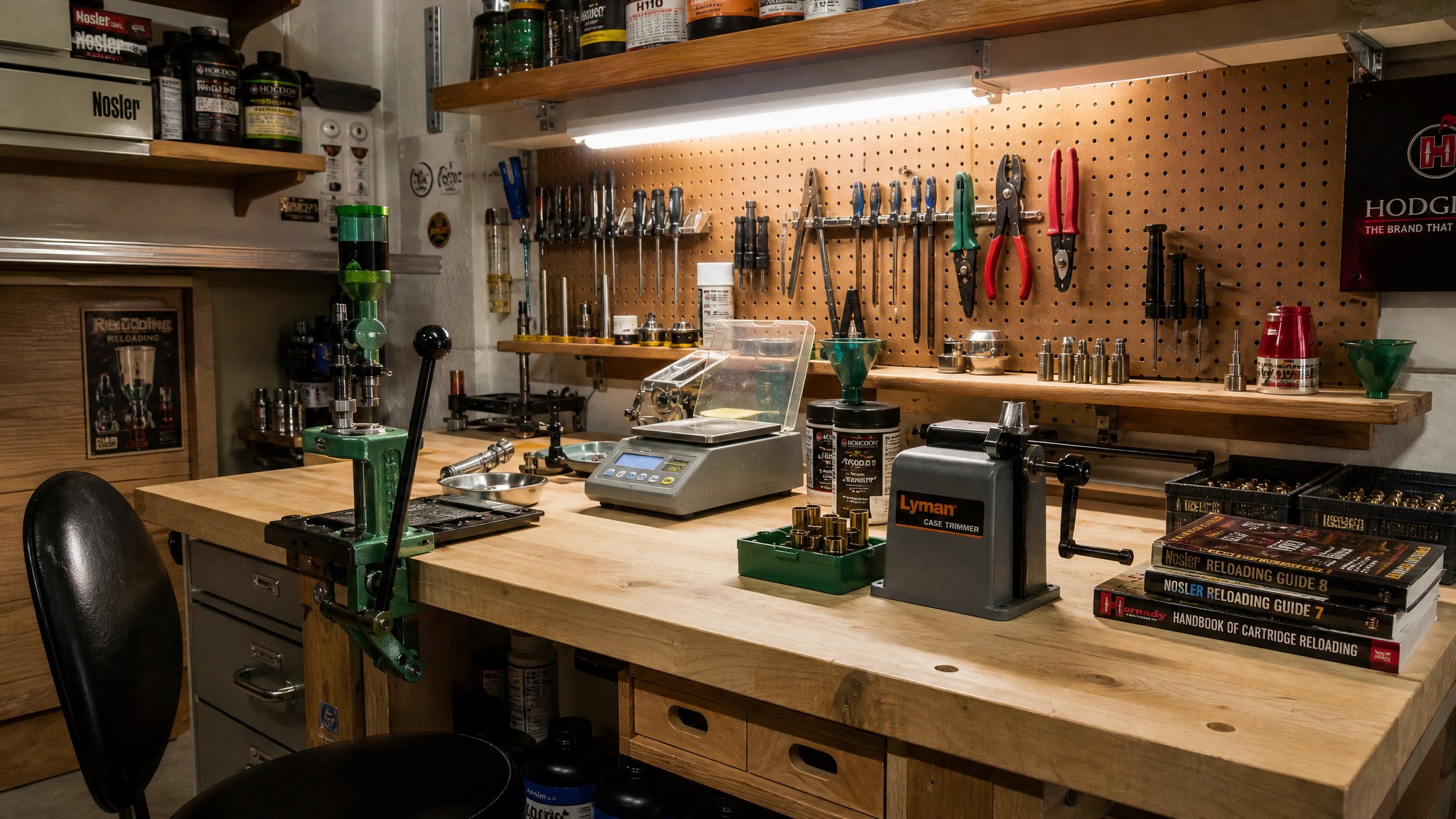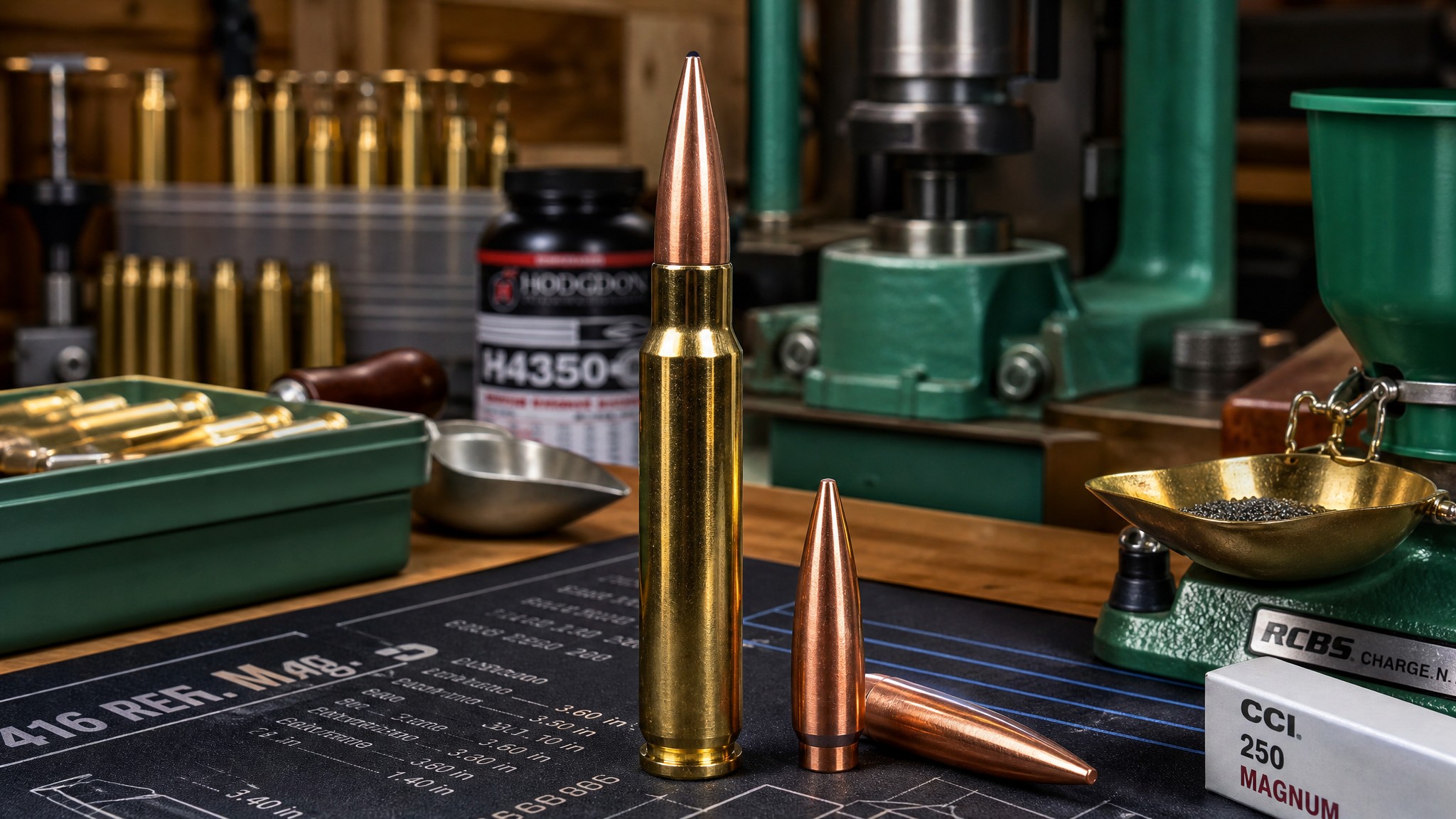
The .416 Remington Magnum does not get much press in deer camp conversation, and that's fine — it was not designed for deer. Born in 1988 as Remington's answer to growing demand for a domestically-manufactured dangerous game cartridge, the .416 Rem Mag shoves a .416-caliber bullet downrange at velocities that produce over 5,000 foot-pounds of muzzle energy. In the Pacific Northwest and Alaska context, that means serious authority on brown bear, coastal grizzly, and any large dangerous animal where stopping power matters as much as trajectory.
Cartridge Basics
The .416 Remington Magnum is built on the 8mm Remington Magnum case, itself derived from the .375 H&H Magnum family. The case is necked up to accept .416-inch diameter bullets and headspaces on the belt. SAAMI maximum average pressure is 65,000 PSI — a relatively high limit that enables the velocity the cartridge is known for.
Factory specifications from Remington list a 400-grain bullet at 2,400 fps — generating around 5,115 foot-pounds at the muzzle. For comparison, that's approximately 25% more muzzle energy than a .375 H&H with a 300-grain load. Reloads can match or exceed factory performance with careful component selection and a properly-chambered rifle.
The primary rifles chambered in .416 Rem Mag are Remington's own Model 700 in various configurations, as well as custom bolt guns from Pacific Northwest-area smiths who work with Alaska brown bear guides. The cartridge fits a standard magnum-length action without modification, which is an advantage over the longer African belted magnums like the .416 Rigby that require a full-length magnum action.
Brass Preparation
Remington and Nosler are the primary .416 Rem Mag brass sources. Both are acceptable; Nosler brass tends to have more consistent primer pocket dimensions and slightly better weight uniformity. Brass prep for a cartridge operating at these pressures deserves extra attention:
- Full-length resize every firing — do not neck-size-only for this application. Reliable extraction in a hunting scenario matters more than extended case life.
- Trim to length after every firing. The SAAMI trim-to length is 2.844". Use a case gauge to confirm after trimming.
- Uniform primer pockets — primer pocket uniforming with a dedicated tool pays dividends at these pressures, ensuring consistent seating depth and ignition.
- Inspect for incipient head separation after 3-4 firings. Use a bent paper clip tool to feel for the ring inside the case head area. A .416 that lets go during extraction is a bad day.
Primer Selection
Large rifle magnum primers are mandatory. The Federal 215M (Gold Medal Match) is the most consistent performer across a wide range of powders in this case. CCI 250 and Winchester WLR Magnum are also solid choices. Avoid standard large rifle primers — the slow-burning powders used in the .416 Rem Mag require reliable ignition to deliver consistent velocity and complete combustion.
Powder Selection
The .416 Rem Mag's large case capacity and heavy projectiles point to slow-burning powders. The sweet spot for most bullet and rifle combinations falls in the IMR 4350 through IMR 7828 burn rate range. Specific powders that have produced proven results:
- Reloader 22: Excellent performer with 400-grain bullets. Provides good velocity with manageable pressure and consistent ES across temperature ranges — important for Alaska brown bear country where temperatures can swing 40 degrees F between morning and afternoon.
- Hodgdon H4831SC: Slightly slower than RL-22, well-suited to maximum-weight bullets (400+ gr). The SC (short-cut) version meters well through powder measures.
- IMR 4350: A bit faster than optimal for 400-grain bullets but works well with 350-grain projectiles where you're optimizing for velocity over penetration depth.
- Reloader 25: For the heaviest 400-grain bonded and monolithic loads, RL-25's slower burn rate pushes velocity higher without spikes in pressure. Requires magnum primers reliably.
Bullet Selection for Hunting Use
This is where the .416 Rem Mag discussion gets serious. The purpose of this cartridge in a hunting context is deep penetration through large, heavy-boned animals. Premium controlled-expansion and solid bullets are the only appropriate choices:
- Swift A-Frame 400-grain: The benchmark for .416 caliber hunting bullets. The dual-core bonded construction with partition wall ensures the bullet holds together through heavy bone and muscle. Excellent weight retention (typically 95% or better). The go-to for brown bear guides in Southeast Alaska.
- Woodleigh Welded Core 400-grain: Australian-made bullet with a reputation for exceptional accuracy in some barrels. Soft-point design provides controlled expansion on contact. Often slightly more accurate than the A-Frame in specific rifle and chamber combinations.
- Hornady DGX/DGS 400-grain: Dangerous Game eXpanding and Dangerous Game Solid. The DGX features a mechanically-locked jacket for reliable expansion; the DGS is a full-metal-jacket flat-nose solid for maximum penetration on follow-up shots through shoulder bone. Many dangerous game hunters load both and layer them in the magazine.
- Barnes TSX 350-grain: For hunters who prioritize velocity over maximum bullet weight. The all-copper TSX at 350 grains achieves 2,500-plus fps and delivers 100% weight retention with four-petal expansion. An excellent choice for elk or coastal black bear where stopping power is not the primary concern but penetration still matters.
Representative Load Data
Always work up from starting loads and stay within published maximums. These figures are starting points, not recipes — individual rifles and components vary.
With 400-grain Swift A-Frame:
- RL-22: Start 75.0 gr (~2,280 fps) / Max 78.5 gr (~2,400 fps) — Federal 215M primer, 2.800" COAL
- H4831SC: Start 76.0 gr (~2,240 fps) / Max 80.0 gr (~2,380 fps) — Federal 215M primer
With 350-grain Barnes TSX:
- IMR 4350: Start 76.0 gr (~2,380 fps) / Max 80.0 gr (~2,510 fps) — CCI 250 primer
- RL-22: Start 78.0 gr (~2,440 fps) / Max 82.0 gr (~2,560 fps) — Federal 215M primer
Pressure signs to watch: cratered primers, sticky extraction, or flattened primers are your indicators to stop and back off a grain. At .416 Rem Mag velocities, ejector marks on case heads can appear at moderate pressures — focus on extraction feel and primer condition, not case marks alone.
Practical Zeroing and Field Use
Most .416 Rem Mag users zero at 100 yards, accepting that this is not a long-range cartridge — it's a 200-yard-and-under stopper. At 200 yards with a 100-yard zero, a 400-grain load is dropping around 7-9 inches depending on velocity. That's acceptable for brown bear shots in coastal alder and spruce country where 150 yards is a long shot.
Recoil is significant — typically 65-75 foot-pounds of free recoil energy in a hunting-weight rifle, roughly double a .300 Win Mag. A quality recoil pad, proper stock fit, and controlled breathing before the shot are mandatory. Flinch prevention starts at the loading bench: work up loads at the range in a Lead Sled before free-recoil testing, and never underestimate the value of a muzzle brake on a practice rifle.
The .416 Remington Magnum is a specialist's tool. If your hunting takes you to country where the game can hunt back, loading it well is worth the investment of time and components.