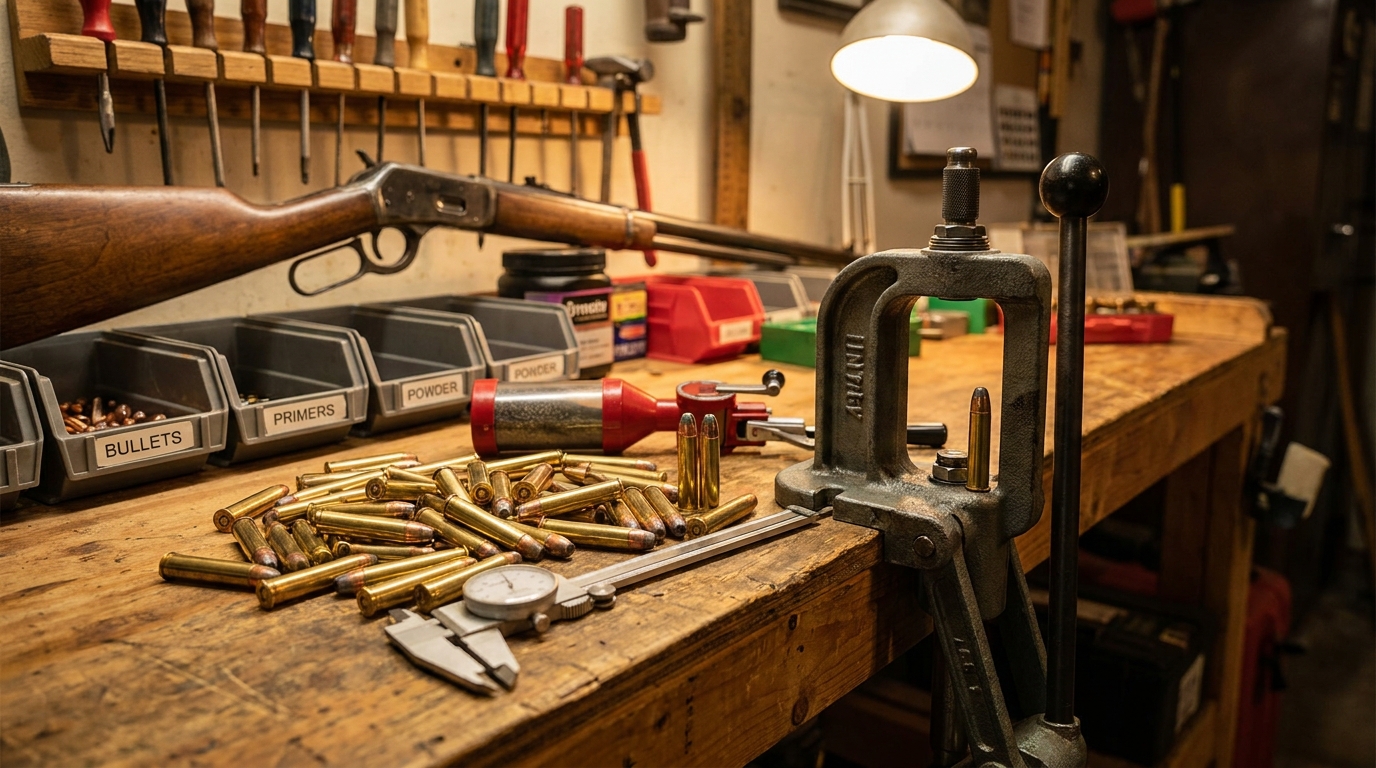
The .45-70 Government is one of America's oldest centerfire rifle cartridges, introduced in 1873 for the Springfield Model 1873 "Trapdoor" infantry rifle. A century and a half later, it's still very much alive — and in Oregon's dense timber, blackberry-choked canyon brush, and close-quarters black bear country, it may be more relevant than ever. For hunters running a Marlin 1895, a Winchester 1886, or a Ruger No. 1, handloading the .45-70 unlocks the full potential of this versatile old warhorse.
Why Reload the .45-70?
Factory .45-70 ammo is widely available but limited in range and often expensive. More importantly, the .45-70 spans an enormous pressure range depending on the action it's fired in — from mild blackpowder-equivalent loads safe in antique Trapdoors to heavy lever-gun loads pushing well over 40,000 PSI in modern Marlins, to Ruger No. 1 handloads that push .45-70 performance into .458 Win Mag territory. No factory box covers all three. Reloading does.
For Oregon black bear, coastal Roosevelt elk in thick timber, and the close-range shots that define Coast Range and Western Cascades hunting, the .45-70 is a legitimate choice — heavy, slow, and absolutely devastating at the ranges where you're actually shooting.
Know Your Action: The Three Tiers
This is the most critical concept in .45-70 reloading. Always identify which action category your rifle falls into before selecting load data:
- Tier 1 (Trapdoor-safe): Original Springfield Trapdoors and reproductions. Maximum load pressure ~14,000 CUP. Keep charges light — these are nineteenth-century actions.
- Tier 2 (Lever-gun loads): Marlin 1895 (all variants), Winchester 1886 reproductions, Henry .45-70. Up to ~28,000 CUP / ~40,000 PSI. The most common reloading tier.
- Tier 3 (Strong single-shot loads): Ruger No. 1, Browning 1885, Thompson/Center Encore. Up to ~50,000 PSI. These are serious loads that push .45-70 into magnum performance.
Never load Tier 3 data in a Marlin. Never. The pressure spike in a lever gun with hot Ruger-grade loads is a recipe for a destroyed action and serious injury. Every reputable reloading manual — Lyman, Hornady, Hodgdon — lists .45-70 data by action type. Use the correct tier for your gun.
Components: Brass, Primers, Powder, and Bullets
Brass
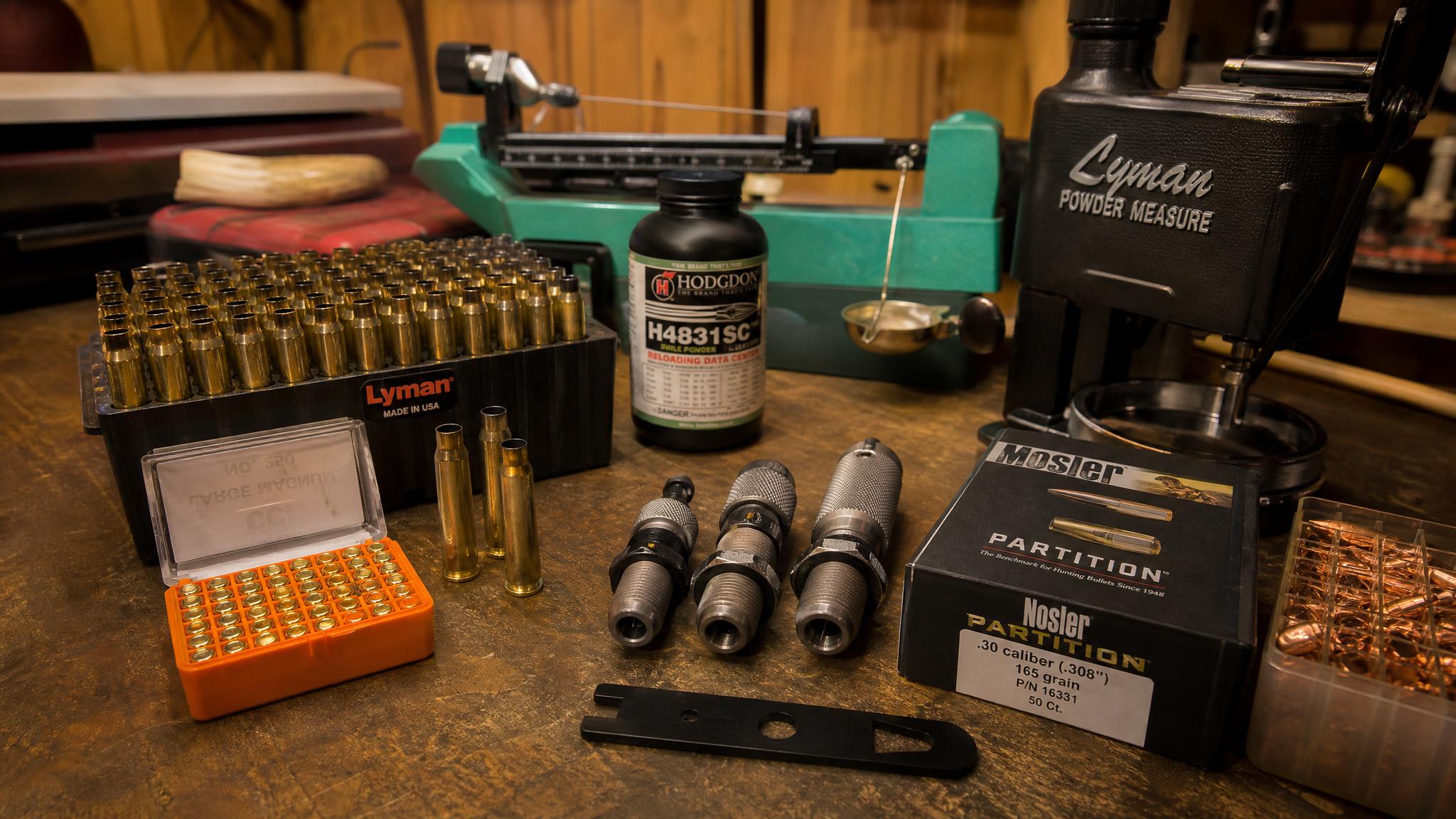
Starline .45-70 brass is the gold standard — thick walls, consistent weight, durable. Remington and Winchester factory brass works well too. Trim to 2.100" after sizing. The case is straight-walled and tapers slightly toward the mouth, making it one of the easiest cartridges to resize and prep. Inspect primer pockets for cratering on hot loads — pocket uniforming extends brass life significantly.
Primers
Large Rifle primers are standard. For most hunting and mid-range loads, Federal 210, CCI 200, or Winchester WLR primers all work reliably. For compressed or harder-to-ignite loads with slower powders, consider Federal 210M (Match) for more consistent ignition — though it's not required for most loads.
Powders
The .45-70's large case and wide pressure range make it flexible with powder selection:
- IMR 3031: A classic choice for mid-range lever-gun loads. Fast enough to give good performance without over-pressure.
- Hodgdon H335: Ball powder, meters well, excellent for mid-range loads in the Marlin.
- IMR 4198: A go-to for heavier bullets (400–500 gr) in lever guns. Fills the case well, predictable pressure.
- Reloader 7 (Alliant): Excellent for 300–405 gr bullets, great velocity with moderate pressure in modern actions.
- H4198 / H322: Both popular for Ruger-grade loads with heavy projectiles.
Bullets
This is where the .45-70 gets interesting. You have options from 250 gr to 500 gr, flat-nose or hollow-point:
- Hornady 325 gr FTX (LeveRevolution): Spitzer-tip flex-polymer, safe in tubular magazines, improved BC for lever guns
- Hornady 350 gr RN: Classic Oregon timber load — heavy, wide flat-nose, excellent penetration on black bear
- Cast Performance 405 gr WFNGC: Wide Flat Nose Gas Check, hard cast lead, ideal for elk and bear at close range
- Barnes 300 gr TSX: All-copper expanding bullet, great for Tier 3 Ruger loads at higher velocity
- Speer 400 gr FP: Budget-friendly cast/jacketed option, solid performer in Marlin actions
Starter Load Data (Marlin 1895 / Tier 2)
Always start 10% below maximum and work up. Verify against a current published manual before loading.
- Hornady 325 gr FTX / Reloader 7 / 52.0 gr (start) – 56.0 gr (max): ~1,850–2,050 fps, excellent deer and black bear load
- 350 gr RN / IMR 4198 / 46.0 gr (start) – 50.0 gr (max): ~1,700–1,850 fps, proven thumper for timber elk
- 405 gr cast WFNGC / H322 / 44.0 gr (start) – 48.0 gr (max): ~1,500–1,650 fps, deep penetration on bear
Seating and Crimp
The .45-70 headspaces on the case mouth in tubular magazine rifles, making a firm roll or taper crimp essential — not optional. Without a solid crimp, recoil from the first shot can push bullets deeper into cases sitting in the magazine, dramatically increasing pressure on subsequent shots. Use a Lee Factory Crimp Die or a dedicated roll-crimp die, and set it firmly into the cannelure of jacketed bullets. For flat-nose cast bullets without a cannelure, seat to a consistent OAL and use a taper crimp.
Working Up Loads Safely
Start low, shoot three-shot groups, and look for pressure signs after each increment: flattened primers, stiff bolt lift (difficult on lever guns — watch for hard extraction instead), case head expansion. The .45-70 in a Marlin gives relatively generous headspace, so case head expansion measurements are your most reliable pressure indicator. If extraction becomes noticeably harder or you see cratering or flowing around the primer, stop and back down.
Range Performance and Oregon Application
A well-loaded Marlin .45-70 with a 350 gr bullet at 1,850 fps is zeroed dead-on at 100 yards and hits about 7–8 inches low at 200. That's your practical hunting range — and in the Coast Range, the Cascades west slope, and the dense river drainages where Oregon black bear and Roosevelt elk live, 200 yards is often a long shot. This is a timber cartridge, optimized for close, decisive hits on heavy animals. It excels exactly where modern magnums become irrelevant.
The .45-70 is a cartridge that rewards handloading more than almost any other. With the right components and the right knowledge of your action's pressure limits, you can build everything from mild plinkers to devastating big-game loads out of the same brass. Load it thoughtfully, shoot it confidently, and take it into the Oregon brush where it was always meant to go.