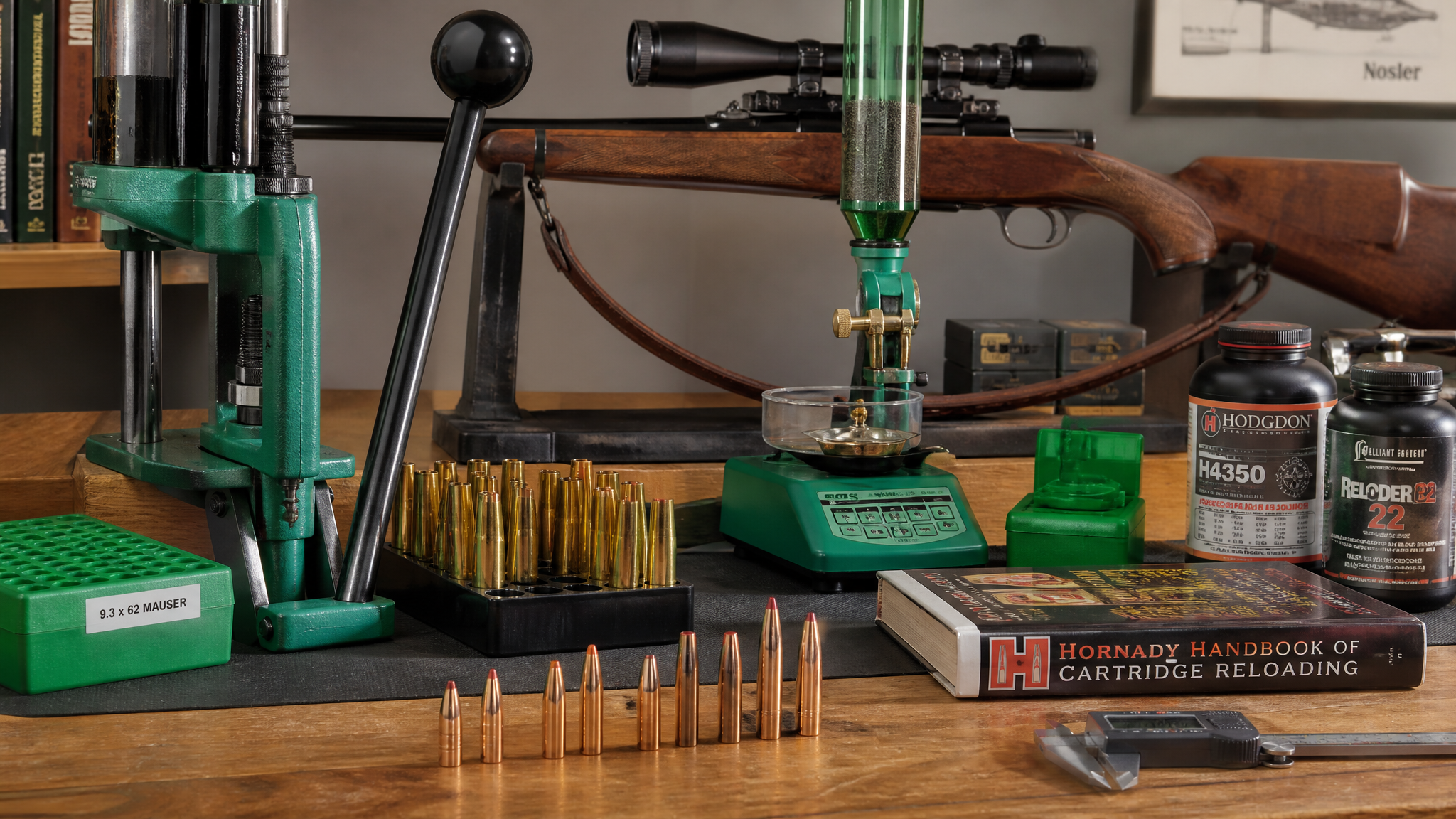
The 9.3x62 Mauser does not have the marketing budget of the newer Nosler and Hornady rounds, and it will never grace the cover of a tactical shooting magazine. What it does have is a 120-year track record as one of the most effective medium-bore hunting cartridges ever chambered. Developed in 1905 by Wilhelm Brenneke for German settlers and hunters working in East Africa, the 9.3x62 fires a .366-inch diameter bullet — typically 232 to 300 grains — at velocities that produce exceptional penetration and terminal performance without the punishing recoil of a magnum. In the heavy timber of Oregon's Coast Range or the steep basins of the Wallowas, that combination of deep penetration and manageable recoil makes it a serious choice for Roosevelt elk and black bear.
The cartridge headspaces on the shoulder of a standard-length Mauser 98 action — meaning it fits any rifle built on that action, a list that includes numerous Ruger M77s, CZ 550s, and Dakota Model 76s chambered for the round. Ammunition is available from Norma, Federal Premium, and Hornady, but at $4–6 per round, the economics of handloading are compelling, and the performance gains from a properly tuned handload are real.
Brass
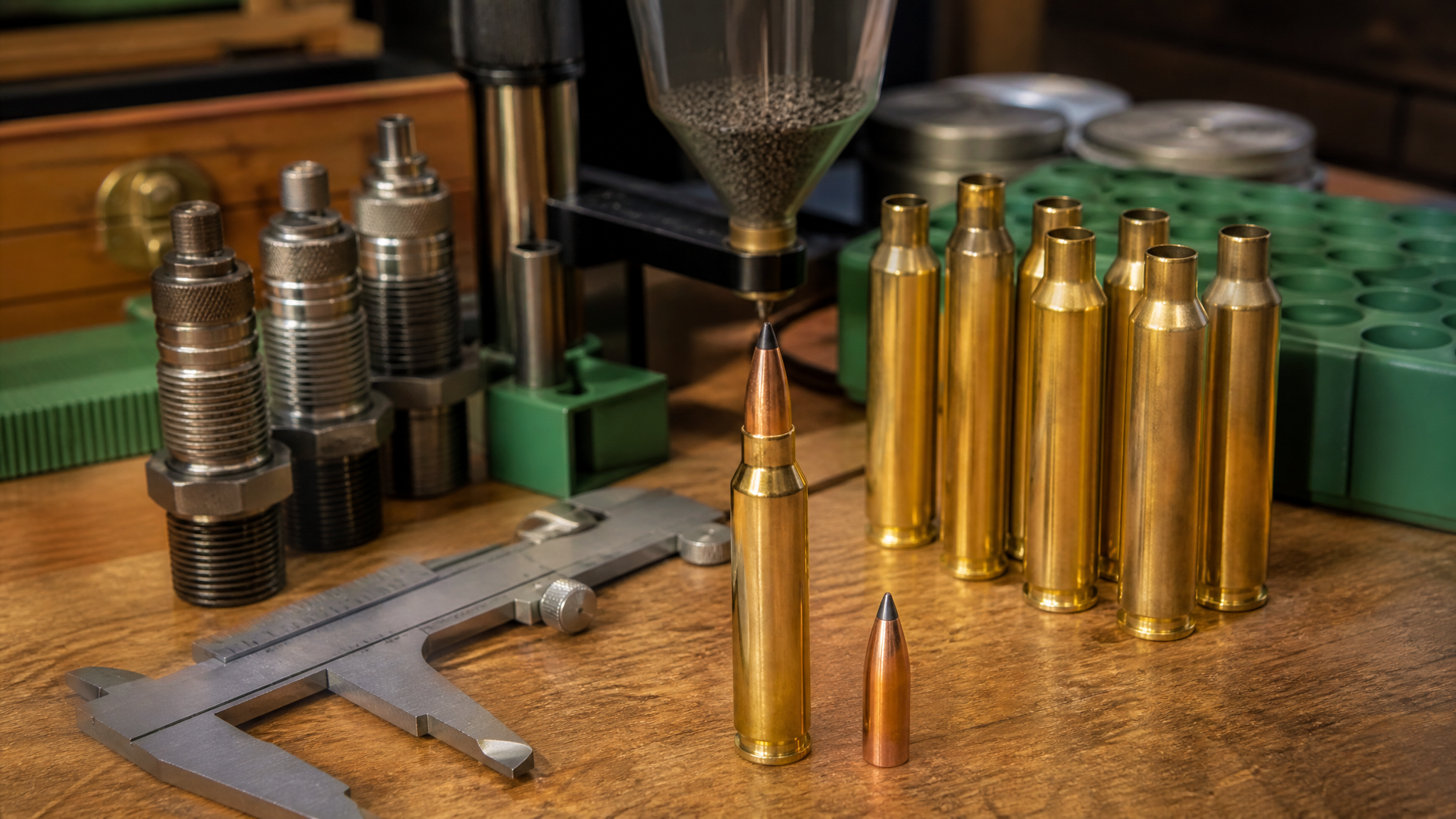
Brass for the 9.3x62 is available from several quality manufacturers. Norma produces the gold standard — consistent neck wall thickness, excellent primer pocket uniformity, and brass that lasts for 6–8 reloading cycles with proper annealing. Lapua makes excellent 9.3x62 brass as well, with the tight tolerances and long case life that brand is known for. Sellier and Bellot offers a budget-friendly option that performs well in hunting applications where extreme consistency is less critical. RWS and Sako both produce quality brass when available.
Initial case prep should include deburring and chamfering the case mouth, primer pocket uniforming, and flash hole deburring if using Norma or Lapua brass for precision loads. Trim-to length is 2.230 inches; max case length is 2.239 inches. Anneal your brass every 3–4 firings to extend case life and maintain consistent neck tension.
Primers
The 9.3x62 uses a standard large rifle primer. CCI 200 is the workhorse choice — consistent, widely available, and appropriate for the moderate to large case volumes typical of this cartridge. Federal 210 (standard, not magnum) is another excellent option with slightly softer cups that work well in older Mauser 98 actions with floating firing pins. Remington 9.5 primers are reliable and typically easy to source. Magnum primers (CCI 250, Federal 215, Winchester WLRM) are generally not needed with the fast-to-moderate powders that work best in this case — standard primers provide adequate ignition consistency across the temperature ranges Oregon hunters encounter.
Bullet Selection
The heart of any 9.3x62 load is the bullet, and here the choices reflect the cartridge's heritage as a close-range dangerous game round adapted to all-around hunting use.
- Woodleigh 286gr Weldcore Soft Point (RN): The definitive 9.3x62 bullet for heavy game. The round-nose profile was designed for controlled penetration through heavy bone, and the Weldcore bonding process ensures the core stays with the jacket even after impacting shoulder bone on a big Roosevelt bull. This is the load to use for close-range elk in heavy timber — shoots through and creates massive wound channels.
- Nosler Partition 286gr: The dual-core Partition is a classic choice for mixed-use hunting where both controlled expansion and deep penetration are required. The front core mushrooms reliably at 9.3x62 velocities; the rear core drives the bullet to full depth.
- Swift A-Frame 286gr: Bonded construction with a bonded front core and a solid shank. Outstanding performer on heavy-boned game — the A-Frame is a legitimate elk-grade bullet at any range the 9.3x62 is appropriate for.
- Barnes TTSX 250gr: The all-copper construction and polymer tip make this a premium close-range option with excellent weight retention. The lighter 250-grain bullet gains velocity without sacrificing the penetration advantage that makes the 9.3 special. Works exceptionally well on black bear.
- Hornady InterLock 286gr: A traditional cup-and-core bullet at a more accessible price point. Reliable performer within normal hunting ranges (under 200 yards) and a good choice for breaking in a new rifle or developing initial load data.
Powder Selection and Load Data
The 9.3x62 case capacity of roughly 70–73 grains of water works best with medium-to-slow powders in the IMR 4350 to IMR 4831 burn rate range. Always start 10 percent below published maximum loads and work up in one-grain increments while watching for pressure signs: cratered primers, hard bolt lift, ejector marks on case heads, or excessive case head expansion.
286-Grain Woodleigh, Partition, or A-Frame Loads
- IMR 4350: 54.0–57.5 gr | approx. 2,320–2,410 fps (24-inch barrel) | Excellent accuracy potential
- H4350: 54.5–58.0 gr | approx. 2,330–2,430 fps | Temperature stable, consistent across seasons
- IMR 4831: 56.0–59.5 gr | approx. 2,340–2,450 fps | Classic powder for heavy bullets in this case
- H4831SC: 57.0–61.0 gr | approx. 2,330–2,440 fps | Short-cut metering, excellent for maximum loads
- Reloder 17: 53.0–56.5 gr | approx. 2,350–2,450 fps | Compressed charge territory at max — watch for pressure
250-Grain Barnes TTSX or Hornady InterLock Loads
- IMR 4350: 55.0–59.0 gr | approx. 2,460–2,580 fps | Good all-around powder for lighter bullets
- H4350: 55.5–59.5 gr | approx. 2,470–2,590 fps | Preferred temperature stability for variable-season use
- Varget: 51.0–54.0 gr | approx. 2,380–2,480 fps | More uniform metering; slightly compressed at max
Note: All load data is for reference purposes only. Always consult current reloading manuals from Nosler, Hornady, Lyman, or Hodgdon/IMR before developing loads. Work up carefully in your specific rifle.
Cartridge Overall Length and Seating
Published COAL for 9.3x62 with 286-grain round-nose bullets typically falls between 3.270 and 3.290 inches, depending on the bullet and rifle. Mauser 98 magazine boxes are long enough to accommodate these COALs without issue. For spitzer bullets like the Barnes TTSX, COAL will vary based on throat dimensions — jump the bullet 0.050 to 0.010 inches off the lands as a starting point and tune from there for best accuracy. A typical hunting-grade 9.3x62 will shoot 1.0–1.5 MOA with quality handloads — more than adequate for the ranges at which this cartridge is intended to be used.
Field Performance
The 9.3x62 at 2,400 fps with a 286-grain bonded bullet generates roughly 3,650 ft-lbs of muzzle energy — more than a .338 Winchester Magnum with a 225-grain bullet, with substantially less recoil. At 200 yards, it still retains over 2,700 ft-lbs. For Roosevelt elk at the ranges typical of Coast Range or Cascade timber hunting — inside 150 yards — nothing about the 9.3x62 is limiting. For the reloader who wants to build serious field loads for Oregon's biggest and most demanding big game, this cartridge rewards the effort invested.