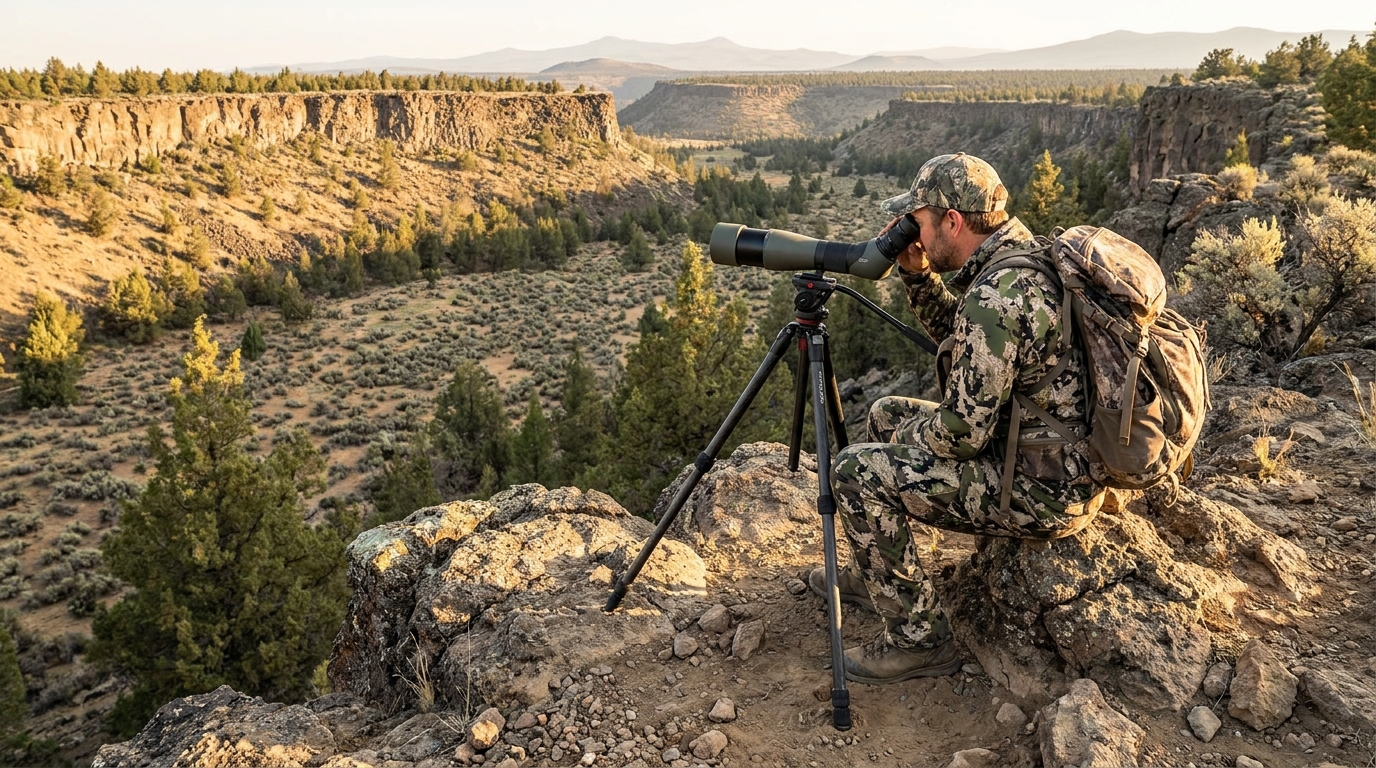
If you ask a serious western hunter what single piece of gear has put the most animals in front of them over the years, the answer is rarely the rifle. It's the glass. And while rifle scopes and binoculars get most of the attention, the spotting scope is the tool that separates hunters who find mature animals from hunters who walk past them.
Oregon mule deer hunters glassing the rimrock above the John Day River, elk hunters scanning the Wallowa timbered parks at first light, pronghorn hunters covering miles of sage from a truck window — in every one of these situations, a quality spotting scope is as important as anything else in the truck. This guide covers what actually matters when you're choosing and using one in the field.
Magnification: How Much Do You Need?
Most hunters reach for the highest magnification they can find and immediately create problems. Heat mirage, atmospheric distortion, and tripod vibration are all amplified by magnification. The question is not "how much power can I get" but "how much power is usable in my conditions."
For western hunting at ranges of 200–800 yards, 20–45x is the practical working range. At 20x you can cover ground quickly and maintain a clean image in moderate mirage. At 45x you can score a buck's frame in detail at 600 yards on a calm morning before the heat builds. Variable eyepieces in the 20–60x range give you flexibility, but be honest about how often you'll actually use 60x in the field.
Objective Lens Size
- 60–65mm: The sweet spot for backpacking hunters. Swarovski BTX 65, Vortex Razor HD 65, and Leica APO Televet 62 all perform beautifully in this class. Lighter, more packable, and genuinely excellent optics in good light.
- 80mm: The workhorse class for vehicle-based hunters. Swarovski ATX 80, Kowa TSN-883, and Maven CS.2 80mm fall here. The extra glass surface makes a meaningful difference in the last 20 minutes of shooting light.
- 95–100mm: Maximum light gathering, maximum weight. These scopes belong on a heavy-duty tripod and in a truck or base camp. Swarovski STX 95 and Zeiss Gavia 95 are what serious optics enthusiasts argue about. They're extraordinary but genuinely heavy for field carry.
Optical Quality: What You're Paying For
- Budget ($200–$500): Vortex Diamondback HD, Celestron Regal M2. Adequate for casual use. Color fringing, soft edges, and poor low-light performance are the tradeoffs.
- Mid-range ($500–$1,200): Vortex Razor HD, Maven CS.1, Maven CS.2, Meopta S2. Genuinely good glass with ED or HD elements. Most hunters will not outshoot this level of quality under field conditions. The Vortex Razor HD represents exceptional value.
- Premium ($1,500–$3,500+): Swarovski ATX/BTX/STX, Leica APO Televid, Zeiss Gavia, Kowa TSN-88. The separation becomes meaningful in challenging conditions — low light, heat mirage, identifying buck score at 600 yards. If you hunt 30+ days a year and rely on optics for success, the investment is justified.
The honest answer for most hunters: a Vortex Razor HD 65 or Maven CS.2 80mm at $700–$1,100 covers everything the majority of western hunters encounter.
Tripods: The Most Underrated Part of the System
A $2,000 scope on a $40 tripod is a waste of money. The tripod determines your actual usable magnification in the field. At 45x, any vibration becomes a blurry mess.
- Carbon fiber construction: Dramatically lighter than aluminum for similar stiffness. When you're hiking a ridge for two hours before light, the weight difference matters.
- Leg locks that work cold and wet: Lever-lock legs work more reliably than twist locks in freezing temperatures.
- Low minimum height: Western hunters spend significant time glassing from seated or prone positions. A tripod that collapses to 12–16 inches is invaluable for glassing from the ground.
- Quality head: A fluid video head or ball head with a panning clamp is far superior to bundled pan-tilt heads. The Manfrotto 502AH fluid head and RRS BH-55 ball head are proven hunting choices.
Recommended tripods: Gitzo GT2543 (carbon, mid-size), Leofoto LS-324C (excellent value in carbon), and for budget hunters, the Vortex High Country 2.
Straight vs. Angled Eyepiece
Angled is better for multiple users at different heights, easier to use prone or seated on uneven ground, and more comfortable for extended glassing sessions — the choice of most experienced western hunters. Straight is more intuitive for quick target acquisition and preferred by some spot-and-stalk hunters who need to track moving animals quickly.
If you're doing hours at a time of serious glassing from a ridge or vehicle window, the angled eyepiece wins.
Practical Glassing Tips
- Start low-power, finish high: Grid your target terrain at 20x, identify something worth investigating, then dial up to 40–45x to evaluate it. Scanning at 45x means you'll miss things at the edges of the field of view.
- Give your eyes a break: After 30 minutes of sustained high-magnification glassing, optical fatigue sets in. Rest every 20–30 minutes.
- Glass the shade: On warm days, bedded animals seek shade. Glass the shadows under trees, cliff edges, and north-facing basins specifically.
- Stay until the light goes: The last 15 minutes of shooting light produce a disproportionate share of animal sightings — deer and elk become active as thermal currents reverse and temperatures drop.
The hunters who kill animals consistently in the West are not always the best shots. They're the best finders — and finding starts with optics worth using and the patience to use them.