The Steens Mountain archery mule deer season is one of Oregon's most demanding and rewarding late-summer bowhunts. Rising nearly a mile above the Alvord Desert to an elevation of 9,733 feet, Steens Mountain creates a unique vertical landscape where mature mule deer bucks spend their summers feeding on alpine meadows before the September archery opener pushes them onto open sagebrush slopes — right into bowhunting range.
This isn't a hunt for the casual weekend warrior. The distances are long, the terrain is brutal, and water is scarce. But for the prepared bowhunter willing to put in the miles, Steens Mountain offers encounters with some of the largest mule deer frames in southeastern Oregon.
Understanding the Steens Mountain Unit
The Steens Mountain Unit covers a massive swath of Harney County, encompassing both the BLM-administered Steens Mountain Cooperative Management and Protection Area (CMPA) and surrounding high desert lands. The unit is open to general archery deer tags — you don't need a controlled hunt tag to bowhunt here, which makes it one of the most accessible quality mule deer opportunities in the state.
The mountain itself runs roughly 30 miles north to south, with the east face dropping precipitously into the Alvord Desert and the west face descending gradually through glacially carved gorges — the Blitzen, Little Blitzen, Wildhorse, and Kiger gorges — each holding deer, water, and shade through the heat of early September.
Timing the September Opener
Oregon's general archery deer season opens in late August and runs through the end of September. For Steens Mountain specifically, the first two weeks of September are prime. Daytime temperatures in the Alvord basin can still push 90°F at elevation, keeping deer on a late-morning to mid-afternoon bedding schedule. Early morning and the last 90 minutes of light are your best windows.
By mid-September, nighttime temperatures drop sharply at elevation, triggering increased movement throughout the day. Bucks that have been nocturnal all summer begin showing themselves in shooting light as velvet hardens and rubbing begins. The last week of September sees the earliest hints of pre-rut behavior — scraping, chasing, and territorial sparring — making it arguably the best bowhunting window of the entire season.
Where to Glass: The Big Country Approach
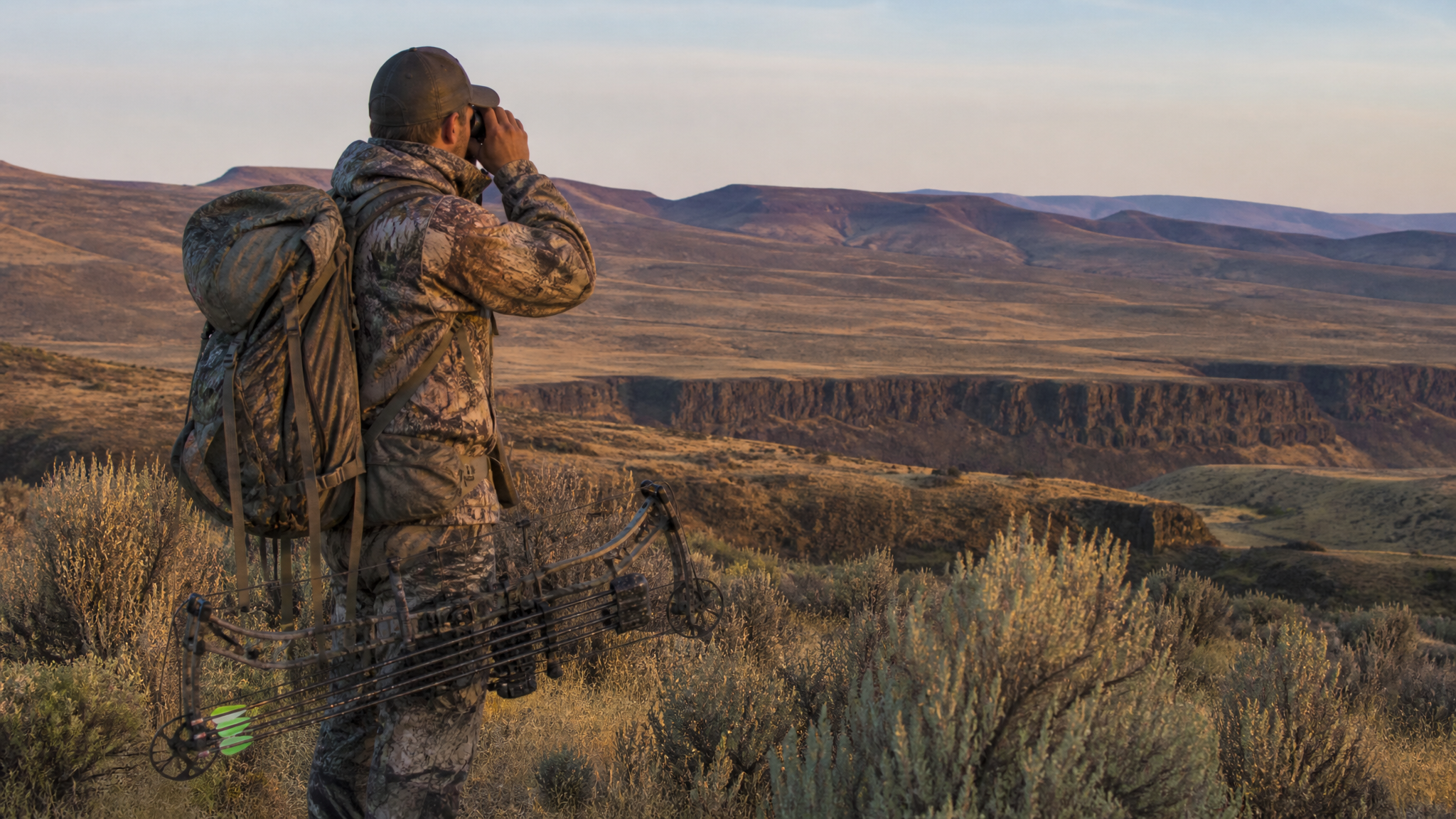
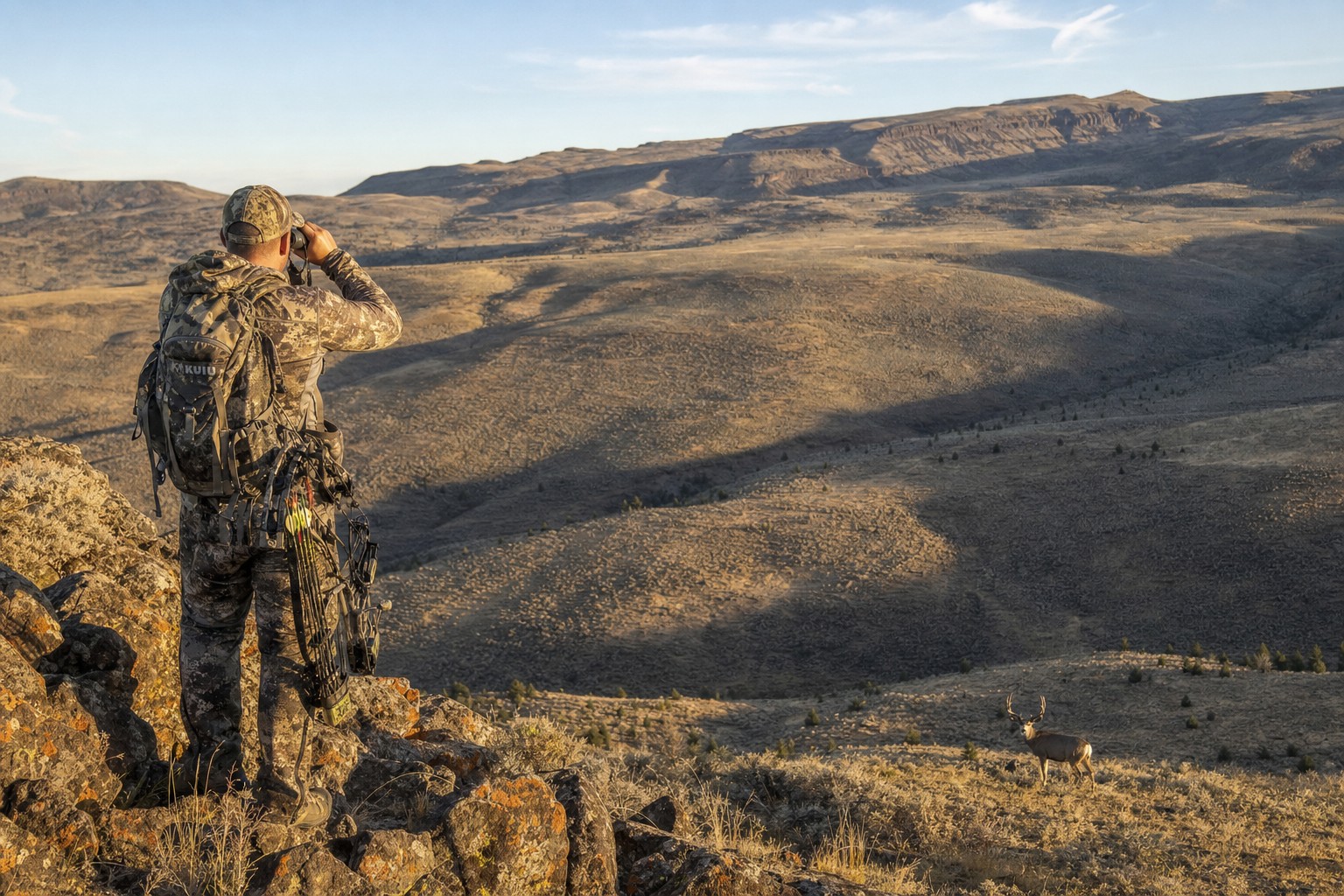
Steens is glass-first country. You will not successfully still-hunt mature bucks through open sagebrush — they'll see you long before you see them. Instead, bring quality optics and plan to spend hours behind a spotting scope each morning and evening.
- Page Springs Campground to South Steens: The BLM road system on the west side provides multiple glassing vantages into the gorges. Park near Jackman Park or at the South Steens trailhead and glass down into Kiger Gorge in morning light.
- Fish Lake area: The meadows around Fish Lake hold deer through early September. Glass the adjacent slopes and the benches above the lake for bucks working between bedding and feeding areas.
- The Rim Road: The high Rim Road (typically accessible to high-clearance 4WD) puts you above 9,000 feet with views into multiple basins simultaneously. Bucks using alpine meadows in August often remain near the rim in early September.
- Alvord Desert edge: The east face drops fast, but the lower sagebrush benches above the playa hold bucks that commute between the desert edge and higher elevation bedding. A spot-and-stalk on these open benches is a Steens specialty.
Spot-and-Stalk Tactics in Open Country
Once you've located a buck from distance, the stalk is everything. Mule deer in open terrain rely on their vision first, but their sense of smell is just as sharp as a whitetail's. Wind is non-negotiable — always approach from downwind, even if it means a longer, harder stalk.
Use the terrain. Sagebrush on Steens grows dense enough in draws and on benches to provide intermittent cover. Plan your stalk in stages, moving from one piece of cover to the next. Drop below ridgelines before crossing them. Wear muted earth tones — sage green, tan, and brown pattern well in high desert terrain.
Keep your rangefinder handy. In open country, distances are deceptive. A buck that looks like 60 yards may be 90. Know your maximum ethical range and stick to it. Most bowhunters hunting Steens with heads-up success are shooting between 30 and 50 yards.
Gear Considerations for High Desert Bowhunting
- Footwear: Stiff-soled boots with aggressive outsoles for rocky basalt and steep gorge walls. Many hunters bring gaiters for sagebrush descent.
- Water: Carry more than you think you need. Filter capacity at springs is a must — a Sawyer Squeeze or similar filter lets you top off at the few reliable springs on the mountain. Know your water sources before leaving the trailhead.
- Optics: Minimum 10x42 binoculars and a 65–80mm spotting scope on a stable tripod. You'll spend more time behind glass than walking.
- Layering: Days hit 80°F+; nights below 40°F at elevation. A lightweight insulated layer and a wind shell are essential even in early September.
- Pack: Plan for day hunts from a base camp at Page Springs or Fish Lake, or backpack into the gorges for multi-day remote access. A 40–50L pack covers most approaches.
Camp Options and Access
Page Springs Campground (BLM, fee site) near Frenchglen is the main base camp for Steens hunters. It sits at the base of the mountain along the Donner und Blitzen River and provides reliable water and shade. The Steens Mountain Loop Road — a 66-mile gravel route — climbs to the rim and is open seasonally, typically accessible by mid-July and closing with the first hard snows, usually October.
Frenchglen (population ~12) has a small hotel, a historic tavern, and a post office. Bring all your supplies from Burns (60 miles north) or Lakeview before heading out — there is no fuel or grocery access once you're in the basin.
Final Thoughts
Steens Mountain mule deer archery is as close to wilderness bowhunting as Oregon gets without a controlled tag. The bucks are wild, pressured only lightly, and living in terrain that rewards the hunter who prepares. Do your scouting via OnX, learn the gorges on the topo, and show up with legs, glass, and patience. The mountain will do the rest.
Check ODFW regulations annually — season dates, legal weapons, and any unit-specific rules can change. Verify your tag requirements and any seasonal road closures with the Hines BLM District before your trip.