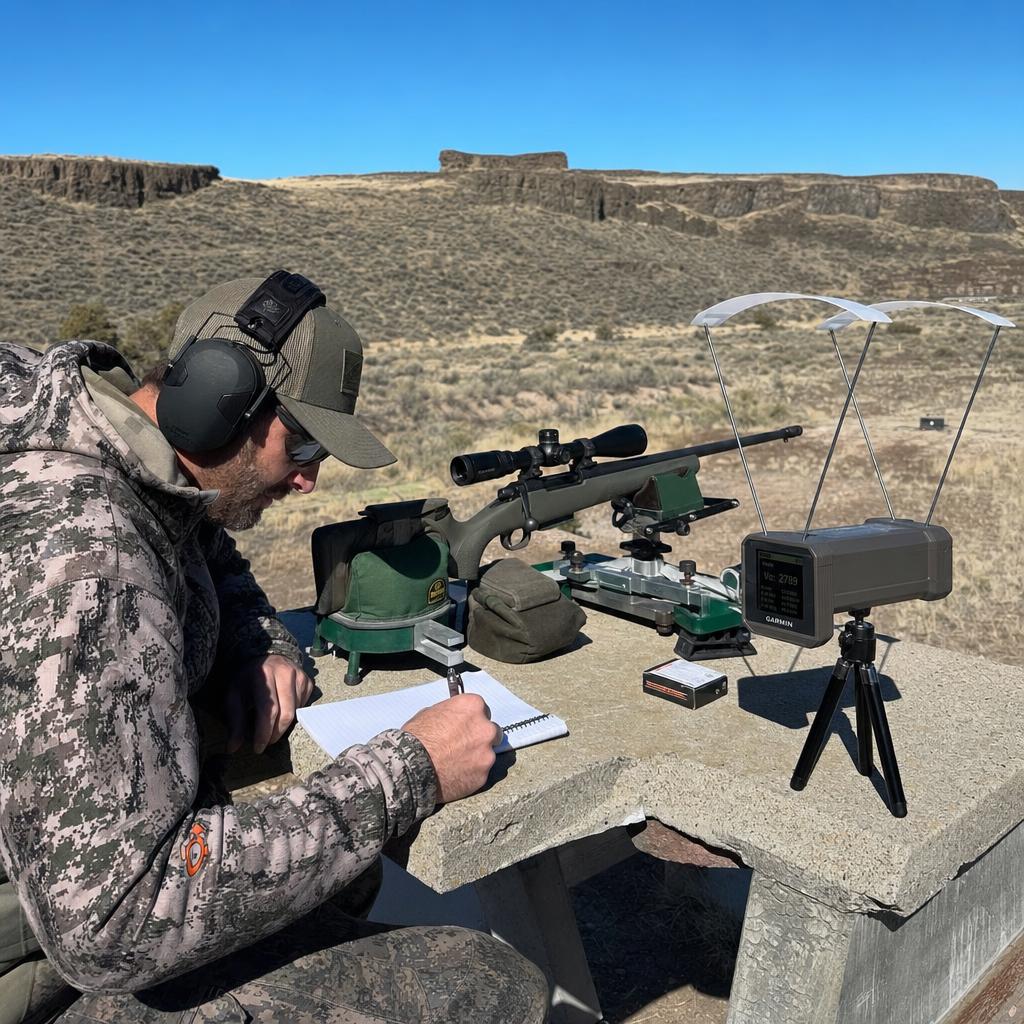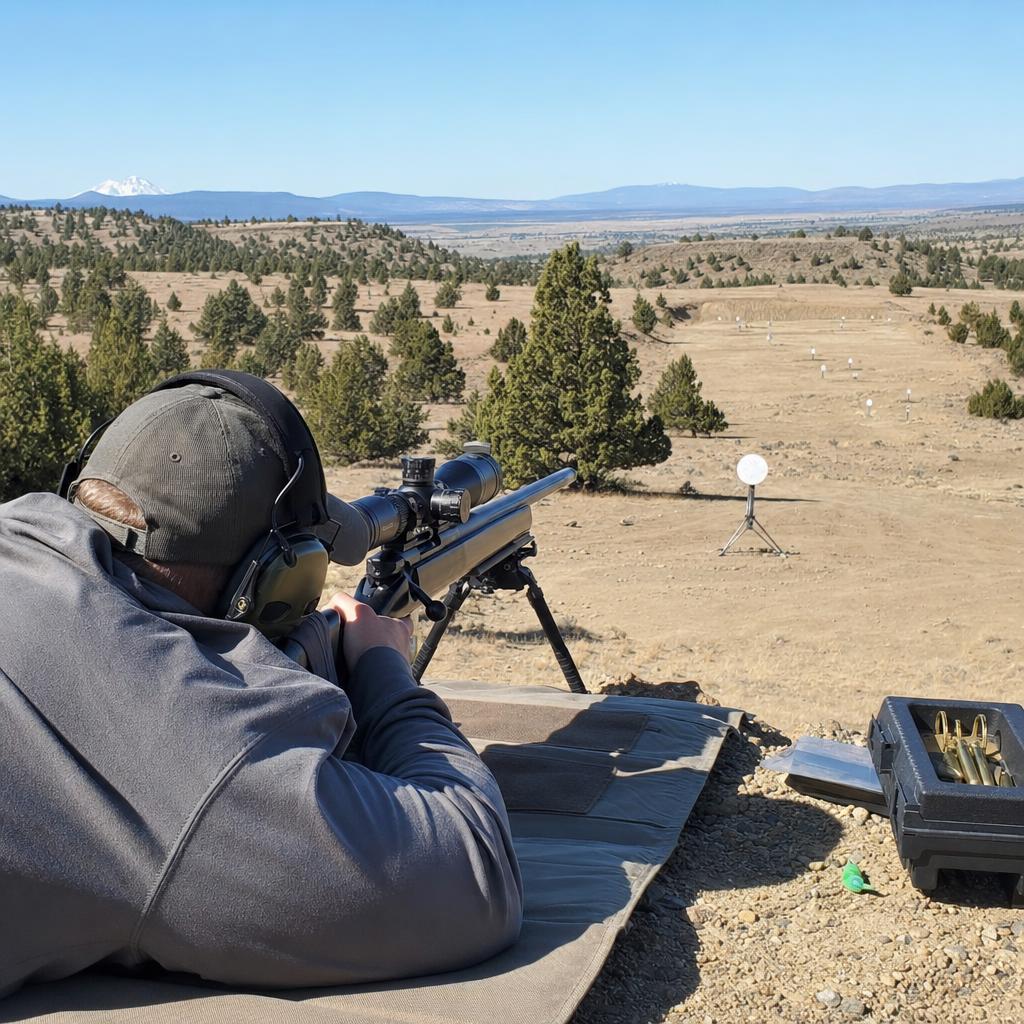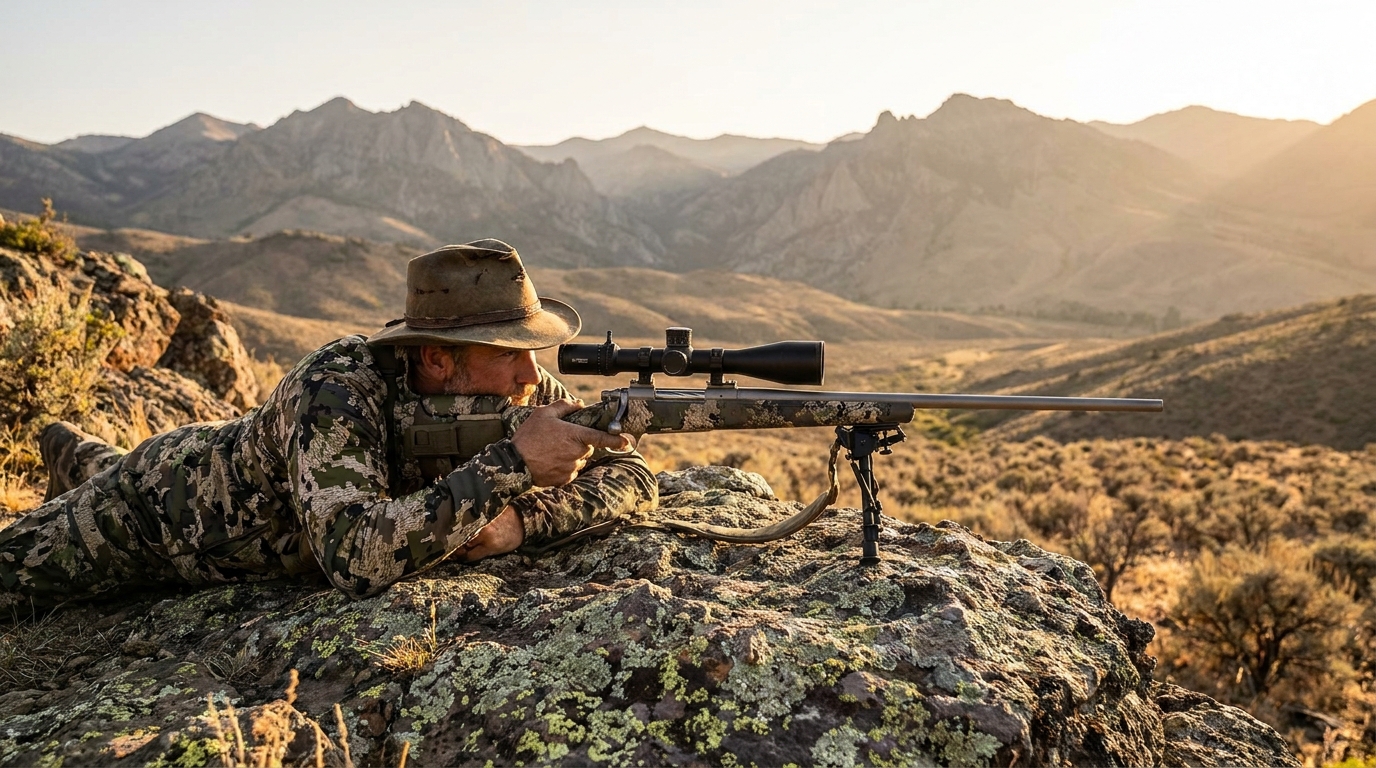
The rifle scope is the most important piece of equipment on a western hunting rifle — more important than the stock, the trigger, or even the action. You can put a $400 scope on a $2,000 rifle and the scope becomes the limiting factor every time. Get it backwards and you're wasting money. Here's how to think through scope selection for deer, elk, and pronghorn hunting in the Pacific Northwest and broader West.
Start With the Mission
Before you look at a single spec sheet, define how you'll actually use this rifle. Answer these honestly:
- What's the farthest shot you realistically practice and can make on game?
- Will you be shooting from a pack or off sticks, or primarily from a bench?
- What time of day do you expect to shoot — first light, all day, or low-light late evenings?
- How much do you want to spend?
A hunter calling elk in dense timber at 200 yards needs something completely different than a pronghorn hunter on eastern Oregon flats where 400-yard shots are standard. Don't buy a precision rifle scope for a brush gun, and don't mount a low-power fixed scope on a 6.5 PRC built for long range.
Magnification: How Much Do You Need?
More magnification is not always better. High magnification narrows your field of view, amplifies mirage, exaggerates shooter wobble, and makes close shots harder. A general-purpose western hunting scope doesn't need to go above 12–14x for most applications.
- 1–6x or 1–8x LPVO: Best for timber elk hunting, black bear over bait, close-quarters scenarios. Fast target acquisition, good low-light performance.
- 3–15x or 4–16x: The all-around western hunting range. Covers 50-yard timber shots at 3x and 400–500 yard open country shots at 14–16x. This is where most hunters should land.
- 5–25x or 6–24x: Precision long-range hunting and competition. Great for pronghorn and mule deer at extreme range. Heavier, bulkier, overkill for most elk hunting.
Objective Lens Size and Light Transmission
The objective lens (the front, bigger lens) determines how much light the scope can gather. For hunting, the practical options are 44mm, 50mm, and 56mm objectives.
A 50mm objective on a 4–16x scope gives an exit pupil of about 3.1mm at 16x — sufficient in good light. At lower magnification (4x), the exit pupil expands to 12.5mm — more than your eye can use in any condition. Low-light performance is determined more by glass quality than objective size. A 44mm Zeiss Conquest will out-perform a 56mm budget scope in low light every time.
Reticle: SFP vs. FFP, and Which One Matters for Hunting
This is one of the most debated topics in scope selection and it's actually pretty simple once you understand the difference.
- First Focal Plane (FFP): The reticle grows and shrinks with magnification. BDC holdovers and mil/MOA subtensions are accurate at any magnification. Best choice for long-range shooting where you dial or hold for elevation at varying magnification.
- Second Focal Plane (SFP): The reticle stays the same size regardless of magnification. Subtensions are only accurate at one specific magnification (usually max power). Fine for hunters who set their magnification and leave it.
If you're planning to use your reticle's holdover marks at different magnifications, you need FFP. If you're a set-it-and-forget-it hunter who dials a turret for elevation, SFP is fine and usually less expensive.
Turrets: Capped vs. Exposed
Hunting scopes traditionally use low-profile capped turrets — you zero the rifle and forget about the turrets. They're protected from accidental movement in the field.
Exposed tactical-style turrets let you dial precise adjustments for elevation. For hunting past 400 yards, a quality exposed elevation turret is a real advantage — you can dial your exact yardage from a rangefinder reading rather than holding a reticle subtension. The tradeoff is bulk and the risk of the turret getting bumped.
If you go exposed turrets, buy a scope with a zero-stop feature. A zero-stop locks the turret at your zero and prevents you from accidentally dialing below zero — a potentially catastrophic mistake in the field.
Glass Quality and Budget Tiers
This is where it gets expensive. There's no way around it: better glass costs more money, and the difference is real and visible, especially in low light and at high magnification.
Budget Tier ($200–$500)
Vortex Crossfire II, Leupold VX-3HD. Usable for hunting inside 400 yards in good light. You will notice the limitations at dawn/dusk. Fine for deer hunting with a modest budget.
Mid-Tier ($500–$1,200)
Vortex Viper HD, Leupold VX-5HD, Tract TORIC, Athlon Argos BTR. This is the sweet spot for most hunters. Noticeably better glass than budget tier, good low-light performance, solid tracking. The Leupold VX-5HD 3.5–18x44 is one of the best hunting scopes ever made at any price.
Premium ($1,200–$2,500+)
Zeiss Conquest V6, Swarovski Z6i, Nightforce ATACR, Leupold Mark 5HD. When money isn't the constraint. Glass clarity and low-light performance are in a different league. Worth it if you're hunting early/late light in the Wallowas or Steens and want every advantage.
Mounting: Don't Skimp Here
A $1,500 scope on a $15 set of Weaver rings is a mistake. Quality rings and bases (Talley, Nightforce, Leupold QRW2, Warne Maxima) cost $60–$200 and are worth every cent. Use a torque wrench set to the manufacturer's spec. A scope that moves under recoil destroys your confidence and your groups.
For most western hunting rifles, a one-piece rail with 20 MOA of built-in cant gives you extra elevation adjustment for long-range work without burning through your scope's internal adjustment range.
The Bottom Line
Match the scope to the mission. For most Oregon and Pacific Northwest big game hunters, a quality 3–15x or 4–16x scope in the mid-tier price range with a first focal plane reticle and exposed elevation turret will cover 95% of shots they'll ever take. Buy the best glass your budget allows — it's the one piece of gear you'll move from rifle to rifle for decades.