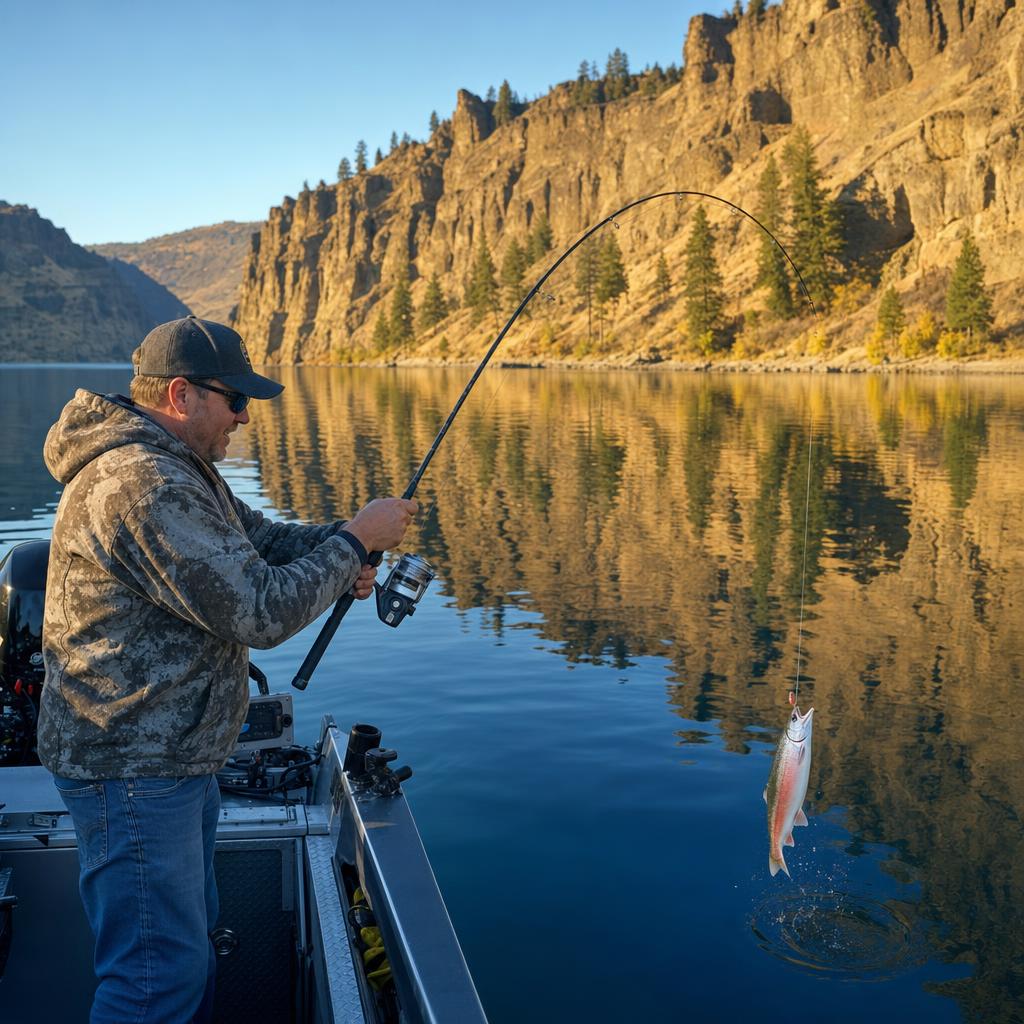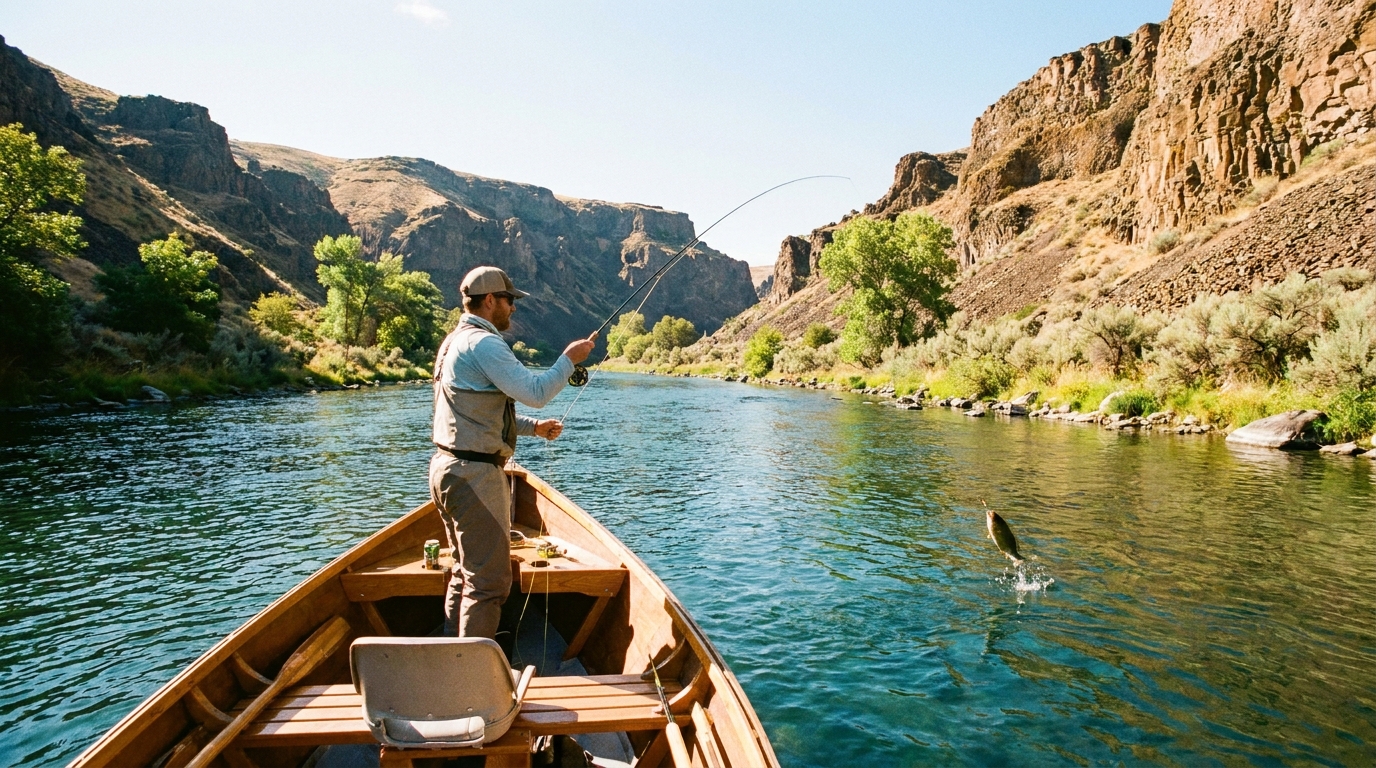
Ask most Oregon anglers where to catch smallmouth bass and they'll say the Columbia or the Snake. Fair enough — those rivers produce big fish. But the John Day River, winding 284 miles through the high desert canyons of eastern Oregon, might be the most underrated smallmouth fishery in the Pacific Northwest. The fish are wild, aggressive, and in many stretches you'll float all day and not see another boat.
Why the John Day Stands Apart
The lower John Day — roughly from Service Creek down through Clarno to Cottonwood Canyon — is wild and remote. There are no dams in the lower canyon, so water temperatures stay cooler than you'd expect, and the river flows through Bureau of Land Management land for most of its length. The canyon walls rise 1,500 feet above the river in places. It doesn't feel like fishing; it feels like an expedition.
Smallmouth in the John Day run 12–17 inches routinely, with genuine 18–20 inch fish possible in the deep pools below Clarno and through the Picture Gorge section. ODFW surveys have consistently shown high bass density in the canyon stretches, and because access is float-only for most of the best water, pressure stays low.
Best Float Sections
- Service Creek to Clarno (69 miles): The classic multi-day John Day float. Plan 4–6 days. Class II and III rapids, stunning canyon scenery, excellent bass throughout. Clarno has a great takeout. This is the workhorse section for bass anglers.
- Clarno to Cottonwood Canyon (52 miles): More remote, fewer floaters, excellent deep-water bass pools below the basalt formations. Access at Cottonwood Canyon State Park.
- Picture Gorge / Middle Fork: Day-accessible in spots with a high-clearance vehicle. Good bass fishing in the canyon pools, and you can bank-fish or use a small inflatable.
Timing Your Float
May through early July is the prime window. Water temperatures in the 60–68°F range trigger peak smallmouth activity — they're pre-spawn, spawning, or just post-spawn and feeding aggressively. By August, the river drops and warms; fishing is still good early morning but the window shrinks. September can be excellent again as temps cool.
Check current flows at the USGS gauge on the John Day at Clarno (gauge 14076500). Ideal floating flows are 500–2,000 cfs. Below 500 cfs you'll be dragging your boat. Above 3,500 cfs, the canyon rapids get serious.
Gear and Rigging
You don't need to overthink tackle for John Day smallmouth. These fish haven't seen a lot of lures and they're not selective.
Top Producers
- 4-inch plastic grubs in smoke, green pumpkin, or watermelon: A 1/4 oz ball-head jig dragged along the rocky bottom is the most consistent all-day producer
- Ned rig: A finesse setup that absolutely slays when fish are lethargic in warm afternoon water
- Topwater (Zara Spook or Whopper Plopper): First and last two hours of daylight, near the canyon walls — violent strikes, the best fishing of the trip
- Inline spinners (Mepps No. 3 or Rooster Tail): When you're drifting and want a searching lure, you can't beat a spinner in fast water
- Crayfish imitations: The river has a dense crayfish population — anything brown and crawly works along the rock shelves
Medium-light spinning rod, 8–10 lb fluorocarbon, maybe a medium rod for heavier jigs. You don't need braid — the clear water can make it a liability.
Reading the Water
In the canyon, bass stack up in predictable spots. Focus on:
- The tailouts of rapids where fast water slows and deepens
- Undercut basalt shelves along the canyon walls — especially in afternoon shade
- Tributary confluences, even small side creeks barely trickling in
- Deep green pools below sharp bends in the river
Work both banks as you float. The shaded bank in afternoon is almost always more productive — bass push tight to the walls to escape the desert heat.
Float Logistics
A self-bailing inflatable raft or hard-sided drift boat works. Most John Day floaters run 15–18 ft rafts with a frame. Bring a spare oar, a first aid kit, and enough food and water for an extra day — cell service is nonexistent in the lower canyon.
Shuttle logistics are the main headache. Local outfitters in Fossil, Mitchell, or Maupin can arrange vehicle shuttles. Plan ahead — this is not last-minute country.
ODFW requires a fishing license and, for multi-day floats through BLM wilderness sections, check current BLM fire restrictions and camping regulations. Leave No Trace applies hard out here — pack out everything.
The Bottom Line
If you've never floated the John Day for smallmouth, you're missing one of Oregon's best-kept fishing secrets. The combination of wild, hard-fighting fish, jaw-dropping canyon scenery, and genuine solitude makes it a bucket-list trip. Block out a week, rig up simple, and go.