When winter settles over the Columbia River Gorge and the salmon runs are a memory, Oregon's most serious boat anglers turn their attention to something far older — white sturgeon. These prehistoric giants have patrolled the Columbia since before the last ice age, and the stretch of river between Bonneville Dam and the mouth of the Sandy River ranks among the finest winter sturgeon fisheries in the Pacific Northwest. If you've never drifted shrimp and smelt along the bottom of the Bonneville Pool on a gray November morning, you're missing one of the great Oregon fishing experiences.
Understanding Columbia River White Sturgeon
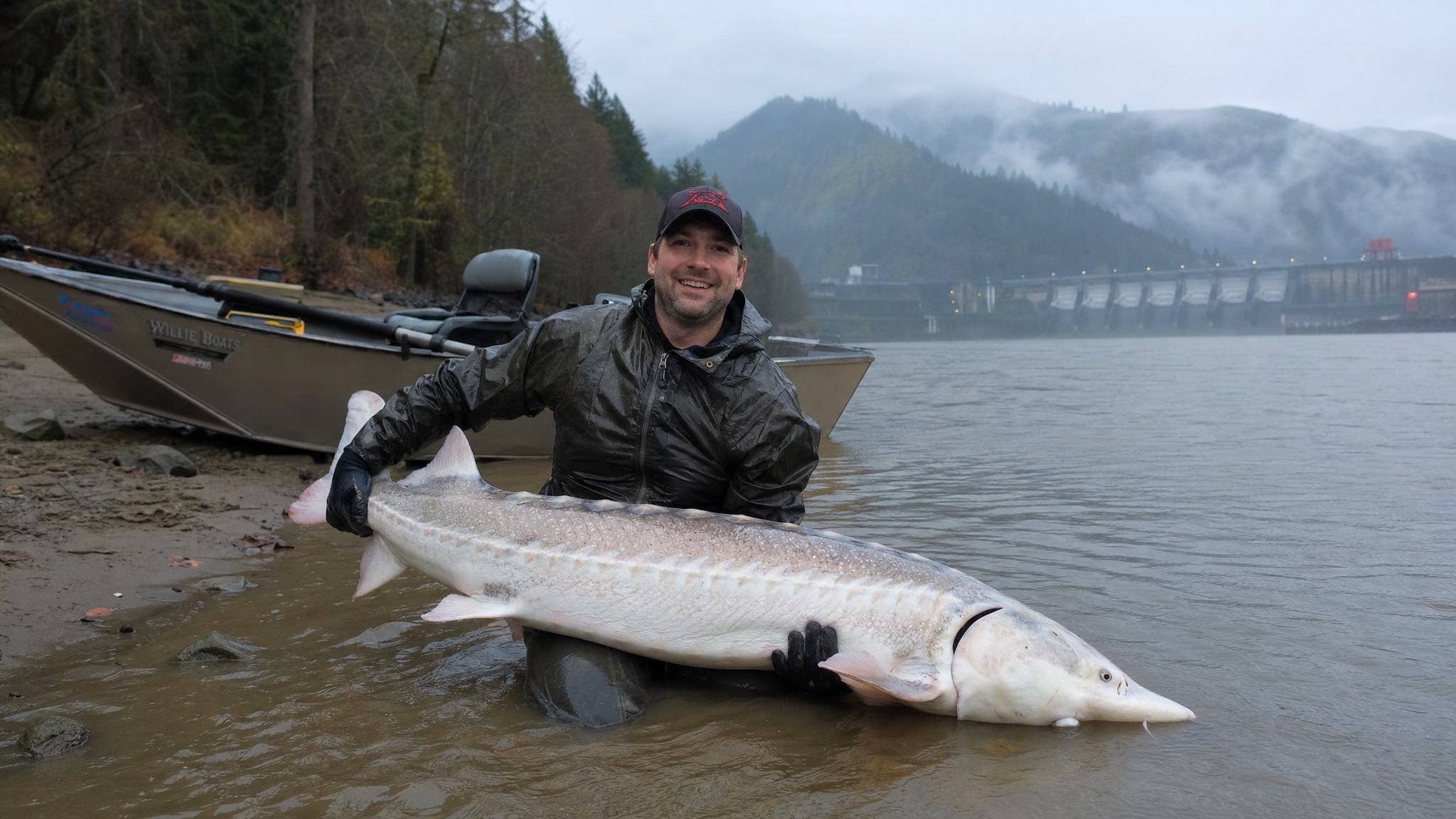
White sturgeon (Acipenser transmontanus) are the largest freshwater fish in North America. Fish in the Columbia regularly reach six feet and 100 pounds, and the river holds individuals well over ten feet long. ODFW strictly regulates the fishery to protect large broodstock: the current retention slot is 38 to 54 inches fork length. Fish outside that window — both smaller juveniles and the massive "over-limit" giants — must be released immediately and carefully.
Winter is prime time for the Bonneville Pool because sturgeon congregate in the deep holes and tailouts below the dam as water temperatures drop. The fish become predictable, stacking in the same rocky ledges and channel edges year after year. This is not a secretive fishery — on a good December weekend you'll share the river with dozens of boats — but the fish are genuinely there, and the action can be outstanding.
The Bonneville Pool: Key Water
The Bonneville Pool extends roughly from the dam itself downstream to the Cascades Rapids area near Stevenson, Washington. The best winter sturgeon water on the Oregon side includes:
- Below Bonneville Dam (RM 145): The tailrace itself draws fish year-round. Work the deep channel edges along the Oregon shore on the downstream face of the dam. Depths of 40–80 feet are common here.
- Tanner Creek Hole: A classic sturgeon anchor spot just downriver from the dam on the Oregon bank. Fish concentrate on the downstream lip of this depression in winter.
- Cascade Locks area (RM 135–140): The mid-pool section holds fish throughout winter. Launch from the Cascade Locks Marine Park ramp and drift the channel edges both up and downriver.
- Bradford Island Flats: Shallower water (15–25 feet) on the Washington side that holds fish during slack tidal influence, particularly at night.
Tackle and Rigging for Winter Sturgeon
Columbia River sturgeon fishing is not technical — it's strategic. The fish are on the bottom, and your bait needs to be right in front of them. A standard sliding sinker rig is what 90% of guides and experienced anglers run:
- Rod: 7–9 foot heavy action, rated for 20–40 lb line. Plenty of backbone for hooksets on these fish.
- Reel: Large capacity baitcaster or conventional reel. Penn Senator 112 or similar. 65 lb braid is the standard main line.
- Sliding sinker rig: 4–10 oz pyramid or sputnik sinker on a slider above a bead and swivel, then 24–36 inches of 60–80 lb fluorocarbon leader to a 7/0–9/0 circle hook. Never J-hooks — circle hooks dramatically improve live release survival.
- Scent: Everything on a sturgeon rig gets smothered in Pro-Cure Anchovy or Shrimp Super Gel. These fish hunt by smell in the turbid winter river.
Best Winter Baits
Sturgeon eat a lot of different things, but winter Columbia fish respond best to:
- Smelt: The number one winter bait. Fresh or brined, whole or cut plug. If you can find fresh smelt from the dip net fishery, run them. Frozen works fine — brine them overnight in a salt/brown sugar mix to firm the flesh and boost scent.
- Shrimp: Ghost shrimp (sand shrimp) are excellent when available. Pile 3–4 on a hook and add a smelt chunk alongside. Sand shrimp give off tremendous scent in cold water.
- Lamprey: Pacific lamprey chunks are a top-tier bait that most recreational anglers overlook. If you can source them from a tribal fisherman or find them legally, run them — they outfish smelt on tough days.
- Sucker meat: Cut sucker or pikeminnow is an underrated option, especially when smelt is scarce mid-winter.
Anchoring Strategy
The most effective winter technique is the "anchor and soak" method. Use your fish finder (Humminbird or Lowrance with side-imaging helps enormously) to locate fish holding in the 25–60 foot range on channel edges and the upstream faces of bottom structure. Anchor upstream and cast your baits to the bottom. Fresh bait every 20–30 minutes keeps your scent trail active.
When the river is running high and fast — common after December rain events — increase sinker weight (up to 12–16 oz) to hold bottom. On lower clear-water days, lighter setups in the 4–6 oz range cover more bottom naturally.
Regulations You Must Know
ODFW white sturgeon regulations change annually. For 2026–2027:
- Retention slot: 38–54 inches fork length (measure from tip of snout to fork of tail)
- Bag limit: 1 per day, 5 per year (tag required — purchase before you fish)
- Some sections near the dam have periodic closures — always check the ODFW Columbia River regulation emergency updates before launching
- All over-limit fish must be released with minimal handling. Wet your hands. Keep the fish in the water during the hook removal. Upright release only.
Launch Ramps and Access
The Columbia River Gorge has solid public access for the Bonneville Pool fishery:
- Cascade Locks Marine Park: The main Oregon-side ramp. Paved, lighted, good parking. Fee required.
- Bonneville Landing: USACE ramp just downstream of the dam. Paved, free, but limited parking.
- Rooster Rock State Park: Downriver access on the lower end of the pool. Good for the Corbett/Rooster Rock sturgeon holes.
Getting Out There
If you're new to sturgeon fishing, consider one trip with a guide before going it alone. The Bonneville Pool has several year-round operations — guides like those running out of Cascade Locks know the holes intimately and will put you on fish fast. One guided trip teaches you more about reading the water than a full season of figuring it out yourself.
Dress for cold. Gorge winds in November and December can be brutal on the water, and you'll be anchored and stationary for hours. Layering with a good waterproof outer shell, neoprene gloves, and hand warmers is mandatory comfort gear. Bring coffee. Bring patience. When a 60-pound sturgeon takes your bait and bulldogs for the bottom of the Columbia — and it will — none of that waiting will feel wasted.