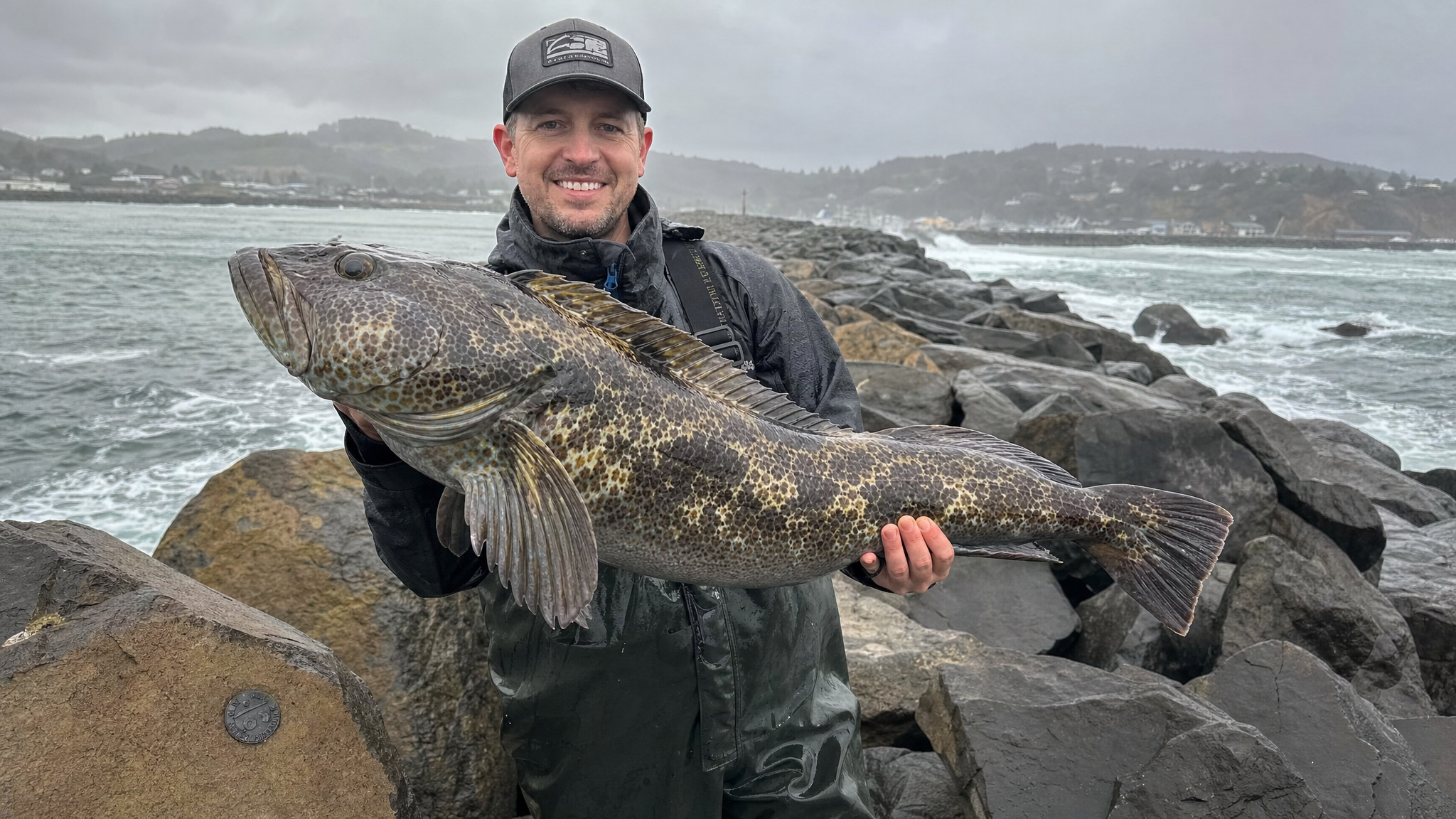
Lingcod are one of the most aggressive, hard-pulling predators in Oregon coastal waters, and winter is when the biggest fish move into range. From late November through February, large female lingcod migrate from deeper offshore structure into the near-shore reefs, kelp beds, and rocky jetties along Oregon’s south coast to spawn. The stretch from Gold Beach south to Brookings—including the Rogue River jetties, Harris Beach, and the rocky points near Cape Ferrelo—produces some of the finest lingcod fishing in the Pacific Northwest during this window, and it is accessible to anglers without a boat.
Oregon Lingcod Season and Regulations
Oregon’s recreational lingcod season south of Cape Falcon (which includes the entire south coast from Lincoln City to Brookings) runs year-round with a size limit and bag limit set annually by ODFW. As of recent seasons, the minimum size is 22 inches total length and the daily bag limit is two fish per angler. Always verify current ODFW regulations before fishing—these rules can change mid-season based on stock assessments. The Oregon Department of Fish and Wildlife website and the MyODFW app are the most reliable sources for current bag limits and open/closed dates.
Best South Coast Access Points
Rogue River Jetties, Gold Beach
The north and south jetties at the mouth of the Rogue River in Gold Beach are arguably the most productive shore-based lingcod spots on the Oregon coast. The south jetty is longer and offers more deep-water access. Fish the tip of the jetty during incoming tides when baitfish funnel through the mouth. The rubble base of the jetty itself holds fish year-round, but December and January concentrations can be outstanding. Use heavy jigs—at least 3 to 4 ounces—to cut through the surge and reach the bottom.
Chetco River Jetties, Brookings
The Chetco River jetties in Brookings offer similar structure to the Rogue but with the added benefit of proximity to some of the richest near-shore reef systems on the Oregon coast. The Chetco jetty produces lingcod in the 5 to 15 pound class regularly, with 20-pound-plus fish showing up in winter. The south side of the jetty, where current sweeps past the rocks into deeper water, is the prime zone.
Harris Beach State Park Rocky Shore
Harris Beach State Park, just north of Brookings off US-101, provides walk-in access to rocky intertidal shelves that drop into 20 to 40 feet of water. Anglers who time low tide access to the outer shelves can cast heavy jigs into the surge channels and reach feeding lingcod that stage along the kelp edges. Footing is critical here—wear cleated rubber-soled wading boots and never turn your back to the ocean.
Tackle and Jig Setup for Oregon Winter Lingcod
Rod and Reel
A medium-heavy to heavy 8 to 9 foot spinning rod rated for 1 to 4 ounces handles most shore-based lingcod situations. Match it with a 4000 to 5000 series spinning reel spooled with 30 to 50 lb braided line. The braid transmits strikes better than mono and handles the abrasive reef structure more reliably. Add a 24 to 36 inch fluorocarbon leader of 40 to 60 lb test—lingcod have sharp teeth and rough gill plates that chafe lighter leaders quickly.
Jig Selection
Lingcod respond well to swimbaits, paddle-tail soft plastics, and lead-head jigs. Top producers on the Oregon south coast include:
- Berkley Gulp! Swimming Mullet (5-6 inch) on a 1.5 to 2 oz lead head—natural white, chartreuse, or pearl white are top colors in turbid winter water
- Hogy Epoxy Jig or Shimano Butterfly Jig in 3 to 4 oz sizes—retrieved with a slow lift-and-drop from the bottom
- Live rubber-skirted jigs in white or green—effective when bounced slowly along cobble bottom
- Large swimbaits (4-6 inch paddle tail) on 1.5 to 3 oz jigheads—the natural swimming action draws reaction strikes from ambush predators
Keep the jig near the bottom. Lingcod are ambush predators that hold on structure and strike upward at prey. Retrieve with a slow lift, 1 to 2 cranks, let it fall back to bottom, repeat.
Tides and Timing
Tide timing is critical for south coast shore fishing. The best production usually occurs on the last two hours of an incoming tide through the first two hours of outgoing. Bait fish and crustaceans move with tidal flow, and lingcod position themselves at the downstream edge of structure to intercept them. A strong minus tide can expose the outer rocks and give jetty anglers access to deeper zones that are unreachable at high water—but always prioritize safety when navigating exposed jetty rock in winter swell.
Swell height matters as much as tide. A 4 to 6 foot swell from the northwest creates enough surge to activate fish without making jetty access dangerous. Swells above 10 feet will close off most shore-based access on the south coast. Check NOAA buoy data for Buoy 46027 (offshore from Crescent City) and the Point St. George nearshore forecast to gauge conditions before making the drive.
Handling and Table Quality
Lingcod are outstanding table fish—the white, mild, dense flesh holds up well to any cooking method. Bleed fish immediately after landing by cutting the gills, then ice them promptly. A lingcod over 10 pounds can produce substantial fillets. The occasional blue-green flesh seen in some lings is harmless—it cooks up white and is completely safe to eat. Boneless lingcod fillets are excellent battered and fried, baked with lemon and herbs, or used in fish tacos.
Safety on the South Coast Jetties
Winter jetty fishing on the Oregon coast demands respect for the ocean. Always:
- Check the swell forecast before accessing any jetty or exposed rock—NOAA’s marine forecast is your first stop
- Wear a personal flotation device (PFD) if fishing from exposed jetty tips in any swell
- Never fish alone on a remote rock shelf or jetty tip in winter
- Cleated or studded wading boots prevent falls on wet, algae-covered rock
- Know your exit route before you commit to a position on the rocks
Final Thoughts
Oregon’s south coast winter lingcod fishery is a hidden gem that rewards anglers who are willing to drive the extra miles down US-101 and work the rocks in cold, raw conditions. The Gold Beach and Brookings jetties see a fraction of the pressure of Central Coast spots, the fish are large and aggressive, and a successful outing can fill a cooler with some of the finest eating fish on the Pacific Coast. If you have not targeted winter lings from shore, this is the season to start.