Oregon's razor clam season is one of the Pacific Northwest's most underrated outdoor traditions. Every December, when minus tides roll the beach flat and the surf pulls back to reveal dark, wet sand, thousands of Oregonians grab their clam guns and head for Clatsop Spit. If you've never dug a limit of Pacific razor clams (Siliqua patula) while the surf crashes fifty yards to your west and a grey winter sky presses down from above, you're missing out on one of the most satisfying and delicious hunts this coast offers.
Knowing the Regulations Before You Dig
Oregon Department of Fish and Wildlife sets the razor clam season based on beach surveys and bioaccumulation testing. As of 2026, the daily limit is 15 razor clams per person, and your first 15 clams — keepers or not — count toward your limit. That means no throwbacks once you've dug them. A valid Oregon fishing license is required. Always check the ODFW Shellfish Hotline at 1-800-448-2474 before heading out, as closures due to paralytic shellfish poisoning (PSP) or domoic acid can happen with little notice.
Prime Oregon Razor Clam Beaches
Clatsop Beach (Fort Stevens to Gearhart)
This 18-mile stretch of open Pacific beach in Clatsop County is Oregon's most productive razor clam ground. The beach from the South Jetty of the Columbia south toward Seaside holds reliable populations year after year. Access at Fort Stevens State Park's day-use area gives you easy parking and a short walk to the surf line. The sand here is firm but workable, and clams typically show at 4–6 inches deep.
Cannon Beach Area (North of Arch Cape)
The flat stretches north of Cannon Beach toward Tolovana offer solid digging and far fewer crowds than Clatsop Spit on a busy tide. Bring a good clam gun — the sand can be compacted here — and work the low surf line where show holes are most visible.
Washington's Long Beach Peninsula (Day Trip Option)
Just across the Columbia River, Washington's Long Beach Peninsula runs 28 miles and is widely considered the best razor clam beach on the entire Pacific Coast. Washington runs separate seasons with its own regulations — check WDFW's website — but the drive from Astoria is under an hour and the clamming can be exceptional when both states are open simultaneously.
Timing the Tides
Razor clams are a low-tide game. You want a minus tide of -0.5 feet or lower to expose the best clam beds. NOAA's tide predictions for the Astoria gauge are your bible here. December typically delivers several strong minus-tide series, often in the early morning or late afternoon. The sweet spot is arriving on the beach about 30 minutes before the predicted low, working fast as the tide bottoms out, then retreating as it comes back in.
Overcast days are actually better for razor clamming — bright sun makes it harder to see the telltale "show" in the sand. Light rain? Perfect. Bring layers and waterproof waders or rubber boots. December on the Oregon coast is cold, wet, and completely worth it.
Gear You'll Actually Need
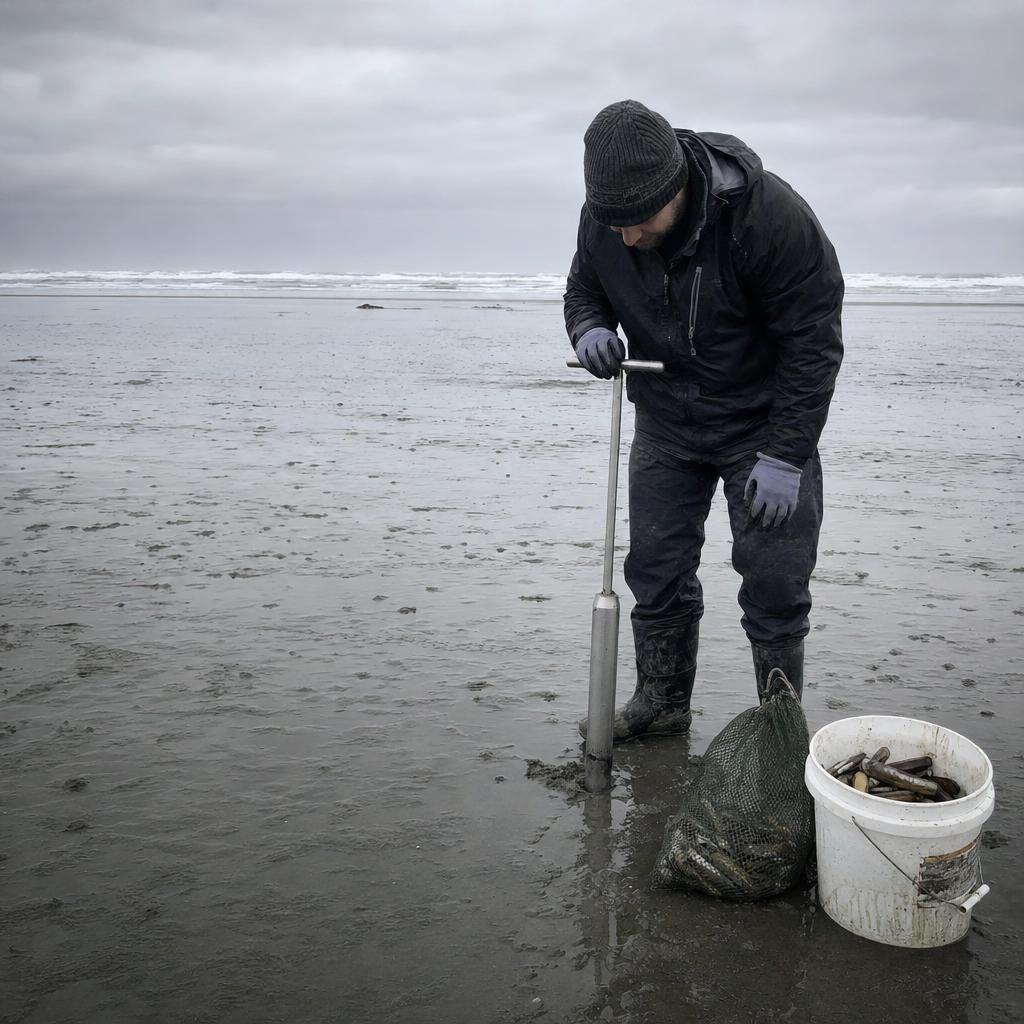
- Clam gun (tube digger): A 6-inch diameter aluminum clam gun is the standard on Oregon beaches. Keep it clean and lightly oiled so the piston slides freely. PVC guns work but tend to split in cold weather.
- Mesh bag or bucket: A mesh bag clips to your waders and keeps clams alive in the surf wash. A 5-gallon bucket with a lid works fine if you're not wading deep.
- Rubber gloves: Optional but useful — razor clam shells are sharp and December sand is 48°F.
- Oregon fishing license: On your phone or printed — wardens check on busy tides.
- Probe stick (optional): A thin fiberglass rod helps locate clams in firm sand before you commit a dig.
Reading the Show
Razor clams reveal themselves in two ways: a dimple or depression in the wet sand (the classic "show"), and a small keyhole-shaped hole that appears when you stomp your foot near the clam. Walk slowly through the wet sand in the surf zone and scan for these signs. When you spot a show, place your clam gun directly over it, push down quickly with a twisting motion, cover the thumb hole to create suction, and pull up in one smooth motion. The clam will often be right at the base of your plug.
Speed matters — razor clams can dig at roughly an inch per second and will escape a slow or tentative digger. Commit to the dig, work fast, and feel for the clam with your fingers at the bottom of the hole if it doesn't come up with the plug.
Cleaning and Eating Your Clams
Razor clams can be cleaned right on the beach in a bucket of surf water or at home. The basic method: blanch for 15 seconds in boiling water, slip off the shell, and remove the gills and digger foot. The clam body and siphon are both edible. Pan-fried razor clams in butter and garlic, or dipped in a seasoned breading and cooked in a cast-iron skillet, are genuinely one of the best meals the Pacific Coast produces. Many old-timers pound the digger flat and fry it whole — don't skip this step if you haven't tried it.
December Is Prime Time — Don't Sleep On It
While most Oregon outdoor attention shifts to steelhead rivers and late-season deer hunts in December, the razor clam beaches are quietly producing some of the best digging of the year. The crowds that pack Clatsop Spit on a July minus tide are nowhere to be found. You'll have wide-open beach, cooperative clams, and a cooler that fills fast. Check the PSP hotline, pick your tide series, and get out there before the season closes.