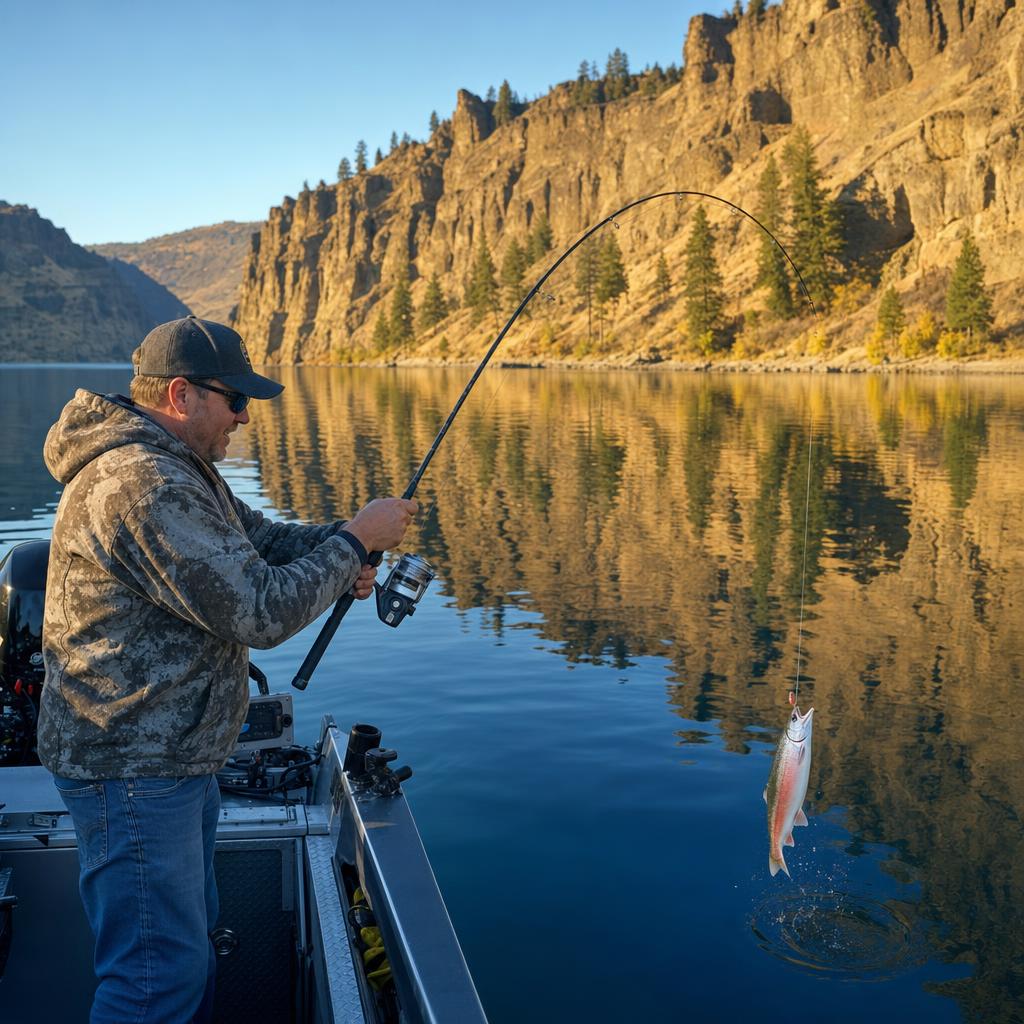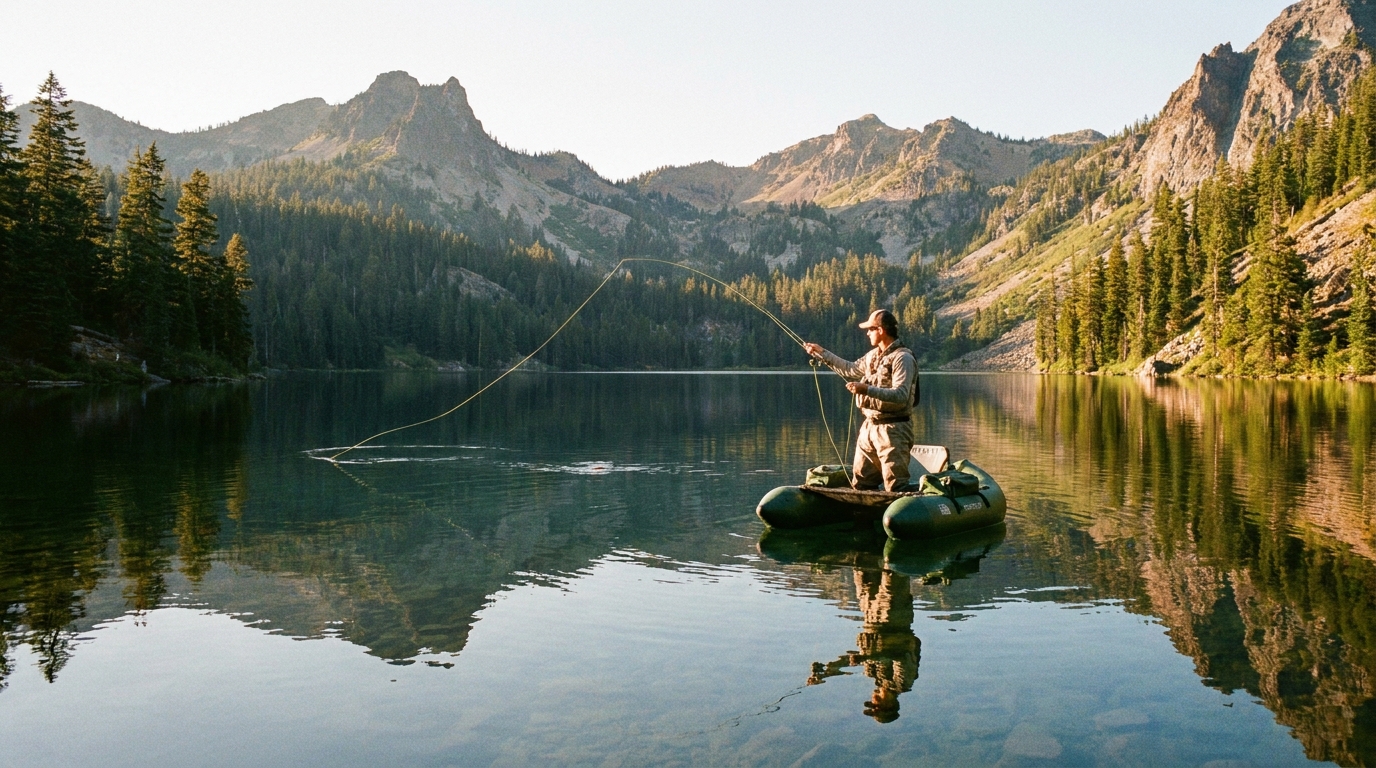
There are a handful of fisheries in the Pacific Northwest that stop you cold the first time you see them. Hosmer Lake, tucked into the Deschutes National Forest about 35 miles southwest of Bend, is one of them. The water is so clear you can watch Atlantic salmon ghost through the shallows while brook trout nose against the drop-offs — and none of it is easy to catch. That combination of beauty and difficulty is exactly why serious fly anglers keep coming back.
What Makes Hosmer Lake Special
Hosmer is a fly fishing-only lake. Artificial flies and lures, barbless hooks required. No bait, no gear fishing, no exceptions. ODFW has managed it this way for decades specifically to grow large fish, and it shows. Brook trout commonly run 14 to 18 inches, and the Atlantic salmon — descendants of a stocking program that began in the 1950s — reach 20 to 26 inches and hit like freight trains when they decide to eat.
The Atlantic salmon here are not true anadromous fish. They were introduced as a landlocked strain and have sustained a self-reproducing population. They are not always cooperative. Some days they ignore everything in the box. Other days they'll chase a Muddler Minnow or a big streamer with reckless aggression. Reading their mood is part of the game.
Access and Facilities
Hosmer sits at roughly 4,960 feet elevation on the eastern slope of the Cascades, accessed via Forest Road 4625 off the Cascade Lakes Highway (Highway 46). Two campgrounds — Hosmer South and Hosmer North — provide lakeside camping with pit toilets, bear boxes, and boat ramps suitable for canoes, kayaks, and small inflatables. No motorized boats are permitted, which keeps the surface quiet and the fish undisturbed.
Bring a canoe, kayak, or float tube. Wading is technically possible in some areas, but the lake bottom turns soft and weedy quickly, and most productive water is only reachable by boat. A float tube and fins is arguably the ideal setup — it gets you low to the water and lets you finesse your position without the noise of oars.
Timing and Seasonal Windows
Hosmer typically opens in late April or early May when access roads clear, and the season runs through October. Summer — June through August — is the most popular window, when the Atlantic salmon are visibly cruising the weed edges and brook trout are active throughout the day.
- Early Season (May–June): Callibaetis mayflies begin hatching, and the fish are aggressive after a long winter. Water temps are cold and fish metabolisms are ramping up. Early mornings produce well.
- Midsummer (July–August): Expect midday lulls when surface temps warm. Fish the edges of the main channel weed beds at dawn and dusk. Damselfly nymphs and adult damsel patterns are productive.
- Fall (September–October): Arguably the best period. Brook trout begin pre-spawn color and aggression. Atlantic salmon stage near the outlet channel. Streamers shine, and crowds thin out after Labor Day.
Flies That Work
The Hosmer hatch sequence tracks predictably through the season:
- Callibaetis Mayflies: Both nymphs (size 14–16) and dries during the hatch. Parachute Adams and CDC Comparaduns work well on surface-feeding fish. Nymphs fished slow under an indicator are consistent producers all summer.
- Damselflies: This is the signature Hosmer hatch. Cast olive or tan damsel nymph imitations toward the weed edges and retrieve with a slow, erratic swimming motion toward open water. The strike often comes right at the weed line. Adult damsel dries — blue or tan Elk Hair Caddis-style patterns — work during mass emergences.
- Chironomids: Midge pupae fished under an indicator at depth can be deadly when surface action is slow. Size 16–20, olive or red with a silver bead.
- Streamers for Atlantic Salmon: The salmon are not reliable dry fly fish, though they can be taken on the surface with large attractors. Muddler Minnows, Woolly Buggers (olive or black, size 4–8), and Zoo Cougars retrieved with quick strips provoke reaction strikes. The salmon will often follow without committing — slow down your retrieve when you see a trailing fish.
Brook Trout vs. Atlantic Salmon: Different Approaches
Brook trout in Hosmer behave like well-educated stillwater fish. They respond to proper presentations but punish dragged flies or heavy tippet. Use 4X or 5X fluorocarbon and be prepared for refusals. They often feed subsurface even when surface activity looks good, so watch carefully for subtle rises versus confident takes.
Atlantic salmon require a mental reset. They are not trout. Their instinct to strike can be triggered by aggression as much as feeding behavior. A fly moved quickly past a visible salmon will sometimes provoke a strike that a perfectly drifted nymph never would. Keep a streamer rod rigged alongside your hatch rod — being able to switch quickly matters.
Regulations Summary
Confirm current ODFW regulations before your trip, but the standard Hosmer framework is:
- Artificial flies and lures only, barbless hooks required
- Atlantic salmon: catch-and-release only
- Brook trout: check current slot and bag limits (typically 5 per day with a size minimum)
- Float tubes, canoes, and non-motorized watercraft only
- Valid Oregon fishing license required
Making the Most of the Drive
Hosmer sits on the Cascade Lakes Scenic Byway, so you can combine a trip with stops at Lava Lake for stocked rainbows, Crane Prairie Reservoir for trophy browns, or Cultus Lake for a midday swim. If you are camping the weekend, fish Hosmer hard both mornings and hit the other lakes midday when the flat water gets glassy and difficult.
It is a drive worth making. Hosmer Lake offers something rare in Oregon fly fishing — a legitimate challenge with legitimate rewards, in a setting that reminds you why you got into this in the first place.