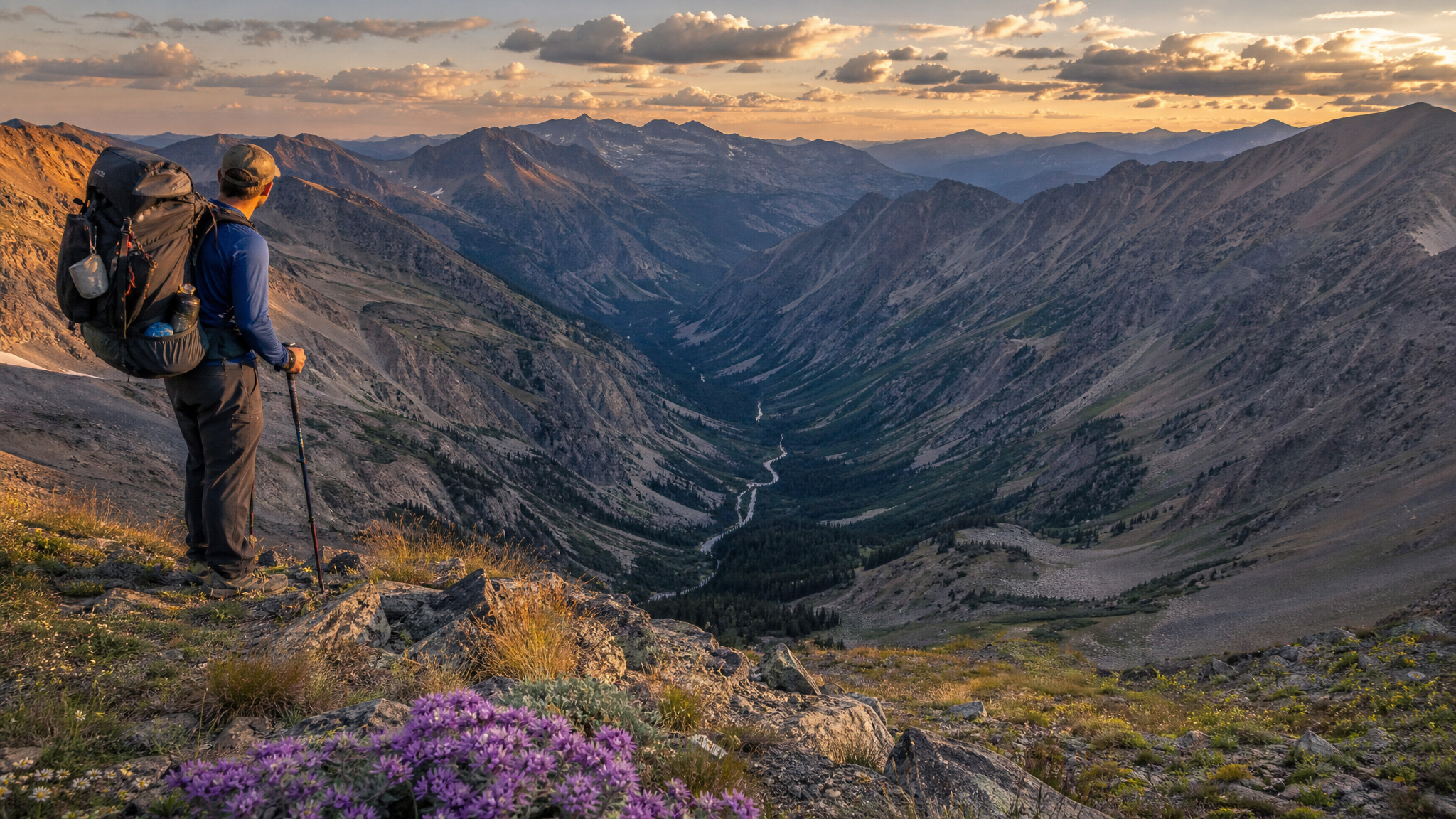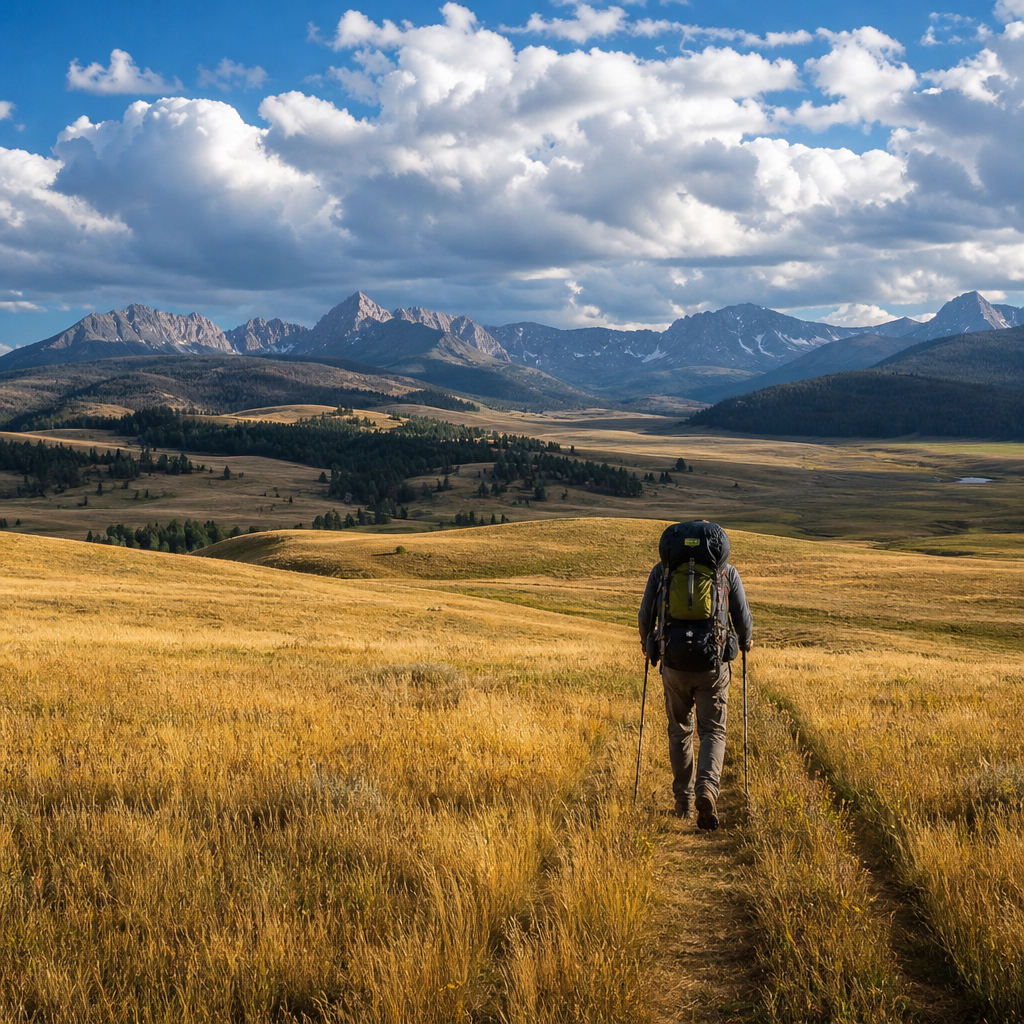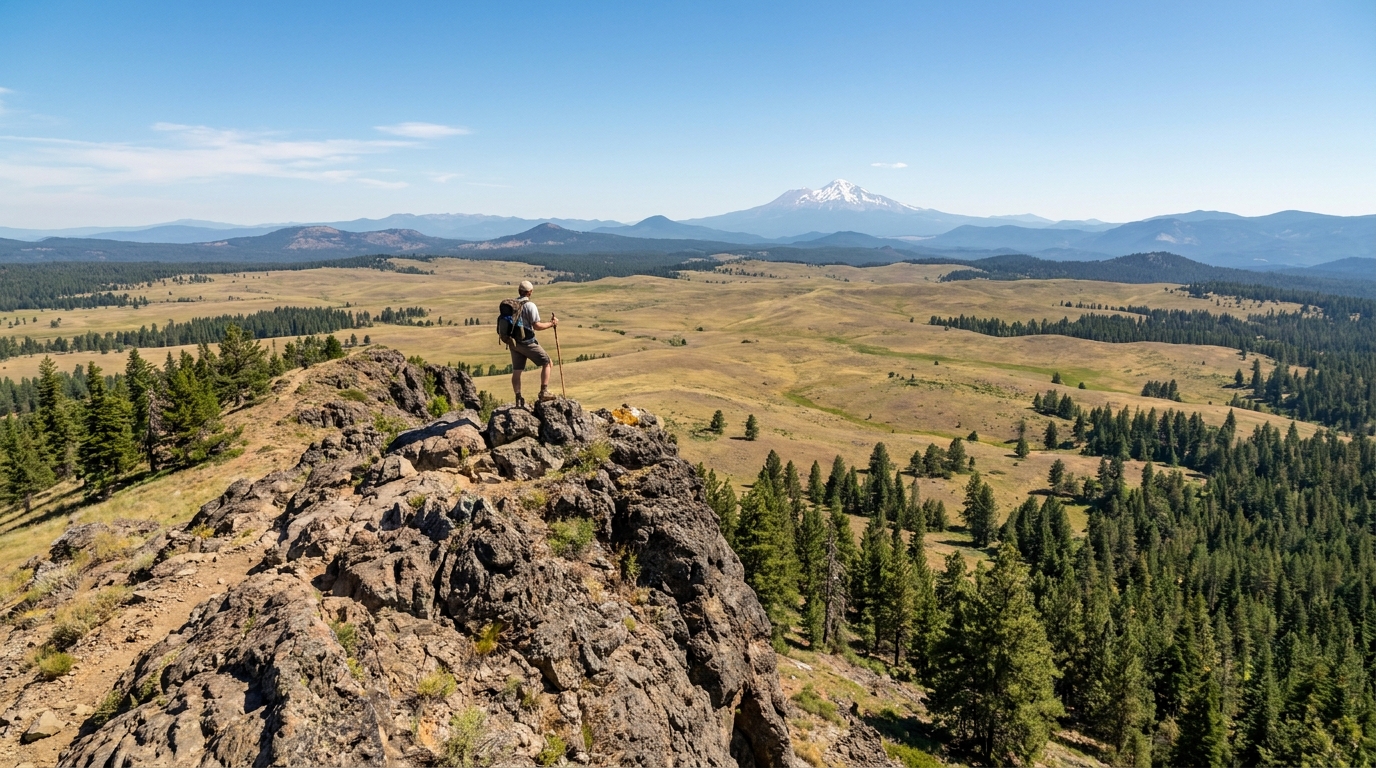
Oregon's Cascade-Siskiyou National Monument occupies an ecological crossroads unlike any other place in the Pacific Northwest — where the Cascades, Siskiyou Mountains, and Great Basin all converge in a mosaic of pine forest, native bunchgrass prairie, and volcanic rimrock. At the heart of the monument's wild lands sits the Soda Mountain Wilderness: 24,100 acres of roadless country in Jackson County, offering backpacking that's genuinely underutilized and ecologically extraordinary.
Why Soda Mountain?
Backcountry travelers who've hammered the Three Sisters Wilderness or the Eagle Cap in recent years are discovering that permits, crowded camps, and pack-in/pack-out regulations are changing the high-Cascade experience. Soda Mountain offers the opposite: no permit required, very few other hikers, and scenery that shifts from Ponderosa pine stands to wide open views across the Rogue-Umpqua Divide and Klamath Basin in a matter of miles. The biological diversity here is extraordinary — the monument hosts more species of plants and animals per square mile than any similarly sized area in the Northwest.
Getting There
The primary access point for Soda Mountain Wilderness backpacking is via BLM roads off Highway 66 east of Ashland. From Ashland, take Dead Indian Memorial Road (County Road 722) east approximately 22 miles to the Soda Mountain trailhead access. A high-clearance vehicle is recommended on the final approach roads. For current road conditions, contact the BLM Medford District at (541) 618-2200 before your trip.
Route Overview: Soda Mountain Loop (2–3 Days)
A satisfying overnight to two-night loop can be built from the Soda Mountain summit area, linking the Pacific Crest Trail with BLM routes through the wilderness core. The PCT passes through the monument and serves as your most reliable navigation anchor.
Day 1: Trailhead to Camp (5–7 miles)
Gain the ridge above the parking area and follow the route toward Soda Mountain summit (6,089 feet). The climb is steady but not extreme — this is not technical terrain. From the summit on a clear summer day, you'll see Mount Shasta to the south, the main Cascade peaks to the north, and the broad sweep of the Klamath Basin to the east. Drop off the east ridge into the wilderness core to established camp sites near seasonal water sources. Water can be scarce by mid-July — carry 3–4 liters when leaving any reliable source.
Day 2: Wilderness Exploration (4–8 miles)
The wilderness interior is open country threaded with PCT trail segments. Explore the bunchgrass prairie openings where wildlife is exceptional — this is pronghorn habitat, and mule deer are common along woodland edges at dusk. Botanists and curious hikers will find rare plant communities not found anywhere else in Oregon. The monument is a designated Important Bird Area: white-headed woodpeckers, Calliope hummingbirds, and Swainson's hawks are all present in summer.
Day 3: Return (5–7 miles)
Return via the PCT north to your original access route. If you've arranged a shuttle, consider exiting via a different access point for a one-way traverse through the monument's most scenic terrain.
Water and Conditions
Water is the limiting factor in Soda Mountain Wilderness by July. Springs identified on current BLM maps may be reduced or dry in drought years. Always filter water and plan for longer carries than you're used to in the high Cascades. Summer temperatures on exposed ridges can reach 90°F — plan to be in camp or under cover during midday heat. Early mornings and evenings are spectacular and comfortable.
Wildlife and Botany
- Mammals: Mule deer, pronghorn (in open grassland areas), black bear, coyote, and northern Pacific rattlesnakes — watch your step on rocky terrain
- Birds: White-headed woodpecker, white-throated swift, prairie falcon, and many Siskiyou-endemic species
- Plants: Endemic Siskiyou wildflowers, giant wildrye grassland communities, knobcone pine, and extraordinary floral diversity at peak bloom in July
Leave No Trace and Regulations
The monument is managed by BLM. No campfire permits are required outside of fire season, but check current fire restriction status at blm.gov or call the Medford office. Dispersed camping is allowed throughout the wilderness — camp on durable surfaces a minimum of 200 feet from water sources. No campfires above 5,500 feet during summer fire restrictions. Dogs are permitted on leash.
When to Go
Mid-June through mid-September is the primary backpacking window. July offers wildflowers at peak, pronghorn with spotted fawns, and long days for exploration. By late September, the grasslands turn gold and the deer rut is approaching — a different but equally rewarding experience. Snow can arrive by October at elevation.
Soda Mountain Wilderness rewards the curious and self-sufficient backpacker. It's not the place for Instagram crowds or permit-required glamping. It's real Oregon backcountry — a little rough, completely beautiful, and entirely your own.