Odell Lake sits at 4,787 feet in the Oregon Cascades, cradled between Diamond Peak and the Willamette Pass ski area along Highway 58. It's one of the state's deepest and coldest lakes — and home to the largest mackinaw (lake trout) fishery in Oregon. When fall turns the surrounding Engelmann spruce and lodgepole pine to gold and the surface temperatures drop into the low 50s, mackinaw move shallow and aggressive. October is the best month to be on the water.
Understanding Odell Lake's Mackinaw
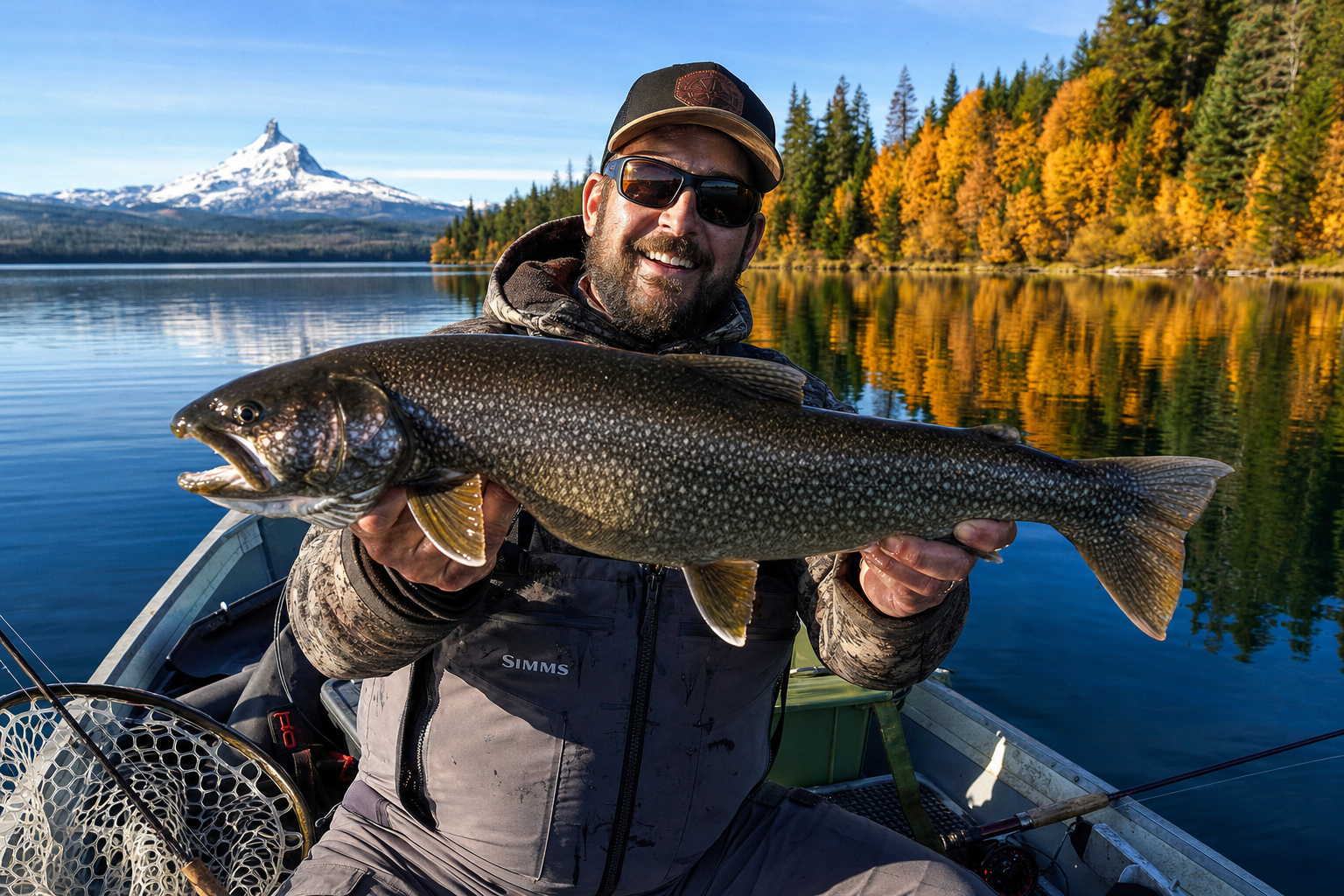
Lake trout (Salvelinus namaycush) are native to high-alpine Canadian lakes and were introduced to Odell in the early 1900s. They thrive in Odell's cold, clear, 285-foot maximum depth — the kind of thermal regime mackinaw evolved for. The lake holds fish to 20+ pounds, with fish in the 5–10 pound range being genuinely common. ODFW surveys have documented lakers over 30 pounds from Odell, though fish that size are rare and old.
Kokanee salmon are Odell's other target species and the primary forage for mackinaw. The lake's exceptional kokanee population explains why mackinaw grow so large here — they have an ideal prey base. When you're targeting mackinaw, think like a predator hunting kokanee schools.
Fall Timing and the Spawn Advantage
October is prime time for one very good reason: mackinaw spawn in fall on rocky shoals. Lake trout move from their summer deep-water haunts (60–200 feet) onto rocky points and rubble shorelines in 15–50 feet of water. This behavioral shift makes them far more accessible to anglers who don't have the downrigger setups required for midsummer deep-water trolling.
On Odell, the spawn typically runs from mid-October through mid-November. Water clarity in this lake is exceptional — Secchi depths often exceed 20 feet — so fish can see (and strike) lures from considerable distances.
Top Locations on the Lake
- Odell Creek inlet (east end) — The creek delta creates a rubble flat that mackinaw stage on during spawn. Fish the transition from the delta into 25–50 feet.
- Pebble Bay to Sunset Cove (south shore) — Rocky points and irregular bottom structure along the south shoreline concentrate lakers. Work the 20–40 foot zone with jigs around visible rock piles.
- Trapper Creek area (west end) — Another inlet area that draws mackinaw. The underwater shelf drops quickly into deeper water — fish the break.
- North shore rock points — The less-accessed north shoreline has several rocky points that produce well in October. You'll need a boat to reach them comfortably.
Jigging Tactics: The Fall Standard
Vertical jigging is the most effective fall mackinaw technique at Odell and the most fun — the strikes are violent and the fight on a 10-pound lake trout in 30 feet of water is genuinely exciting.
Jig Selection
- Swedish Pimples (3/4 oz – 1.5 oz) — The classic mackinaw jig. Silver and gold finishes mimic kokanee. Drop to bottom, rip upward 2–3 feet, let it flutter back down. Strikes usually come on the drop.
- Tube jigs (4"–6") — White, chartreuse, or smoke colors work. Rig on a 1/2–1 oz. jig head. The subtle tentacle action on the drop triggers reaction strikes from neutral fish.
- Jigging Rapalas (J9, J11) — Particularly effective in shallower water (15–30 feet). The erratic action on a slack-line drop is a near-perfect kokanee imitation.
- Kastmaster spoons (3/4 oz) — Silver or gold. Can be cast to rocky shorelines from the boat and jigged back, which covers more water than straight vertical work.
Presentation Tips
The key to fall mackinaw jigging is working close to bottom structure. Let your jig hit bottom, then work it in an aggressive lift-drop cadence — 2-foot lifts, then a controlled drop on semi-slack line. The flutter on the drop is everything. If you're not occasionally snagging bottom, you're too high.
In clear Odell water, mackinaw will often follow a jig for several feet before committing. If you feel pressure without a positive hookset, hold the rod steady — sometimes the fish needs another second to engulf the lure before you set.
Trolling Tactics
If jigging doesn't produce, or if you want to cover water to locate fish, trolling with a downrigger or heavy flasher-fly setup works well at Odell in fall.
- Depth: Target 20–60 feet in October. As water temps cool through November, fish push deeper — 60–100 feet.
- Speed: 1.5–2.5 mph. Mackinaw prefer slower presentations than kokanee.
- Lures: Large Rapala husky jerks (size 12–14), J-Plugs, large Krocodile spoons, or a dodger-and-anchovy setup. Silver and chartreuse dominate, but experiment with purple-and-silver in lower light.
- Flashers: A 00 or 0-size dodger ahead of a 4–5" plastic grub or anchovy strip triggers big fish that won't chase a bare spoon.
Gear Setup
For jigging, a medium-heavy baitcasting setup works best — a 7' Shimano Curado or Daiwa Tatula paired with 15–20 lb fluorocarbon or 30 lb braid with a 15 lb fluoro leader. Braided line transmits the subtle taps of a following fish far better than mono, which matters in Odell's clear water.
For trolling, a dedicated downrigger rod — 8'–9' medium-action — in the 15–20 lb mono or 30 lb braid class handles the cannonball and fish without issue.
Regulations and Access
Odell Lake is managed under Oregon's general trout regulations for most of the lake. Check current ODFW regulations for the Odell Lake unit, as mackinaw rules can include slot limits or special retention rules. As of 2026, mackinaw at Odell are open year-round with a 5-fish daily limit — but always verify before you go.
Boat launch: There are two improved ramps — one at Odell Creek (east end) and one near Shelter Cove Resort on the south shore. Shelter Cove Resort also rents fishing boats if you're making the trip without your own. The resort's general store carries basic terminal tackle.
Getting there: Odell Lake is on Highway 58, approximately 60 miles southeast of Eugene and 70 miles southwest of Bend. The drive from Bend over Willamette Pass is spectacular in October — budget extra time if the larch are turning.
Final Thoughts
Odell Lake is one of Oregon's most overlooked trophy fisheries. While salmon rivers crowd up in October, Odell sees a fraction of the pressure despite holding lake trout that rival anything in the Pacific Northwest. Load up a box of Swedish Pimples, book a cabin at Shelter Cove, and spend a morning working rocky points in 30 feet of gin-clear water. One solid mackinaw on a light jigging rod and you'll understand why this fishery deserves more attention.