Oregon's coastline stretches 363 miles from the Columbia River to the California border, and much of that coastline sits above prime Dungeness crab habitat. The Pacific Northwest's most sought-after crustacean thrives in the cold, productive waters of Oregon bays and near-shore areas, and recreational crabbers who understand the timing, gear, and regulations can pull limits on most tide cycles from May through October.
Understanding Oregon's Crabbing Regulations
The Oregon Department of Fish and Wildlife sets daily bag limits at 12 male Dungeness crabs, with a minimum carapace width of 5¾ inches. Only males may be retained — females and undersized males must be returned unharmed to the water immediately. Crabbing is permitted year-round in most bays, but ocean crabbing from boats follows a commercial-season-dependent schedule that can affect nearshore access. Always check the current ODFW regulations before your trip at myodfw.com, as closures can occur due to domoic acid contamination without advance notice.
A shellfish license is required for anyone 12 years of age or older. Combination licenses that include shellfish are available and represent excellent value if you're also planning to fish during your coastal trip.
Best Bays for Oregon Dungeness Crab
Yaquina Bay (Newport)
Yaquina Bay at Newport is arguably Oregon's most accessible crabbing destination. The bay has well-maintained public docks near the historic bayfront, making it ideal for crabbers without a boat. The Newport Bayfront Municipal Dock and the ODFW access dock provide free crabbing from shore. Crab populations in Yaquina Bay are consistently strong, and the bay sees heavy recreational pressure on summer weekends. Weekday morning sessions at high tide consistently outperform weekend afternoons.
Tillamook Bay
Tillamook Bay, fed by five rivers, produces excellent Dungeness crabbing throughout the season. Boat access greatly expands your options here, allowing you to set gear in the lower bay channels near the Tillamook Bay North and South Jetties. The jetty mouths tend to hold the largest crabs as ocean-migrating males move in and out with tidal exchange. Shore crabbing is possible from several access points, but productive areas are spread out.
Coos Bay
Coos Bay is Oregon's largest natural bay and produces exceptional Dungeness crab. The sheer size of the bay means competition for prime spots is less intense than at smaller bays. North Bend has several productive crabbing areas accessible from shore, and the Charleston boat basin provides excellent boat launch access to the lower bay. The area around the highway bridge and the Charleston Channel is worth targeting during incoming tides.
Alsea Bay (Waldport)
Waldport's Alsea Bay is a smaller, less-pressured bay that produces solid crabbing throughout the season. The public dock near the Alsea Bay Bridge provides shore access, and the relatively compact bay allows boat crabbers to efficiently cover productive ground. Alsea Bay tends to fish better on incoming and high tides when saltwater dominates the lower bay.
Gear and Rigging for Dungeness Crab
Ring Nets vs. Pots
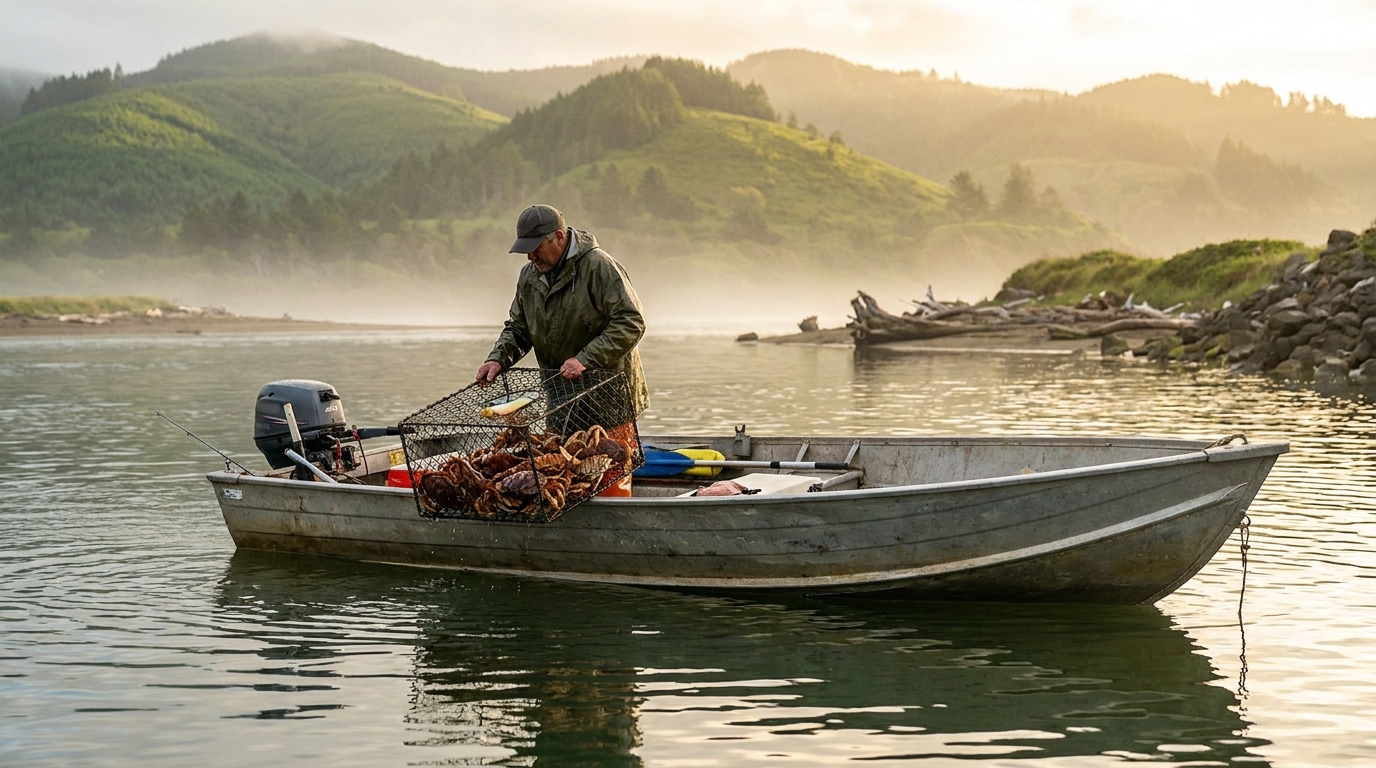
Ring nets are the go-to choice for shore and dock crabbers. They're portable, inexpensive, and easy to check quickly. The disadvantage is that crabs can escape a ring net if you take too long to retrieve it — keep your pulls brisk and practice a smooth hand-over-hand haul. Pots (box-style or round) are the preferred tool from a boat. They allow longer soak times and retain bait more effectively. Oregon regulations allow up to three rings or pots per licensed crabber, so a two-person team can deploy six pieces of gear simultaneously.
Bait Selection
Fresh or frozen tuna carcasses are considered the gold standard Dungeness bait on the Oregon coast. The strong oil scent disperses well in current and draws crabs from distance. Chicken legs and thighs work nearly as well and are far more affordable — a bag of frozen chicken quarters from a grocery store will last several trips. Commercially prepared razor clam necks and salmon carcasses are also effective. Whatever you use, change your bait every two to three hours, as waterlogged bait loses scent rapidly.
Tidal Timing
Dungeness crab move most actively during tidal transitions. The two hours leading into high tide and the first hour of the outgoing tide produce the most consistent action in Oregon bays. Slack water periods during low tide can be slow, as crabs tend to hold in deeper channel edges. Set your gear before the incoming tide begins and plan to pull it during the peak of the flood. Nighttime crabbing during large tidal swings can be exceptionally productive, as crabs feed more aggressively after dark.
Handling and Keeping Your Catch
Dungeness crab must be measured across the widest part of the carapace, just behind the eyes and lateral spines. A quality stainless-steel crab gauge makes quick, accurate measurements easy — and ensures you're keeping legal crabs. Keep live crabs cool and moist in a cooler with wet burlap or seaweed; do not submerge them in freshwater, which will kill them. Live crabs kept cool will remain in excellent condition for 12 to 18 hours. Cook them as soon as possible after returning home — Dungeness crab are best eaten the day they're caught.
Final Thoughts
Oregon's recreational Dungeness crab fishery is one of the most accessible high-quality seafood opportunities in the Pacific Northwest. Whether you're dropping a ring net off a public dock in Newport or running pots in the lower Coos Bay channel from a 20-foot aluminum skiff, the fundamentals are the same: fresh bait, the right tide, and patience. Check your gear regularly, measure every crab, and release anything undersized or female with care. Do it right, and a limit of fat Oregon Dungeness is entirely achievable in a single tide cycle.