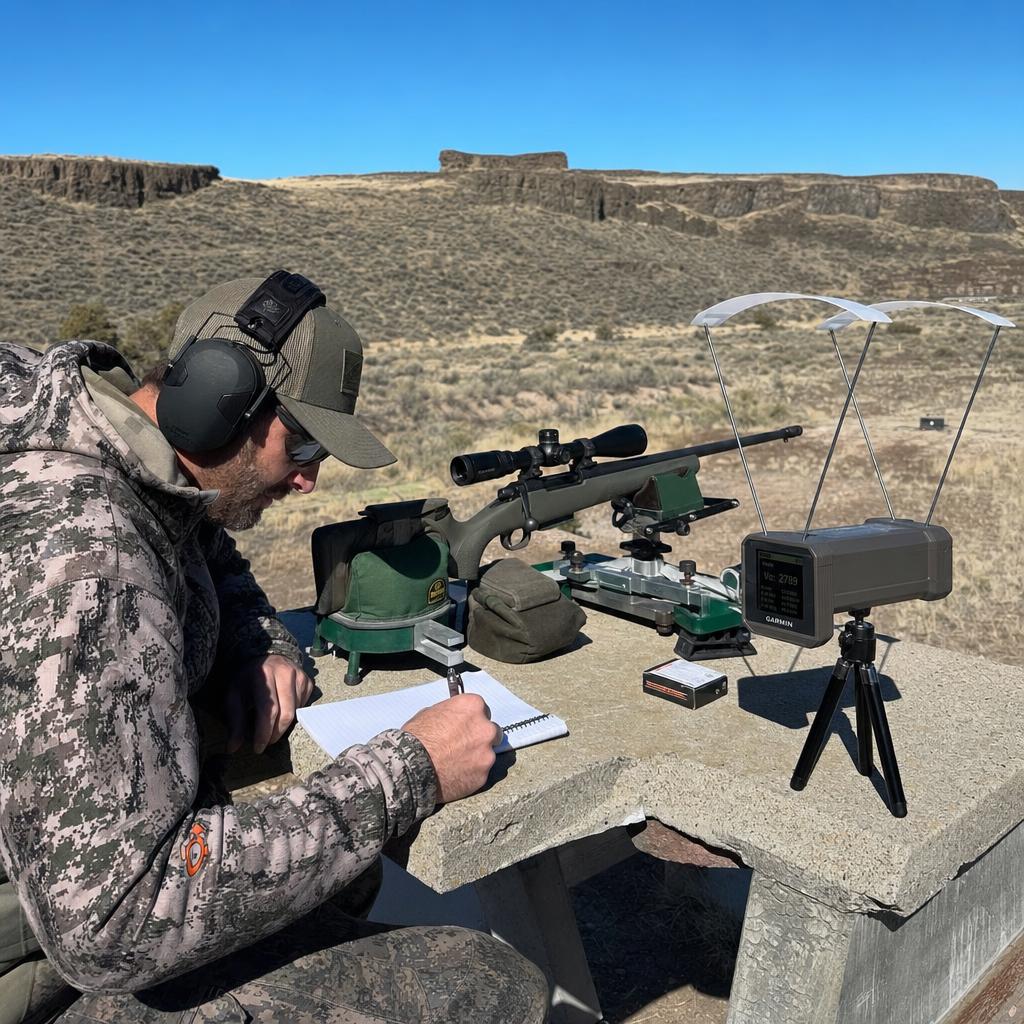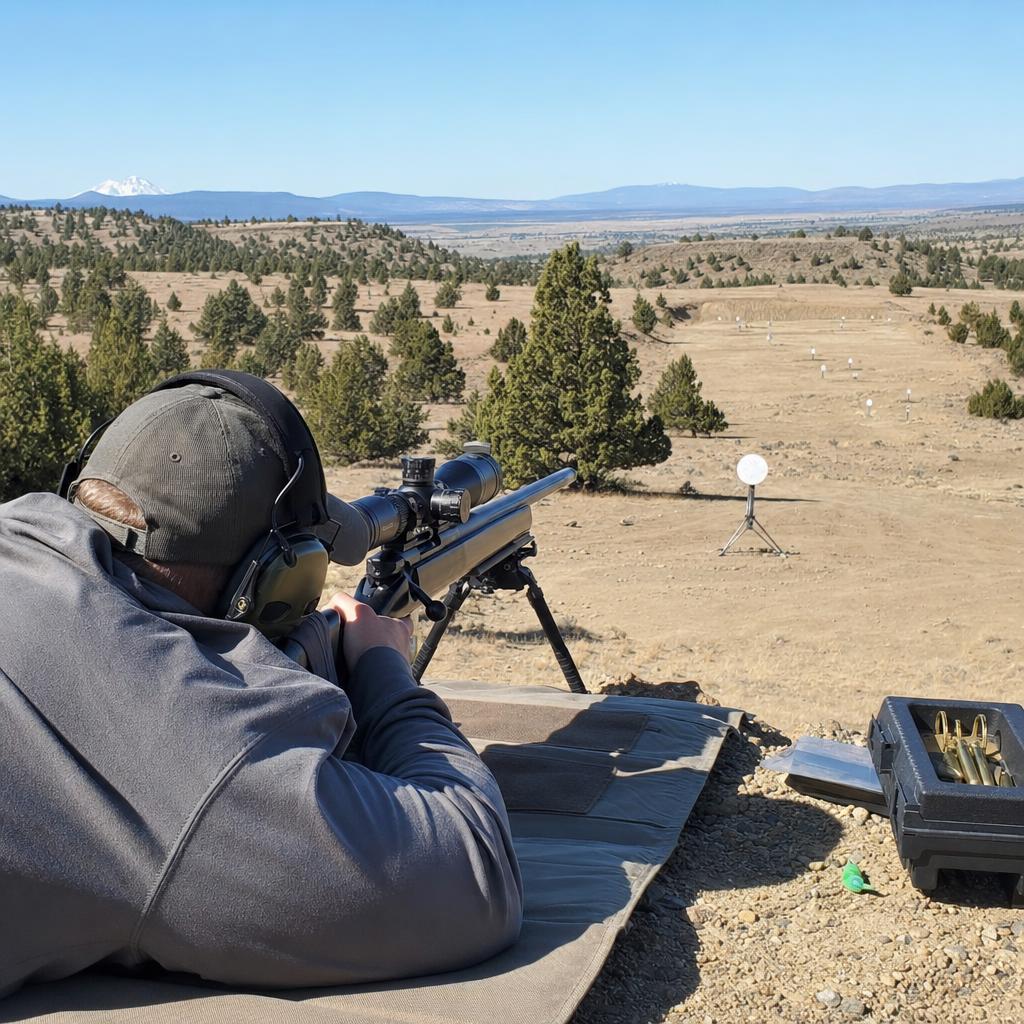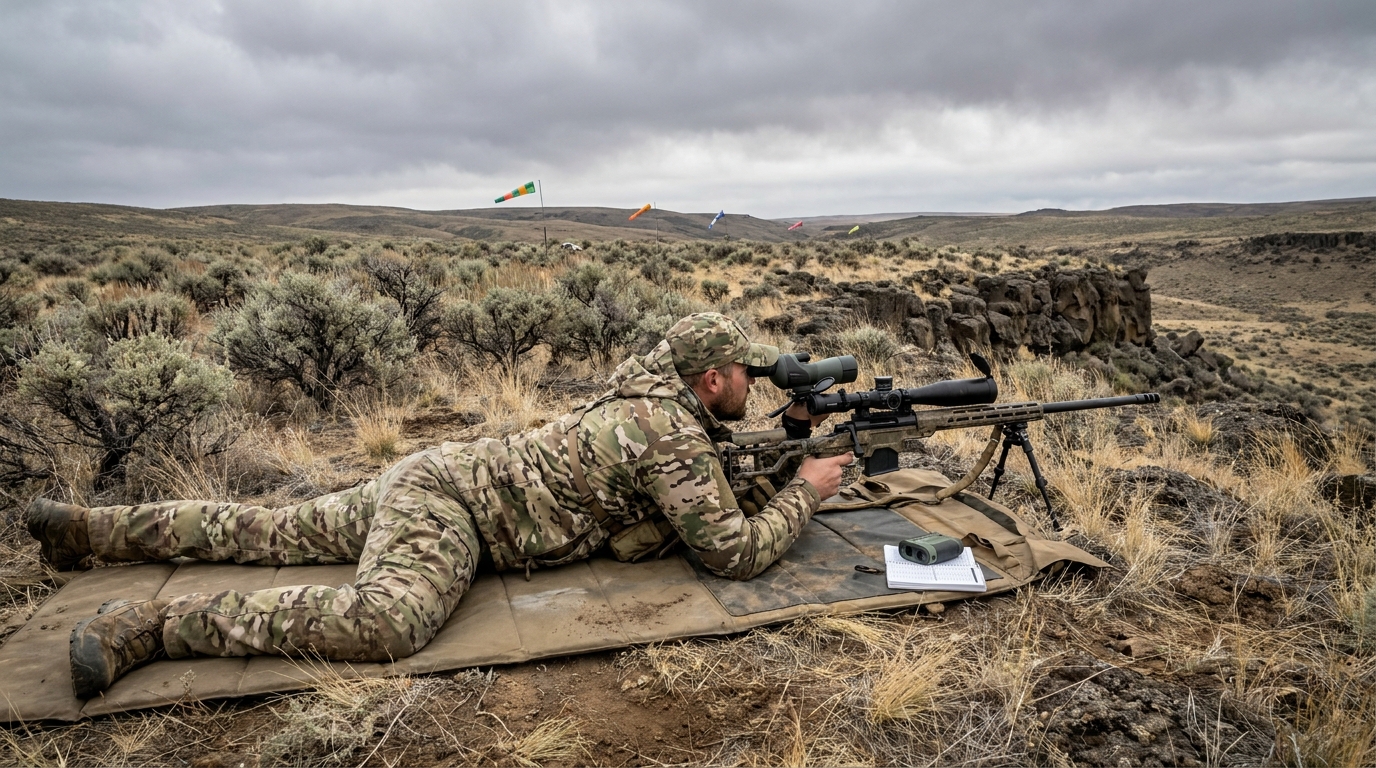
At 200 yards, a 10 mph crosswind moves a .308 bullet about 7 inches. At 400 yards, that same wind pushes it nearly 30 inches — more than two feet of drift that no amount of good trigger technique can overcome. Wind is the one variable in long-range shooting that cannot be solved at the bench. It has to be solved in the field, in real time, with the tools and knowledge you carry in your head. That is what separates hunters who connect consistently at distance from those who pull the shot and blame the wind.
Understanding Wind: Speed, Direction, and Value
Before you can read wind, you need to understand how it affects your bullet. Wind value — the effective component of wind acting perpendicular to your bullet's path — is the key concept. A direct crosswind (90 degrees to your line of fire) has a full value of 1.0. A wind coming from 45 degrees (quartering) has a half value of approximately 0.5. A direct headwind or tailwind has essentially zero value for horizontal drift, though it affects velocity slightly.
Most long-range hunting shots happen across terrain with variable wind — different speeds and directions at the muzzle, midrange, and target. The wind at your position and the wind at the target are often completely different, and the wind at midrange matters most because that is where the bullet spends the most time. This is why simply sticking a finger in the air is not a wind solution — it is a starting point at best.
Reading Mirage
Mirage — the heat shimmer visible through a high-power scope or spotting scope — is the most accurate wind indicator available to shooters, and most hunters never learn to use it. Mirage is caused by heat rising from the ground and is visible any time there is a temperature differential between the surface and the air above it. That includes cold mornings in the desert, open hillsides in fall, and any sun-exposed slope with some thermal activity.
Through a spotting scope at 20-45x, mirage appears as a rolling, flowing shimmer. The direction and speed of the roll tells you both the wind direction and a relative sense of speed:
- Mirage running right to left or left to right: Direct crosswind. The faster the flow, the stronger the wind.
- Mirage boiling straight up: Very light wind, essentially calm. A full-value crosswind hold will likely be too much.
- Mirage running at a diagonal: Quartering wind. Use roughly half value in your dope.
The key to using mirage effectively is to focus your scope or spotter on a point about two-thirds of the way to the target. This gives you the midrange wind read that matters most for deflection. With practice, mirage becomes your most reliable real-time wind indicator — far better than flags or vegetation at distance.
Vegetation Indicators
When mirage is not visible — overcast conditions, early morning, or longer grass and brush obscuring the ground plane — vegetation is your next best tool. Here is a rough wind speed guide based on what you see:
- Dust and light debris moving: 3-5 mph
- Small leaves and thin grass constantly moving: 7-10 mph
- Small branches moving, flags extended: 12-15 mph
- Large branches moving, difficult to hold binoculars steady: 18-25 mph
In Eastern Oregon's high desert — sagebrush flats, rimrock canyons, open juniper country — the sagebrush itself is an excellent indicator. Light sagebrush movement is a reliable 5-7 mph signal. When the brush is really rocking, you are in 15+ mph territory and 400-yard shots become serious gambles for all but the most practiced wind readers.
Terrain-Induced Wind Effects
In mountain and canyon country, wind is rarely consistent across the entire shooting lane. Terrain channels and deflects wind in ways that can fool even experienced shooters. A few patterns to know:
- Ridge lines: Wind accelerates over ridges and tops. If your shot crosses a ridgeline, expect the wind value to be higher over the ridge than at your position.
- Canyon crossings: Wind swirls and eddies in canyons, often changing direction completely from the canyon floor to the rim. When shooting across or down a canyon, read wind at multiple points along the flight path if possible.
- Thermal cycles: In the morning, air flows down slope as the ground is still cooler than the air. After midday, thermals reverse and air moves upslope as the ground heats. Knowing this cycle helps you predict when wind will be lightest — typically at the transition points around mid-morning and late afternoon.
Tools: What to Carry
A quality handheld anemometer — the Kestrel 2500 or 3500 is the standard in the shooting community — gives you precise wind speed at your position. This is useful baseline data, but remember: your position is not where the bullet is traveling. Use the Kestrel reading in conjunction with mirage and vegetation observation to build a picture of what is happening downrange.
Some hunters use a simple piece of thread tied to their rifle barrel or scope turret as a low-tech wind indicator. It is surprisingly effective for detecting light, variable winds below the threshold of vegetation movement.
When to Hold Off the Shot
The most important wind-reading skill is knowing when not to shoot. Variable, gusty conditions — where the wind is switching directions or spiking and dropping unpredictably — are the most dangerous scenario for a long-range hunting shot. In gusting conditions, wait for a lull. Most wind gusts follow a pattern: a peak gust, a few seconds of near-calm, another gust. Learn to read the rhythm and break your shot in the window between gusts. If the wind is sustained and variable above 15-20 mph with direction changes, the ethical call is often to hold off and wait for better conditions or close the distance.
A clean miss from a well-read shot in bad conditions is still a good decision. A wounded animal from a rushed shot in wind you did not account for is not. The rifle and the ballistic data are only as good as the wind call behind them — and that call is yours to make every single time.