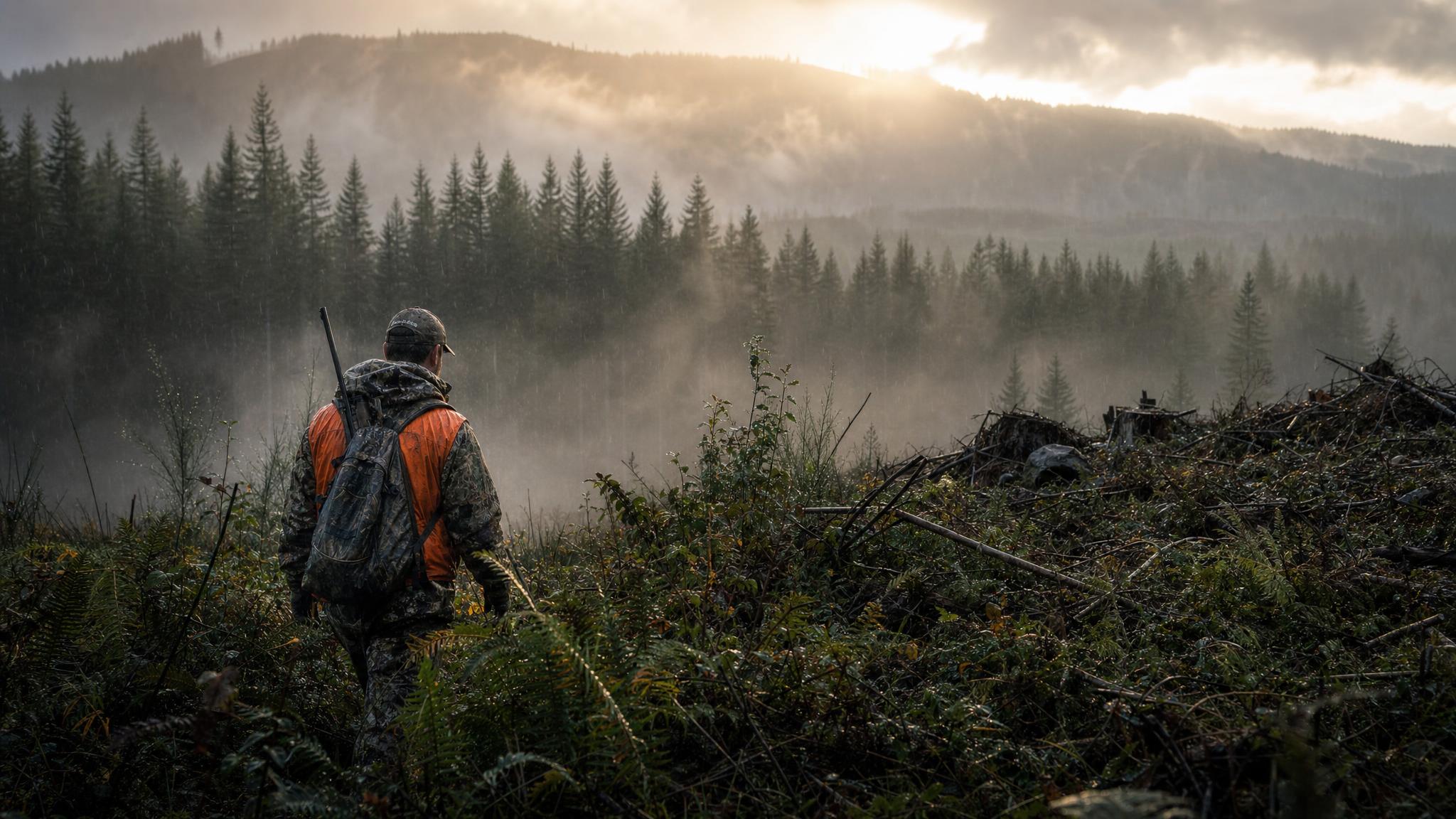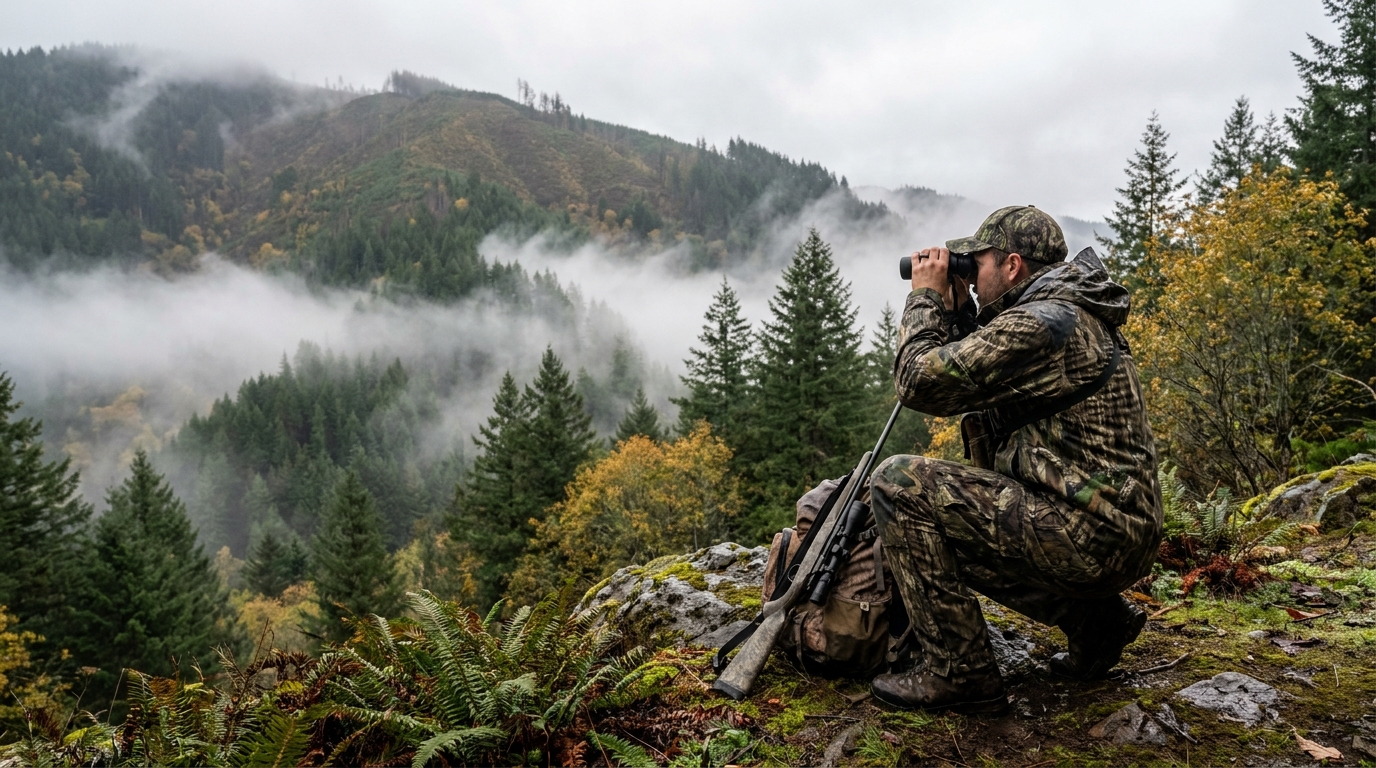
Columbia blacktail deer are often called the ghosts of the Coast Range. They live in some of the densest, wettest, most impenetrable timber on the continent — and they've evolved to be nearly invisible in it. Hunting them is not like hunting mule deer in the open high desert, where a good set of optics and a spotting scope do half the work. Blacktail hunting rewards patience, intimate knowledge of the terrain, and a willingness to get soaked day after day without much to show for it. When it comes together, though, there's nothing quite like it.
Understanding Blacktail Habitat in Western Oregon
Columbia blacktail deer (Odocoileus hemionus columbianus) range from northern California up through western Oregon and Washington into British Columbia. In Oregon, the heart of the blacktail range is the Coast Range and the western slopes of the Cascades — a vast corridor of Douglas fir, western hemlock, red alder, and dense brush that receives 60–100+ inches of rainfall per year.
The key to finding deer in this country is understanding edge habitat. Blacktails spend their lives where dense cover meets food — clear-cuts in the 3–8 year old range are gold. Young alder regrowth, berry patches, and early successional shrubs provide the calories deer need to put on weight before winter. Big old-growth blocks are bedding areas and escape routes, not feeding areas. The productive zones are the transitions between them.
Best Oregon Coast Range Units for Blacktail
Oregon's ODFW divides the state into wildlife management units (WMUs), and the blacktail units in the Coast Range each have their own character:
- Siuslaw Unit (WMU 043): Lane County coast range, heavy pressure near Eugene but tremendous numbers of deer in the young clear-cuts south of Highway 126. General season hunters can tag out here with patience.
- Alsea Unit (WMU 042): Benton and Lincoln counties. Strong deer numbers, good mix of private timber and public BLM ground. Archery hunters do particularly well in the agricultural edges near the valley floor.
- Wilson Unit (WMU 071): Tillamook County and the northern coast range. Excellent deer densities, well-managed by ODFW. The Tillamook State Forest offers significant public access.
- Clatsop Unit (WMU 072): Clatsop and Columbia counties. Pressure from the Portland metro area is real, but the unit holds good numbers of mature bucks if you're willing to hike away from road access.
- Dixon Unit (WMU 044): South coast, Coos and Douglas counties. Less pressure than northern units, some very big-bodied bucks, and access through Siuslaw National Forest and BLM land.
Seasonal Patterns and the Rut
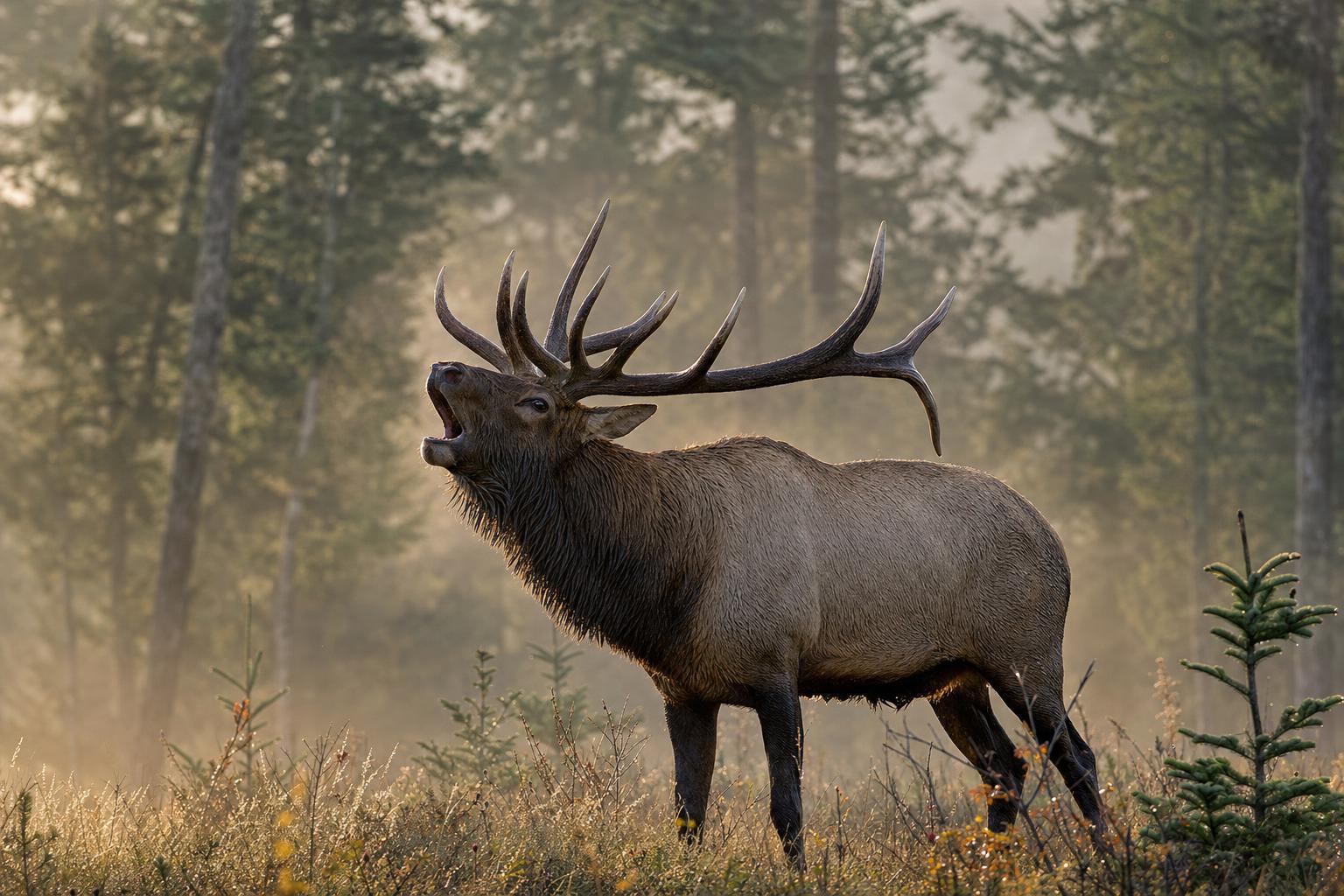
The Coast Range blacktail rut typically peaks in late October through mid-November, though it varies by elevation and latitude — northern, higher-elevation populations tend to rut slightly later. During pre-rut, bucks begin cruising more actively and scrapes start appearing along logging roads and ridge edges. This is the best time to catch a mature buck on his feet during daylight.
During peak rut, bucks abandon almost all caution and can be found in unexpected places — sometimes standing in the middle of a clear-cut at noon. Still-hunting through cover with the wind in your face during the rut can produce close encounters that are otherwise impossible to engineer.
After the rut, late-season bucks are focused entirely on feeding before winter. Key in on south-facing slopes that have some solar exposure and green browse, and on the edges of standing corn or turnip fields near the valley floors.
Tactics That Work in Thick Timber
Still-Hunting
This is the quintessential blacktail method and the hardest to do well. Move at a pace that feels frustratingly slow — 100 yards in 30 minutes is not excessive in dense timber. Keep the wind in your face, use terrain to break your silhouette, and stop frequently to glass any opening before you step into it. Blacktails see movement first; a stationary hunter blends in remarkably well.
Logging Road Ambushes
Old spur roads cut through clear-cuts are natural deer travel corridors. Find where deer trails cross these roads — the rubs, the tracks, the worn dirt — and set up an ambush position downwind in the brush where you can see 50–150 yards of the road. Early mornings and evenings, especially during the rut, this can be dynamite.
Rattling and Calling
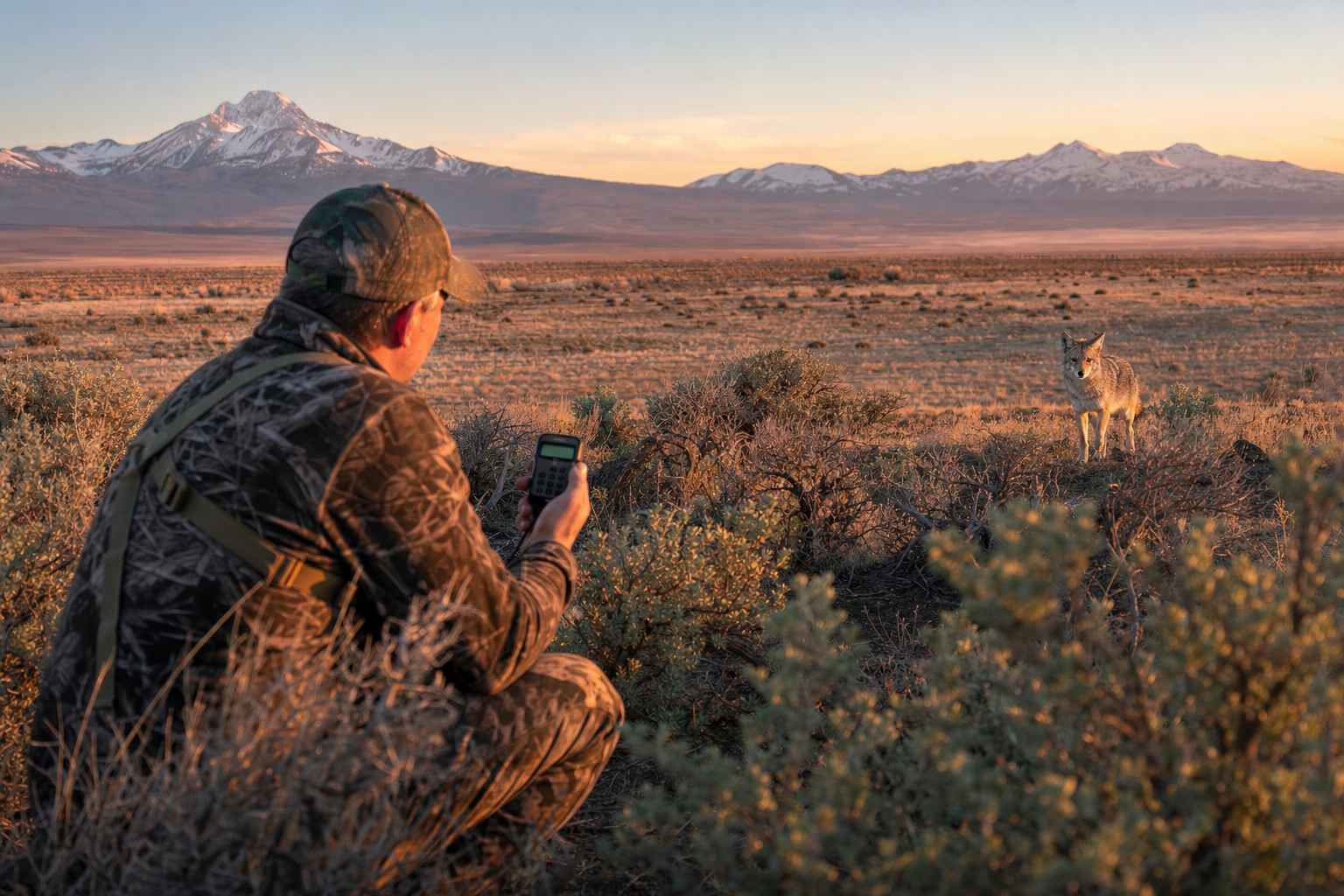
Blacktails respond to rattling, but they're more reserved than whitetails. Light tickling of antlers during pre-rut can pull a curious buck in, but aggressive rattling often pushes them away. A doe bleat can be effective during the rut when bucks are actively seeking. Keep it subtle and wait — blacktails come in slowly and usually hang up in cover before committing.
Gear Considerations
Coast Range hunting demands waterproof everything. Your boots, rain gear, and pack need to be legitimately waterproof, not water-resistant. Good rubber boots — knee-high Lacrosse or Muck boots — are worth every penny on the socked-in days that define this country. For rifles, keep it to moderate ranges; 150 yards is a long shot in the timber. A fast-handling lever action in .30-30, a short bolt gun in .308, or even a .44 mag carbine are all practical choices. You're not shooting across canyons — you're threading shots through timber.
The Coast Range will humble you. It's thick, wet, and unforgiving, and the deer know every inch of it better than you do. But put in the time learning the ground, and you'll eventually find yourself with a heavy blacktail buck on the ground in a clear-cut fog — one of the most satisfying moments Western hunting has to offer.