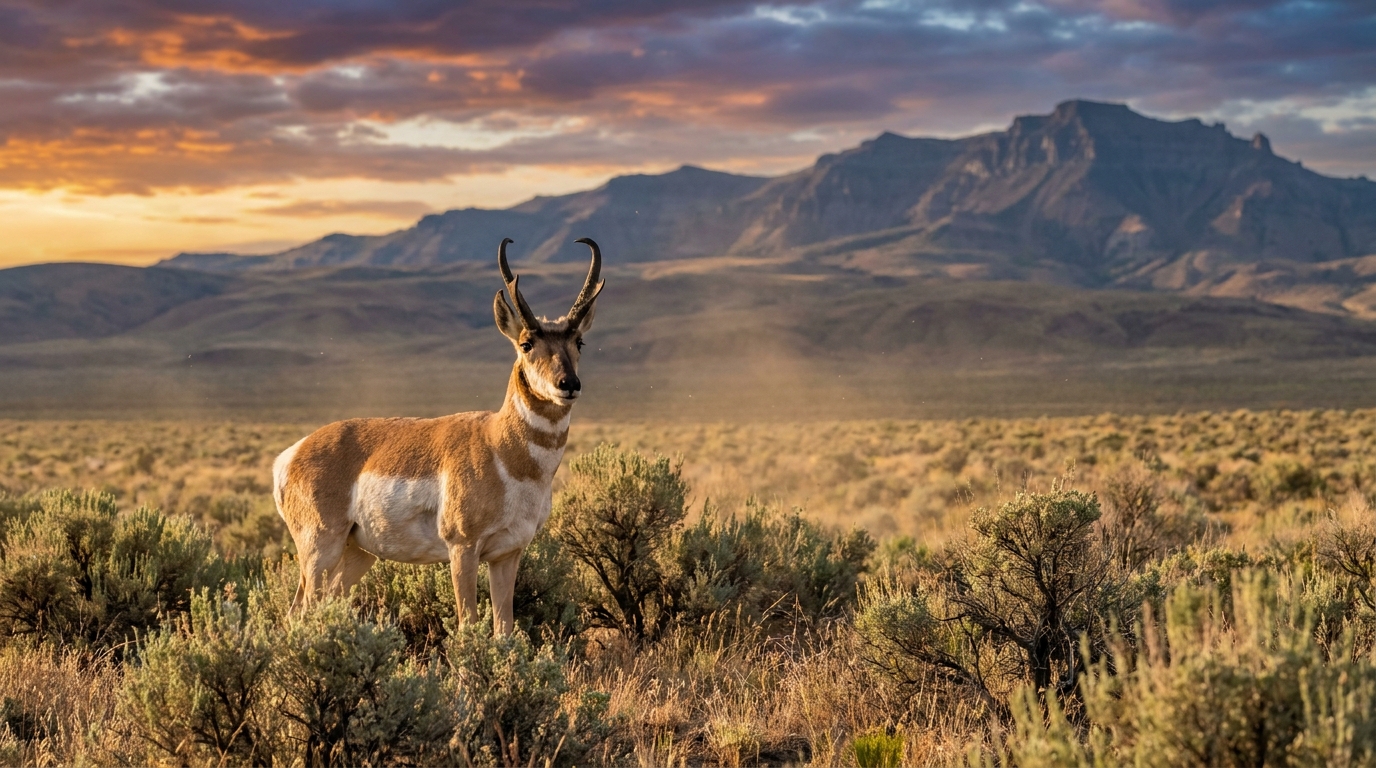
Pronghorn antelope are built different. They evolved alongside now-extinct North American cheetahs, and that evolutionary pressure produced an animal with binocular vision comparable to a 10x binocular, the ability to sustain 45 mph for miles, and an almost preternatural ability to detect movement at extreme distances. Hunting them on Oregon's open sagebrush flats is humbling, challenging, and deeply rewarding — and right now, in mid-May, is exactly when you should be submitting your application.
Oregon Pronghorn Tag Application Basics
Oregon pronghorn tags are controlled through ODFW's competitive draw system. Applications for the 2026 season are typically due in mid-May to early June — check the ODFW Big Game Tag Application Guide for exact dates, as they shift slightly year to year. Most zones offer both rifle and archery tags, with archery being somewhat easier to draw in many units.
Points accumulate for unsuccessful draws, so first-time applicants in premium units shouldn't be discouraged. In some zones, 1–3 points is enough to draw. In the most coveted units, expect 5–8+ points. Bonus points purchased annually are worth the investment if you're serious about hunting the best ground.
Top Oregon Pronghorn Units
Beatys Butte / Warner Valley (Units 80, 81, 82)
The remote Lake County units around the Warner Valley and Beatys Butte represent Oregon's most iconic pronghorn country. Wide open sagebrush flats, limited pressure, and excellent buck quality make these units worth the point investment. Expect 4–7 points for rifle tags. Access is via Hart Mountain Road out of Plush — plan for a long drive on rough roads and bring extra fuel.
Silvies / Logan Valley (Unit 75)
Grant County's Silvies Valley unit is a consistent producer with moderate draw odds. The terrain mixes open meadows with juniper-sagebrush habitat, and buck quality has been improving with recent population management. This is a good unit for hunters new to pronghorn — the terrain is accessible, and glassing setups are easier to establish.
Christmas Valley / Fort Rock (Unit 67)
Lake County's Christmas Valley unit sees moderate pressure but holds good numbers. The Christmas Valley itself is nearly flat — which sounds easy until you realize there's nowhere to hide during a stalk. This unit rewards hunters who've done their homework on water sources and travel corridors.
Hart Mountain / Poker Jim (Unit 79)
The Hart Mountain National Antelope Refuge area produces some exceptional bucks. Tag numbers are limited and draw odds are tougher, but the quality of the hunt — remote, scenic, excellent genetics — is worth pursuing.
Scouting: How to Find Pronghorn Before Season
Pronghorn are creatures of habit but they roam vast distances. Effective scouting means:
- Water source mapping: In August heat, pronghorn visit water once or twice daily. Identify every stock tank, spring, and reservoir in your unit on OnX or Google Earth, then prioritize based on surrounding habitat quality.
- High-point glassing: Find a ridge or hill with a 180-degree view of the flats. Glass systematically at first and last light. Pronghorn are visible at extraordinary distances if you're patient.
- Google Earth time-lapse: Review historical satellite imagery to spot well-used trails and bedding areas near water.
- August preseason trips: A day or two glassing in late August before the September opener is worth every mile. Knowing where the bucks are living saves you days of searching during season.
Rifle Hunting Tactics for Open Country
Oregon's rifle pronghorn season typically runs in late August to early September — brutally hot, and demanding in ways that elk season in the timber isn't. The approach is almost entirely spot-and-stalk.
The Stalk Problem
Here's the hard truth: most stalks on pronghorn fail. They have 340-degree peripheral vision, they watch for movement constantly, and on flat terrain there's often no cover. A successful stalk requires:
- Getting the wind right — pronghorn rely less on smell than deer but don't ignore it
- Using every bit of terrain — dry creek beds, sagebrush swales, gentle depressions
- Moving only when the animal's head is down feeding or turned away
- Patience to abort a bad stalk and reset
Rifle and Caliber Selection
Pronghorn country means long shots. Shots over 300 yards are common; 400–500 yards is not unusual in some units. Flat-shooting cartridges with high BC bullets are the right tool. The 6.5 Creedmoor, .243 Winchester, 6.5 PRC, .270 Winchester, and .300 Win Mag all have proven track records. Whatever you shoot, know your drop at 400 yards cold and practice field positions — not just from a bench.
Archery Pronghorn: The Ultimate Challenge
Archery pronghorn hunting is one of the most demanding challenges in western big game. Getting a pronghorn within 40–60 yards in open terrain requires a completely different approach: water hole hunting with a ground blind.
Set your blind 3–4 days before the opener and let it sit — pronghorn are extremely wary of new objects. Blind placement within 30–40 yards of the waterline is critical. Shoot from shooting lanes you've prepared in advance, and above all, be absolutely still once animals approach. Any movement inside the blind at close range will bust you.
Field Care in August Heat
You're hunting in 85–100°F temperatures. Meat care is critical. Pronghorn are relatively small animals (average 100–130 lbs), so quartering in the field is fast. Get the hide off immediately — it's incredibly insulating — and get quarters into breathable game bags in the shade. Use a cooler with dry ice if you have a long pack-out. A spoiled pronghorn in August heat is a tragedy and a waste.
The meat itself is exceptional — mild, fine-grained, and often described as the best wild game table fare in North America. Give it the same respect and care you'd give a premium beef roast.
Getting After It This Application Season
Whether this is your first pronghorn application or you've been accumulating points for years, Oregon's high desert will reward you eventually. Apply now, scout hard in August, and put in the miles. The moment a big buck pronghorn stands up out of a sagebrush flat 400 yards away and you hear the shot echo across the desert basin — that's one you'll remember for the rest of your life.