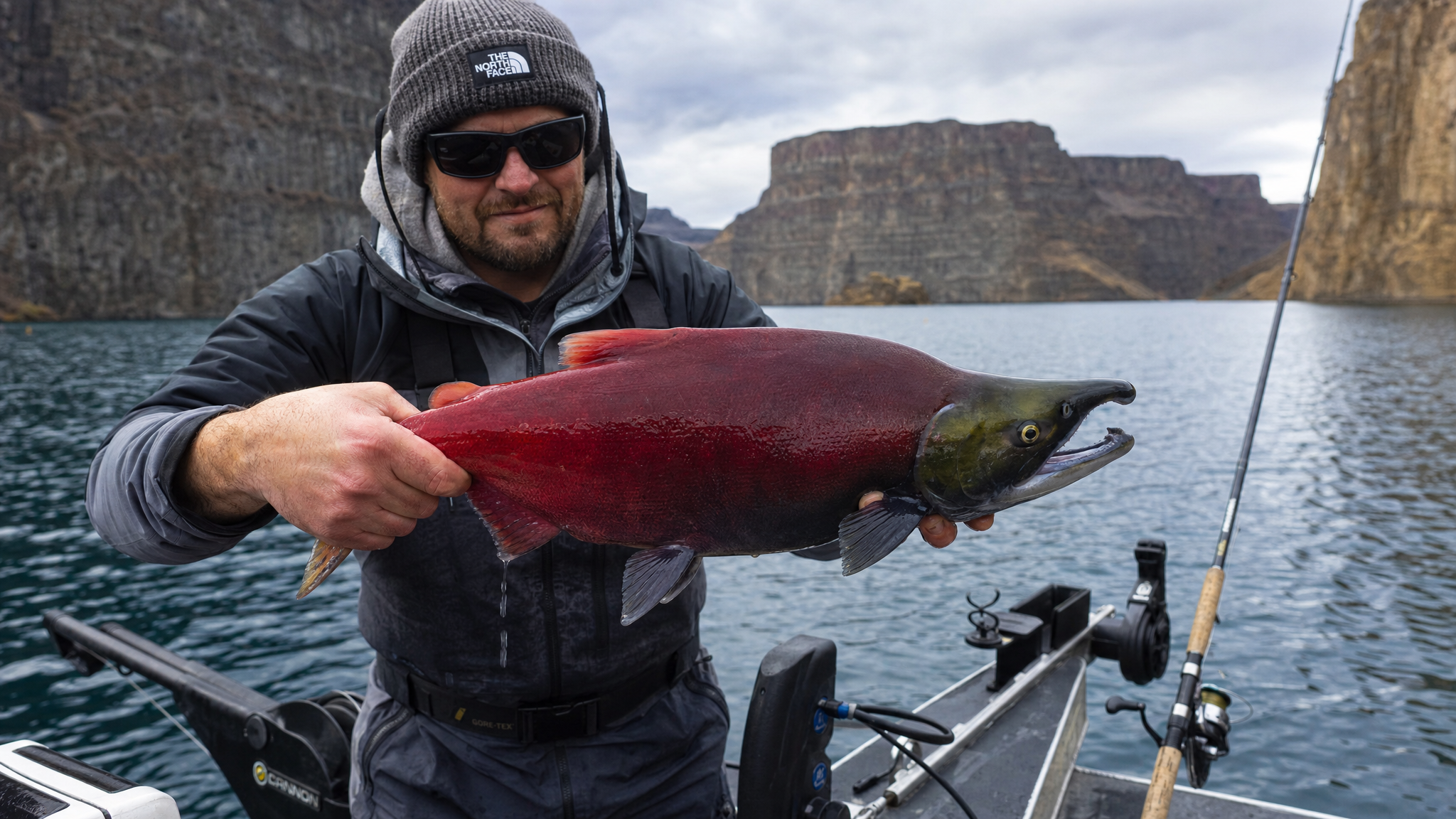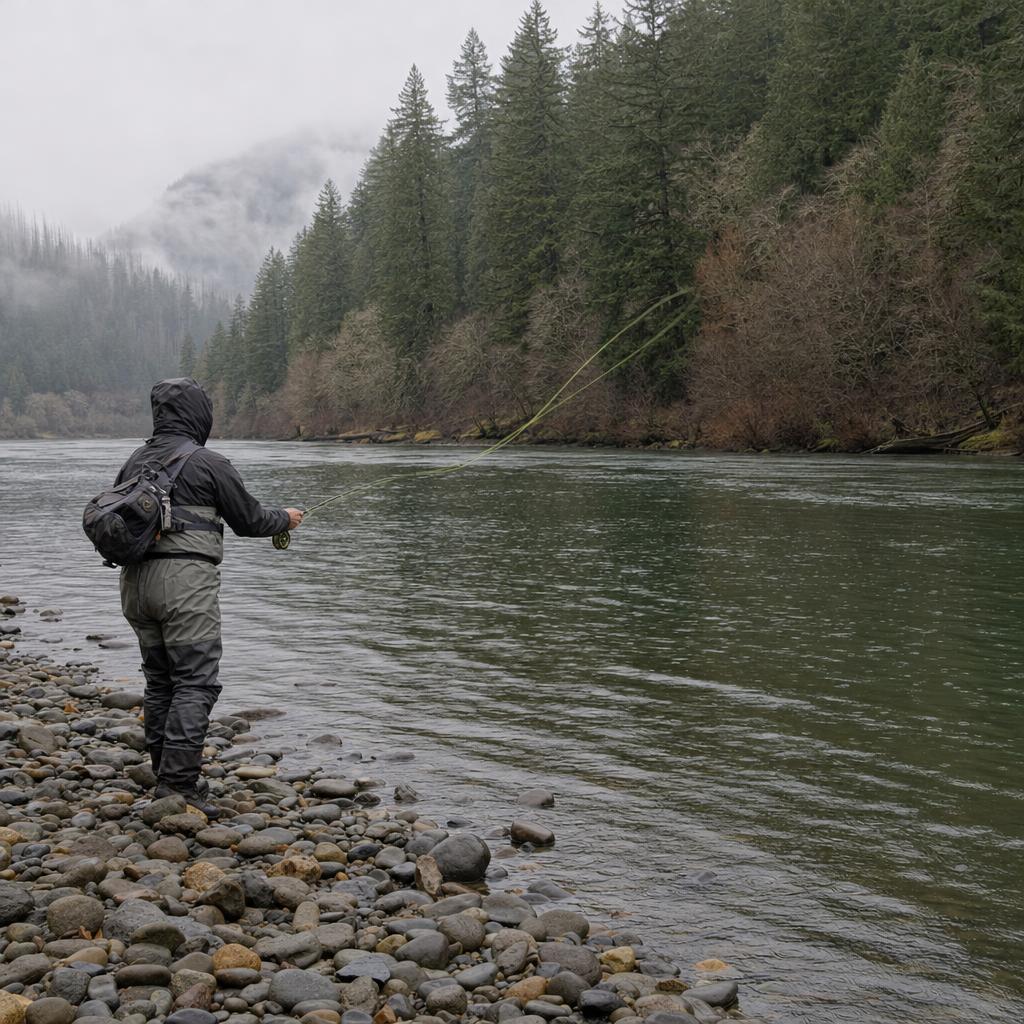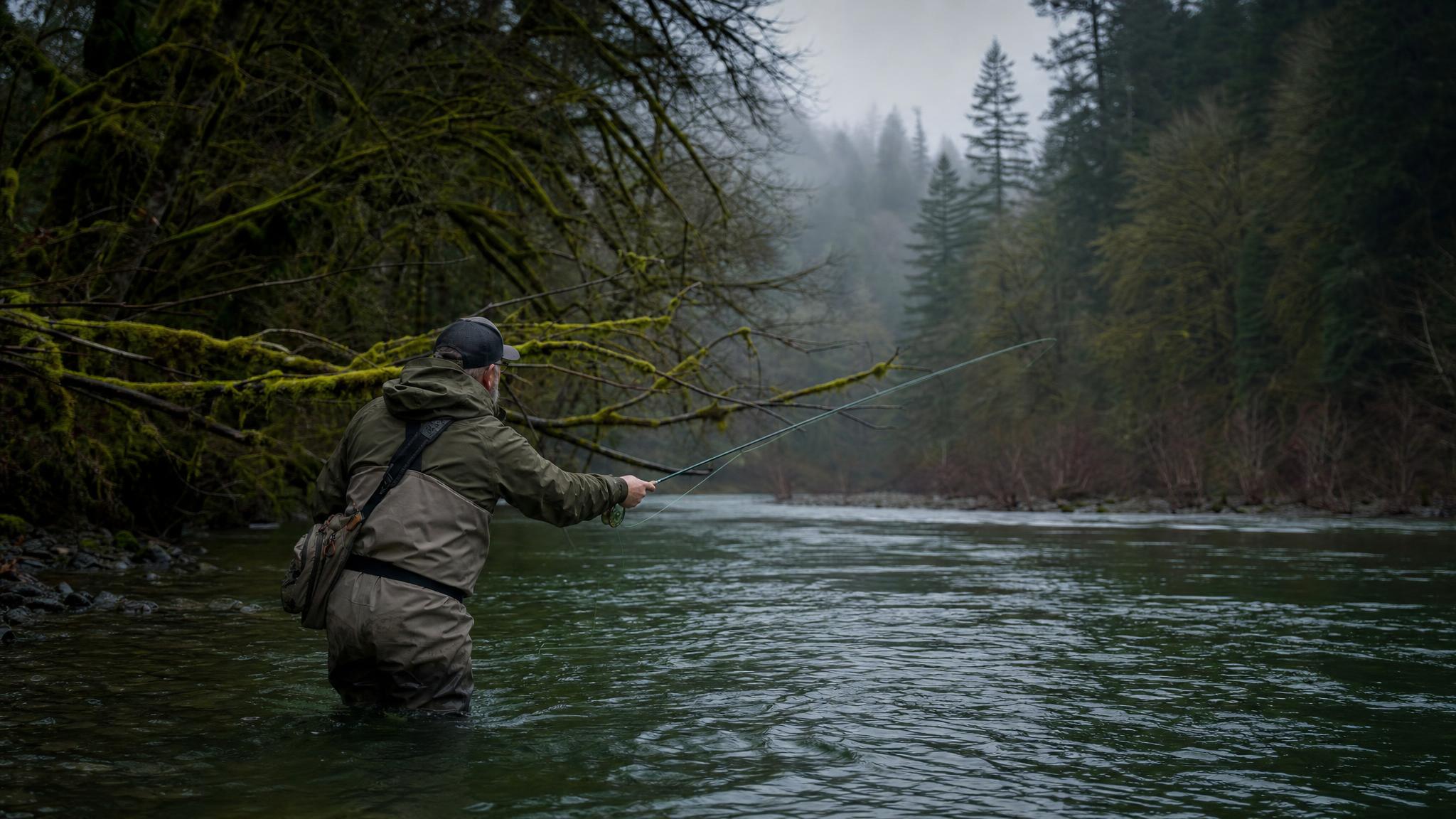
When December rains swell Oregon's coastal rivers, steelhead anglers turn their attention to the Alsea River — one of the central coast's most productive and underappreciated winter wild fish runs. While the Wilson, Nestucca, and Siletz get most of the glory, the Alsea quietly delivers chrome steelhead to anglers willing to study its pools, read its flows, and show up on the right tides.
Why the Alsea in December?
The Alsea drains roughly 940 square miles of the Coast Range before emptying into Alsea Bay near Waldport. Its winter steelhead run typically kicks off in earnest by late November and runs strong through February, with the peak hatchery push often arriving right around Christmas. December offers a sweet spot: fish are fresh from the ocean, aggressive, and have not yet been pressured heavily by the crowds that show up after the holidays.
The river is also relatively compact compared to the Wilson or Nestucca, meaning bank anglers can cover productive water efficiently. ODFW stocks hatchery winter steelhead in the Alsea system through the Alsea Hatchery located about 7 miles east of Tidewater, and wild fish return throughout the season alongside them.
Key Access Points and Pools
Most bank anglers focus on the tidewater and lower river sections. Here are the top December spots:
- Mike Bauer Wayside (near Tidewater): One of the best-known bank access points on the entire river. A deep run holds fish on the incoming tide, especially on overcast mornings after a fresh push of rain-driven fish. Park at the wayside and fish both the upstream and downstream pools.
- Tidewater Bridge Area: The tide influence makes this section dynamic — fish stack here as water warms slightly during tidal pushes. Work spinners or cured roe along the seam where faster current meets the slack tidal pool.
- Riverview Drive Bank Access: Downstream from Tidewater toward Waldport, Riverview Drive parallels the river with multiple informal pull-outs. Fish here are transitioning from salt to fresh and hit hard.
- Five Rivers Confluence: About 20 miles upstream, Five Rivers joins the Alsea near Lobster Valley. This confluence area concentrates fish, especially when Five Rivers is slightly elevated and discolored — fish stage below the turbid tributary inflow in the cleaner main Alsea water.
December Tactics That Work
Float and Bead / Float and Yarn
When the Alsea runs at 3–5 feet on the USGS gauge at Tidewater and visibility is 3 feet or better, float fishing with cured salmon eggs or a bead-and-yarn combo is the most consistent producer. Use a 10–11 foot noodle rod or a moderate-action spinning rod with 12–15 lb monofilament. Set your float depth so the bait drifts 6–12 inches off the bottom. Pink, chartreuse, and natural cure colors all work — natural cures tend to shine on clearer water days.
Spinners and Plugs
When flows are higher and water is off-color (2–3 foot visibility), switch to blade baits. Blue Fox Vibrax in size 4 or 5, or a Mepps Aglia in chartreuse/silver, can be deadly worked across current in deep seams. For plug fishing, a small Hot Shot or Wiggle Wart in metallic blue or pink pulled from a bank position in a steady current is a productive technique adapted from drift boaters.
Reading the Gauge
The USGS gauge at Tidewater (station 14306500) is your best friend for the Alsea. The sweet spot is roughly 4–8 feet, rising or stable. A fast-dropping gauge after a rain event signals fish are moving — be there at first light. If the gauge is above 10 feet, the river is likely blown out and bank fishing is marginal. Check flows at waterdata.usgs.gov the night before every trip.
Gear Setup for Alsea Bank Anglers
- Rod: 9–11 ft medium-light to medium spinning rod, or a 13–15 ft noodle rod for float fishing
- Reel: 2500–4000 size spinning reel with a smooth drag
- Mainline: 12–17 lb monofilament or 20 lb braid with a 10–15 lb fluorocarbon leader
- Hooks: Size 2–4 Gamakatsu Octopus in red or pink for egg rigs; single barbless required for wild fish
- Bait: Cured chinook or coho eggs, shrimp, sand shrimp, or coon shrimp — all work on the Alsea
Regulations — Know Before You Go
Oregon regulations for the Alsea River can be complex and change year to year. As of recent seasons, the Alsea below the hatchery is open to retention of hatchery steelhead (marked fish with a clipped adipose fin) while wild fish must be released. The Three Rivers (Five Rivers, Lobster Valley area) section may have specific closures — always check the current ODFW Oregon Sport Fishing Regulations booklet before you fish, available at odfw.oregon.gov.
Non-residents need an Oregon fishing license plus a Combined Angling Tag. Residents need a fishing license and Combined Angling Tag as well. Steelhead report cards are required when retaining hatchery fish.
Timing and What to Expect
December days are short on the Oregon coast — first light arrives around 7:30 AM and you're losing light by 4:30 PM. Fish the first two to three hours of daylight hard; steelhead are most active during low-light periods. Pack rain gear, rubber boots or waders, and dress in layers. December temperatures in the Alsea valley hover in the 40–50°F range, and the rain is not optional — it's part of the experience.
The Alsea won't have the shoulder-to-shoulder crowds of the Wilson River on a December weekend. That's exactly why steelhead regulars keep coming back. Fresh fish, gorgeous Coast Range scenery, and enough solitude to actually enjoy the experience — the Alsea delivers all of it.
Always practice catch-and-release on wild steelhead, handle fish in the water, and use barbless hooks even where not required. These fish are a resource worth protecting.