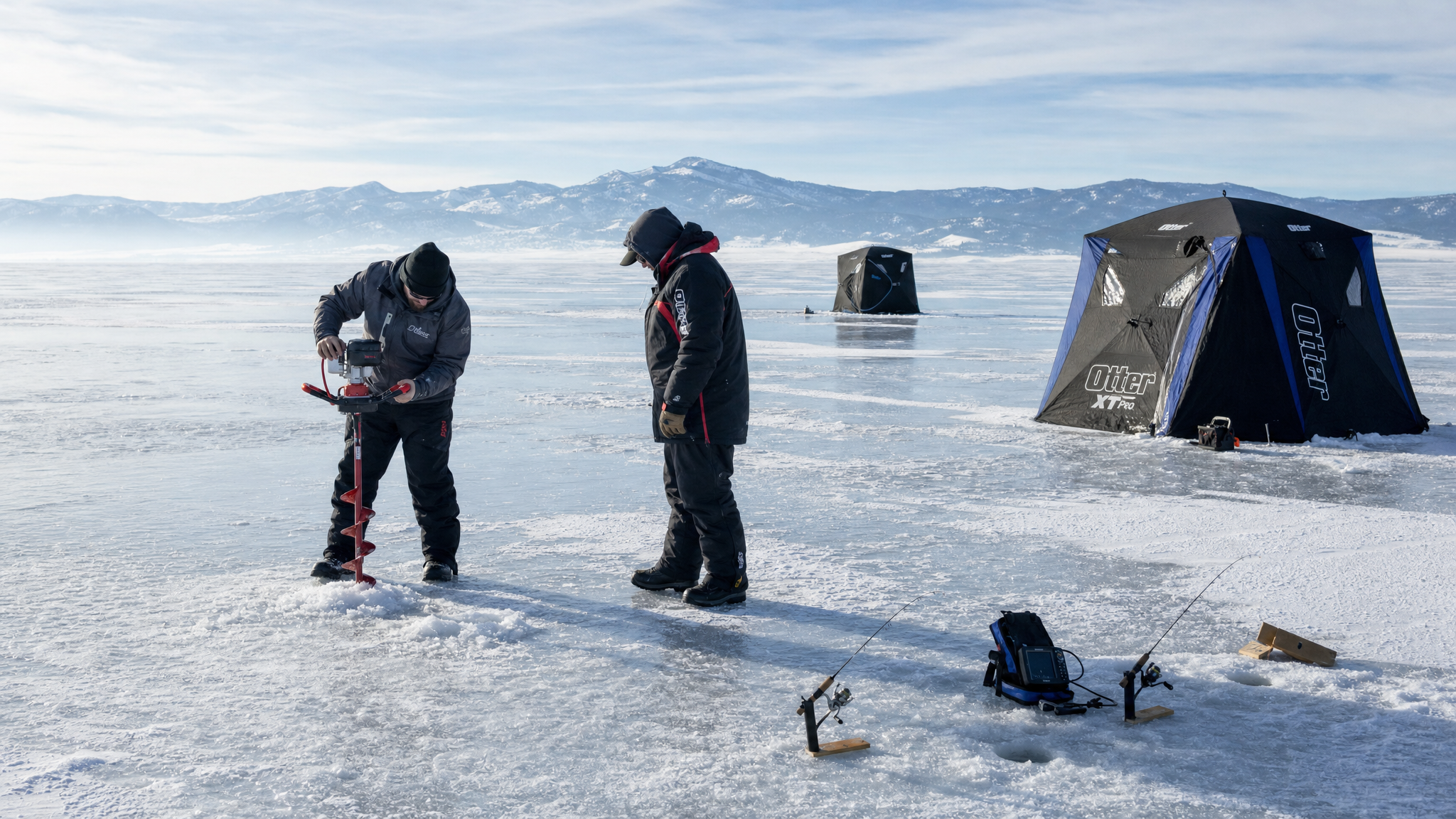
When a hard cold snap settles into the Klamath Basin in December, something magical happens on Upper Klamath Lake: the shallows freeze, the perch stack up, and Oregon's best-kept ice fishing secret becomes accessible to anyone willing to bundle up and drill a few holes. At roughly 140 square miles, Upper Klamath Lake is the largest natural freshwater lake in Oregon — and when it ices over, it produces impressive yellow perch action that draws ice anglers from across the state.
Understanding Upper Klamath Lake's Ice Fishing Season
Upper Klamath Lake sits at about 4,100 feet elevation on the Klamath Plateau south of Crater Lake, surrounded by the Cascades to the west and the Fremont-Winema National Forest. That elevation means genuine winter cold — temperatures regularly drop into the teens and single digits from late November through February, and the lake's north and east arms typically develop safe ice by mid-December in cold years.
The ideal ice fishing window on Upper Klamath runs from roughly mid-December through late January, though it varies year to year. The North Bay and Rocky Point areas on the western and northern shorelines tend to freeze first due to their sheltered, shallower character. Always check ice thickness before venturing out — 4 inches minimum for a single angler on foot, 6+ inches for a group.
Target Species: Yellow Perch and Beyond
Yellow Perch
The primary draw for ice anglers on Upper Klamath is the yellow perch. The lake has historically supported large perch populations, and in winter they school heavily in 6 to 14 feet of water over weed edges and muddy flats. Fish running 8–12 inches are common, with the occasional slab pushing 14 inches showing up during prime bites. Perch fishing is fast-action — when you're on a school, expect steady action with multiple rods.
Brown Bullhead
Upper Klamath's shallow, nutrient-rich water also holds a large population of brown bullhead catfish that remain active under the ice, especially near the Agency Lake arm to the north. While not the primary target, bullhead will eat small jigs and baited hooks and provide bonus action when perch slow down.
Rainbow Trout
ODFW plants rainbow trout in several areas accessible from the lake system, and stocked fish can be intercepted through the ice near tributary inflows, particularly near the Wood River arm in the northern portion of the lake. Check current ODFW stocking reports at myodfw.com before your trip.
Best Access Points for Ice Fishing
- Rocky Point Resort area (west shore, Hwy 140): The Rocky Point Road off Highway 140 provides the best access to the lake's western shallows, which freeze early and hold consistent perch. Rocky Point Resort historically offered boat launch access; check current conditions before visiting.
- Malone Springs / North Bay: The northern arm near Malone Springs Campground offers walk-in access to some of the best shallow-water perch habitat on the lake. The marsh edge where submerged tule roots create structure is especially productive.
- Howard Bay / East Shore: Highway 97 runs along the eastern shore, providing several pull-off access points. Howard Bay's protected water freezes well and offers solid mid-winter perch action.
- Agency Lake: The smaller Agency Lake, connected to the north end of Upper Klamath via a narrow channel, is a productive and often overlooked alternative. Shallower overall, it freezes reliably and holds perch, bullhead, and trout.
Gear and Tactics for Klamath Perch
Ice fishing for Upper Klamath perch doesn't require elaborate gear, but the right setup makes a significant difference:
- Rod: A 24–28" ultralight ice rod with a sensitive tip for detecting the often-subtle perch bite. Frabill, Celsius, and HT Enterprises all make solid affordable options available at Bi-Mart and Schrock's Hardware in Klamath Falls.
- Reel and line: A small spinning reel spooled with 4–6 lb fluorocarbon. Fluorocarbon is nearly invisible underwater and far less likely to freeze in the rod guides than monofilament.
- Jigs: Small tungsten tear-drop jigs in chartreuse, orange, and pink in sizes 1/64 to 1/16 oz are the go-to for perch. Tip with a small wax worm, Eurolarvae, or tiny minnow head. Swedish Pimples in size 1 work well for attracting perch to the hole before switching to a finesse presentation.
- Auger: A 6" hand auger is sufficient for most Upper Klamath ice. If ice exceeds 12 inches, a 7" or 8" auger with a power head saves significant effort.
- Sonar/flasher: A portable ice fishing flasher (Vexilar FL-8 or Garmin Striker Ice) lets you watch perch rise to your jig and dramatically improves your hookup rate. Worth the investment if you're making multiple trips.
Oregon Fishing Regulations for Upper Klamath Lake
Upper Klamath Lake is open year-round with no closed season for yellow perch. The daily bag limit for perch is 25 fish per angler. Trout regulations apply separately — check the current ODFW Oregon Sport Fishing Regulations for Klamath Zone specifics, as special restrictions may apply to native redband trout in certain portions of the system. A valid Oregon angling license is required for all anglers 12 and older. Licenses are available at Schrock's in Klamath Falls, Bi-Mart, and online at odfw.com.
Getting There and What to Bring
Klamath Falls is the gateway to Upper Klamath Lake, located about 60 miles south of Crater Lake on US-97. From Klamath Falls, Highway 140 west takes you to the Rocky Point and Agency Lake access areas. For the east shore, stay on 97 north and watch for lakeshore pull-offs.
December temperatures in the Klamath Basin can drop below zero overnight and hover in the teens during the day. Dress in layers, bring hand warmers, and pack a thermos. Ice fishing is a waiting game, and staying warm is what separates a great day from a miserable one. The reward — a bucket of fat Klamath perch and total winter silence on a frozen Oregon lake — is absolutely worth it.