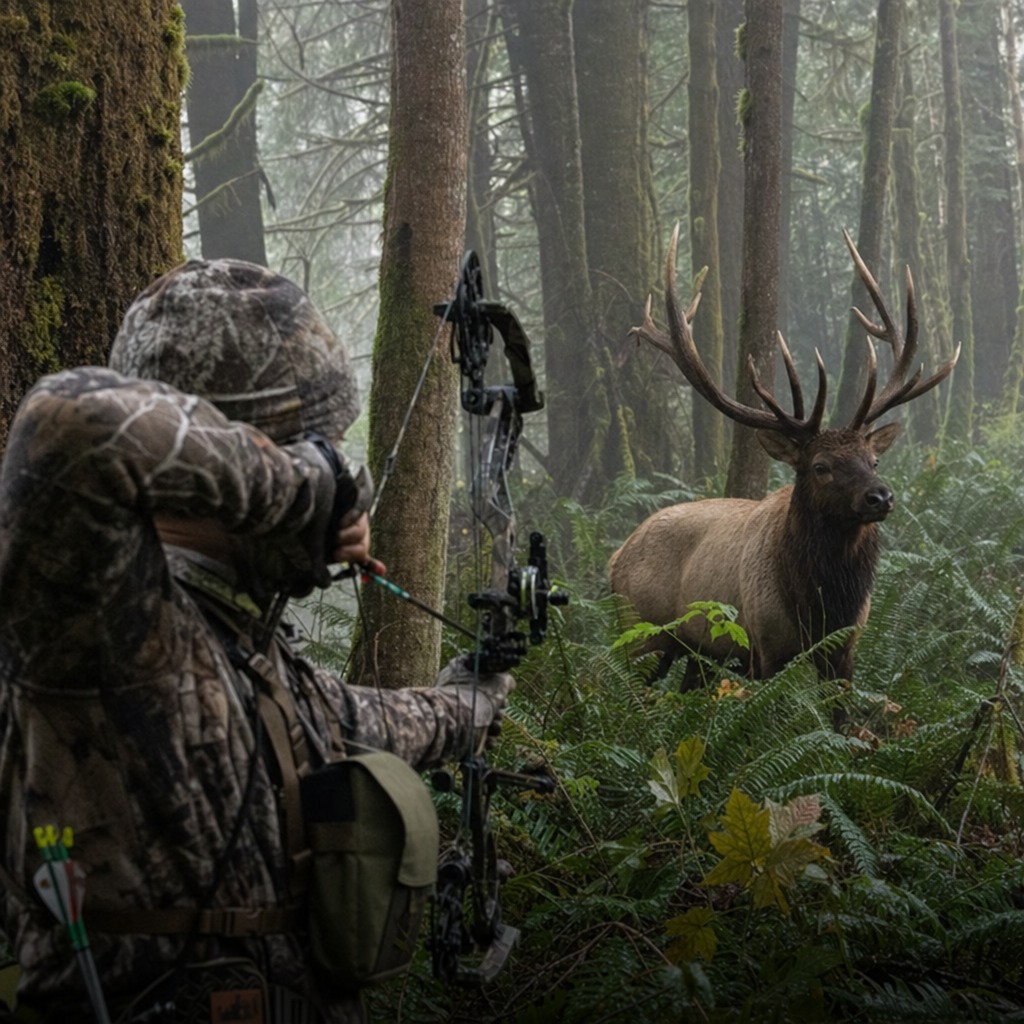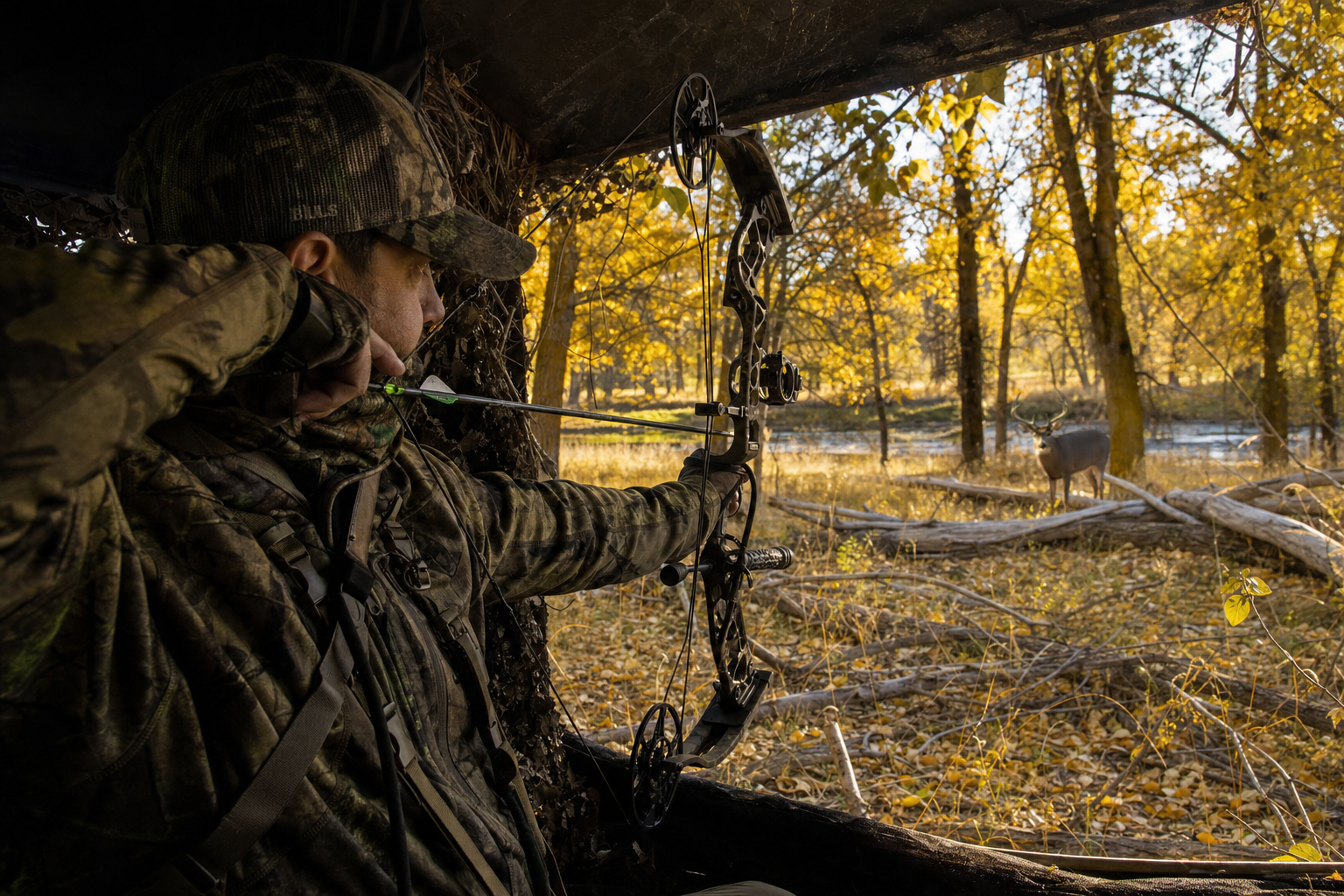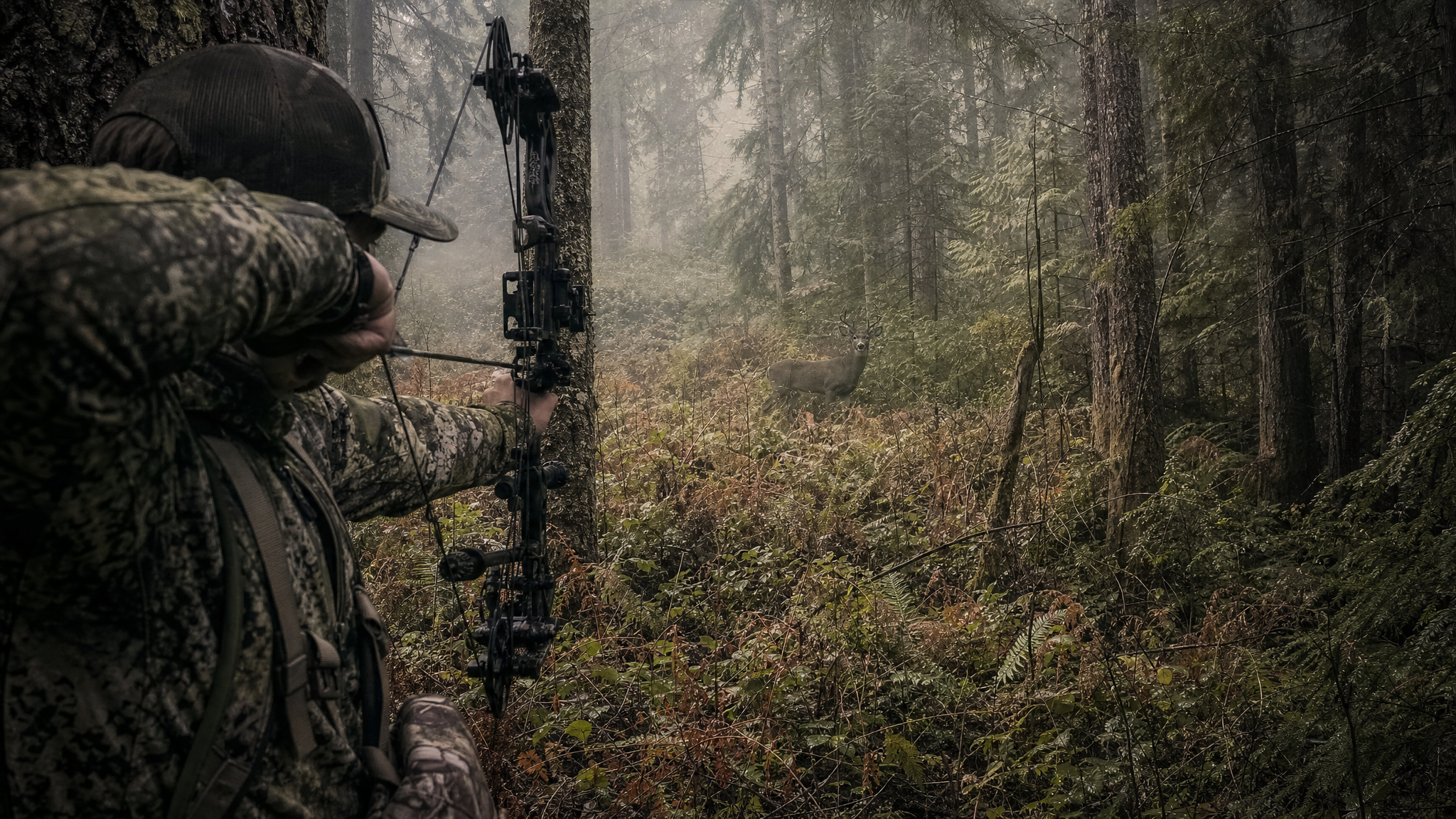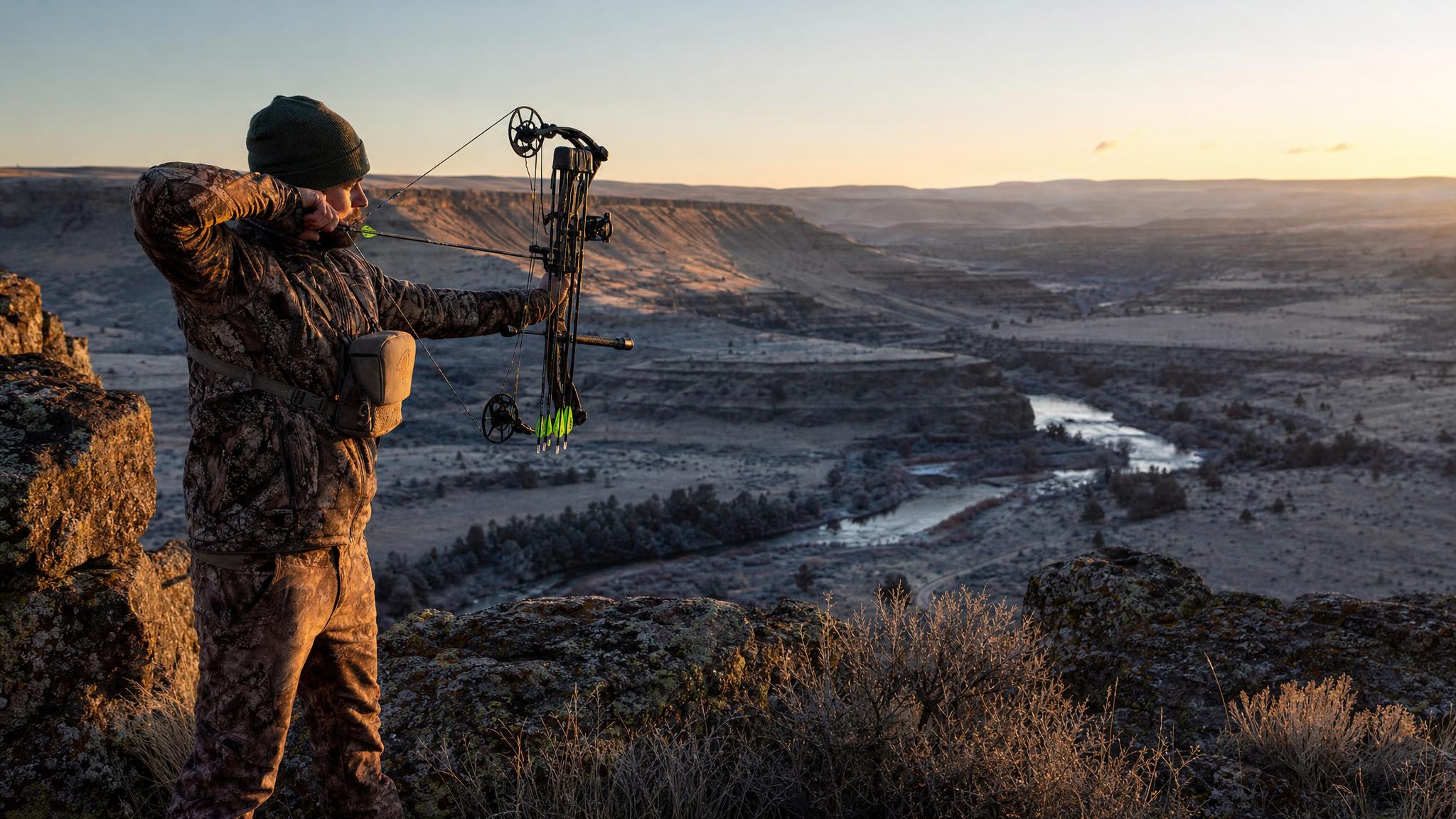
Oregon's late archery season for mule deer extends into December across much of Eastern Oregon, giving bowhunters a rare crack at bucks that have survived rifle season, shed their summer velvet, and finished the rut. The John Day Basin — encompassing Wheeler, Grant, Gilliam, and Crook Counties — is the epicenter of this hunting, offering a mix of public BLM ground, canyon rimrock, and river drainages that concentrate winter mule deer in predictable patterns.
Understanding December Mule Deer Behavior
By December, Oregon's high desert bucks have made their annual transition from summer range to winter habitat. After weeks of chasing does through November's rut, bucks are exhausted, depleted, and focused almost entirely on feeding and recovery. This behavioral shift is both a challenge and an opportunity for the bowhunter: deer are less alert during peak rut but highly suspicious after weeks of hunting pressure.
Winter bucks concentrate in thermal cover — south-facing slopes that absorb afternoon sun, canyon bottoms protected from wind, and rimrock benches where body heat is retained. In the John Day country, this means glassing into draws, coulees, and the brushy canyon walls above tributaries like the North Fork John Day, Middle Fork, and their countless unnamed side drainages.
Key Units and Public Land Access
Murderers Creek Unit
The Murderers Creek Wildlife Management Area west of Seneca offers dedicated archery access and holds a solid population of mature mule deer. The area's combination of ponderosa pine, mountain mahogany, and bunchgrass draws winter deer into predictable feeding areas. BLM ground adjoining the WMA extends hunting opportunities for hunters willing to hike.
Fossil Unit and Wheeler County
The rolling canyon country around Fossil and Service Creek along the John Day River corridor is classic mule deer country. Rimrock breaks above the river hold bucks through December. Access is primarily BLM ground with some state land — download current BLM unit maps before your hunt and identify spring sources, which concentrate deer in dry winters.
Malheur and Beulah Units
The south end of the John Day's influence gives way to the Malheur River drainage, where Harney and Malheur Counties hold good numbers of late-season deer. The vast BLM range east of Burns toward Juntura and Riverside offers miles of sage-covered canyon country with minimal hunting pressure in December.
Glassing Tactics for Canyon Country
Spot-and-stalk is the dominant strategy for late-season high desert archery hunting. The key is spending 80 percent of your time behind glass and 20 percent moving:
- Glass at first and last light: Deer move to feed in canyon bottoms and south-facing slopes at dawn and dusk. Set up on opposite canyon rims for maximum visibility into the drainage below.
- Work south-facing slopes midday: On cold December days, bucks bed on sun-warmed southern exposures to conserve energy. Glass these slopes carefully between 10 AM and 2 PM.
- Use quality optics: A 10x42 binocular and 15–45x spotting scope are minimum tools for this terrain. Vortex Razor HD, Swarovski EL, or Leupold BX-5 binoculars excel in the flat winter light of Eastern Oregon canyons.
- Look for parts, not whole deer: An ear flick, a dark line of antler against rimrock, or a horizontal shape on a slope that otherwise has nothing horizontal — these partial views often betray bedded bucks.
The Stalk: Rimrock and Canyon Approach Routes
Getting within archery range of a mule deer in open canyon country is a chess match. December bucks have survived rifle season and are conditioned to scan for danger. Successful stalks require:
- Wind discipline above all else: Mule deer noses are exceptional. Plan every approach with wind direction as the primary constraint, not distance or terrain.
- Use the canyon terrain: Rimrock edges, side draws, and ridge fingers naturally channel your approach out of the deer's sight. Sometimes a 2-mile detour makes for a 20-yard shot.
- Move only when the deer's head is down: Bedded bucks scan frequently. Time your movement to their feeding or head-down periods.
- Wear quiet clothing: Fleece or wool outer layers in sage-tan coloration. Avoid materials that rustle against sagebrush — it carries in still canyon air.
Gear Considerations for December Hunting
Late-season Eastern Oregon hunts test your gear. Temperatures in the John Day canyon country can drop to single digits overnight in December, with daytime highs often staying below freezing on storm systems. Prepare accordingly:
- Layering system rated to 0°F — merino wool base, insulated mid-layer, and a packable puffy for glassing sessions
- Insulated boots rated to -20°F for glassing stands in wind; lighter leather boots for active stalking
- Hand warmers in bow hand and release hand pockets — cold fingers affect your draw and release dramatically
- Practice cold-weather shooting: compound bow limbs stiffen in cold, and your draw length in a heavy jacket is shorter than in a T-shirt
Shot Placement and Recovery in Cold Weather
One significant advantage of December archery hunting: meat care is simple. Cold ambient temperatures keep carcasses fresh without rushing the gutting process. That said, blood trailing in snow is a gift — most hits leave obvious tracks. Wait at least 30 minutes on a solid double-lung hit before following, longer for liver or gut hits. Canyon terrain can make recovery challenging; always mark your hit location with a GPS waypoint before beginning the track.
Odds and Expectations
Late-season archery mule deer hunting in Oregon is legitimately difficult. Expect to cover significant ground on foot, make multiple stalks that fall apart before you get one that works, and encounter weather that tests your resolve. But the John Day Basin in December is also stunningly beautiful — silent rimrock canyons, golden grass, and big desert sky. Even unsuccessful hunts here reset something in the soul. The hunters who succeed most often are those who glass until their eyes water, stay patient when a stalk collapses, and get back out the next morning ready to do it again.