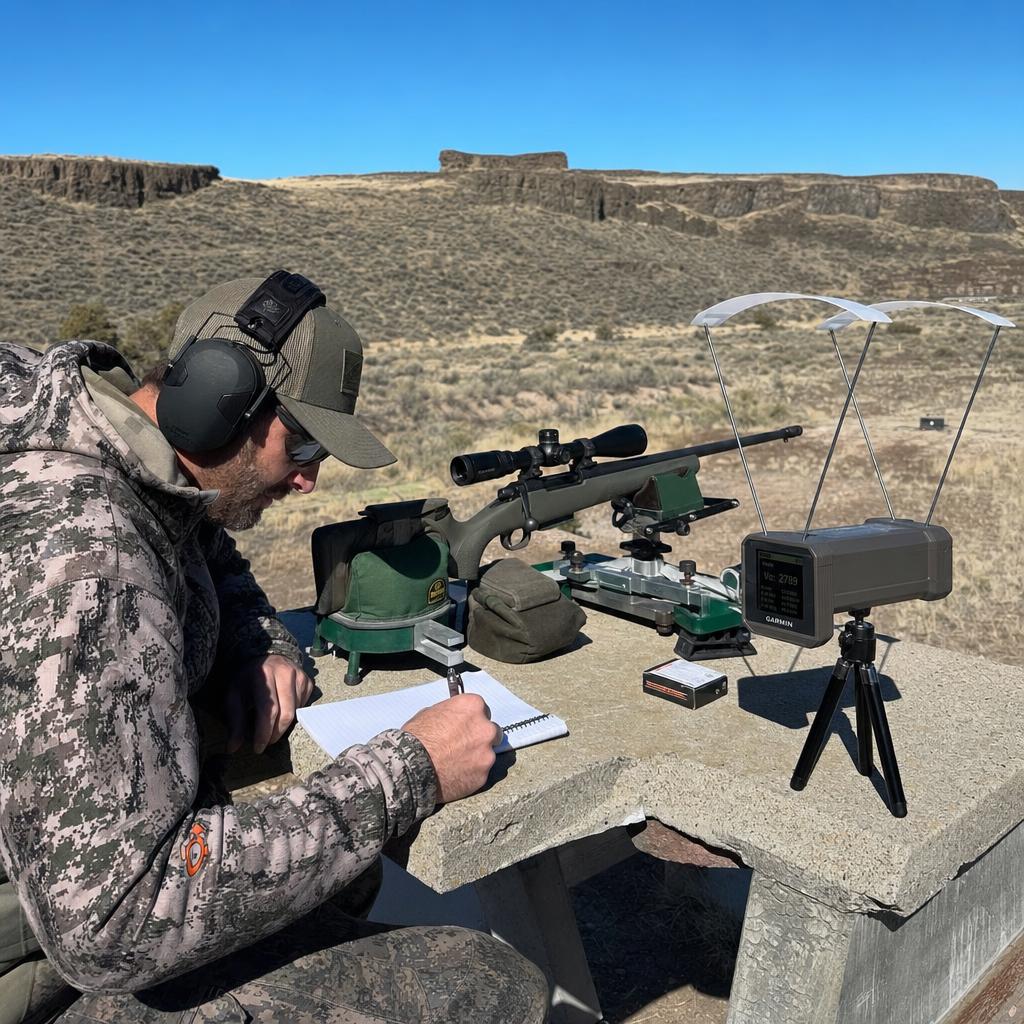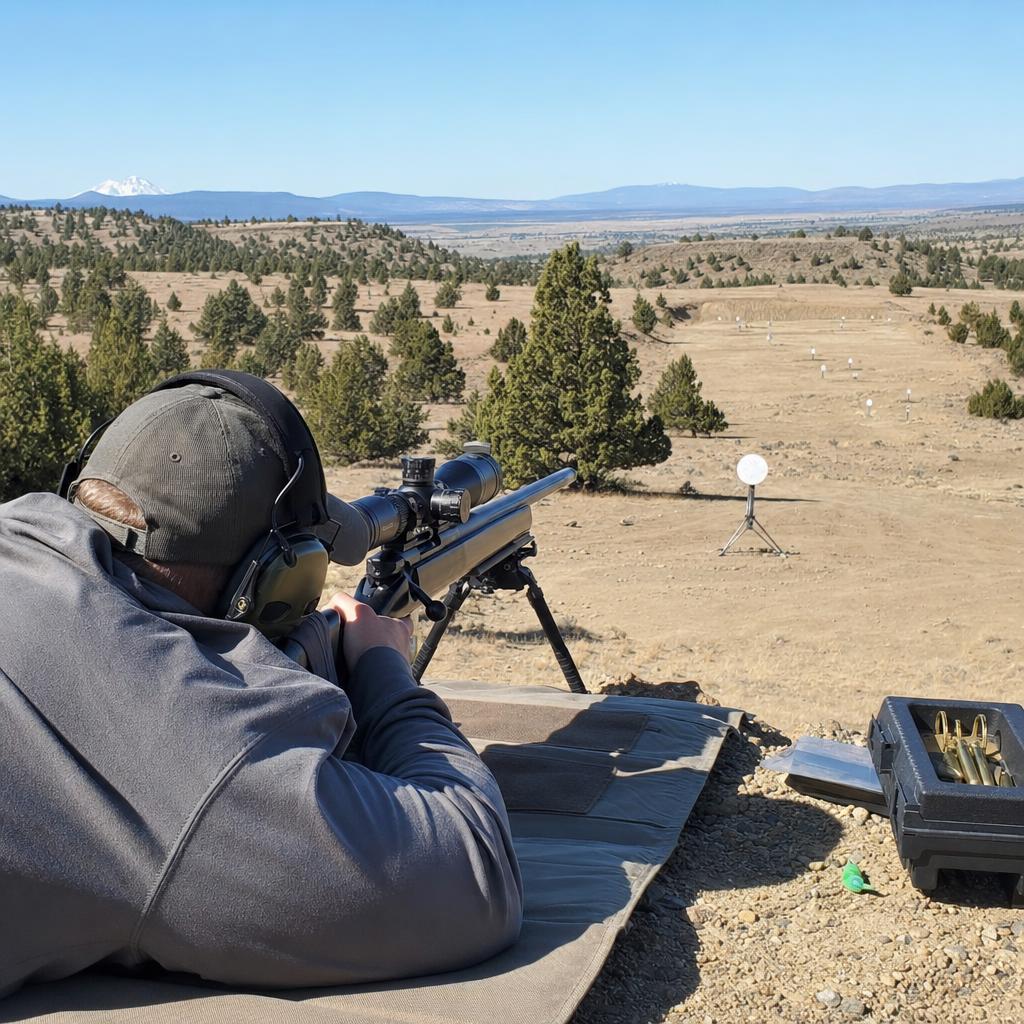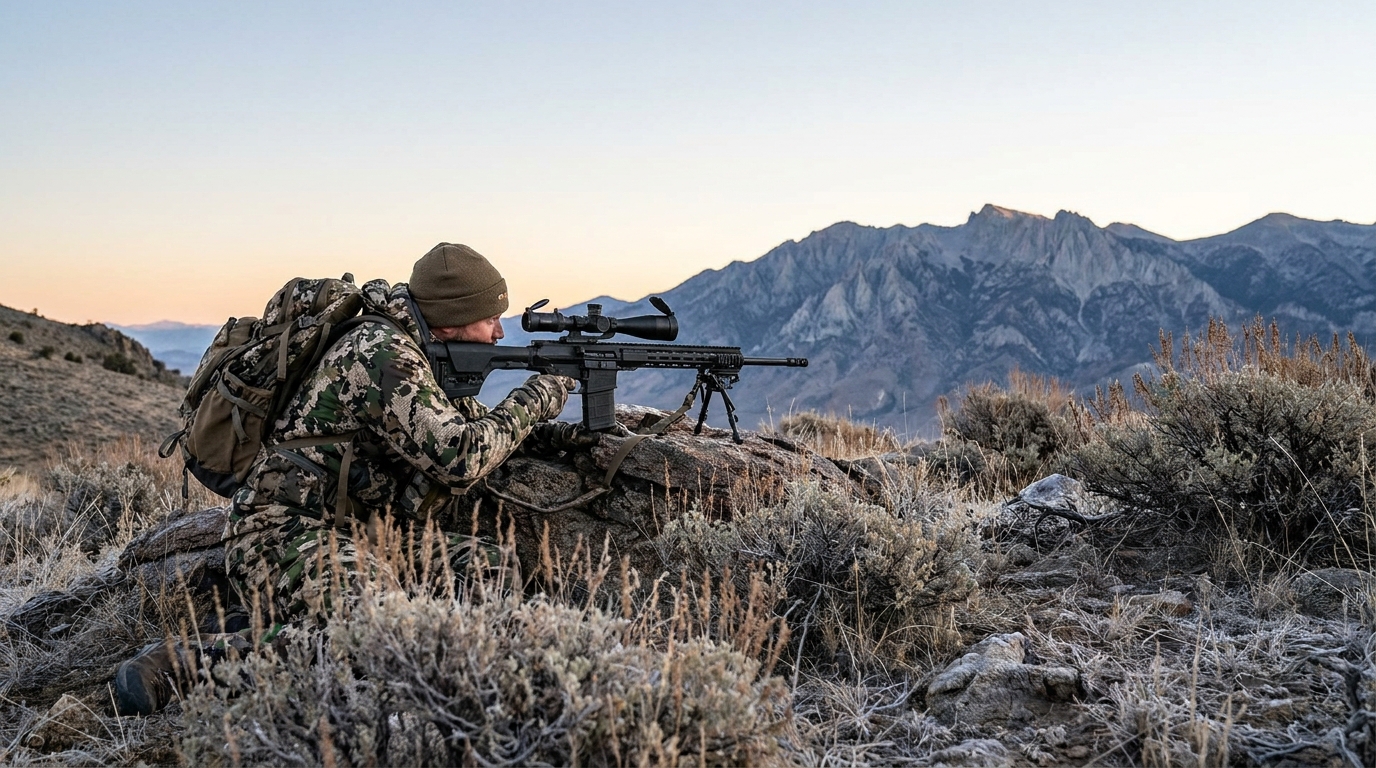
Ten years ago, walking into the deer woods with an AR-10 would have drawn looks. Today, it draws questions — usually some variation of "what caliber is that?" and "how does it shoot?" The platform has arrived as a legitimate hunting tool, and for good reason. Semi-automatic follow-up shots, modular ergonomics, and chambering options that cover everything from deer to elk have made the .308-platform rifle a genuine contender for western hunting where shots can come at awkward angles, distances change fast, and a follow-up shot sometimes matters.
But buying or building an AR-10 for hunting isn't the same as buying one for the range. Here's what matters for field work.
Caliber Selection: What the Platform Does Well
The AR-10 / DPMS LR-308 pattern supports several cartridges worth considering for Oregon and Pacific Northwest hunting.
.308 Winchester / 7.62x51
The original and still the most versatile. Ammunition is everywhere, barrel life is excellent, and 150–180 grain loads handle deer, elk, and black bear with authority. The .308 in a semi-auto hits hard and the platform manages recoil well enough that a 180-grain load is noticeably more comfortable to shoot than in a bolt gun. For most Oregon big game hunters, this is still the default starting point.
6.5 Creedmoor
The 6.5 CM has become the most popular AR-10 chambering outside of .308, and for good reason. Higher BC projectiles carry energy further downrange, recoil is mild, and barrel life is better than many magnum alternatives. The tradeoff is that semi-automatic feeding with some long, high-BC 6.5mm bullets requires careful ammunition selection — not every 6.5 CM load feeds flawlessly in every AR-10. Test your hunting ammo or handloads in your specific rifle before the season.
7mm-08 Remington
Underappreciated in the AR-10 world. The 7mm-08 feeds reliably, shoots flat, hits hard on deer and pronghorn, and produces enough energy for elk at close to moderate ranges. If you already handload for a bolt-action 7mm-08, sharing components between platforms is convenient. A 140-grain Nosler Partition at 2,800 fps from a 20-inch AR-10 barrel is a legitimate elk load.
.243 Winchester
For hunters who want an AR-10 that does double duty on deer and varmints, the .243 is a capable choice. It's not an elk round, but for deer and pronghorn at distance it's excellent, and the recoil is almost nonexistent. Not as common as .308 or 6.5 CM in the AR platform, but available.
Gas System and Weight: Where Field Use Diverges from Range Use
Most factory AR-10s come with a carbine or mid-length gas system tuned for a specific range of loads. For hunting, especially with handloads or suppressed shooting, an adjustable gas block is one of the best investments you can make. It lets you dial back the bolt velocity for suppressed shooting (which significantly reduces recoil and wear), tune for different bullet weights, and troubleshoot reliability issues without guesswork.
Weight is the other big field consideration. A full-size AR-10 with a 20-inch barrel and all the accessories can push 10–11 pounds before you add a scope. That's manageable on a rifle that lives in a truck or a hunting vehicle, but it's a lot to carry in the Wallowas or the Steens for a week. If you're planning backpack or spike camp hunts, look at the Ruger SFAR (Small Frame Autoloading Rifle) or similar lightweight designs — they pull sub-9-pound weights in .308 while maintaining the AR-10 function set.
Key Upgrades for Hunting
Trigger
Factory AR-10 triggers are adequate but rarely exceptional. For hunting, a clean break in the 3.5–4.5 pound range is ideal — light enough for precision, heavy enough that you won't get surprises in the cold. Geissele SSA-E, Timney Impact, and CMC flat-bow drop-in triggers all significantly improve precision over mil-spec options without adding complexity.
Free-Float Handguard
A free-float rail eliminates pressure on the barrel from the handguard, which improves consistency — especially important after the barrel heats up during a morning's shooting. M-LOK format rails are lighter than full Picatinny options and still give you attachment points for a bipod or sling.
Muzzle Device
A quality muzzle brake on an AR-10 makes .308 feel like .243. That's great for range work and for hunters who want fast target reacquisition for follow-up shots. Be aware that brakes significantly increase noise and concussion — anyone shooting beside you will feel it. A hybrid brake/compensator like the Vais or SureFire SOCOM series splits the difference. If you're running a suppressor, get a direct-thread or quick-detach adapter matched to your can.
Stock and Length of Pull
The AR-15 pattern adjustable stock translates to the AR-10 platform and is one of the genuine advantages of the design for hunters. Adjust for heavy hunting clothing in winter, body armor in competition, or a precise benchrest position with equal ease. A quality mil-spec buffer tube with a Magpul CTR or MOE stock handles rough field use without play or rattle.
Oregon Hunting Regulations and Semi-Autos
Oregon allows semi-automatic rifles for big game hunting in most units and seasons. There are no restrictions on magazine capacity for hunting (though know your target and what's beyond it). Check current ODFW regulations for any unit-specific or season-specific restrictions — some special hunts and zones have additional requirements. Suppressor use for hunting is legal in Oregon with the proper NFA paperwork, and an AR-10 is a natural host for a .308 or 6.5 CM can.
Accuracy Expectations
A quality AR-10 — think Aero Precision M5, Ruger SR-762, or a mid-tier built receiver set with a quality barrel — should consistently produce 1–1.5 MOA groups with quality ammunition. Sub-MOA is achievable with handloads tuned to the specific rifle. For hunting purposes, a rifle that puts 150-grain factory .308 into 1.5 inches at 100 yards is more than adequate for any shot you should be taking at game.
The AR-10 isn't the right tool for every hunting situation. But for hunters who want a modern, ergonomic, fast-handling rifle that covers deer through elk, it's earned its place. Put in the work to set one up right — good trigger, free-float rail, adjustable gas, quality optic — and it will outperform expectations in the field.