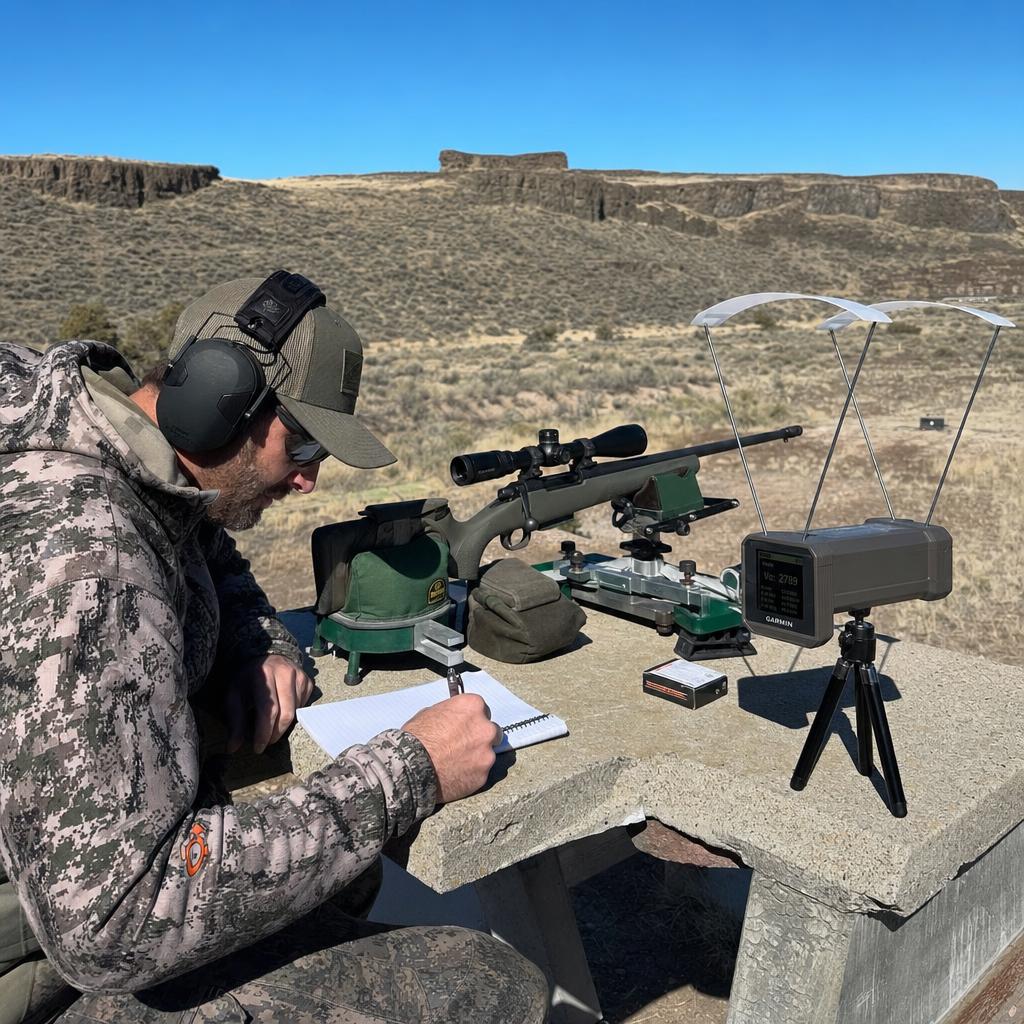
Precision Rifle Series has dominated the long-range shooting conversation for the last decade, and for good reason — it's demanding, athletic, and produces well-rounded field marksmen. But if you want to explore the absolute limits of what a rifle and handloaded ammunition can do at 600 and 1000 yards, without the time pressure and positional complexity of PRS, F-Class deserves your attention.
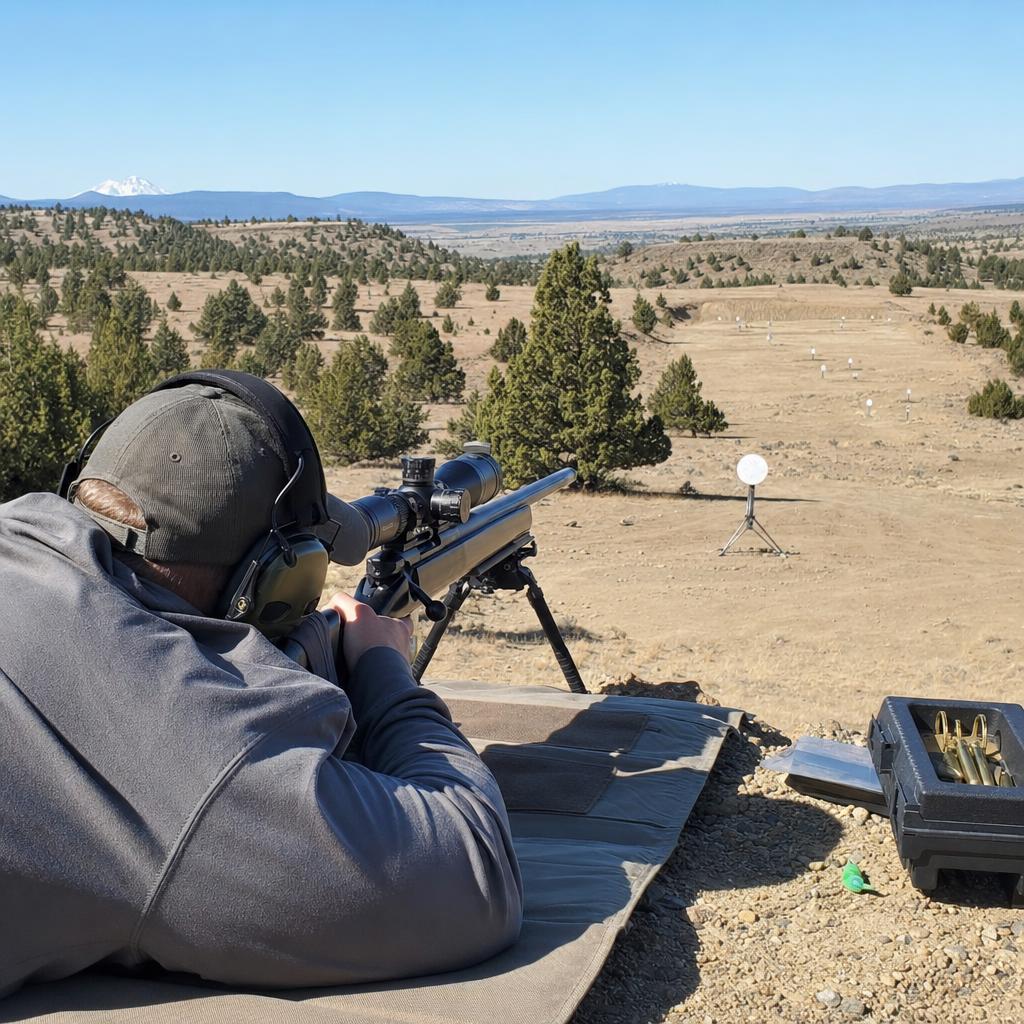
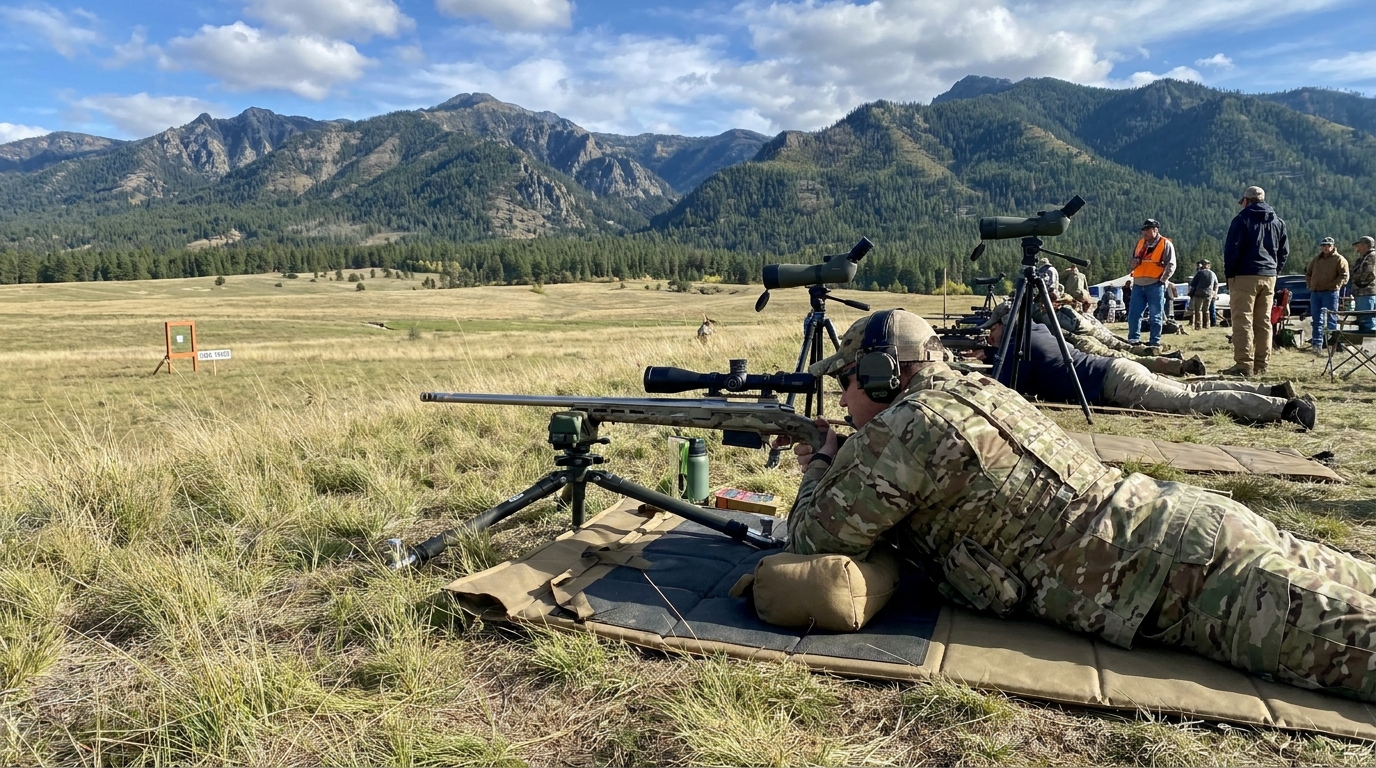
F-Class is a prone position target discipline shot from a mat, using a front rest or bipod and a rear sandbag. You take your time. You read the wind. You squeeze every bit of accuracy out of your equipment. At its core, it's benchrest shooting taken to distance — a pure test of rifle accuracy, ammunition quality, and wind-reading skill. In the Pacific Northwest, F-Class matches are held at several ranges from the Willamette Valley to eastern Oregon, and the community is welcoming to new shooters.
The Two Divisions: F-Open and F-TR
F-Class competition is divided into two main categories:
F-TR (F-Target Rifle)
F-TR is restricted to .223 Remington and .308 Winchester chamberings, with a rifle and bipod weight limit of 8.25 kg (18.18 lbs). No other calibers are permitted. You shoot from a bipod and rear bag only — no front rest. This is the entry-level division in the sense that calibers are accessible and equipment costs are lower, but don't mistake it for easy. Reading wind at 1000 yards through a .308's 10-second flight time is one of the most demanding skills in the sport.
F-Open
F-Open allows essentially any caliber, any rifle up to 10 kg (22 lbs), and the use of a mechanical front rest. This is where you'll see purpose-built rifles in 6mm Creedmoor, 6.5-284 Norma, .284 Winchester, .300 Norma Magnum, and other precision long-range cartridges. Equipment costs are higher, but the accuracy potential is extraordinary — top F-Open shooters routinely produce sub-minute groups at 1000 yards.
Ranges and Matches in the Pacific Northwest
Several clubs and ranges in Oregon and Washington run F-Class programs:
- Tri-County Gun Club (Sheridan, OR): Active long-range program with 600-yard capability. Hosts regional F-Class and High Power matches. Good entry point for Willamette Valley shooters.
- Clatskanie Rifle and Pistol Club: Northwest Oregon, with 600-yard rifle range. Check their match schedule for F-Class events.
- Rattlesnake Mountain Shooting Facility (Richland, WA): One of the premier long-range facilities in the Pacific Northwest, with a 1000-yard range. Hosts state and regional F-Class matches regularly.
- Oregon Riflery Association: Coordinates High Power and F-Class competition across multiple Oregon venues. Their website maintains a match calendar worth bookmarking.
Even if a range doesn't host formal F-Class matches, a 600-yard facility with target frames lets you practice the fundamentals before entering competition.
Getting Started: What You Need
Rifle
For F-TR on a budget, a factory Remington 700, Savage 110, or Tikka T3x in .308 Winchester with a quality stock and bedding job will compete respectably at club matches. As you advance, a custom or semi-custom action in a chassis system with a quality match barrel becomes worthwhile. For F-Open, a purpose-built rifle in 6mm Creedmoor or 6.5-284 on a Kelblys or BAT action will be competitive at regional and national level.
Optic
At minimum, a 20x scope with a fine crosshair reticle and repeatable, verified adjustments. Most competitive F-Class shooters run 30–40x variable or fixed magnification — you need to see the mirage to read the wind, and 1000-yard targets are small. March, US Optics, Nightforce, and Schmidt and Bender all have dedicated F-Class offerings. The reticle matters less than adjustment repeatability and optical clarity.
Ammunition and Handloads
Factory ammunition will get you started, but handloads are essentially mandatory for competitive F-Class. At 1000 yards, extreme spread in muzzle velocity translates directly to vertical dispersion on the target. F-Class handloaders obsess over case prep: annealing, flash hole deburring, primer pocket uniforming, and precise powder charges measured by weight rather than volume. Match-grade brass — Lapua or Peterson — and premium bullets like the Berger 105 Hybrid Target or Sierra 175 MatchKing are the baseline for serious competition.
Reading Wind
More than any other element, wind reading separates F-Class scores at 1000 yards. You have two tools: the mirage you see through your scope and the flags on the range. Learn to read mirage — a boiling, straight-up mirage indicates no wind; a mirage running hard to one side indicates significant wind value. Most courses of fire allow time observation before the string — use it entirely to read conditions, not to adjust equipment.
Scoring and Course of Fire
Standard F-Class competition uses a 15-inch V-Bull at 1000 yards, with an outer X-ring for tie-breaking. A perfect score requires all shots inside that V-Bull — roughly the size of a dinner plate at a thousand yards. Matches typically run 15–20 shots per string with a preparation and sighting period. Your aggregate score across multiple strings and distances determines your match placing.
Why F-Class Makes You a Better Hunter
Beyond the competition itself, F-Class builds the discipline that makes long-range hunting shots accountable. Trigger control under a high-power optic, wind-reading skill, understanding your rifle's zero and drift, and developing confidence in your data — all of it transfers directly to the field. Hunters who shoot F-Class regularly tend to be the ones who pass on iffy shots because they know exactly where their limit is. That's a skill worth developing.
Check the Oregon Riflery Association or your local gun club for match schedules. Bring your rifle, a good spotting scope, a shooting mat, and a willingness to learn from the shooters around you. F-Class communities are generous with knowledge — almost everyone started from zero and remembers it.