If you carry a handgun for self-defense — or if you just want to get dramatically better at shooting under realistic pressure — IDPA competition might be the single best thing you can do with a Saturday morning. The International Defensive Pistol Association was founded in 1996 as a sport that stays tethered to real-world defensive shooting scenarios, and its match stages reflect that philosophy. Oregon has an active and welcoming IDPA club scene from Portland to the Rogue Valley. Here's how to get started.
What Is IDPA?
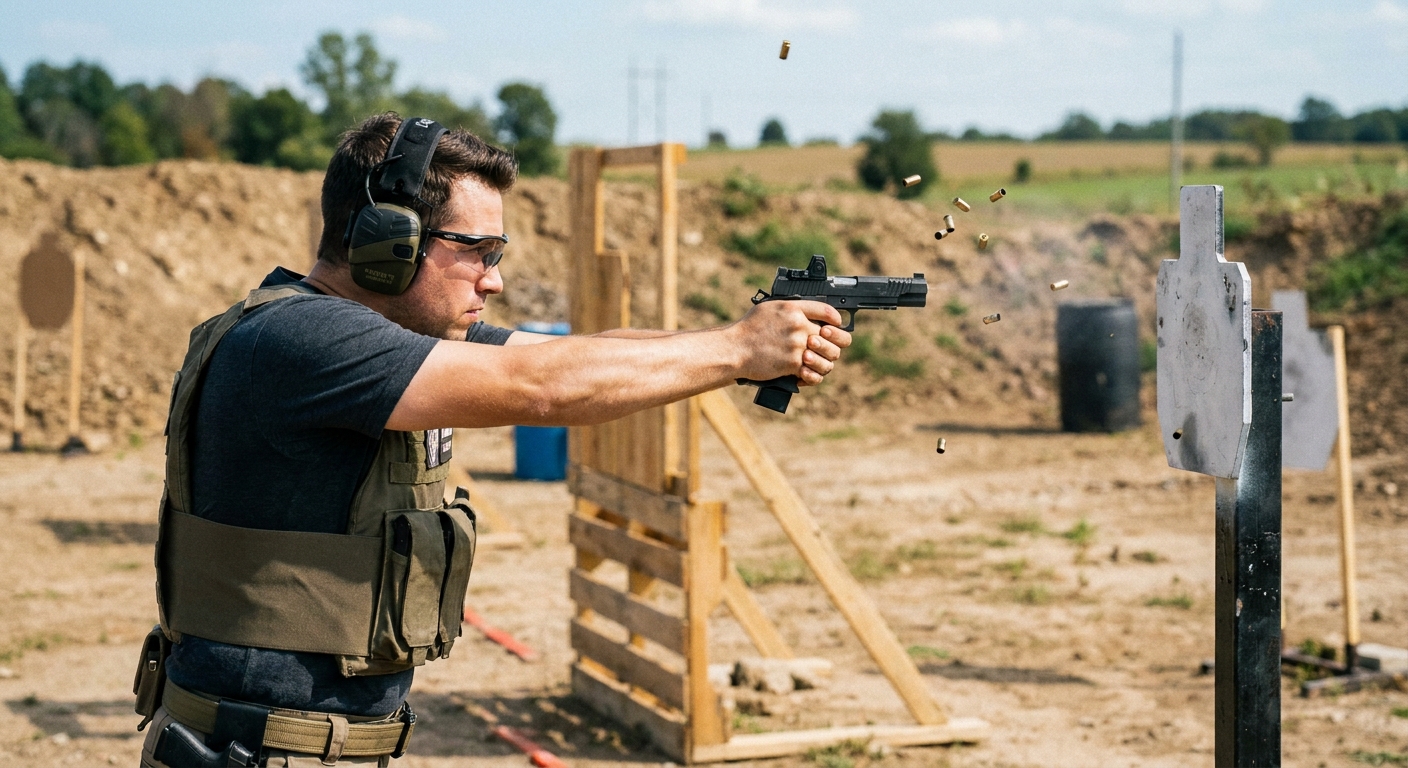
IDPA stages are designed around realistic defensive scenarios — engaging threats from behind cover, drawing from concealment, performing emergency reloads, and moving while shooting. Unlike pure speed sports, IDPA penalizes you for exposing yourself unnecessarily, failing to use available cover, and procedural errors. The ruleset intentionally reinforces good defensive habits rather than gamey competition techniques that would get you killed in a real fight.
Matches are scored on time plus penalties. Every hit in the down zone adds time. A miss adds more. Procedural errors add time. The fastest shooter with the fewest errors wins — but precision matters as much as speed.
IDPA Divisions Explained
IDPA organizes competition into divisions based on equipment. The most popular in Oregon's club scene are:
- Stock Service Pistol (SSP): Your everyday carry gun, lightly modified. Glock 17/19, Sig P320, Smith M&P, Walther PDP — all are legal. This is where most beginners start.
- Enhanced Service Pistol (ESP): Slightly more permissive. Single-action semi-autos and more aftermarket work allowed. 1911 and CZ platforms are common here.
- Carry Optics (CO): A booming division. Red dot-equipped semi-autos with a footprint cut or mount. Increasingly popular as optics-ready handguns become standard.
- Compact Carry Pistol (CCP): Sub-compact CCW guns. Glock 43X, Sig P365, Springfield Hellcat. Great for those who want to compete with exactly what they carry daily.
- Bug (BUG): Deep concealment guns — the Ruger LCP, S&W Bodyguard, pocket-sized revolvers. Five-round stages, tight scoring.
Oregon IDPA Clubs
Oregon's IDPA presence is concentrated at several active clubs that run regular monthly or twice-monthly matches:
- Tri-County Gun Club (Sherwood): One of the Portland metro area's busiest IDPA venues. Excellent match directors and welcoming to new shooters.
- Cascade Shooting Facilities (Chehalis, WA): Just across the state line but draws a large Oregon contingent. Excellent bays for complex stage design.
- Rogue Valley Gun Club (Medford): Southern Oregon's home for IDPA and other action pistol sports. Active membership, good stage variety.
- Albany Rifle and Pistol Club (Albany): Central Willamette Valley location. Regularly runs IDPA and USPSA matches with good turnout.
Find matches in your area at idpa.com/clubs or search the IDPA club finder by ZIP code. Most Oregon clubs also post match schedules on their own websites and Facebook pages.
What You Need for Your First Match
The Pistol
Use what you have. If you own a full-size or compact 9mm, .40, or .45 ACP semi-auto, you can compete in SSP or ESP. Don't buy a competition gun before you know what division you want to shoot long-term. Your carry Glock is perfectly competitive at a club-level match.
Holster and Magazines
IDPA requires an Outside the Waistband (OWB) or Inside the Waistband (IWB) concealment holster — not a race holster. Your holster must fully cover the trigger guard and retain the pistol securely. Kydex is most common. You'll need at least three magazines to run most stages without being caught empty at an inopportune moment.
Magazine Carrier
You need to be able to reach your spare magazines from a concealment garment. A simple OWB double-mag carrier works. The concealment garment requirement — a vest, jacket, or un-tucked shirt — is part of IDPA's design. It mirrors real-world concealed carry conditions.
Eye and Ear Protection
Non-negotiable at any match. Electronic ear pro is highly recommended — you need to hear range commands and fellow competitors. Passive foam plugs are legal but leave you partially deaf on the line. Peltor Sport Tactical 100 or Howard Leight Impact Sport are affordable electronic options that work well.
Ammunition
IDPA has a power factor requirement — your load needs to make a minimum 125,000 PF (bullet weight in grains × muzzle velocity in FPS). Standard 115 gr 9mm at 1,100+ fps easily meets this. Most factory 9mm, .40, and .45 ACP loads qualify without any calculation. Bring at least 150 rounds for a typical club match.
Match Day Etiquette for First-Timers
IDPA is genuinely welcoming to new shooters. A few things will make your first match smooth:
- Arrive early. Registration and equipment check happen before the match. Showing up at start time means you're already behind.
- Tell the match director you're new. Every IDPA club is used to welcoming first-timers. They'll assign you a mentor for your first few stages.
- Keep your muzzle downrange and your finger off the trigger until you're on the line with the range officer commanding you to engage. This is the cardinal rule.
- Ask before you touch. If you have a question about the stage, ask the RO. Never handle your firearm unless directed.
- Don't sandbag. IDPA has a classifier system — your score from your first matches will place you in a division (Novice, Marksman, Sharpshooter, Expert, Master). Shoot your best from day one.
Why IDPA Makes You a Better Defensive Shooter
The pressure of competition — even low-stakes club competition — triggers a physiological stress response that practice at the static range simply doesn't replicate. Your hands shake a little. Your thinking slows. Drawing from concealment while a timer beeps and people watch is categorically different from deliberate dry-fire practice in your living room.
That stress inoculation is the point. Regular competitors consistently demonstrate faster, more accurate shooting under pressure than non-competitors with equivalent range time. If you carry a gun for defensive purposes, IDPA is the most realistic training tool most civilians have access to — at a price point that beats a private defensive handgun course.
Oregon's club scene is active, the people are good, and the sport is genuinely fun. Shoot your first match as a student, not a competitor. You'll be hooked by stage three.