Hunting in Oregon means carrying firearms in a state that has seen significant changes to its firearms laws over the past several years. Whether you're a lifelong resident or hunting Oregon on a nonresident tag, understanding the current legal landscape isn't optional — it's part of being a responsible hunter. This guide covers the key laws as they stand in 2026 and how they specifically affect hunters in the field, at camp, and traveling to and from hunting areas.
Note: This article is for informational purposes only and does not constitute legal advice. Laws change and can be subject to ongoing court interpretations. Always verify current statutes through official Oregon state sources or consult an attorney for questions specific to your situation.
Oregon's Background Check and Firearm Purchase Requirements
All firearm sales in Oregon — including private party sales — require a background check through a licensed dealer. If you're buying a rifle, shotgun, or handgun from a private seller, both parties must complete the transfer through a Federal Firearms Licensee (FFL). No exceptions for transfers between private individuals, even at gun shows. The background check fee varies by dealer but is typically $10–$25.
Hunters purchasing firearms out of state should be aware that rifles and shotguns may be transferred directly to Oregon residents from out-of-state FFLs, but handguns must be transferred through an Oregon-licensed dealer.
Magazine Capacity Restrictions
Oregon law currently limits magazine capacity to 10 rounds for detachable magazines for semi-automatic pistols and rifles. Hunters using semi-automatic rifles for deer, elk, or predator hunting should ensure their magazines comply with current state law. For most hunting applications — bolt-action rifles, lever guns, pump shotguns — this restriction is practically irrelevant.
Note that federal waterfowl hunting regulations independently require plugging shotguns to a three-shell capacity (magazine + chamber), which is a separate and longstanding requirement unrelated to Oregon's magazine laws.
Carry Laws: Open and Concealed
Open Carry
Oregon generally allows open carry of firearms without a permit for those who are legally allowed to possess firearms. However, local governments — counties and cities — have the authority to regulate open carry in public places. Several Oregon cities have enacted restrictions on open carry in certain public areas. In rural hunting country, open carry in the field is standard practice and creates no legal issues in most areas.
Concealed Handgun License (CHL)
Oregon issues Concealed Handgun Licenses (CHL) through county sheriff's offices. A CHL requires a background check, proof of training or a safety course, and a fee. Many hunters carry a sidearm in the field for personal protection, particularly in cougar and bear country. A valid Oregon CHL covers concealed carry in the field across most of the state's public land. Note that concealed carry on federal land (National Forests, BLM) is generally governed by the laws of the state in which the federal land is located.
Hunting-Specific Firearms Rules
Hunting from a Vehicle
It is illegal to hunt from a motor vehicle in Oregon. More specifically, you may not discharge a firearm from or across a road, use a motor vehicle to pursue wildlife, or have a loaded firearm in a motor vehicle (with limited exceptions for people with disabilities who hold a special permit). "Loaded" is defined as having a round in the chamber for rifles and pistols; for muzzleloaders, a charged and primed firearm is considered loaded.
Semi-Automatic Restrictions in Specific Hunts
Oregon's big game hunting regulations do not broadly prohibit semi-automatic firearms for most seasons. Semi-auto rifles are legal for deer, elk, bear, cougar, and pronghorn hunting with appropriate calibers. However, some special seasons and weapon-restricted hunts specify bolt-action only, muzzleloader only, or archery only — read your tag and season description carefully.
Suppressor Use in Hunting
Oregon allows the use of legally-owned suppressors for hunting. If you've completed the NFA process and have a tax stamp for your suppressor, you can use it in the field on most game species. This is a hearing health benefit that Oregon hunters have had access to for several years now.
Rifle Caliber Minimums
Oregon requires a centerfire cartridge for deer and elk (no rimfire). For bear and cougar, centerfire is also required. A .243 Win minimum is a reasonable practical floor for deer, and nothing less than a .270 Win or 6.5 Creedmoor is advisable for elk-sized animals.
Transportation of Firearms
When transporting firearms in a vehicle in Oregon:
- Long guns (rifles and shotguns) must be unloaded. They do not need to be in a case, though casing is good practice.
- Handguns must be unloaded if not carried concealed under a valid CHL. In a vehicle, a handgun without a CHL must be unloaded and in a closed container or locked compartment.
- When traveling interstate, federal law governs — unloaded, locked case, ammo stored separately. Know the laws of every state you pass through when driving to out-of-state hunts.
Public Land Discharge Rules
Different types of public land have different rules about firearm discharge. Shooting within 150 feet of a road or 50 feet of a trail is restricted in many areas. State parks prohibit firearm discharge entirely in most cases. On BLM and National Forest land, target shooting is generally allowed but prohibited within developed recreation areas and campgrounds. Always read the land management area's specific rules before shooting.
Key Resources
- ODFW 2026 Big Game Regulations: myodfw.com — the definitive source for season dates, weapon restrictions, and tag rules
- Oregon State Police Firearms Unit: oregon.gov/osp — CHL applications, dealer directories, background check status
- Oregon Firearms Federation (OFF): oregonfirearms.org — tracks current legislation and legal challenges
- NRA-ILA Oregon page: nraila.org — state law summaries updated regularly
Stay Legal, Stay Hunting
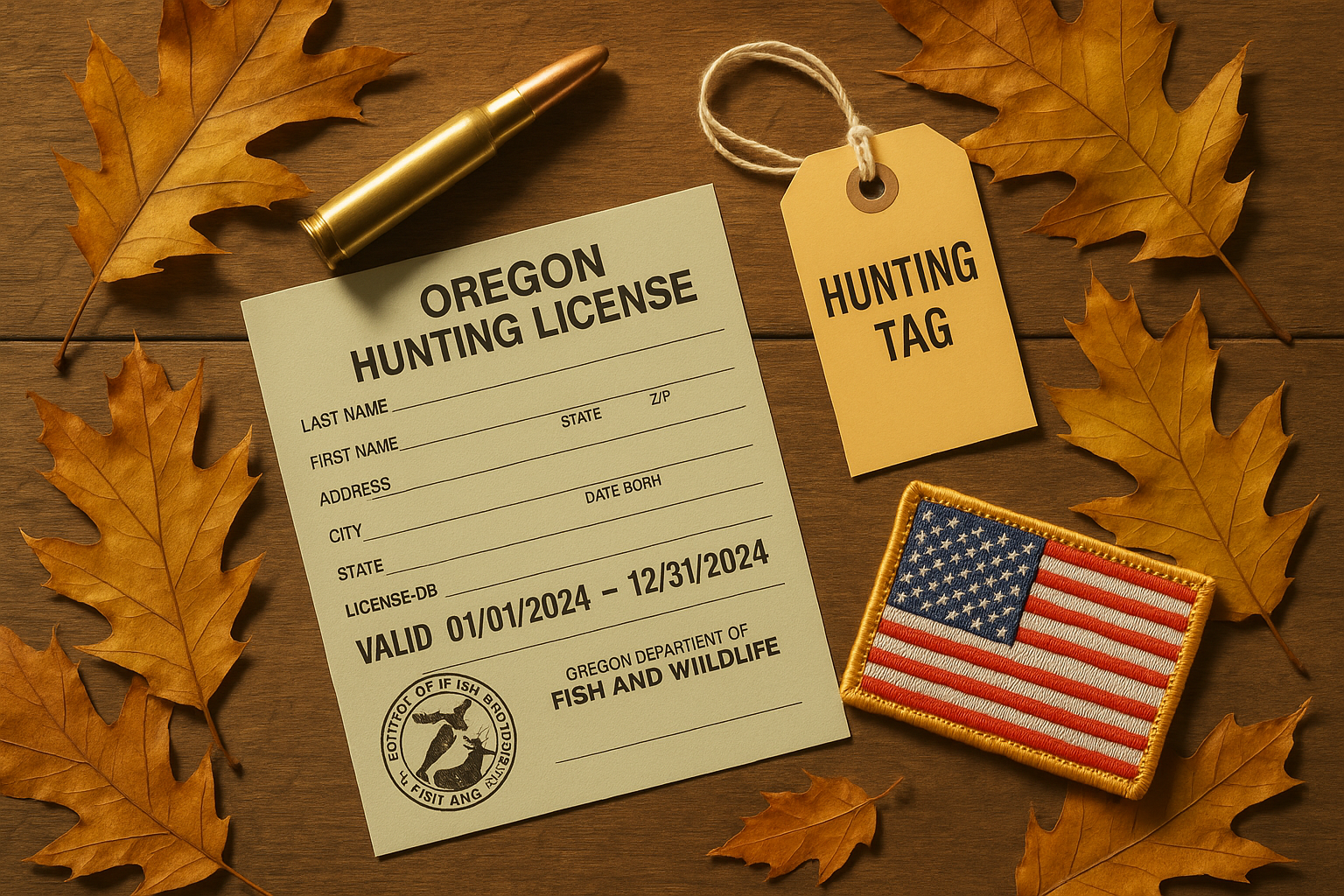
Oregon's gun laws are in flux, and that's not going to change anytime soon. The best thing a hunter can do is stay informed, read the current year's regulations cover to cover before each season, and carry your hunting license, tag, and any applicable permits whenever you're afield. A minor legal oversight — a loaded firearm in the cab, a magazine over capacity, or a missed regulation change — can cost you your tag, your firearm, and your hunting privileges. It's not worth it. Know the rules and go fill your freezer.