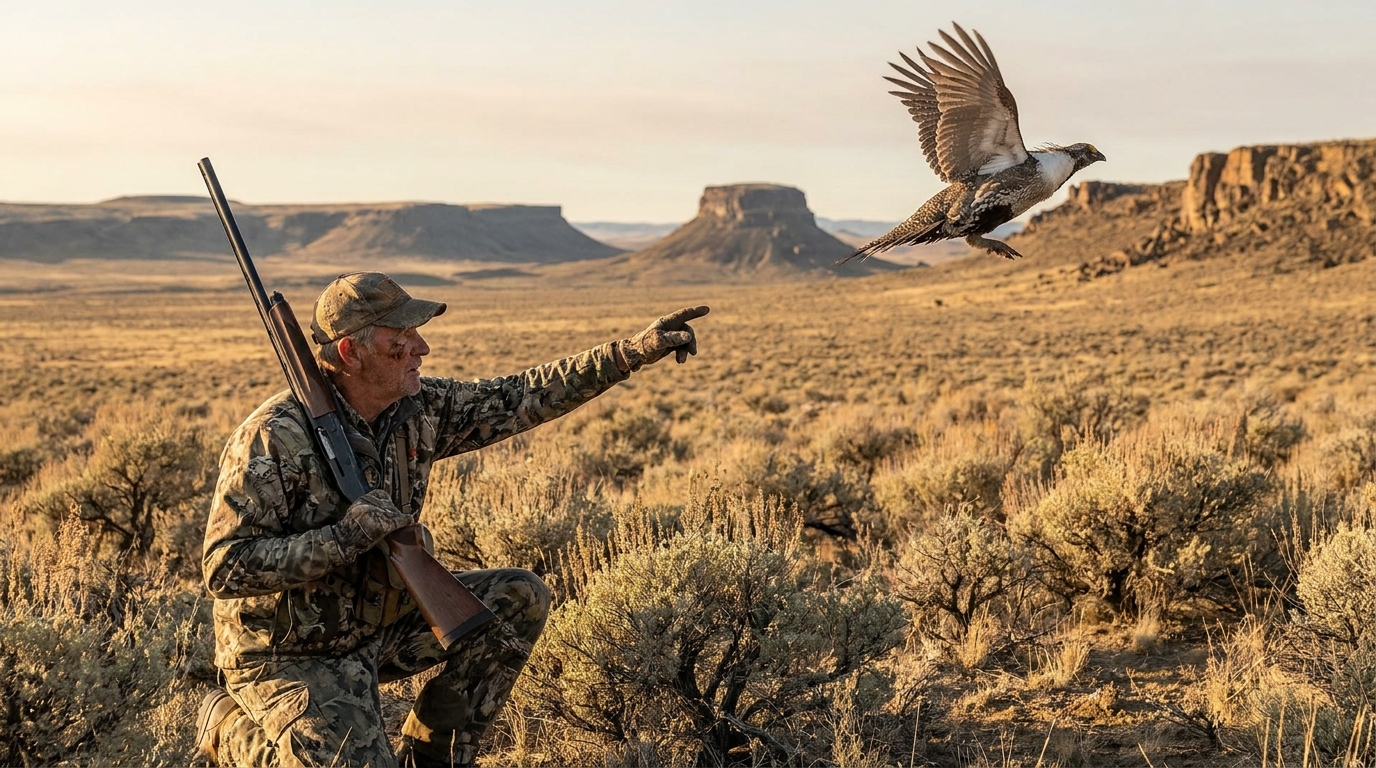
Greater sage grouse are a conservation success story and a hunting tradition all at once. In Oregon, the September season runs for just a few days each year in a handful of eastern Oregon units — and every tag represents ODFW's careful balancing of a stable local population against the sustainable harvest that keeps regulated hunting in the toolbox. If you've never chased sage grouse across the big empty of Oregon's high desert, you're missing one of the West's most unique upland experiences.
The Draw System and Tag Allocations
Oregon sage grouse tags are issued through a controlled draw — this isn't an over-the-counter bird season. Applications are submitted through the ODFW Hunt Planner portal, typically in the spring for the fall season. Bonus points accumulate annually for unsuccessful applicants, so even low-odds units eventually become accessible with patience. Tag quotas are set by unit based on annual lek counts and population surveys, so the allocation can shift year to year.
Priority units for Oregon hunters include portions of Lake, Harney, Malheur, and Grant counties. The Harney Basin in particular — centered around Burns — holds some of the strongest sage grouse numbers in the region and historically offers the most tag availability. Always verify current open units and quotas in the annual ODFW upland game regulations before applying.
Habitat: Reading the Sagebrush Sea
Greater sage grouse are obligate sagebrush birds. Their diet is dominated by sagebrush leaves year-round, supplemented by forbs and insects during summer. Finding birds means finding big, unbroken stands of mature sagebrush — the patchy scrub along roads or disturbed areas doesn't hold birds the way undisturbed basin shrublands do.
- Basins and draws: Look for drainage features where big sagebrush is taller and denser — these are morning feeding areas and midday loafing spots.
- Benches above springs: Water is precious in the high desert in September. Grouse routinely walk to water sources morning and evening; set up near a seep or stock pond and let the birds come to you.
- Sage flats near winter wheat fields: On private land, the interface between wheat stubble and adjacent sagebrush concentrates birds that move out to feed in open ground at first light.
- Leks as a scouting anchor: While lek displays happen in spring, the locations of known leks tell you where birds home range. Sage grouse don't wander far from established leks in the fall — center your scouting on those areas.
September Season Tactics
Early season sage grouse are young-of-the-year birds that haven't seen pressure. They hold well for dogs and tolerate a close approach before flushing. As the season progresses — and after the first significant cold front — the old cocks get wary fast.
Dogs vs. Walk-Up Hunting
A pointing dog is the gold standard for sage grouse — the birds hold long enough that a solid point with a controlled flush is consistently achievable. Wide-running breeds like German Shorthairs, Wirehairs, and English Pointers cover the vast sage flats efficiently. Without a dog, walk-up hunting works fine on calm mornings when birds are moving and feeding; the key is slow, deliberate movement through thick sage and watching ahead for the heads of feeding birds before they see you.
Shooting
Sage grouse are large birds — a mature cock can push 7 pounds — but they're not difficult to kill if you shoot them properly. Open-choke shotguns with 2¾-inch lead loads in No. 6 shot are the standard recommendation. These birds flush low and don't gain altitude fast; most shots are at 20 to 35 yards, not long crossing shots. The mistake beginners make is aiming for the body center mass — hit them in the wing and neck, not the back.
Timing Your Hunt
Birds move most actively the first 2 hours of daylight and again in the 2 hours before dark. Midday in September can push 90°F in the Oregon high desert — birds sit tight in dense sage and won't cooperate. Build your day around first and last light, and rest in the shade of your truck during the heat of the afternoon.
Field Care
Sage grouse have a unique sagebrush scent to their meat that divides hunters into camps. The key to the best table fare is immediate field dressing and rapid cooling — do not let a bird sit in the heat. Breast the birds promptly, put the meat on ice, and brine it overnight in cold, lightly salted water before cooking. Slow-cooked preparations — braises, stews, or crock pot methods — showcase sage grouse better than high-heat cooking that dries them out.
Conservation First
Sage grouse carry ESA listing pressure and their populations in the Great Basin have declined significantly outside of Oregon's stronger strongholds. Oregon hunters who target sage grouse are part of a management system that funds monitoring, predator management, and habitat restoration through license and tag revenue. Follow all regulations strictly, report your harvest accurately, and advocate for the sagebrush ecosystem that makes this hunt possible. It's one of the West's genuinely irreplaceable outdoor traditions.