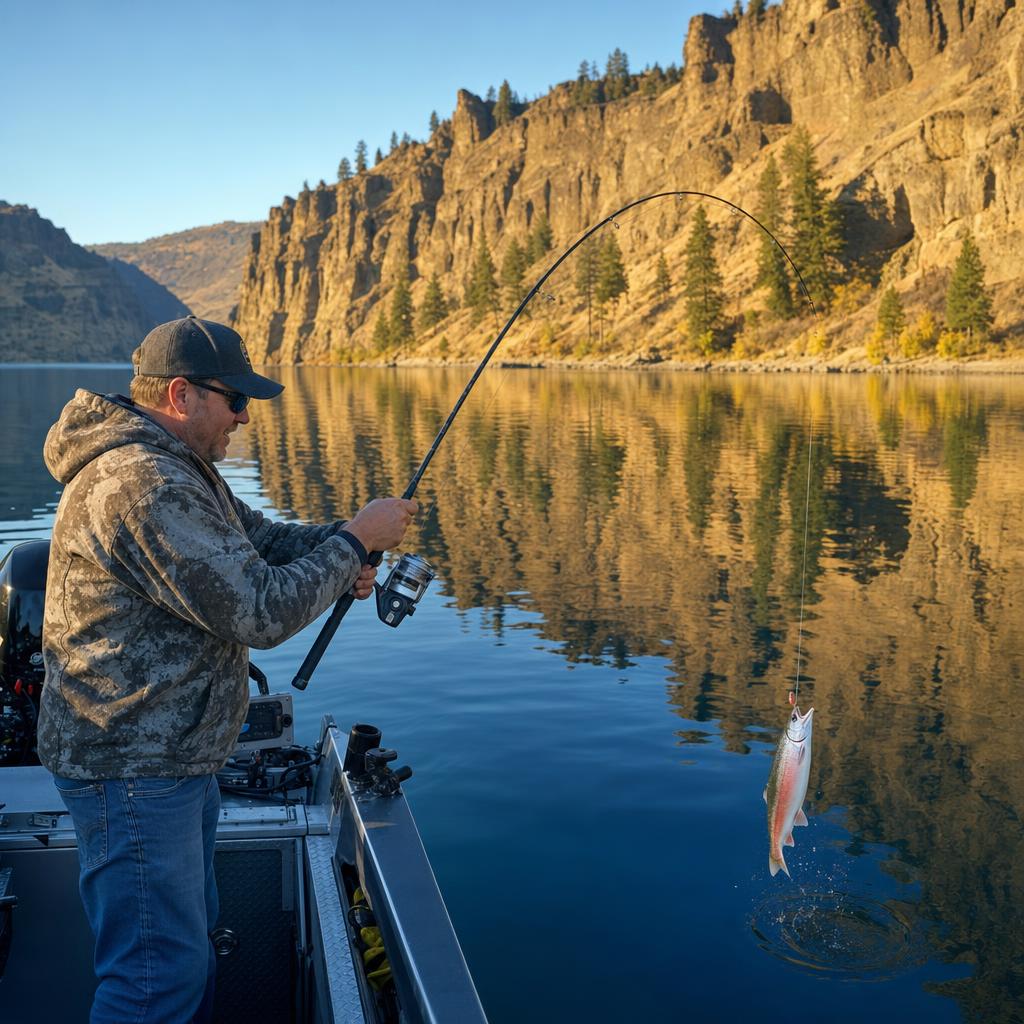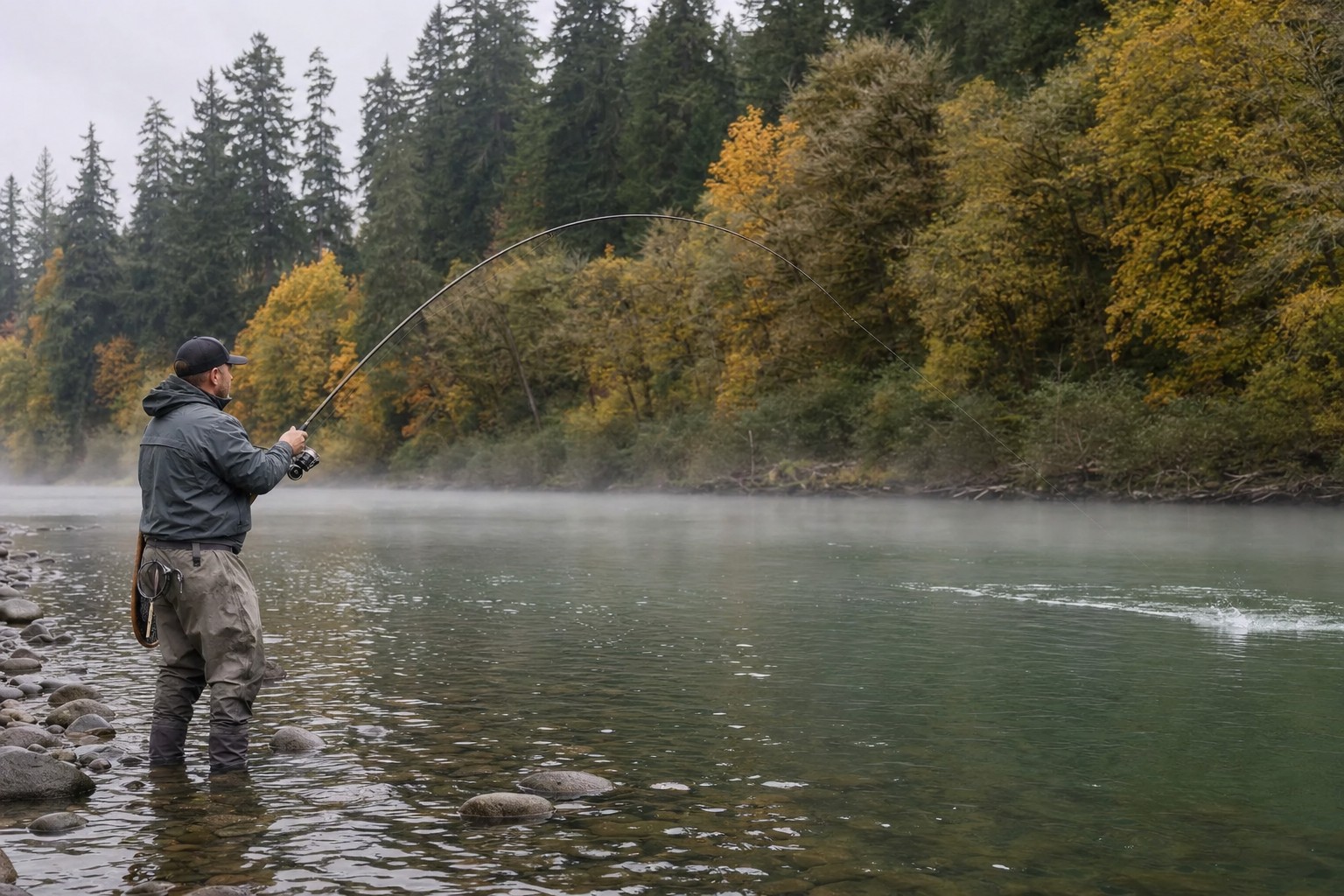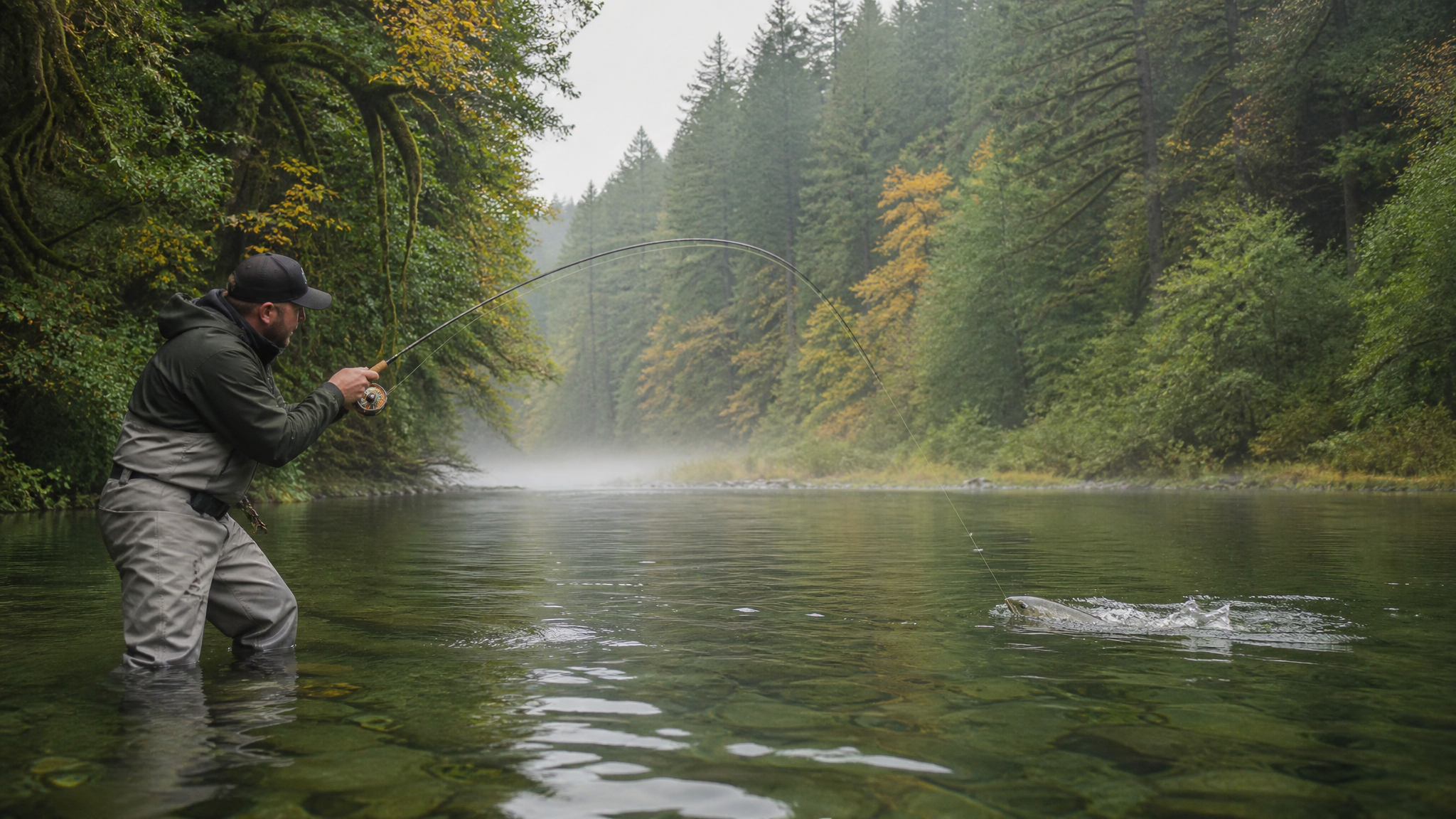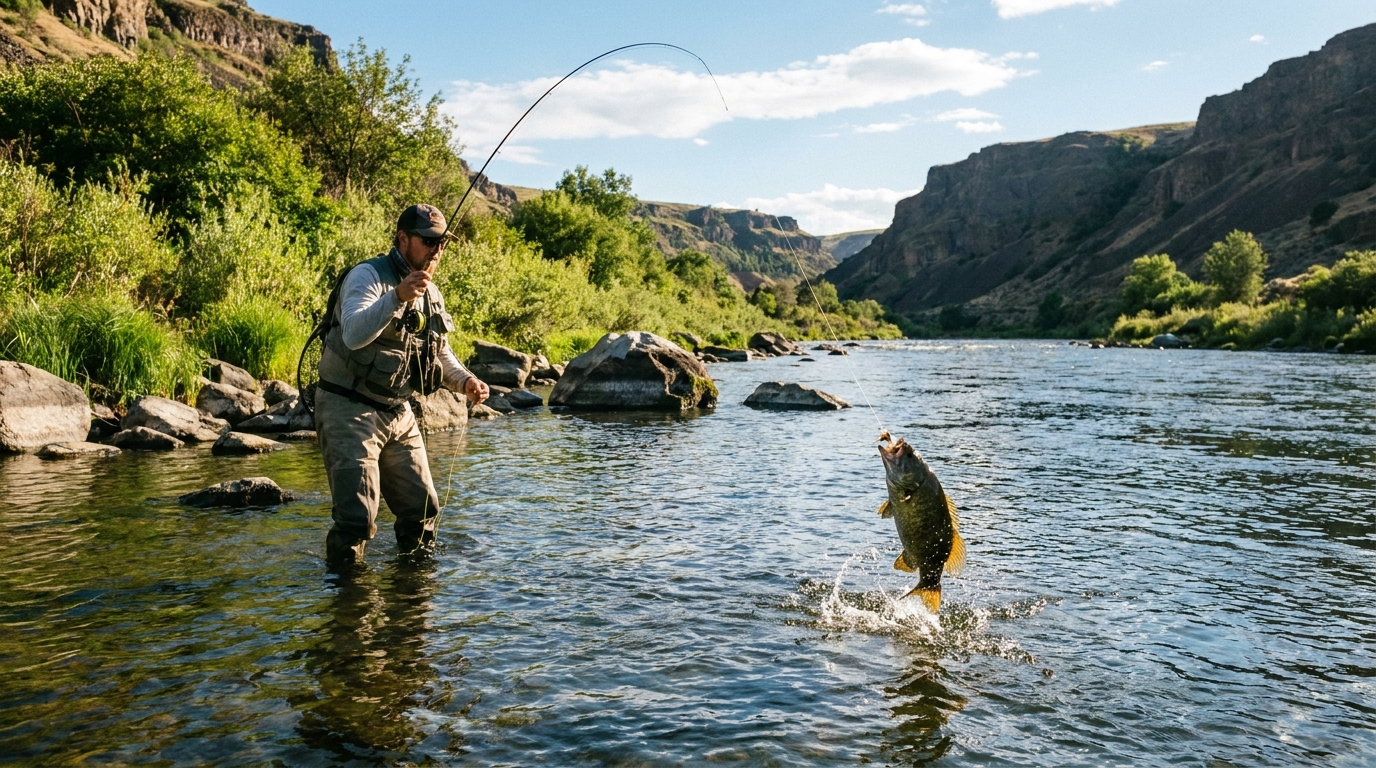
The Umpqua River carries a reputation built on steelhead and salmon — but from late June through September, the main stem transforms into one of Oregon's most productive and underutilized smallmouth bass fisheries. While trout anglers chase winter runs and salmon guides prep for fall, the mid-river section between Roseburg and Elkton quietly heats up, and the bass are waiting.
Why the Umpqua Holds So Many Smallmouth
The main Umpqua from Roseburg downstream to the tidal water near Scottsburg runs through a mix of basalt canyon, gravel bar, and exposed bedrock — exactly the structure smallmouth love. Water temperatures climb into the upper 60s and low 70°F range by mid-July, which is the prime trigger zone for active feeding behavior. The river's clarity is also exceptional for a Pacific Northwest drainage; in summer low-flow conditions, you can spot bass holding behind boulders in four feet of water from thirty yards away.
Smallmouth in this system run larger than most anglers expect. Three-pound fish are common, five-pound specimens are caught regularly, and the occasional six-pounder gets reported every summer. These aren't the stunted river bass of nitrogen-loaded agricultural drainages — they're fat, healthy fish that eat well on crayfish, sculpin, and the abundant hatch of aquatic insects the Umpqua throws off all summer.
Access Points and Floats
Wade anglers have several strong options for public river access:
- Sawyers Rapids (BLM): A solid put-in with a long riffle section leading into a wide pool system. Park at the BLM day-use area and work upstream into the rapids — the tailouts hold fish all day long in summer.
- Susan Creek Day Use Area: Easy bank access with a gravel bar that extends well into the river at low water. Walk the bar downstream toward the canyon and you'll find rocky points that concentrate fish from late morning onward.
- Whistler's Bend County Park: A family-friendly access near Glide with good upstream wade water. Fish the inside seam of the big bend on a falling tide — bass stack up there as crayfish get pushed around in the current.
- Rock Creek Confluence (BLM): One of the best access points on the mid-river. The confluence creates a distinct thermal and current break, and bass pile into this zone during the evening hours.
Float anglers can run a jon boat or drift boat through several popular sections, but wade fishing is the preferred method here — you'll cover more quality structure on foot than you will drifting past it.
Tactics That Catch Umpqua Smallmouth
This isn't a finesse fishery. Umpqua bass are aggressive, and the clearest water in the state means you can sight-fish in ways you can't anywhere else in Oregon.
Topwater (5 AM–9 AM, 7 PM–Dark)
The dawn window is exceptional. Walk slowly across gravel bars in the low light, working a Whopper Plopper or Heddon Zara Spook along the transition from fast water to slow. Bass will often push 18 inches of water to nail a topwater presentation during the first hour of light. Don't move your lure too fast — give it a pause-and-pop rhythm and hold on.
Ned Rig and Drop Shot
When the sun gets high and fish go tight to bottom structure, a 3-inch Ned rig on a 3/16 oz mushroom head is your best tool. Cast uptide and let it tumble naturally through the rocky bottom. Drop shot rigs with finesse worms excel along current seams where bass are holding mid-column and feeding up.
Crayfish Imitations
The Umpqua has a heavy crayfish population, and smallmouth here are conditioned to eat them. A brown or orange Strike King Rage Craw on a 3/8 oz. football head, worked slowly across bedrock shelves and through rocky pockets, is absolutely deadly in the middle of the day when other presentations slow down.
Streamers for the Fly Rod
Fly anglers will find the Umpqua smallmouth incredibly willing. A 6-weight with a sinking-tip line and a tan or olive Clouser Minnow in size 4 is the standard setup. Work the fly across the current on a tight-line swing through deeper runs, or strip it fast along rocky banks in early morning.
Gear and Regulations
A medium-light spinning rod in the 7-foot range paired with 10-pound braid and a 10-pound fluorocarbon leader is the all-around setup for wade fishing the Umpqua. The rocky bottom will abrade light monofilament quickly — braid-to-fluoro is the only way to fish here confidently.
Smallmouth bass in the Umpqua River are open year-round with no size or bag limit under current Oregon regulations, but check the ODFW regulation booklet annually as closures may apply near salmon and steelhead holding areas during fall. Catch-and-release is strongly encouraged for larger fish to maintain the quality of this fishery.
The Bottom Line
If you've been driving past the Umpqua on your way to a steelhead river or a high-lake hike, you've been leaving fish behind. From late June through September, this mid-river section offers some of the best wade fishing for smallmouth in the Pacific Northwest — and almost nobody is out there. Pack a spinning rod, wear your wading boots, and spend a morning working those rock-studded pools. The Umpqua smallmouth will make a believer out of you fast.