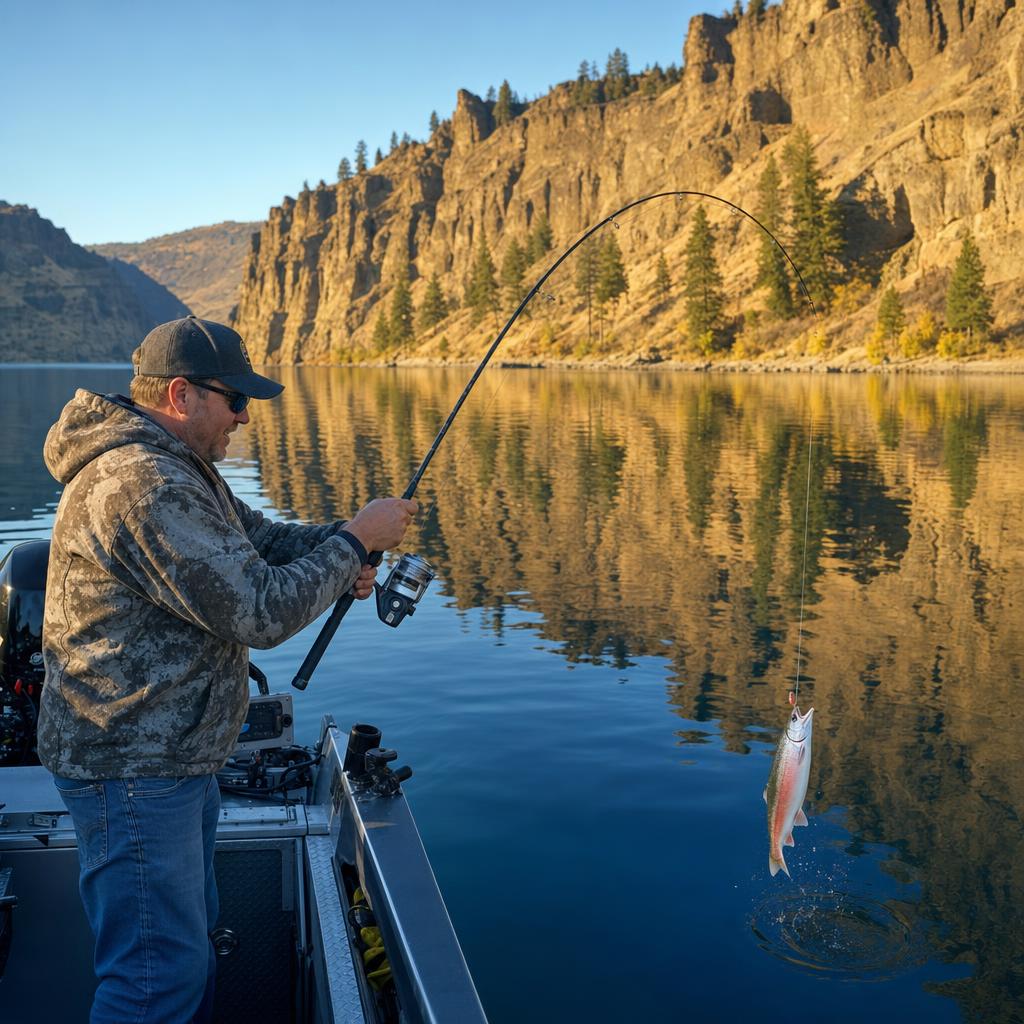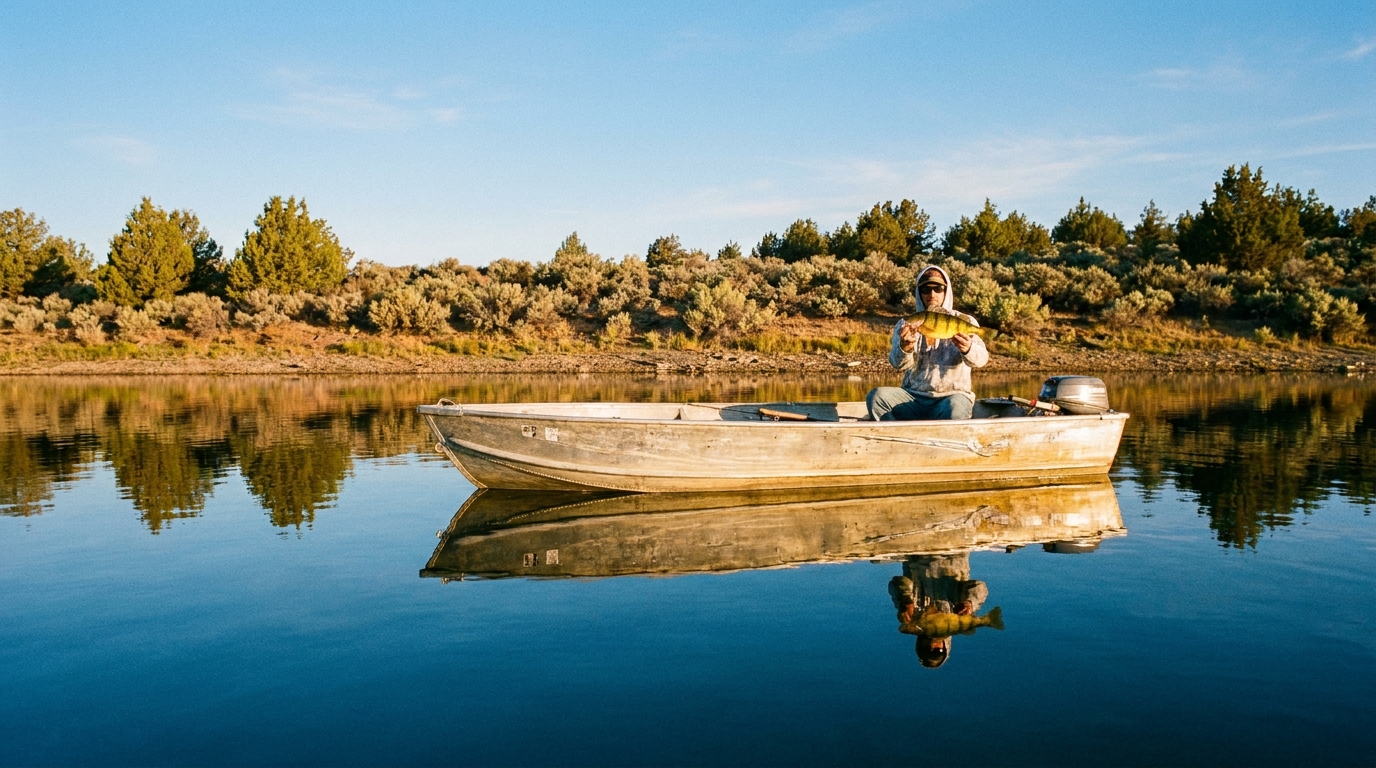
Most Oregon anglers drive past Chickahominy Reservoir on their way to somewhere else. That suits the regulars just fine. Tucked into the alkali flats of Harney County about 33 miles west of Burns on Highway 20, "Chick" is a shallow, alkaline impoundment that looks underwhelming on a map but fishes like a trophy factory when conditions align. In July, the water is warm, the perch are stacked, and the largemouth bass are in full summer feeding mode.
Know What You're Fishing
Chickahominy sits at roughly 4,200 feet in elevation and covers about 3,100 surface acres at full pool — though levels fluctuate significantly year to year depending on winter snowpack. The reservoir is shallow, averaging less than 10 feet across most of the basin, with the deepest water near the dam reaching 15–18 feet. That shallowness drives everything: it warms fast in spring, supports dense aquatic vegetation by summer, and hosts extraordinary densities of yellow perch, largemouth bass, and occasional crappie.
Oregon Department of Fish and Wildlife manages Chick primarily as a warmwater fishery. There's no minimum size limit or bag limit on yellow perch, and the bass limit is five fish with a 12-inch minimum. If you've never targeted yellow perch seriously, this reservoir will convert you fast — these aren't the 6-inch pan fish from a farm pond. Chickahominy perch regularly run 10 to 13 inches and push toward 14 when the conditions are right. They eat like trout and fight like they mean it on light spinning tackle.
July Timing and Water Conditions
By mid-July, water temperatures at Chick are typically in the low-to-mid 70s — ideal for active largemouth but pushing perch toward slightly deeper water during the midday heat. The best bite windows are early morning from first light until about 9:00 AM, and again in the last two hours of daylight. During the peak of the day, perch slide into the 8–12 foot depths near channel edges and the deeper basin areas, while bass tuck into whatever shade the sparse vegetation provides.
Wind is your biggest variable at Chickahominy. The high desert can fire up afternoon thermals that make the shallow reservoir choppy and uncomfortable quickly. Plan your launch for calm mornings and keep an eye on conditions. The boat ramp and primitive camping area near the dam offer easy access, and the BLM-maintained facility has vault toilets but no hookups or services — bring everything you need.
Perch Tactics That Produce
The most productive perch approach at Chick is vertical jigging with small 1/16 to 1/8 oz jig heads tipped with a 2-inch paddle tail swimbait or a wax worm. Work the bottom methodically in the 6–12 foot range. Once you mark fish on your sonar, drop straight down and work the jig with short, sharp hops. Yellow perch school tightly — if you catch one, there are 50 more in the same spot.
- Rod/reel: Light or ultralight spinning rod, 6–8 lb monofilament or 6 lb fluorocarbon leader
- Best lures: Berkley Gulp! Alive Minnows (1-inch), small tube jigs, 2-inch curl tail grubs in chartreuse or white
- Live/natural bait: Small nightcrawler pieces, wax worms — perch eat everything and live bait produces consistent numbers
- Depth finder: Even a basic fish finder transforms your success — marking perch schools vs. guessing is the difference between 5 fish and 50
When you find the perch, stay put. They don't spook from a boat overhead and will hold a spot for hours. Work a school until the bites slow, then probe around until you locate the next concentration.
Bass Fishing at Chick
Largemouth bass at Chickahominy don't get the attention they deserve. The fish aren't giants — a 3-pounder is a good fish here — but they're numerous and aggressive, and catching bass in the middle of eastern Oregon's alkali flats carries a certain absurd satisfaction. In July, key on the edges of emergent vegetation and any submerged structure you can locate with your sonar.
Topwater lures produce spectacular early morning action on calm days. A Heddon Zara Spook or a Rapala Skitter Pop walked along vegetation edges will draw blow-ups in the first hour of light. Once the sun climbs, switch to Texas-rigged plastic worms (6-inch finesse worm in green pumpkin or watermelon red) worked slowly through the weeds, or a swimbait on a 1/4 oz ball-head jig along depth transitions.
Getting There and What to Bring
From Burns, head west on Highway 20 for approximately 33 miles. The turnoff for Chickahominy Reservoir is well-signed on the south side of the highway. The BLM access road is graded gravel — passable for most vehicles in summer, though a high-clearance rig is always more comfortable in the high desert.
Nearest services are in Burns. Fuel up and ice your cooler before you leave town — there's nothing at the reservoir. A valid Oregon fishing license with combined angling tag is required. No camping fee is currently charged at the BLM site, though that can change. Pack out all trash; this is remote BLM land and it deserves to stay clean.
Summer temperatures in Harney County regularly exceed 90°F by afternoon. Sun protection, plenty of water, and an early start aren't suggestions — they're requirements. And bring a camera: the high desert light on that basin at sunrise is something worth documenting.
The Bottom Line
Chickahominy Reservoir won't make most Oregon fishing publications, and that's part of its appeal. It's a drive-past fishery for the people who know, and a revelation for the people who stop. This July, when the perch are schooled in the channel edges and the bass are chasing topwater at dawn, it's one of the most productive warmwater fisheries in eastern Oregon. Give it a shot.