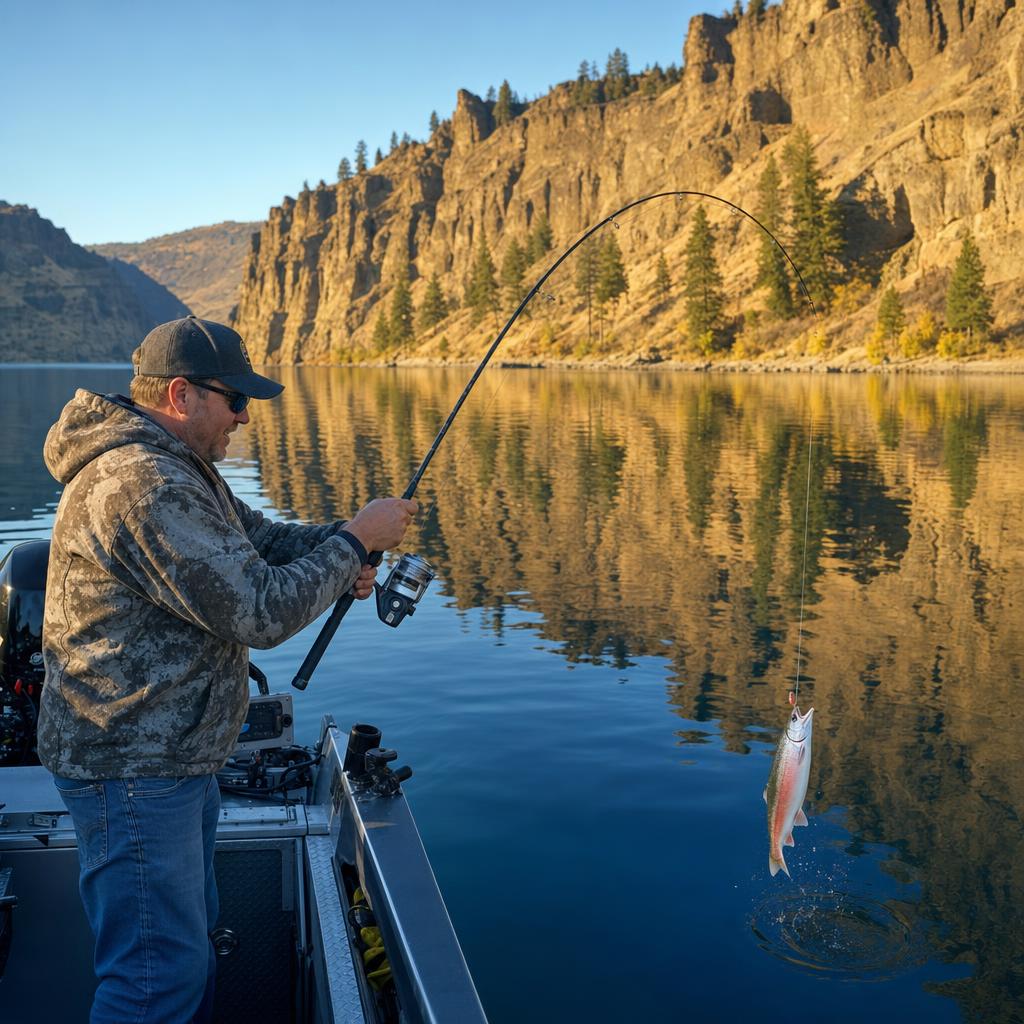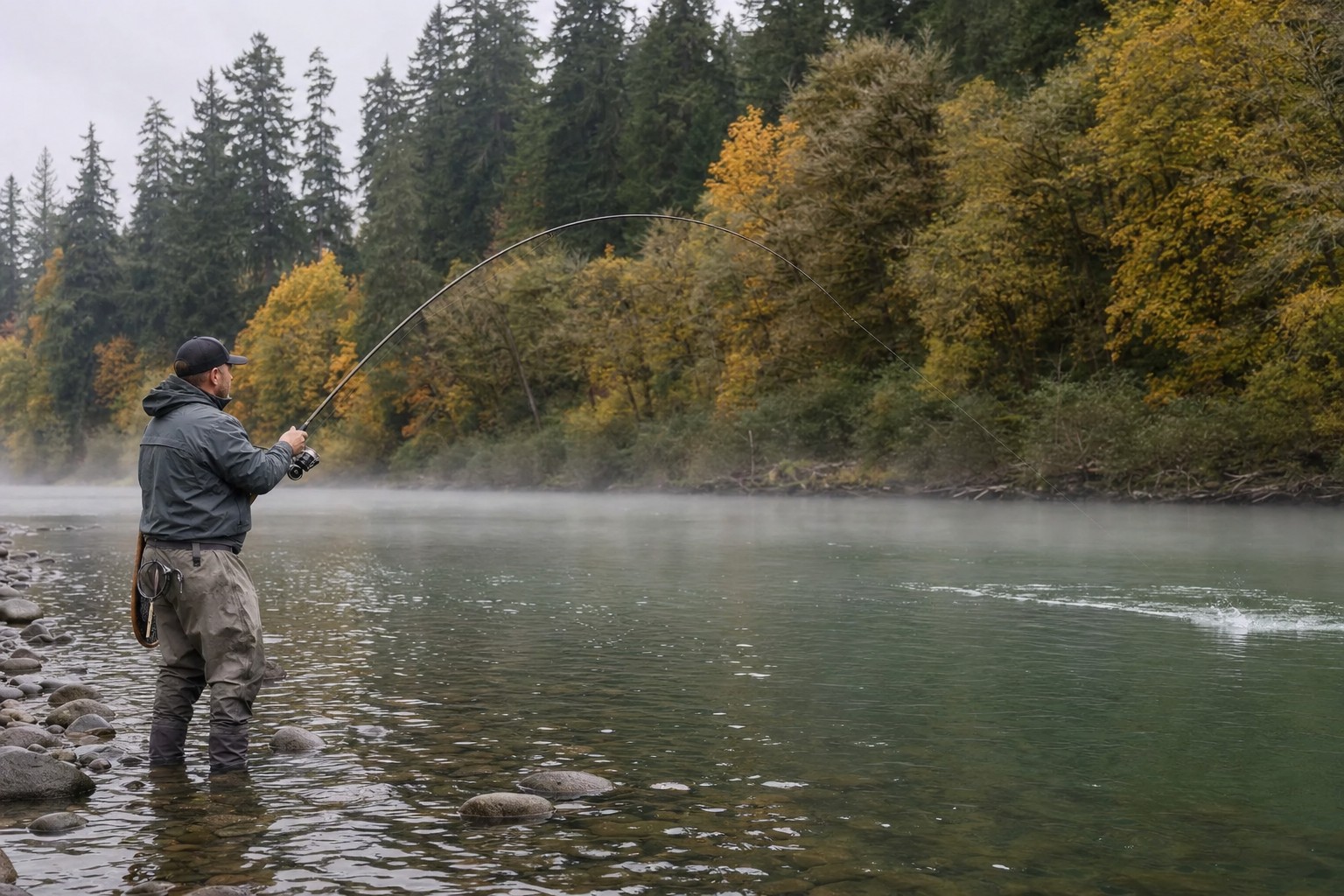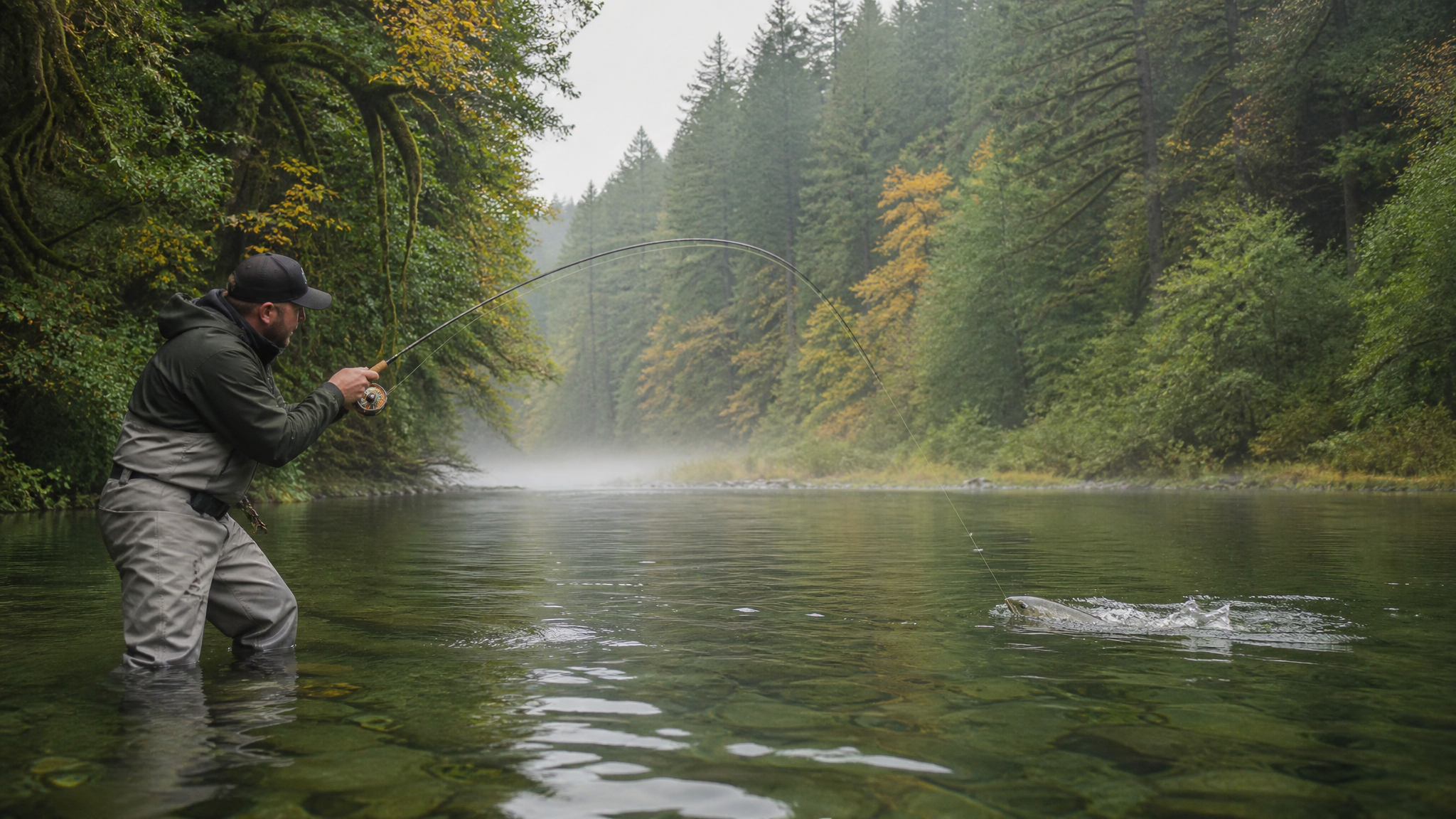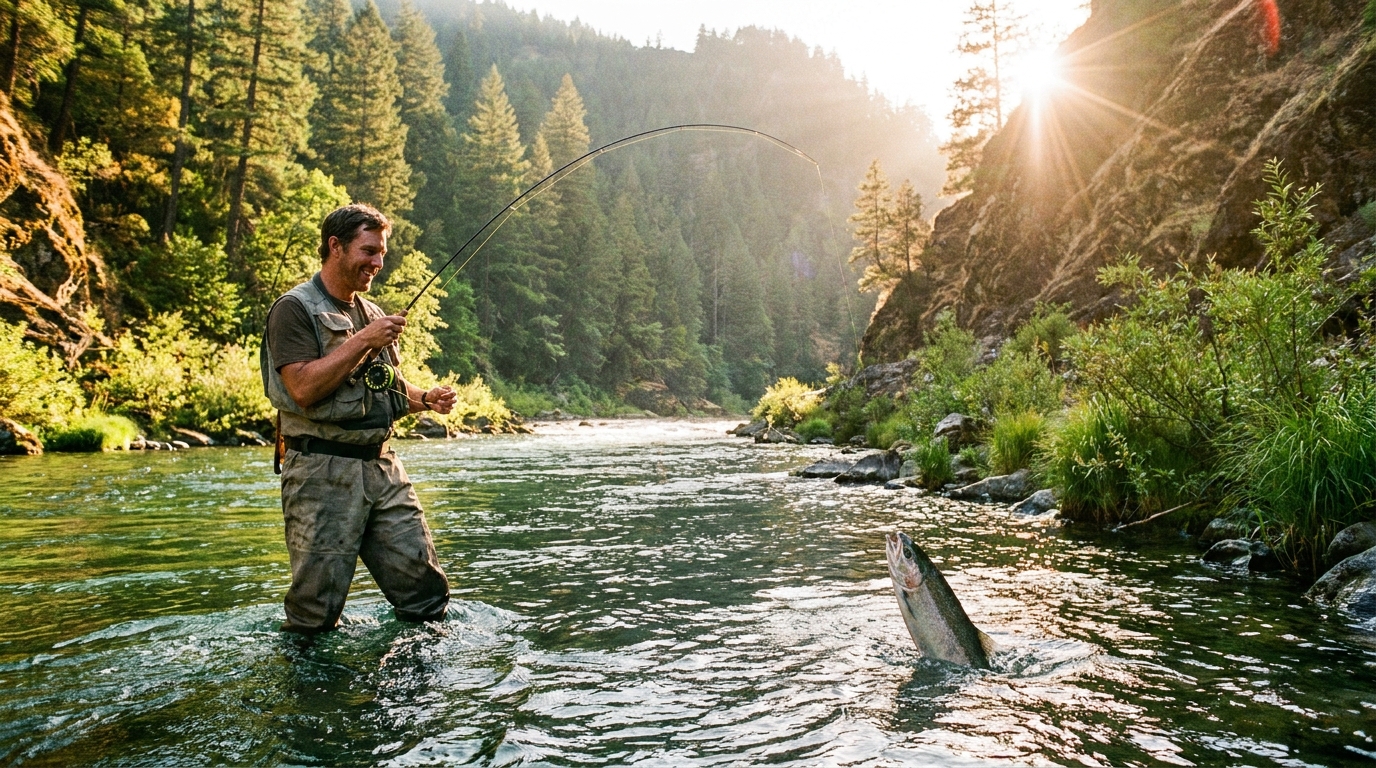
Ask any experienced Oregon steelhead angler about the Rogue River in July, and you'll see their eyes light up. While the rest of the state waits for fall runs and winter fish, the Rogue is doing something entirely unique — producing one of the Pacific Northwest's most thrilling summer fisheries: the half-pounder steelhead.
What Is a Half-Pounder?
Half-pounders aren't a separate species — they're juvenile steelhead that make an abbreviated ocean migration. Rather than spending two or three years in the Pacific, these fish return after just three to six months at sea, typically weighing one to three pounds when they come back. Don't let the size fool you. Half-pounders are pound-for-pound among the most athletic fish you'll tangle with in freshwater Oregon. They jump repeatedly, they'll hit with savage aggression, and they'll wear out an angler who isn't paying attention.
The Rogue is one of only a handful of rivers in North America where half-pounders return in fishable numbers. The Klamath in Northern California and the Trinity share this distinction, but the Rogue's accessibility and the quality of the surrounding canyon water make it the premier destination for this fishery.
When and Where to Fish
Half-pounders begin showing in the lower Rogue near Gold Beach in late June. By mid-July they've pushed well upstream, and the prime water through Grants Pass and the Wild Rogue Wilderness canyon is holding fish. Peak action typically runs from mid-July through September, with fish scattered throughout the system.
Top Access Points and Reaches
- Grants Pass to Hellgate Canyon: Excellent wade access from multiple BLM boat ramps. The canyon narrows here and concentrates fish in predictable holding lies — tailouts, seams behind boulders, and the inside edges of bends.
- Galice to Almeda: This stretch mixes wading with float fishing. The Almeda bar area is particularly productive, with gravel shelves that let you cover water efficiently with a swing.
- The Wild Rogue Wilderness: Float-trip only, but the payoff is solitude and miles of unfished water. July and August trips through this section — roughly Grave Creek to Foster Bar — put you on half-pounders with minimal pressure and spectacular canyon scenery.
- Agness and the Tidal Reach: Closer to the coast, half-pounders mix with larger adults entering the system. The Lobster Creek area near Agness is worth targeting if you're coming from the coast side.
Gear and Techniques
Half-pounders are caught on fly, lure, and bait, but fly fishing is the classic and most satisfying approach on the Rogue. The fish are aggressive enough that presentation errors that would blow up a winter steelhead presentation often get forgiven here.
Fly Fishing
A 9-foot, 7- or 8-weight rod with a Skagit or Scandi head covers most Rogue situations. In summer, swing wet flies and soft hackles through the tailouts and seams — Muddler Minnows, Hoh Bo Spey patterns, and traditional wets like the Purple Peril or Silver Hilton are consistent producers. Half-pounders are particularly fond of waking surface patterns during low-light hours; a Bomber or riffle-hitched fly pulled across the surface will draw explosive strikes that you'll remember for years.
During midday heat when fish push deeper, switch to a sink tip and fish slightly heavier patterns with more weight — Bunny Leeches or Intruder-style patterns stripped with short, sharp pulls can trigger reaction strikes from fish that won't chase a swung fly.
Hardware
Spin anglers do very well with small spinners in the No. 3 to No. 4 range — Blue Fox Vibrax, Mepps Aglia, and Panther Martin all work. Cast upstream and across, maintain contact as the blade swings through the current, and be ready for a violent take anywhere in the swing. Small spoons like the Kastmaster or Krocodile in chrome or gold also excel in riffled water.
Reading the Water
Half-pounders in July hold in classic summer steelhead lies: the upper-third of pools, in faster chop rather than the glassy slow water where winter fish rest. Look for depth of two to four feet, broken surface, and good oxygenation. The fish are actively feeding — think more like trout than like the lethargic holding behavior of winter steelhead.
Regulations to Know
The Rogue River steelhead regulations are split by zone and change annually — always download the current ODFW Sport Fishing Regulations before your trip. In most years, summer steelhead above Huntley Park in Grants Pass have a retention limit for adipose-clipped (hatchery) fish, while wild fish — identified by the intact adipose fin — must be released unharmed. Handle wild half-pounders with care: keep them in the water, support the fish horizontally, and minimize time out of the current.
Logistics and Access
Grants Pass is the hub for Rogue half-pounder fishing. The BLM Medford District manages extensive public land along the river corridor. Boat ramps at Whitehorse, Ennis Riffle, Hog Creek, and Galice provide float-trip put-ins. Several Grants Pass outfitters run guided half-day and full-day trips specifically targeting half-pounders in July — worthwhile if you're new to the river or want to shortcut the learning curve on reading this particular water.
Campgrounds along the Rogue include Griffin Park, Almeda, and various dispersed BLM sites. Reserve early — the Rogue corridor is popular with both anglers and rafters throughout the summer season.
The Bottom Line
If you've only fished the Rogue in fall or winter, or if you've never experienced a half-pounder grab a surface fly with both fins out of the water, put this on your July calendar. It's one of those Oregon fishing experiences that doesn't get talked about enough — accessible water, willing fish, and a canyon that reminds you why you got into this sport in the first place.