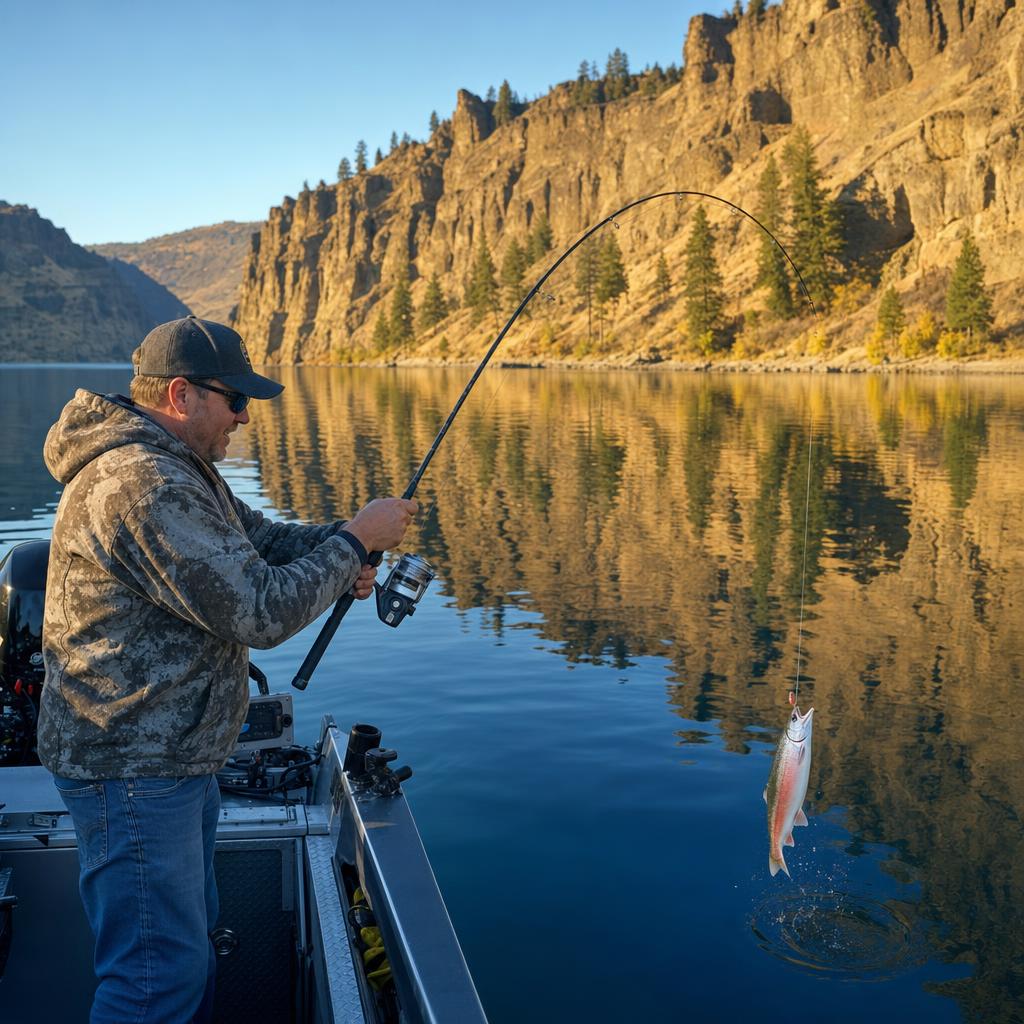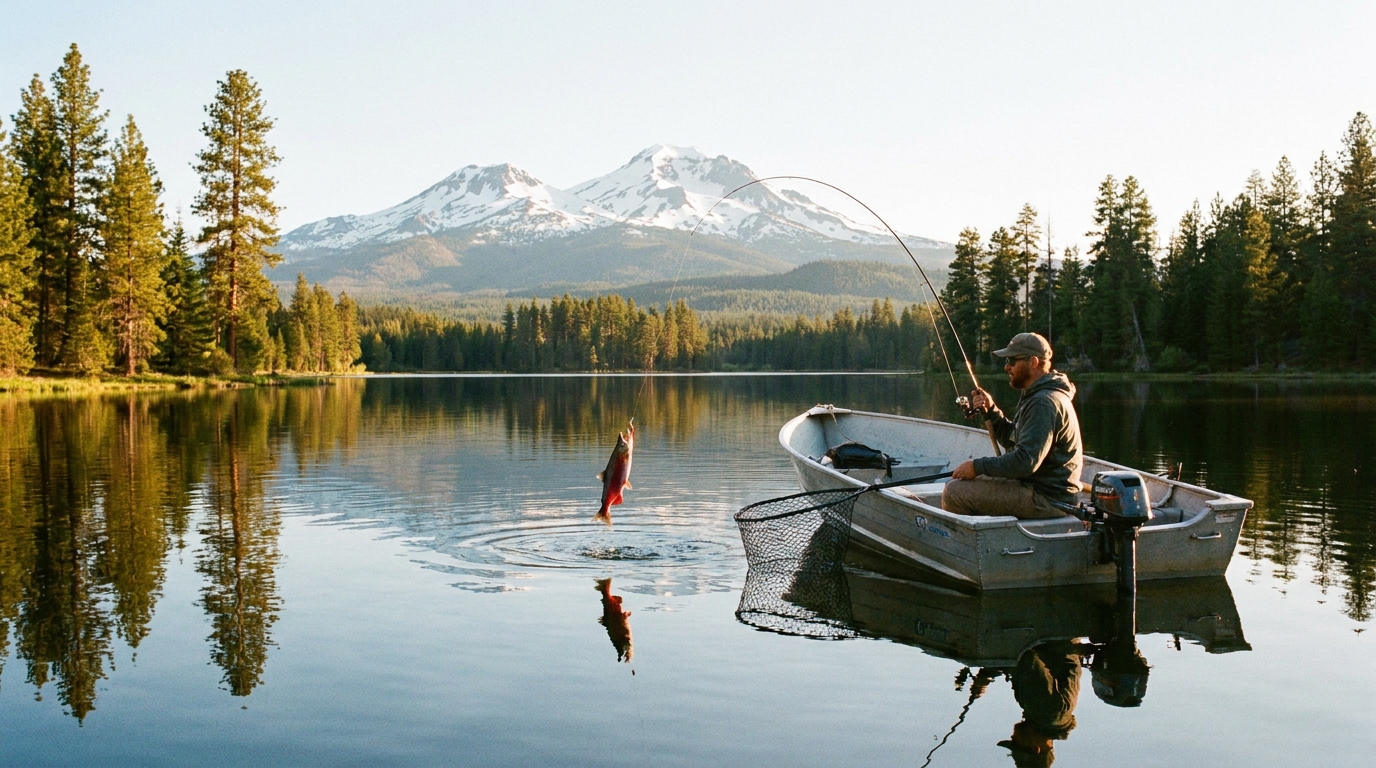
Suttle Lake sits at 3,450 feet in the Deschutes National Forest, about 13 miles west of Sisters on Highway 20. Most Oregon anglers drive right past it chasing bigger names — Wickiup, Crane Prairie, Hosmer. That's their loss and yours to exploit. From late June through early September, Suttle Lake offers some of the most consistent kokanee trolling in the Oregon Cascades, with fish regularly running 12 to 15 inches and the occasional trophy pushing 18.
Understanding Suttle Lake Kokanee
Kokanee are landlocked sockeye salmon — genetically identical to their anadromous cousins but adapted to cold, deep lakes. Suttle Lake's depth (nearly 200 feet at the deepest point) provides the cold, well-oxygenated water column kokanee need to survive summer heat. By mid-July, fish are typically suspended between 25 and 45 feet, chasing zooplankton and schooling tight in the thermocline.
Suttle Lake kokanee tend to run smaller than fish from Odell or Crescent Lake, but the population is robust and underutilized. You can often get limits of 10 fish per angler without serious competition on the water.
Gear and Tackle Setup
Trolling is the most consistent method for Suttle Lake kokanee. Keep it simple and you'll catch fish.
Rod and Reel
A light to medium-light trolling rod in the 7- to 8-foot range paired with a line-counter reel makes depth management straightforward. Load up with 10-pound monofilament or go with lead-core line if you want a more analog depth-control system. Many anglers use a combination: 10-pound mono with snap weights to get down without the complexity of a downrigger.
Terminal Tackle
- Dodgers — A 4-inch metallic dodger 18 to 24 inches ahead of your lure is the standard Suttle Lake setup. Silver and UV pink dodgers produce well throughout the season.
- Lures — Kokanee love small spoons and wedding ring spinners. Dick Nite spoons in pink/silver or chartreuse/silver are hard to beat. Tie a small piece of white shoepeg corn or a maggot on the hook for added attraction.
- Leader length — Keep your lure 18 to 24 inches behind the dodger. Shorter leaders increase action; longer leaders calm it down. Start at 18 inches and adjust based on fish response.
Finding Fish
Start by running your electronics before making your first pass. Suttle Lake kokanee school in dense pods — if you can mark them on your fishfinder, you're already halfway to a limit. Look for the thermocline (typically a sharp temperature break showing on your sonar) and troll just above it.
Early morning, fish often suspend shallower — sometimes as shallow as 15 feet in the first hour after sunrise. As the day warms, they drop. By noon on a hot July day, you may need to go 40 feet or deeper to find active biters.
Productive Trolling Routes
The eastern basin near the outlet (Suttle Creek) tends to hold consistent numbers due to current and slightly cooler water. The northern shore along the campground side can be productive in early morning. Troll at 1.5 to 2.0 mph; kokanee are speed-sensitive, and going too fast kills your hook-up rate. Use a GPS to monitor trolling speed precisely — 1.8 mph is often the sweet spot.
Best Time to Fish
July and early August are peak season. The fish have had time to grow since the spring plant or natural spawn cycle, water temperatures are stratified and stable, and zooplankton populations are at their annual high. Arrive early — kokanee are dawn fish, and the first two hours of daylight frequently account for 60% of the day's action.
Weekday fishing is dramatically less pressured. The Forest Service campground fills on weekends, and boat traffic disrupts feeding patterns. If you can hit Suttle on a Tuesday or Wednesday in mid-July, you'll have the lake largely to yourself.
Regulations and Access
Suttle Lake falls under standard ODFW regulations for the Deschutes Zone. The daily bag limit for kokanee is 10 fish, with no minimum size requirement — though you'll rarely keep anything under 10 inches anyway. A standard Oregon fishing license with Combined Angling Tag is all you need.
The lake has a paved boat ramp on the south shore adjacent to the Lodge at Suttle Lake. Parking is available, and there's a day-use fee when camping isn't involved. Electric motors and gas motors are both permitted; there's no horsepower restriction, but the lake is small enough that no-wake courtesy goes a long way.
What to Bring
- Line-counter reel or snap weights (essential for depth control)
- A quality fishfinder — kokanee hunting without one is guesswork
- UV-reactive pink, red, and chartreuse lures — they outperform standard colors in Suttle's clear water
- A cooler with ice — kokanee flesh degrades fast in summer heat
- Maggots or shoepeg corn for scent tipping
- Sunscreen — the lake sits in an open basin and reflects sun all day
Final Word
Suttle Lake won't make the headlines that Odell or Crane Prairie do, but that's exactly what makes it worth fishing. If you're in the Sisters area this summer and want consistent kokanee action without fighting crowds, point the boat trailer west on Highway 20 and spend a morning on the water. You'll have it mostly to yourself, and the bite is real.